Kirjojen hintavertailu. Mukana 12 016 292 kirjaa ja 12 kauppaa.

Kirjahaku

Etsi kirjoja tekijän nimen, kirjan nimen tai ISBN:n perusteella.

1000 tulosta hakusanalla John L Cook

Computer Architecture

Computer Architecture

John L. Hennessy; David A. Patterson

Morgan Kaufmann Publishers In
2017
nidottu
Computer Architecture: A Quantitative Approach, Sixth Edition has been considered essential reading by instructors, students and practitioners of computer design for over 20 years. The sixth edition of this classic textbook from Hennessy and Patterson, winners of the 2017 ACM A.M. Turing Award recognizing contributions of lasting and major technical importance to the computing field, is fully revised with the latest developments in processor and system architecture. The text now features examples from the RISC-V (RISC Five) instruction set architecture, a modern RISC instruction set developed and designed to be a free and openly adoptable standard. It also includes a new chapter on domain-specific architectures and an updated chapter on warehouse-scale computing that features the first public information on Google's newest WSC. True to its original mission of demystifying computer architecture, this edition continues the longstanding tradition of focusing on areas where the most exciting computing innovation is happening, while always keeping an emphasis on good engineering design.
Opus Dei

Opus Dei

John L. Allen

Penguin Books Ltd
2006
pokkari
Opus Dei is one of the most talked about but least known religious organizations of our time. For years no one has been allowed access to its secrets.Until now ...Here, Vatican insider John Allen uncovers its true nature. Granted unlimited access to those within its ranks, gaining a wealth of interviews with the heads of Opus Dei around the world, Allen finally separates the myths from the facts: the actual use of whips and the cilice; the true extent of Opus Dei's funds; the identities of its influential members in politics, banking and high office; and how much power this shadowy group really has.'Definitive, persuasive and absorbing' Daily Telegraph'Focuses on some of the most controversial aspects of the organization, from its treatment of women to its recruitment and its money' Independent'He reports on all aspects of the Opus Dei cult (including structure and finance, and the practice of mortifying the flesh with a cilice) ... and, most usefully, includes details of the bishops and personnel around the world who are Opus Dei clergy' New Statesman'An admirable book ... the first stop for anyone interested in [Opus Dei]' Sunday Times
The Beggar's Pawn

The Beggar's Pawn

John L'Heureux

Plume
2020
nidottu
The final book by the noted novelist, short story writer, and teacher John L'Heureux: the story of an affable stranger whose appeals for money gradually upend the lives of an academic's family After a decades-long career as a critically acclaimed writer (including several novels with Viking and Penguin in the late '80s and early '90s) John L'Heureux had a late flowering in his career. In the year before his death in April of 2019, The New Yorker published three of his stories, and a collection of his short stories will be published by A Public Space in December 2019. His final novel, The Beggar's Pawn, is the story of a family whose chance meeting with a stranger while dog walking slowly becomes an ominous invasion of their domestic lives. David and Maggie Holliss are an ordinary married couple about to ease into a comfortable, well-earned retirement while tending to three middle-aged children with whom they share an edgy relationship of love and resentment. Reginald Parker enters their lives when he saves their dog from being run over by a truck, and when asked how they can possibly thank him, he replies with a request for the loan of two hundred dollars. They lend it to him, gladly, and thus begins what will become for them and their family a nightmare that moves from comic resignation to stark tragedy. In The Beggar's Pawn, John L'Heureux explores the strains of marriage, the nature of trust, the limits of love, and the inevitability of fate.
Islam

Islam

John L. Esposito

Oxford University Press Inc
2016
nidottu
This exceptionally successful survey text introduces the teachings and practice of Islam from its earliest origins up to its contemporary practice. John L. Esposito, an internationally renowned expert on Islam, traces the development of Islam and its impact on world history and politics. Lucidly written and expansive in scope, Islam: The Straight Path, Updated Fifth Edition, provides keen insight into one of the world's least understood religions. It is ideally suited for use in courses on Islam, world religions, comparative religions, and Middle East history and culture. A FREE 6-month subscription to Oxford Islamic Studies Online (www.oxfordislamicstudies.com), edited by John L. Esposito, is included with the purchase of every new copy of this text.
Criminal Evidence: An Introduction

Criminal Evidence: An Introduction

John L. Worrall; Craig Hemmens; Lisa S. Nored

Oxford University Press
2017
nidottu
Criminal Evidence: An Introduction, Third Edition, provides comprehensive and applied coverage of the rules of evidence, along with numerous case excerpts that clearly illustrate those rules. Using engaging, straightforward language, authors John L. Worrall, Craig Hemmens, and Lisa S. Nored offer an invaluable and innovative resource for both students and instructors. Concentrating on the Federal Rules of Evidence, this distinctive text presents in-depth yet accessible coverage of evidentiary law in fourteen succinct chapters. To draw students into this complex subject, the authors explain criminal evidence through a unique blend of text and case excerpts; throughout, these excerpts illuminate the rules in useful, fascinating, and often unusual examples.
American Discontent

American Discontent

John L. Campbell

Oxford University Press Inc
2018
sidottu
The 2016 presidential election was unlike any other in recent memory, and Donald Trump was an entirely different kind of candidate than voters were used to seeing. He was the first true outsider to win the White House in over a century and the wealthiest populist in American history. Democrats and Republicans alike were left scratching their heads--how did this happen? In American Discontent, John L. Campbell contextualizes Donald Trump's ascendance to the presidency by focusing on the long-developing economic, racial, ideological, and political shifts that enabled Trump to win the White House. Campbell argues that Trump's rise to power was the culmination of a half-century of deep, slow-moving change in America, beginning with the decline of the Golden Age of prosperity that followed the Second World War. The worsening economics anxieties of many Americans reached a tipping point when the 2008 financial crisis and Barack Obama's election, as the first African American president, finally precipitated the worst political gridlock in generations. Campbell emphasizes the deep structural and historical factors that enabled Trump's rise to power. Since the 1970s and particularly since the mid-1990s, conflicts over how to restore American economic prosperity, how to cope with immigration and racial issues, and the failings of neoliberalism have been gradually dividing liberals from conservatives, whites from minorities, and Republicans from Democrats. Because of the general ideological polarization of politics, voters were increasingly inclined to believe alternative facts and fake news. Grounded in the underlying economic and political changes in America that stretch back decades, American Discontent provides a short, accessible, and nonpartisan explanation to Trump's rise to power.
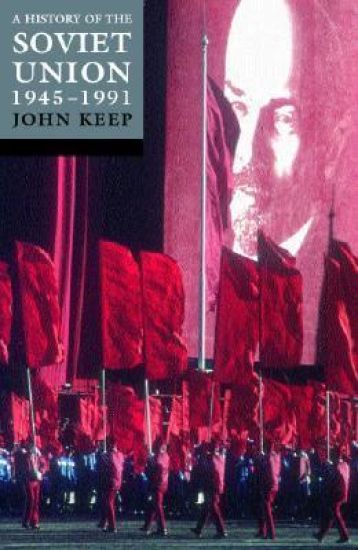
A History of the Soviet Union 1945-1991

A History of the Soviet Union 1945-1991

John L. H. Keep

Oxford University Press
2002
nidottu
Described as 'one of the most tragic human experiences in human history', the Soviet Union as an empire holds much intrigue and fascination for the Western world. It held unquestionable status as an empire, with its coverage of over 100 nationalities. Its status as the 'Last of the Empires' depends on what the future may hold, but any future 'empires' will undoubtedly be based on intellectual and institutional foundations far different from those developed during the Soviet era. Here John Keep presents the narrative history of the USSR, from the last years of Stalin, to the checkered fate of Gorbachev's reform policies, and the ultimate collapse of the empire under manifold centrifugal pressures. Focusing upon political, economic, social, and cultural developments, the book is divided into four parts: the last years of Stalin; Nikita Krushchev's abortive attempts to reform Communist rule; the years 1964-1985, covered largely by Breshnev's long tenure of power; and lastly Gorbachev's abortive attempts to promote a reformed, 'democratic', communism.
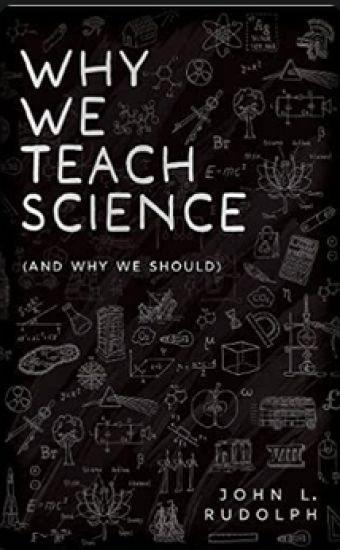
Why We Teach Science

Why We Teach Science

John L. Rudolph

Oxford University Press
2023
sidottu
Few people question the importance of science education in American schooling. The public readily accepts that it is the key to economic growth through innovation, develops the ability to reason more effectively, and enables us to solve the everyday problems we encounter through knowing how the world works. Good science teaching results in all these benefits and more -- or so we think. But what if all this is simply wrong? What if the benefits we assume science education produces turn out to be an illusion, nothing more than wishful thinking? In Why We Teach Science (and Why We Should), former high school teacher and historian of science education John L. Rudolph examines the reasons we've long given for teaching science and assesses how they hold up to what we know about what students really learn (or don't learn) in science classrooms and what research tells us about how people actually interact with science in their daily lives. The results will surprise you. Instead of more and more rigorous traditional science education to fill the STEM pipeline, Rudolph challenges us to think outside the box and makes the case for an expansive science education aimed instead at rebuilding trust between science and the public -- something we desperately need in our current era of impending natural challenges and science denial.
Nomic Probability and the Foundations of Induction

Nomic Probability and the Foundations of Induction

John L. Pollock

Oxford University Press Inc
1990
sidottu
This book deals with the subject of probabilistic reasoning. Professor Pollock attempts to make general philosophical sense of objective probabilities and he explores their relationship to the problem of induction. He argues that probability is fundamental not only to physical science, but to induction, epistemology, the philosophy of science and to much reasoning of interest to artificial intelligence. He attempts to show how his understanding of probability throws light on these related issues. Pollock's main claim is that the fundamental notion of probability is nomic - that is, it involves the notion of natural law, valid across possible worlds. The various epistemic and statistical conceptions of probability, he demonstrates, are derived from this nomic notion. He goes on to provide a theory of statistical induction; an account of computational principles allowing some probabilities to be derived from others; an account of acceptance rules; and a theory of direct inference.
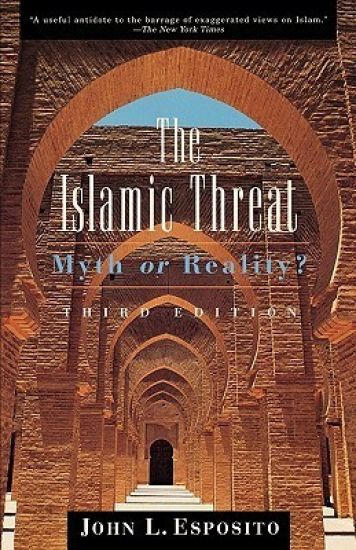
The Islamic Threat

The Islamic Threat

John L. Esposito

Oxford University Press Inc
1999
nidottu
Are Islam and the West on a collision course? From the Ayatollah Khomeini to Saddam Hussein, the image of Islam as a militant, expansionist, and rabidly anti-American religion has gripped the minds of Western governments and media. But these perceptions, John L. Esposito writes, stem from a long history of mutual distrust, criticism, and condemnation, and are far too simplistic to help us understand one of the most important political issues of our time. In this new edition of The Islamic Threat: Myth or Reality?, Esposito places the challenge of Islam in critical perspective. Exploring the vitality of this religion as a global force and the history of its relations with the West, Esposito demonstrates the diversity of the Islamic resurgence--and the mistakes our analysts make in assuming a hostile, monolithic Islam. This third edition has been expanded to include new material on current affairs in Turkey, Afghanistan, Palestine, and Southeast Asia, as well as a discussion of international terrorism.
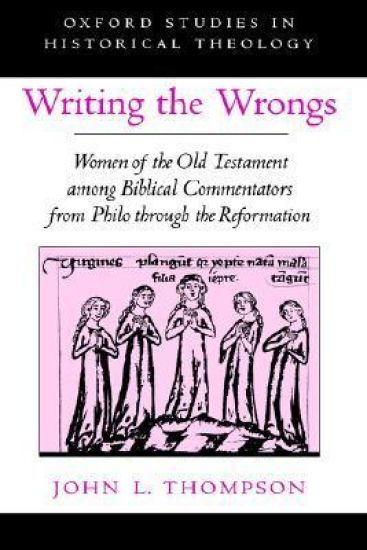
Writing the Wrongs

Writing the Wrongs

John L. Thompson

Oxford University Press Inc
2001
sidottu
The last third of the 20th century has witnessed an eruption of interest in the women in the Bible. In this field, Phyllis Trible's Texts of Terror is a landmark among those studying women of the Bible. Focusing on stories of the maltreatment of women, Trible paved the way for subsequent feminist exegetes who have been very critical of such stories in the Bible, and who see Christianity as an irredeemably patriarchal religion. It is commonly said that these Old Testament stories of rape, murder, torture, and abandonment passed without comment until recent times. In this book, however, John Thompson points out that many neglected pre-modern Christian interpreters have wrestled with the texts of terror throughout the centuries, sometimes writing volumes 'between the lines' of scripture out of an apparent concern for the women in these stories. Thompson traces and analyses the interpretation of the stories of Hagar, Jephthah's daughter, the Levite's wife, and Lot's daughters from the earliest Church Fathers through to the Reformation. He argues that the neglected and largely inaccessible commentaries on which he draws not only shed light on how these troubling stories have been seen in the past, but can speak to Christians who are battling over how the Bible ought to be read today. Here, Thompson traces and analyses various Christian interpretations of these Bible stories of women. In drawing attention to views other than Texts of Terror, Thompson speaks to Christians who are battling over how the Bible ought to be read today.
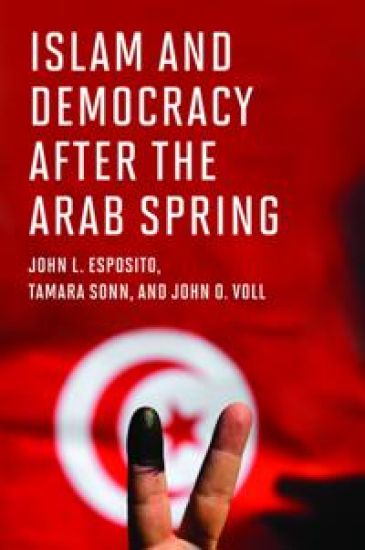
Islam and Democracy after the Arab Spring

Islam and Democracy after the Arab Spring

John L. Esposito; Tamara Sonn; John O. Voll

Oxford University Press Inc
2016
sidottu
In late 2010, the wave of civil resistance known as the Arab Spring stunned the world as dictatorships in Tunisia, Egypt, and Libya were overthrown, while the regimes of Bahrain, Syria, and Yemen brutally suppressed their own revolutions. The Islamic political parties of Tunisia and Egypt have gained particular attention for their success in the national elections following the overthrow of their regimes, and similar electoral success has been seen in Morocco and is predicted throughout the Arab world and beyond in the broader Middle East and in Southeast Asia. While the opposition movements of the Arab Spring are distinctive, each has raised questions regarding equality, economic justice, democratic participation, and the relationship between Islam and democracy in their respective countries, such as: does democracy require a secular political regime? And are religious movements the most effective opponents of authoritarian secularist regimes? The argument that that Islamic political groups' participation in democratic processes is only a ruse to actually impose an anti-democratic theocracy once in power continues to be made, often by former political and economic elites and secularists who would prefer a secularist autocracy to a democracy in which religious parties might control the government. In Islam and Democracy after the Arab Spring, renowned Islamic Studies and History scholars John Esposito, Tamara Sonn, and John Voll examine these uprisings and the democratic process in the Muslim world, while also analyzing the larger relationship between religion and politics. Expanding upon issues initially raised by Esposito and Voll in the mid-1990s with Islam and Democracy, Islam and Democracy after the Arab Spring applies a twenty-first century perspective to the question of whether or not Islam is "compatible" with democracy by redirecting the conversation towards a new politic of democracy that transcends both secular authoritarianism and Political Islam.
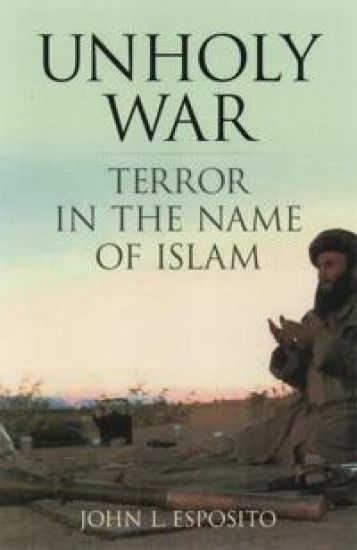
Unholy War

Unholy War

John L. Esposito

Oxford University Press Inc
2002
sidottu
The devastating September 11 attacks on the World Trade Center and the Pentagon left us stunned, angry, and uncomprehending. As it became clear that these horrifying acts had been committed in the name of Islam, we struggled to understand how religion could be used to justify the slaughter of innocents. The media, the government, and ordinary citizens alike sought answers to questions about Islam and its adherents. Who are the Muslim extremists who perpetrate such deeds? Why do they hate us? What do they hope to achieve? Does Islam really teach that such terrorists are holy warriors who will be rewarded with everlasting bliss? In this level-headed and authoritative book, John L. Esposito, one of the world's most respected scholars of political Islam, provides answers to these and many other questions that have arisen in the wake of the attacks. He clearly and carefully explains the teachings of Islam--the Quran, the example of the Prophet, Islamic law--about jihad or holy war, the use of violence, and terrorism. He chronicles the rise of extremist groups and examines their frightening worldview and tactics. Anti-Americanism (and anti-Europeanism), he shows, is a broad-based phenomenon that cuts across Arab and Muslim societies. It is not just driven by religious zealotry, but by frustration and anger at U.S. policy. Moreover, many Muslims are repelled by aspects of Western culture, and alarmed at its impact around the world. It is vital to understand, however, that the vast majority of Muslims are appalled by the acts of violence committed in the name of their faith. It is essential that we distinguish between the religion of Islam and the actions of extremists like Osama bin Laden who hijack Islamic discourse and belief to justify their acts of terrorism. How can we continue the fight against terrorism without precipitating a global clash of cultures? This is perhaps the most important question we face in this time of crisis. The terrorists behind the September 11 attacks must be brought to justice, their cells eradicated, and their bases destroyed. But this war against terror must not be used to justify erosion of important values at home, or become a green light to authoritarian regimes in the Muslim world to repress non-violent opposition. Only by understanding and addressing the issues that breed hatred and radicalism, argues Esposito, can we defuse the conflicts that will otherwise continue to confront future generations. This brief, clear-sighted and accessibly written book reflects twenty years of study, reflection, and experience on the part of a scholar who is equally respected in the West and in the Muslim world. It will prove to be the best single guide to these urgent questions that have suddenly forced themselves on the attention of the entire world.
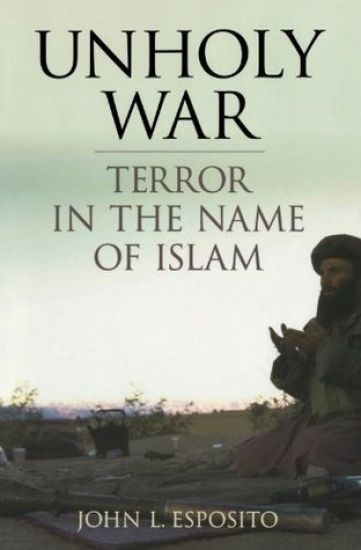
Unholy War

Unholy War

John L. Esposito

Oxford University Press Inc
2003
nidottu
The September 11 attacks on the World Trade Center and the Pentagon left us stunned, angry, and uncomprehending. As it became clear that these horrifying acts had been committed in the name of religion, the media, the government, and ordinary citizens alike sought answers to questions about Islam and its adherents. In this level-headed and authoritative book, John L. Esposito, one of the world's most respected scholars of political Islam, provides answers. He clearly and carefully explains the teachings of Islam--the Quran, the example of the Prophet, Islamic law--about jihad or holy war, the use of violence, and terrorism. He chronicles the rise of extremist groups and examines their frightening worldview and tactics. Anti-Americanism (and anti-Europeanism), he shows, is a broad-based phenomenon that cuts across Arab and Muslim societies. It is not just driven by religious zealotry, but by frustration and anger at U.S. policy. It is vital to understand, however, that the vast majority of Muslims are appalled by the acts of violence committed in the name of their faith. It is essential that we distinguish between the religion of Islam and the actions of extremists like Osama bin Laden, who hijack Islamic discourse and belief to justify their acts of terrorism. This brief, clear-sighted book reflects twenty years of study, reflection, and experience on the part of a scholar who is equally respected in the West and in the Muslim world. It will prove to be the best single guide to the urgent questions that have recently forced themselves on the attention of the entire world.
Thinking about Acting

Thinking about Acting

John L. Pollock

Oxford University Press Inc
2006
sidottu
This book aims to construct a theory of rational decision making for real, resource-bounded, agents. Such decision making must be based on objective probabilities rather than subjective probabilities, and cannot be done by choosing single actions with maximal expected values. Actions must be chosen as parts of plans, and plans must be evaluated in the context of other plans.
Paul in Israel's Story

Paul in Israel's Story

John L. Meech

Oxford University Press Inc
2006
sidottu
In this book, John Meech reflects on St. Paul's construal of Christian identity in light of what has become known as the 'new paradigm' in Pauline studies, which stresses the communal aspects of Paul's thought and his narrative understanding of the self. Then he offers a pivotal analysis of Rudolph Bultmann's phenomenology of the self and its impact on his demythologizing interpretation of Paul's writings. Meech also engages Paul Ricoeur's late work Oneself as Another, as a guide to the postmodern problem of selfhood.
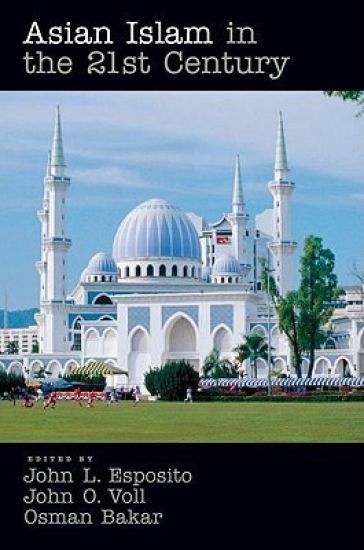
Asian Islam in the 21st Century

Asian Islam in the 21st Century

John L. Esposito; John Voll; Osman Bakar

Oxford University Press Inc
2007
sidottu
Although more than half of the world's Muslims live in Asia, most books on contemporary Islam focus on the Middle East, giving short shift to the dynamic and diverse presence of Asian Islam in regional and global politics. The Muslims of Asia constitute the largest Muslim communities in the world - Indonesia, Pakistan, Bangladesh, India and Central Asia. In recent years, terrorist bombings in Bali, separatist conflicts in Thailand and the Philippines, and opposition politics in Central Asia, all point to the strategic importance of Asian Islam. In Asian Islam in the 21st Century, terrorism and its effects are placed within the broader context of Muslim politics and how Islamic ideals and movements, mainstream and extremist, have shaped Asian Muslim societies. Democratization experiments -- successful and unsuccessful -- are examined. The rise of radical militant movements is analyzed and placed in historical perspective. The result is an insightful portrait of the rich diversity of Muslim politics and discourse that continue to affect Asian Muslim majority and minority countries. Specialists and students of Islamic studies, religion and international affairs, and comparative politics as well as general readers will benefit from this sorely needed comprehensive analysis of a part of the world that has become increasingly important in the 21st century.
Asian Islam in the 21st Century

Asian Islam in the 21st Century

John L. Esposito; John Voll; Osman Bakar

Oxford University Press Inc
2007
nidottu
Although more than half of the world's Muslims live in Asia, most of the widely read books on contemporary Islam focus on developments in the Middle East, giving short shrift to experiences in some of the largest Muslim countries in the world. In recent years events like the terrorist bombings in Bali, intensifying separatist activities in Thailand, and developments in the Central Asian states of the former Soviet Union all point to the fact that Asian Islam is a subject of growing importance. Specialists as well as general readers interested in international relations need broadly conceived analyses of developments in the major Muslim societies of Asia. The beginning of the twenty-first century is witnessing profound transformations in the way that Islamic ideals and Islamic movements shape state and society. The studies collected in this book look at the changes happening both in Muslim majority countries and in societies where Muslims are a minority. Experiences of democratization - successful and unsuccessful - are examined. The rise of radical militant movements is analyzed, and placed in historical perspective and in the broader context of mainstream Islamic ideals. Among the contributors are such prominent scholars as Fred von der Mehden, Vali Nasr, Hakan Yavuz, and John Voll. This book will serve as the successor to Esposito's influential 1987 collection, Islam in Asia.
World Religions Today

World Religions Today

John L. Esposito; Darrell J. Fasching; Todd T. Lewis

Oxford University Press
2021
nidottu
Revealing the significance of religion in contemporary life, World Religions Today, Seventh Edition, explores major religious traditions--Judaism, Christianity, Islam, Hinduism, Buddhism, South Asian religions, East Asian religions, indigenous religions, and new religions--as dynamic, ongoing forces in the lives of individuals and in the collective experience of modern societies. This unique volume accomplishes two goals: it connects today's religions to their classical beliefs and practices and focuses on how these religions have both radically changed the modern world and been changed by it. The book is enhanced by numerous pedagogical aids--text boxes, timelines, maps, illustrations, discussion questions, a comprehensive glossary of key terms, and suggestions for further reading--and more than 200 photographs.
Soldiers of the Tsar

Soldiers of the Tsar

John L. Keep

Oxford University Press
1985
sidottu
This volume explores the military aspects of Russian society and the 'service state' from its fifteenth-century origins unitl its obsolescence in the age of mass conscription and mechanized warfare. The author examines the complex interplay of military and civilian elements in Russia's administration; the social and economic impact of the armed forces; the way officers and men were recruited and the conditions in which they worked; and the development of opposition to military dominance. Focusing on the human rather than the technical aspects of military history, this book offers a rare picture of the inner life of the armed forces and of the Russian political and social system under the tsars.