Kirjojen hintavertailu. Mukana 11 577 215 kirjaa ja 12 kauppaa.

Kirjahaku

Etsi kirjoja tekijän nimen, kirjan nimen tai ISBN:n perusteella.

1000 tulosta hakusanalla John R. Fitzpatrick

Inside Egypt

Inside Egypt

John R. Bradley

Palgrave Macmillan
2011
nidottu
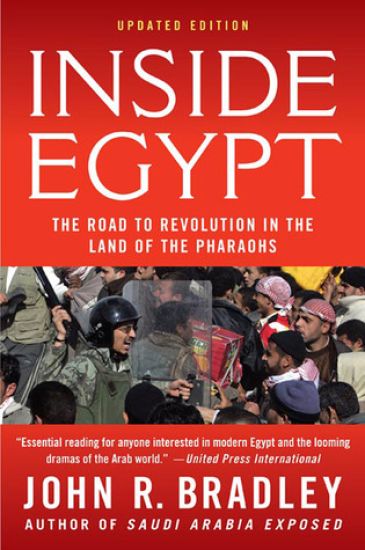
The government of Egypt banned Inside Egypt in 2008 - the first time a book on Egyptian politics had been banned in the country in decades - and quickly rescinded it after the media firestorm that followed. The book depicts a country on the brink of collapse. Through interviews with ordinary Egyptians and extensive travels in the country, Bradley reveals why Egypt is now vulnerable to another popular uprising that could bring about an Iranian-style theocracy in a country once noted for its plurality and tolerance.
Inside Egypt

Inside Egypt

John R. Bradley

Palgrave Macmillan
2009
nidottu
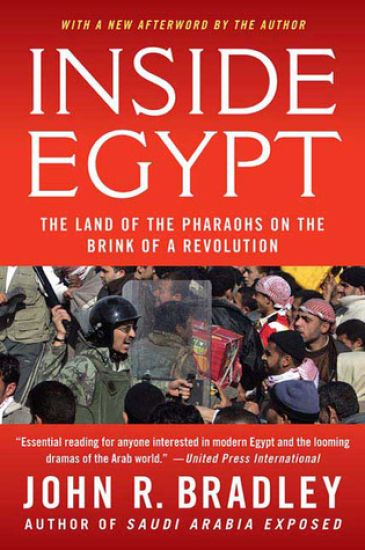
Five decades after Nasser and the Free Officers overthrew the British-backed monarchy in a dramatic coup d'etat, the future of Egypt grows more uncertain by the day. John Bradley examines the junctions of Egyptian politics and society as they slowly disintegrate under the twin pressures of a ruthless military dictatorship at home and a flawed Middle East policy in Washington. Inside Egypt is a tour-de-force of the most brutal Arab state where torture and corruption are endemic - but one that is also a key U.S. all and a historic regional trendsetter. This uniquely insightful book brings to vivid life Egypt's competing identities and political trends, as the Mubarak dynasty struggles to resolve a succession crisis and the disciplined Islamists wait patiently in the wings for a chance to seize power.
Behind the Veil of Vice

Behind the Veil of Vice

John R. Bradley

Palgrave Macmillan
2010
sidottu
The Middle East has long been something of a mystery to Westerners, and in particular the sexual mores of the region continue to fascinate. Arabs are often described as being in a state of Islam-induced sexual anxiety and young Muslims' frustrations are said to be exacerbated by increasing exposure to the licentiousness of the West. Here, Middle East expert John R. Bradley sets out to uncover the truth about sex in countries like Egypt, Syria, Morocco and Yemen. Among many startling revelations, Bradley reports on how "temporary" Islamic marriages allow for illicit sex in the theocracies of Iran and Saudi Arabia; "child brides" that are sold off to older Arab men according to ancient tribal traditions; the hypocrisy that undermines publicized crackdowns on the thriving sex industry in the Persian Gulf; and how, despite widespread denial, homosexuality is still deeply ingrained in the region's social fabric. Richly detailed and nuanced, Behind the Veil of Vice sheds light on a taboo subject and unravels widely held myths about the region. In the process, Bradley also delivers an important message about our own society's contradictions.
Rising Tides

Rising Tides

John R. Wennersten; Denise Robbins

Indiana University Press
2017
pokkari
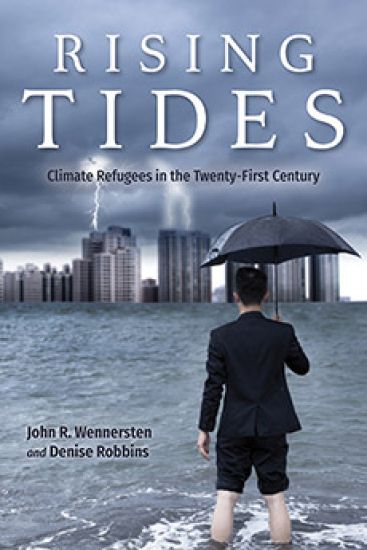
Global climate change is undeniable. Over the next few decades, as sea levels rise, storms intensify, and drought and desertification run rampant, hundreds of millions of civilians will abandon their homes, cities, and even entire countries. What will happen to these massive numbers of environmental refugees? Where will they go, what rights will they have, and who will take care of them? Over 200 million people in Asian countries live on land that will be affected by rising seas. Picture Pakistan, India, and China—all nuclear powers—skirmishing at their borders over access to shared rivers and farmable land with former coastal areas now submerged. Imagine tens of thousands of Pacific and Indian Ocean islanders cast adrift by waves that have drowned their nations, and more than 100,000 Caribbean islanders forced to leave submerged towns. Consider the complete abandonment of Miami Beach and other coastal communities up and down the Americas. At the same time, hundreds of millions will be desperate for water and a secure life in drought-ravaged Africa and the Middle East. Rising Tides sounds an urgent wakeup call to the growing crisis of climate refugees, and offers an essential, continent-by-continent look at these dangers. The crisis is everywhere and it is imminent. Detailing a number of solutions, John R. Wennersten and Denise Robbins argue that no nation can tackle this universal problem alone. The crisis of climate refugees requires global, concerted solutions beyond the strategic, fiscal, and legal capability of a single country or agency.
Rising Tides

Rising Tides

John R. Wennersten; Denise Robbins

Indiana University Press
2017
sidottu
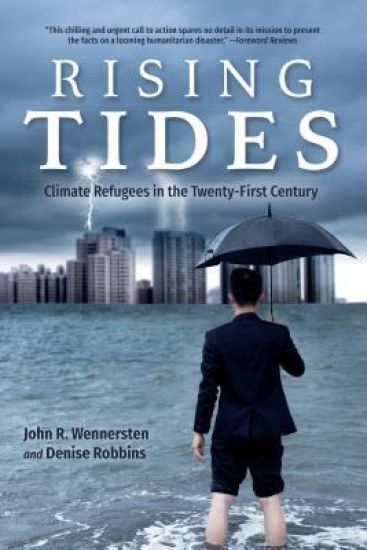
Global climate change is undeniable. Over the next few decades, as sea levels rise, storms intensify, and drought and desertification run rampant, hundreds of millions of civilians will abandon their homes, cities, and even entire countries. What will happen to these massive numbers of environmental refugees? Where will they go, what rights will they have, and who will take care of them? Over 200 million people in Asian countries live on land that will be affected by rising seas. Picture Pakistan, India, and China—all nuclear powers—skirmishing at their borders over access to shared rivers and farmable land with former coastal areas now submerged. Imagine tens of thousands of Pacific and Indian Ocean islanders cast adrift by waves that have drowned their nations, and more than 100,000 Caribbean islanders forced to leave submerged towns. Consider the complete abandonment of Miami Beach and other coastal communities up and down the Americas. At the same time, hundreds of millions will be desperate for water and a secure life in drought-ravaged Africa and the Middle East. Rising Tides sounds an urgent wakeup call to the growing crisis of climate refugees, and offers an essential, continent-by-continent look at these dangers. The crisis is everywhere and it is imminent. Detailing a number of solutions, John R. Wennersten and Denise Robbins argue that no nation can tackle this universal problem alone. The crisis of climate refugees requires global, concerted solutions beyond the strategic, fiscal, and legal capability of a single country or agency.
Balkan Economic History, 1550-1950

Balkan Economic History, 1550-1950

John R. Lampe

Indiana University Press
1982
sidottu
Western economic historians have traditionally concentrated on the success stories of major developed economies, while development economists have given most of their attnetion to the problems of the Third World. The authors of this pioneering work study a part of Europe neglected by both approaches. Modernizing patterns in Balkan economic history are traced from the sixteenth century (when the territory was shared by Ottoman and Habsburg empires), through the nineteenth century (when they emerged as independent states), to the end of World War II and its aftermath. Despite present differences in economic systems—Greece's private market economy, Yugoslavia's planned market economy, and the centrally planned economies of Romania, Bulgaria, and Albania—the authors find that shared origins and common subsequent experiences are ample justifications for treating the area as an economic unit. Balkan Economic History, 1550-1950 will be a major case study for development economists and will provide historians with the first analytical and statistical study to survey the entire region from the start of the early modern period.
Tennessee Frontiers

Tennessee Frontiers

John R. Finger

Indiana University Press
2001
sidottu
This chronicle of the formation of Tennessee from indigenous settlements to the closing of the frontier in 1840 begins with an account of the prehistoric frontiers and a millennia-long habitation by Native Americans. The rest of the book deals with Tennessee's historic period beginning with the incursion of Hernando de Soto's Spanish army in 1540. John R. Finger follows two narratives of the creation and closing of the frontier. The first starts with the early interaction of Native Americans and Euro-Americans and ends when the latter effectively gained the upper hand. The last land cession by the Cherokees and the resulting movement of the tribal majority westward along the "Trail of Tears" was the final, decisive event of this story. The second describes the period of Euro-American development that lasts until the emergence of a market economy. Though from the very first Anglo-Americans participated in a worldwide fur and deerskin trade, and farmers and town dwellers were linked with markets in distant cities, during this period most farmers moved beyond subsistence production and became dependent on regional, national, or international markets. Two major themes emerge from Tennessee Frontiers: first, that of opportunity the belief held by frontier people that North America offered unique opportunities for advancement; and second, that of tension between local autonomy and central authority, which was marked by the resistance of frontier people to outside controls, and between and among groups of whites and Indians. Distinctions of class and gender separated frontier elites from lesser whites, and the struggle for control divided the elites themselves. Similarly, native society was riddled by factional disputes over the proper course of action regarding relations with other tribes or with whites. Though the Indians lost in fundamental ways, they proved resilient, adopting a variety of strategies that delayed those losses and enabled them to retain, in modified form, their own identity. Along the way, the author introduces the famous personalities of Tennessee's frontier history: Attakullakulla, Nancy Ward, Daniel Boone, John Sevier, Davy Crockett, Andrew Jackson, and John Ross, among others. They remind us that this is the story of real people who dealt with real problems and possibilities in often difficult circumstances.
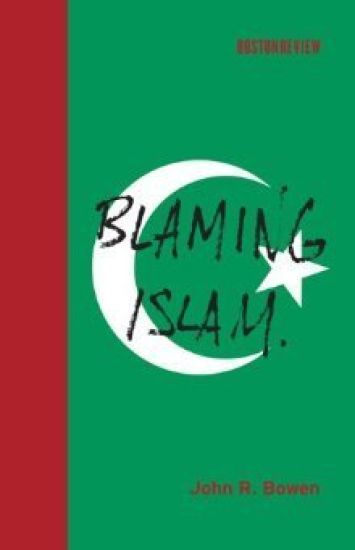
Blaming Islam

Blaming Islam

John R. Bowen

MIT Press
2012
sidottu
Why fears about Muslim integration into Western society-propagated opportunistically by some on the right-misread history and misunderstand multiculturalism.In the United States and in Europe, politicians, activists, and even some scholars argue that Islam is incompatible with Western values and that we put ourselves at risk if we believe that Muslim immigrants can integrate into our society. Norway's Anders Behring Breivik took this argument to its extreme and murderous conclusion in July 2011. Meanwhile in the United States, state legislatures' efforts to ban the practice of Islamic law, or sharia, are gathering steam-despite a notable lack of evidence that sharia poses any real threat.In Blaming Islam, John Bowen uncovers the myths about Islam and Muslim integration into Western society, with a focus on the histories, policy, and rhetoric associated with Muslim immigration in Europe, the British experiment with sharia law for Muslim domestic disputes, and the claims of European and American writers that Islam threatens the West. Most important, he shows how exaggerated fears about Muslims misread history, misunderstand multiculturalism's aims, and reveal the opportunism of right wing parties who draw populist support by blaming Islam.
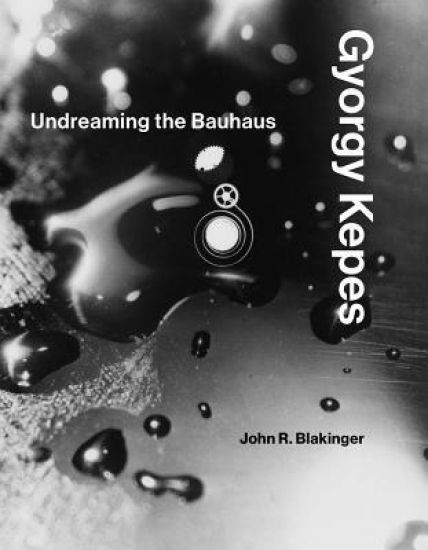
Gyorgy Kepes

Gyorgy Kepes

John R. Blakinger

MIT Press
2019
sidottu
How Gyorgy Kepes, the last disciple of Bauhaus modernism, became the single most significant artist within a network of scientific experts and elites.Gyorgy Kepes (1906-2001) was the last disciple of Bauhaus modernism, an acolyte of Laszlo Moholy-Nagy and a self-styled revolutionary artist. But by midcentury, transplanted to America, Kepes found he was trapped in the military-industrial-aesthetic complex. In this first book-length study of Kepes, John Blakinger argues that Kepes, by opening the research laboratory to the arts, established a new paradigm for creative practice: the artist as technocrat. First at Chicago's New Bauhaus and then for many years at MIT, Kepes pioneered interdisciplinary collaboration between the arts and sciences-what he termed "interthinking" and "interseeing." Kepes and his colleagues-ranging from metallurgists to mathematicians-became part of an important but little-explored constellation: the Cold War avant-garde.Blakinger traces Kepes's career in the United States through a series of episodes: Kepes's work with the military on camouflage techniques; his development of a visual design pedagogy, as seen in the exhibition The New Landscape and his book The New Landscape in Art and Science; his encyclopedic Vision + Value series; his unpublished magnum opus, the Light Book; the Center for Advanced Visual Studies (CAVS), an art-science research institute established by Kepes at MIT in 1967; and the Center's proposals for massive environmental installations that would animate the urban landscape. CAVS was entangled in the antiwar politics of the late 1960s, as many students and faculty protested MIT's partnerships with defense contractors-some of whom had ties to the Center. In attempting to "undream" the Bauhaus into existence in the postwar world, Kepes faced profound resistance.Generously illustrated, drawing on the vast archive of Kepes's papers at Stanford and MIT's CAVS Special Collection, this book supplies a missing chapter in our understanding of midcentury modern and Cold War visual culture.
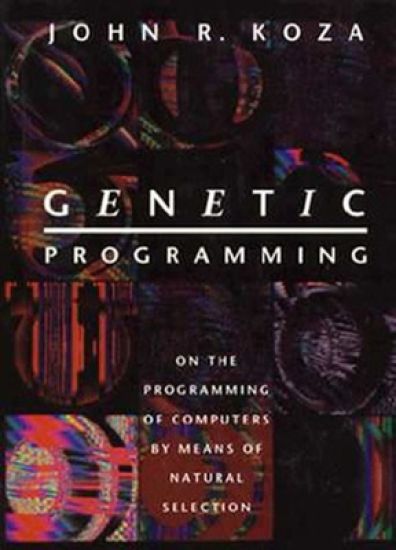
Genetic Programming

Genetic Programming

John R. Koza

Bradford Books
1992
pokkari
In this ground-breaking book, John Koza shows how this remarkable paradigm works and provides substantial empirical evidence that solutions to a great variety of problems from many different fields can be found by genetically breeding populations of computer programs. Genetic programming may be more powerful than neural networks and other machine learning techniques, able to solve problems in a wider range of disciplines. In this ground-breaking book, John Koza shows how this remarkable paradigm works and provides substantial empirical evidence that solutions to a great variety of problems from many different fields can be found by genetically breeding populations of computer programs. Genetic Programming contains a great many worked examples and includes a sample computer code that will allow readers to run their own programs.In getting computers to solve problems without being explicitly programmed, Koza stresses two points: that seemingly different problems from a variety of fields can be reformulated as problems of program induction, and that the recently developed genetic programming paradigm provides a way to search the space of possible computer programs for a highly fit individual computer program to solve the problems of program induction. Good programs are found by evolving them in a computer against a fitness measure instead of by sitting down and writing them.
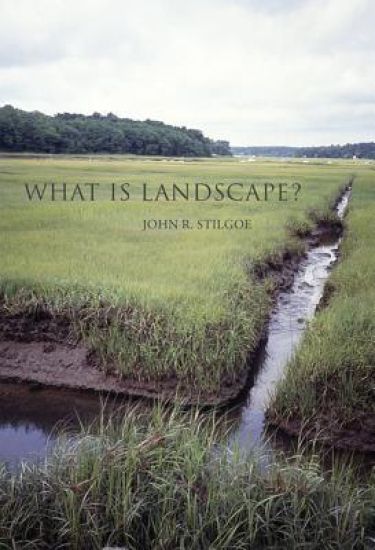
What Is Landscape?

What Is Landscape?

John R. Stilgoe

MIT Press
2018
pokkari
A lexicon and guide for discovering the essence of landscape."Mr. Stilgoe does not ask that we take his book outdoors with us; he believes that reading and experiencing landscapes are activities that should be kept separate. But, as I learned in his book, the hollow storage area in a car driver's door was once a holster, the 'secure nesting place of a pistol.' I recommend you stow your copy there."-The Wall Street JournalLandscape, John Stilgoe tells us, is a noun. From the old Frisian language (once spoken in coastal parts of the Netherlands and Germany), it meant shoveled land: landschop. Sixteenth-century Englishmen misheard or mispronounced this as landskep, which became landskip, then landscape, designating the surface of the earth shaped for human habitation. In What Is Landscape? Stilgoe maps the discovery of landscape by putting words to things, zeroing in on landscape's essence but also leading sideways expeditions through such sources as children's picture books, folklore, deeds, antique terminology, out-of-print dictionaries, and conversations with locals. ("What is that?" "Well, it's not really a slough, not really, it's a bayou...") He offers a highly original, cogent, compact, gracefully written narrative lexicon of landscape as word, concept, and path to discoveries.What Is Landscape? is an invitation to walk, to notice, to ask: to see a sandcastle with a pinwheel at the beach and think of Dutch windmills-icons of triumph, markers of territory won from the sea; to walk in the woods and be amused by the Elizabethans' misuse of the Latin silvaticus (people of the woods) to coin the word savages; to see in a suburban front lawn a representation of the meadow of a medieval freehold.Discovering landscape is good exercise for body and for mind. This book is an essential guide and companion to that exercise-to understanding, literally and figuratively, what landscape is.
Pragmatism

Pragmatism

John R. Shook

MIT PRESS LTD
2023
nidottu
A concise, reader-friendly overview of pragmatism, the most influential school of American philosophical thought.Pragmatism, America’s homegrown philosophy, has been a major intellectual movement for over a century. Unlike its rivals, it reaches well beyond the confines of philosophy into concerns and disciplines as diverse as religion, politics, science, and culture. In this concise, engagingly written overview, John R. Shook describes pragmatism’s origins, concepts, and continuing global relevance and appeal. With attention to the movement’s original thinkers—Charles Sanders Peirce, William James, John Dewey, and George Herbert Mead—as well as its contemporary proponents, he explains how pragmatism thinks about what is real, what can be known, and what minds are doing. And because of pragmatism’s far-reaching impact, Shook shows how its views on reality, truth, knowledge, and cognition coordinate with its approaches to agency, sociality, human nature, and personhood.
The Rediscovery of the Mind

The Rediscovery of the Mind

John R. Searle

Bradford Books
1992
pokkari
In this major new work, John Searle launches a formidable attack on current orthodoxies in the philosophy of mind. More than anything else, he argues, it is the neglect of consciousness that results in so much barrenness and sterility in psychology, the philosophy of mind, and cognitive science: there can be no study of mind that leaves out consciousness. What is going on in the brain is neurophysiological processes and consciousness and nothing more-no rule following, no mental information processing or mental models, no language of thought, and no universal grammar. Mental events are themselves features of the brain, "like liquidity is a feature of water."Beginning with a spirited discussion of what's wrong with the philosophy of mind, Searle characterizes and refutes the philosophical tradition of materialism. But he does not embrace dualism. All these "isms" are mistaken, he insists. Once you start counting types of substance you are on the wrong track, whether you stop at one or two. In four chapters that constitute the heart of his argument, Searle elaborates a theory of consciousness and its relation to our overall scientific world view and to unconscious mental phenomena. He concludes with a criticism of cognitive science and a proposal for an approach to studying the mind that emphasizes the centrality of consciousness to any account of mental functioning.In his characteristically direct style, punctuated with persuasive examples, Searle identifies the very terminology of the field as the main source of truth. He observes that it is a mistake to suppose that the ontology of the mental is objective and to suppose that the methodology of a science of the mind must concern itself only with objectively observable behavior; that it is also a mistake to suppose that we know of the existence of mental phenomena in others only by observing their behavior; that behavior or causal relations to behavior are not essential to the existence of mental phenomena; and that it is inconsistent with what we know about the universe and our place in it to suppose that everything is knowable by us.
The Platonic Political Art

The Platonic Political Art

John R. Wallach

Pennsylvania State University Press
2001
pokkari
In this first comprehensive treatment of Plato’s political thought in a long time, John Wallach offers a "critical historicist" interpretation of Plato. Wallach shows how Plato’s theory, while a radical critique of the conventional ethical and political practice of his own era, can be seen as having the potential for contributing to democratic discourse about ethics and politics today.The author argues that Plato articulates and "solves" his Socratic Problem in his various dialogues in different but potentially complementary ways. The book effectively extracts Plato from the straightjacket of Platonism and from the interpretive perspectives of the past fifty years—principally those of Karl Popper, Leo Strauss, Hannah Arendt, M. I. Finley, Jacques Derrida, and Gregory Vlastos.The author’s distinctive approach for understanding Plato—and, he argues, for the history of political theory in general—can inform contemporary theorizing about democracy, opening pathways for criticizing democracy on behalf of virtue, justice, and democracy itself.
Thrill Ride

Thrill Ride

John R. Haddad

Pennsylvania State University Press
2025
pokkari
More than an amusement park linked to a chocolate empire, Hershey Park in its early years was an extension of industrialist Milton Hershey’s paternalistic capitalism. Hershey sought to avoid the labor strife seen in other industries by giving his workers a better deal. He provided employees with affordable homes, free schools, utility subsidies, and municipal services as well as amenities including a theater, library, and amusement park. In exchange, he expected hard work, loyalty, and no strikes. Eventually the Hershey Company faced intense market pressure from its competitor Mars and discontinued the services and amenities the community had come to expect. By the 1960s, the park had become so run-down that Hershey officials decided it needed a redesign, and they refashioned it into a Disney-style theme park. What had been an old-fashioned, pay-as-you-go amusement park for chocolate workers, their families, and the community would become a major mid-Atlantic attraction. Haddad’s engaging and accessible social history explores how this remodel of the park strategically used symbols of the past and future to help the Hershey community cope with change. The new park guided patrons from depictions of the Old World through subsequent eras, culminating in a space exemplifying modernity, with colossal steel structures and sophisticated thrill rides.Drawing on deep archival work and personal interviews, Haddad charts how memory and feelings are tied to locations and how people respond when change threatens those locations.
Rewriting the United States Constitution

Rewriting the United States Constitution

John R. Vile

Praeger Publishers Inc
1991
sidottu
Since the Reconstruction period, there have been over forty proposals to rewrite the U.S. Constitution. John Vile's unique historical study analyzes all of these proposals within the framework of the constitutional amending process. In each case Vile examines the substance of the proposal, its goals and methods, the response to the proposal, and its overall influence--concluding that the Constitution in its current form faces no immediate threats. He finds no convincing cases for a new Constitution and believes that most perceived defects can be remedied with less drastic measures. The study illuminates issues of constitutional change, stressing the importance of understanding alternative forms of government and the basis for their support. While immediate change is not likely, constitutional change will ultimately come, and when it does, earlier criticisms and suggestions may help to set the agenda. Proposals for change are critiques which help to identify strengths and weaknesses in the current system. In addition, examinations of past proposals reveal how people view the Constitution during crises. This work will be particularly useful for political scientists, historians, lawyers, and individuals interested in, or involved with, efforts for constitutional change.
The Constitutional Amending Process in American Political Thought
This book is the first full-length work to present debates over the constitutional amending process as a perennial theme in American political thought. Beginning with a discussion of the views of political philosophers, publicists, and legal commentators who may have influenced the views of legal change held by the American Founding Fathers, the work proceeds to look at the historical influences on and discussions surrounding the amending process that was incorporated into Article V of the U.S. Constitution. The reader will gain a new respect for the way the amending process has served and still serves as a safety valve for constitutional change in the United States without permitting ill-considered or hastily conceived modifications.This work will be of interest to political scientists, historians, and students of American studies and legal history.