This anthology fuses an array of poems and short stories, meticulously crafted over many years. It spans a diverse spectrum of themes-from the lighthearted whimsy of comedy to the profound depths of everyday human experiences. The author presents a distinctive perspective on biblical scriptures, enriching them with personal insights and reflections. Moreover, this collection acts as a reflective mirror, capturing the essence of pivotal events and characters that have left an indelible mark on the author's life journey. In homage to the Bard, the author has skillfully crafted a series of sonnets that honor both the traditional Shakespearean style and the lyrical Italian form. Adding a touch of whimsy, the book includes a selection of limericks, initially penned in jest but now presented for the readers' delight. The short stories explore themes of unrequited love, sacrifice, forgiveness, fractured vows, the resilience of the human spirit, the devastating impact of war on innocent children, heartbreak, resurgence, the fallibility of human judgment, enduring love, jealousy, and the pain of abandonment. Each story conveys a message that resonates deeply with the reader. The book's title reflects the author's transformative journey from the shadows of adversity to the radiant light of divine grace. This profound metamorphosis is delicately woven into the fabric of the poetry and prose, offering readers an intimate glimpse into the soul of a writer reborn. This work is the second installment in a series, following the author's initial offering, "Of Sadness and Of Pleasure."
For the Love of Words is a journey through life's storms, guided by the beacon of language. It celebrates the resilience of the human spirit and the enduring power of words to captivate, enlighten, heal, and inspire. As you turn each page, you are invited into the heart of a writer who has poured his soul into his work, facing the tempests of doubt and emerging with a powerful, profound voice. The short stories delve into the intricacies of human love, the struggles of the Christian church, the temptations of the heart, the battles between hatred and forgiveness, the richness of traditions and customs, and the pain of unrequited love. The author has also crafted various types of poetry, including acrostics, cinquains, elegies, epitaphs, free verses, haikus, odes, sestinas, sonnets, villanelles and other forms. A dedicated section captures love poems that warm the heart. Each piece of poetry speaks to love, hardship, disappointment, and happiness, giving voice to the voiceless and hope to the despairing. May this book remind you of the beauty and strength that words can hold. May it inspire you to find your own voice and use it with courage and conviction. For it is through our words that we leave our mark on the world, touch the lives of others, and truly soar. This book is the third in a series by the author. The first is titled Of Sadness and Of Pleasure, and the second, A Journey Towards Endless Light Out Of Pitiless Darkness.
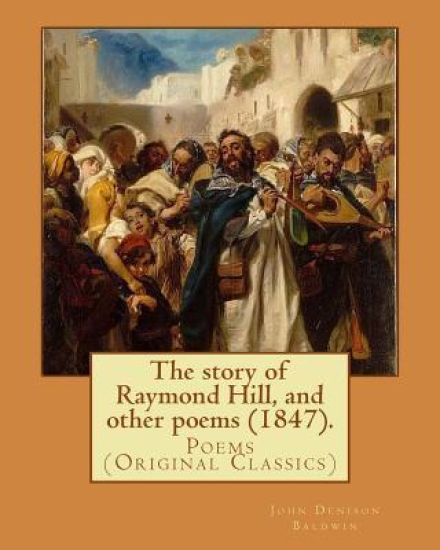
John Denison Baldwin (September 28, 1809 - July 8, 1883) was an American politician, Congregationalist minister, newspaper editor, and popular anthropological writer. He was a member of the Connecticut State House of Representatives and later a member of the U.S. House of Representatives from Massachusetts. Biography: Baldwin briefly studied law, but graduated with a degree in theology from Yale Divinity School in 1834. He became a Congregationalist minister and preached in West Woodstock, North Branford, and North Killingly, all in Connecticut. In 1839 Yale awarded him an honorary Master of Arts degree. He became a member of the Connecticut State House of Representatives in 1847. Baldwin was active in the Free Soil and anti-slavery movements. He edited anti-slavery journals the "Republican" (published in Hartford) and the "Commonwealth" (published in Boston), and from 1859 became the owner and editor of the "Worcester Spy," what George Frisbie Hoar called "one of the most influential papers in New England." From this time onwards Baldwin was resident in Worcester, Massachusetts. He was a delegate to the 1860 Republican National Convention, where Abraham Lincoln was nominated as Republican presidential candidate, and in 1863 he was elected to the U.S. House of Representatives for Massachusetts's 8th congressional district. A "close friend" of both Charles Sumner and Henry Wilson, Senators from Massachusetts, Baldwin served for three terms in the House, promoting full equal rights for black Americans in the wake of the Civil War. In 1869, when George F. Hoar was nominated as the Republican candidate for his seat, Baldwin returned full-time to his journalistic and anthropological work. He edited the Worcester Spy until his death in 1883. In 1867 Baldwin was elected a member of the American Antiquarian Society. Anthropological writings and beliefs: Baldwin conducted correspondence with many notable thinkers of his time, including Ralph Waldo Emerson, Charles Darwin, James Russell Lowell, and particularly his friend Charles Sumner. He accepted Darwin's theory of evolution while maintaining a belief in the divine origin of "first forms." In 1865 he was elected a corporate member of the American Oriental Society. Baldwin's anthropological writing posited the origins of human civilization as arising among an Arabian or Northeast African people, the Cushites, in pre-historic times. In Ancient America, In Notes on American Archaeology he also speculated on the origins of the "Mound Builder" people then believed to have constructed the famous mounds around the Mississippi and Ohio River Valleys, suggesting that they had been an aboriginal people who had migrated northwards from Central America or Mexico. He rejected the then-common notion that they had been a lost European, Semitic, or Asiatic people who had been wiped out by the North American Indians, asserting on the contrary that the Mounds were "wholly original, wholly American" and "did not come from the Old World".He did, however, still subscribe to the idea that these "Mound Builders" were not the same as the American Indian inhabitants of the region at that time, who he believed were a separate race originating in Asia.
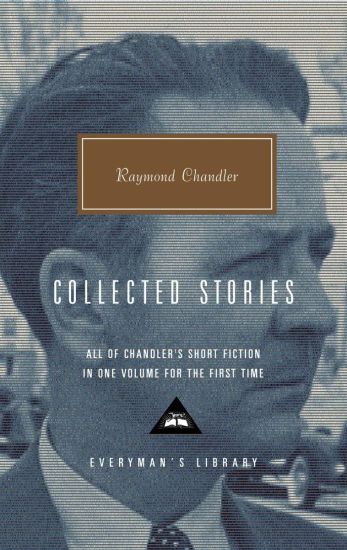
A complete collection of short fiction by the creator of Philip Marlowe includes stories from two prior anthologies--Trouble Is My Business and The Simple Art of Murder--as well as "Blackmailers Don't Shoot," "The Pencil," "English Summer," and more. 35,000 first printing.
Until the mid-1960s, most commentators of the Gospel of John were aware of a polemic against 'the Jews,' yet they did not consider it with reference to contemporary ethical discussion. A shift in focus in Johannine scholarship is noticeable from the mid-1960s and 1970s to the present, where commentators began to connect the Gospel's polemic against 'the Jews' with potential anti-Judaism in the text. As yet, very little work has been done to answer the question of how this change in sensitivity came about. This book is a historiography of one scholar's growing awareness of potential anti-Judaism in the Gospel of John with the intention of using this individual history to explain the larger trend in biblical studies. Sonya Cronin examines the published work of Raymond Brown, a prominent Catholic New Testament scholar, between the years 1960-1998. The book contextualizes Brown's work by evaluating the impact of ecclesiastical statements and the influence of earlier and contemporary Johannine scholarship on Brown's biblical interpretation, and then posits theories as to why change occurs at specific times.
Until the mid-1960s, most commentators of the Gospel of John were aware of a polemic against 'the Jews,' yet they did not consider it with reference to contemporary ethical discussion. A shift in focus in Johannine scholarship is noticeable from the mid-1960s and 1970s to the present, where commentators began to connect the Gospel's polemic against 'the Jews' with potential anti-Judaism in the text. As yet, very little work has been done to answer the question of how this change in sensitivity came about. This book is a historiography of one scholar's growing awareness of potential anti-Judaism in the Gospel of John with the intention of using this individual history to explain the larger trend in biblical studies. Sonya Cronin examines the published work of Raymond Brown, a prominent Catholic New Testament scholar, between the years 1960-1998. The book contextualizes Brown's work by evaluating the impact of ecclesiastical statements and the influence of earlier and contemporary Johannine scholarship on Brown's biblical interpretation, and then posits theories as to why change occurs at specific times.
Studienarbeit aus dem Jahr 2008 im Fachbereich Kunst - Architektur, Baugeschichte, Denkmalpflege, Note: 1,0, Freie Universit t Berlin (Kunsthistorisches Institut), Veranstaltung: Hochh user, 13 Quellen im Literaturverzeichnis, Sprache: Deutsch, Abstract: Die vorliegende Hausarbeit nun m chte sich n her mit dem Tribune Tower befassen, seine Baugeschichte ebenso wie die u ere Gestaltung betrachten. Ersteres wird dem Leser im zweiten Kapitel der Arbeit dargelegt; hierzu sollen Anlass und Umst nde des Internationalen Wettbewerbs der Chicago Tribune ausf hrlicher erl utert werden, galt dieser schlie lich als ausschlaggebend f r die Erbauung des Tribune Towers. Eine Baubeschreibung findet sich im darauf folgenden Kapitel und dient dazu, dem Leser die Architektur des vollendeten Towers vor Augen zu f hren, um sich im vierten Kapitel dem Stil desselben widmen zu k nnen; Fragen nach der Rezeption sollen an dieser Stelle ebenfalls nicht unerw hnt bleiben. Das f nfte Kapitel schlie lich fungiert als Schlusskapitel und fasst in einer Schlussbetrachtung noch einmal die wichtigsten Punkte der Arbeit zusammen.
The 18th century was a wealth of knowledge, exploration and rapidly growing technology and expanding record-keeping made possible by advances in the printing press. In its determination to preserve the century of revolution, Gale initiated a revolution of its own: digitization of epic proportions to preserve these invaluable works in the largest archive of its kind. Now for the first time these high-quality digital copies of original 18th century manuscripts are available in print, making them highly accessible to libraries, undergraduate students, and independent scholars.Western literary study flows out of eighteenth-century works by Alexander Pope, Daniel Defoe, Henry Fielding, Frances Burney, Denis Diderot, Johann Gottfried Herder, Johann Wolfgang von Goethe, and others. Experience the birth of the modern novel, or compare the development of language using dictionaries and grammar discourses. ++++The below data was compiled from various identification fields in the bibliographic record of this title. This data is provided as an additional tool in helping to insure edition identification: ++++British LibraryT135469In: 'Paradise lost, and Paradise regain'd. In two volumes.' London, 1775]. Includes: 'The life of Milton' by Elijah Fenton.London: printed for R. Bladon, T. Lawes, S. Crowder, C. Ware, and T. Payne, 1775. 2v.; 12