Kirjojen hintavertailu. Mukana 12 390 323 kirjaa ja 12 kauppaa.

Kirjahaku

Etsi kirjoja tekijän nimen, kirjan nimen tai ISBN:n perusteella.

1000 tulosta hakusanalla Jonathan R. Eller

Modern Approaches to the Invariant-Subspace Problem

Modern Approaches to the Invariant-Subspace Problem

Isabelle Chalendar; Jonathan R. Partington

Cambridge University Press
2011
sidottu
One of the major unsolved problems in operator theory is the fifty-year-old invariant subspace problem, which asks whether every bounded linear operator on a Hilbert space has a nontrivial closed invariant subspace. This book presents some of the major results in the area, including many that were derived within the past few years and cannot be found in other books. Beginning with a preliminary chapter containing the necessary pure mathematical background, the authors present a variety of powerful techniques, including the use of the operator-valued Poisson kernel, various forms of the functional calculus, Hardy spaces, fixed point theorems, minimal vectors, universal operators and moment sequences. The subject is presented at a level accessible to postgraduate students, as well as established researchers. It will be of particular interest to those who study linear operators and also to those who work in other areas of pure mathematics.

American Economic History: The Development of a National Economy

American Economic History: The Development of a National Economy

Lance Edwin Davis; Jonathan R. T. Hughes; Duncan M. McDougall

Literary Licensing, LLC
2012
sidottu
American Economic History: The Development Of A National Economy by Lance Edwin Davis is a comprehensive study of the economic history of the United States. The book covers the period from the colonial era to the present day, examining the development of the American economy from a small, agricultural society to a global economic superpower.The author explores the major economic events and trends that have shaped the American economy, including the Industrial Revolution, the Great Depression, and the rise of the service sector. He also examines the role of government in regulating the economy, the impact of technological innovation on economic growth, and the changing nature of work and employment.Throughout the book, Davis emphasizes the importance of understanding the historical context of economic events and policies. He argues that economic history provides valuable insights into the challenges and opportunities facing the American economy today.Written in a clear and accessible style, American Economic History is an essential resource for students, scholars, and anyone interested in understanding the economic history of the United States.Edited By Lloyd G. Reynolds. The Irwin Series In Economics.This scarce antiquarian book is a facsimile reprint of the old original and may contain some imperfections such as library marks and notations. Because we believe this work is culturally important, we have made it available as part of our commitment for protecting, preserving, and promoting the world's literature in affordable, high quality, modern editions, that are true to their original work.
Human T Cell Clones

Human T Cell Clones

Marc Feldmann; Jonathan R. Lamb; James N. Woody

Humana Press Inc.
2011
nidottu
Most complex biological systems, such as enzyme pathways, are effec­ tively controlled near the beginning of the process. There is increasing evidence that the same is true for the immune system, with the initial interactions between antigen, antigen-presenting cells, and T cells hav­ ing a paramount influence on the ensuing events. Thus, analysis of the early stages of the immune responses has been a preoccupation of many immunologists. This has been considerably aided by the capac­ ity to expand these early events, and 'immortalize' them as clones of T cells, for detailed analysis. The discovery by Morgan, Ruscetti, and Gallo (Science 193, 1007, 1976) of T-cell growth factor (now termed interleukin-2 or IL-2) has had a major impact in immunology that is far from over. The greater ease of handling murine tissues experimentally, with the availability of more precisely defined reagents such as inbred strains, has meant that, to date, most of the work on long-term T-cell cultures has been per­ formed in the mouse, as summarized by Fathman and Fitch (eds. , Iso­ lation, Characterization and Utilization of T Lymphocyte Clones, Aca­ demic Press, NY, 1982). However, the limitations of working with human tissues are counterbalanced by the great long-term importance of understanding disorders of human immune regulation, especially since it is becoming evident that these are far from rare. Immune deficiencies such as agammaglobulinemia and T-cell deficiencies are not common, but immune hyperresponsiveness occurring in allergy and allergiC diseases (e. g.
Windham's Rembrandt (Full Color): The True Story of the First Prison Art Teacher in Texas

Windham's Rembrandt (Full Color): The True Story of the First Prison Art Teacher in Texas

James L. Humphries; Jonathan R. Humphries

Jonathanhumphries.com
2012
nidottu
UPDATED (LATE 2012) WITH MANY MORE PICTURES When Jim Humphries was called on to teach art behind Texas prison walls in 1972, he was just another struggling artist. He never thought of the impact his art class would have on the the inmates or the mentally disturbed patients housed by the Texas Department of Corrections. Maybe it was because Jim was the first art teacher in Texas to teach the federally incarcerated, a role that soon had him pioneering the first art therapy program behind bars. Or maybe it was the right time in America to try another, more rehabilitative approach to the treatment of convicted felons. The reasons may be numerous, as are the stories he wrote, based on the actual life events that involved Jim, his colleagues, and his students. This book tells their stories, and reveals the effect a little artistic expression had on the lives of the many inmates fortunate enough to have learned from Jim.
Understanding and Teaching Bronfenbrenner's Bioecological Theory

Understanding and Teaching Bronfenbrenner's Bioecological Theory

Jessica L. Navarro; Jonathan R. H. Tudge

TAYLOR FRANCIS LTD
2025
sidottu
Clarifying misinterpretations of Bronfenbrenner's bioecological theory and offering a fresh perspective, this insightful book provides practical guidance for scholars on effectively teaching Bronfenbrenner’s theory at both undergraduate and graduate levels, as well as applying it in research and practice.The book traces the evolution of Bronfenbrenner’s theory of human development, from its original ecological framework of the 1970s to the fully developed bioecological theory and the Process-Person-Context-Time (PPCT) model. Key concepts such as macrosystemic influences are clarified, and innovative adaptations like inverse proximal process and neo-ecological theory are explored, addressing how virtual and digital contexts shape human development.The book offers adaptable strategies for applying Bronfenbrenner’s theory across a range of disciplines, demonstrating its versatility in undergraduate and graduate courses as well as in research. It includes practical teaching tools such as in-class activities, lecture slides and notes, reading primers, case studies, and discussion questions, equipping instructors with everything needed to teach Bronfenbrenner’s theory and its recent adaptations accurately and effectively.This resource is indispensable for instructors, researchers, and students eager to understand and apply the theory, as well as for anyone seeking a deeper understanding of human development in today’s complex, interconnected world.
Understanding and Teaching Bronfenbrenner's Bioecological Theory

Understanding and Teaching Bronfenbrenner's Bioecological Theory

Jessica L. Navarro; Jonathan R. H. Tudge

TAYLOR FRANCIS LTD
2025
nidottu
Clarifying misinterpretations of Bronfenbrenner's bioecological theory and offering a fresh perspective, this insightful book provides practical guidance for scholars on effectively teaching Bronfenbrenner’s theory at both undergraduate and graduate levels, as well as applying it in research and practice. The book traces the evolution of Bronfenbrenner’s theory of human development, from its original ecological framework of the 1970s to the fully developed bioecological theory and the Process-Person-Context-Time (PPCT) model. Key concepts such as macrosystemic influences are clarified, and innovative adaptations like inverse proximal process and neo-ecological theory are explored, addressing how virtual and digital contexts shape human development. The book offers adaptable strategies for applying Bronfenbrenner’s theory across a range of disciplines, demonstrating its versatility in undergraduate and graduate courses as well as in research. It includes practical teaching tools such as in-class activities, lecture slides and notes, reading primers, case studies, and discussion questions, equipping instructors with everything needed to teach Bronfenbrenner’s theory and its recent adaptations accurately and effectively. This resource is indispensable for instructors, researchers, and students eager to understand and apply the theory, as well as for anyone seeking a deeper understanding of human development in today’s complex, interconnected world.
Discrete Calculus

Discrete Calculus

Leo J. Grady; Jonathan R. Polimeni

Springer London Ltd
2014
nidottu
The goal of this book is to present the topic of discrete calculus to scientists and - gineers and to show how the theory can be applied to solving a wide variety of re- world problems. We feel that discrete calculus allows us to unify many approaches to data analysis and content extraction while being accessible enough to be widely applied in many ?elds and disciplines. This project initially began as a tutorial on discrete calculus and its applications, and we hope that this work can provide an introduction to discrete calculus and demonstrate its effectiveness in many problem domains. This book bene?ted enormously from the friends and colleagues who provided software, data, and their time in reading the manuscript. In particular, for software we would like to thank Sebastien Bougleux for help with total variation code for an arbitrary graph and Camille Couprie for powerwatershed code. For use of their data, we wish to thank Jason Bohland, James Fowler, David Gleich, and Robert S- ner. For comments on the manuscript we would like to thank Christopher Alvino, Mukund Balasubramanian, Jason Bohland, Sebastien Bougleux, Gaelle Desbordes, Mathieu Desbrun, Noha El-Zehiry, Gareth Funka-Lea, David Gleich, Oliver Hinds, Anil Hirani, Hiroshi Ishikawa, Robert Kotiuga, Elliot Saltzman, Dheeraj Singaraju, Ganesh Sundaramoorthi and Enzo Tonti. We thank Eric Schwartz for all his help and support over the years. We would like to thank Wayne Wheeler, Simon Rees, and Catherine Brett at Springer for their enthusiasm and for initially proposing this project.
Leading Through

Leading Through

Kim B. Clark; Jonathan R. Clark; Erin E. Clark

Harvard Business Review Press
2024
sidottu
Generative AI and the remote-work revolution show us every day that we're in a new era. The rules and norms have changed—and so must leadership.And yet, coercive bureaucracy, hierarchy, and control—old ways of thinking and working—are still with us, a deep-seated and powerful legacy. We are living through a profound transition from an old, industrial era to a new one that is digital, transparent, and complex.In this important new book by former dean of Harvard Business School Kim Clark, written with his business school professor son, Jonathan, and management consultant daughter, Erin, the dynamic struggle between two competing paradigms of leadership is compellingly illustrated: an old paradigm that involves control and power over people versus a new one that enables and inspires power through people.With rich examples and stories, the authors show how deeply ingrained the legacy model of leadership remains and how destructive it is, causing waste and loss of human potential, stifling innovation, and ultimately resulting in what the authors call "organizational darkness." They go on to articulate a new, positive model, one that consciously seeks to do good and to make things better; that cares for people, helping them to thrive; and that mobilizes people to solve tough problems. These three elements, they argue, are the soul, heart, and mind of leadership, and activating them requires careful attention to both the personal and the organizational dimensions of leadership.The narrative is interwoven with probing analysis and reflection, and the authors speak clearly and frankly about the moral aspects and impact of leadership. They also provide a concrete frame and approach for scaling the new model and creating a vibrant leadership system.Leading Through is a deep and essential account of the evolution of our leadership thinking and practice that is both timely and timeless.
Discrete Calculus

Discrete Calculus

Leo J. Grady; Jonathan R. Polimeni

Springer London Ltd
2010
sidottu
The goal of this book is to present the topic of discrete calculus to scientists and - gineers and to show how the theory can be applied to solving a wide variety of re- world problems. We feel that discrete calculus allows us to unify many approaches to data analysis and content extraction while being accessible enough to be widely applied in many ?elds and disciplines. This project initially began as a tutorial on discrete calculus and its applications, and we hope that this work can provide an introduction to discrete calculus and demonstrate its effectiveness in many problem domains. This book bene?ted enormously from the friends and colleagues who provided software, data, and their time in reading the manuscript. In particular, for software we would like to thank Sebastien Bougleux for help with total variation code for an arbitrary graph and Camille Couprie for powerwatershed code. For use of their data, we wish to thank Jason Bohland, James Fowler, David Gleich, and Robert S- ner. For comments on the manuscript we would like to thank Christopher Alvino, Mukund Balasubramanian, Jason Bohland, Sebastien Bougleux, Gaelle Desbordes, Mathieu Desbrun, Noha El-Zehiry, Gareth Funka-Lea, David Gleich, Oliver Hinds, Anil Hirani, Hiroshi Ishikawa, Robert Kotiuga, Elliot Saltzman, Dheeraj Singaraju, Ganesh Sundaramoorthi and Enzo Tonti. We thank Eric Schwartz for all his help and support over the years. We would like to thank Wayne Wheeler, Simon Rees, and Catherine Brett at Springer for their enthusiasm and for initially proposing this project.
The Rope, The Chair, and the Needle

The Rope, The Chair, and the Needle

James W. Marquart; Sheldon Ekland-Olson; Jonathan R. Sorensen

University of Texas Press
1998
pokkari
In late summer 1923, legal hangings in Texas came to an end, and the electric chair replaced the gallows. Of 520 convicted capital offenders sentenced to die between 1923 and 1972, 361 were actually executed, thus maintaining Texas’ traditional reputation as a staunch supporter of capital punishment.This book is the single most comprehensive examination to date of capital punishment in any one state, drawing on data for legal executions from 1819 to 1990. The authors show persuasively how slavery and the racially biased practice of lynching in Texas led to the institutionalization and public approval of executions skewed according to race, class, and gender, and they also track long-term changes in public opinion up to the present.The stories of the condemned are masterfully interwoven with fact and interpretation to provide compelling reading for scholars of law, criminal justice, race relations, history, and sociology, as well as partisans on both sides of the debate.
Rational Therapeutics for Infants and Children

Rational Therapeutics for Infants and Children

Ronald W. Estabrook; Peter Bouxsein; Sarah Pitluck; Jonathan R. Davis

National Academies Press
2000
nidottu
The Institute of Medicine's (IOM's) Roundtable on Research and Development of Drugs, Biologics, and Medical Devices evolved from the Forum on Drug Development, which was established in 1986. Sponsor representatives and IOM determined the importance of maintaining a neutral setting for discussions regarding long-term and politically sensitive issues justified the need to revise and enhance past efforts. The new Roundtable is intended to be a mechanism by which a broad group of experts from the public* and private sectors can be convened to conduct a dialogue and exchange information related to the development of drugs, biologics, and medical devices. Members have expertise in clinical medicine, pediatrics, clinical pharmacology, health policy, health insurance, industrial management, and product development; and they represent interests that address all facets of public policy issues. From time to time, the Roundtable requests that a workshop be conducted for the purpose of exploring a specific topic in detail and obtaining the views of additional experts. The first workshop for the Roundtable was held on April 14 and 15, 1998, and was entitled Assuring Data Quality and Validity in Clinical Trials for Regulatory Decision Making. The summary on that workshop is available from IOM. This workshop summary covers the second workshop, which was held on May 24 and 25, 1999, and which was aimed at facilitating the development and proper use of drugs, biologics, and medical devices for infants and children. It explores the scientific underpinnings and clinical needs, as well as the regulatory, legal, and ethical issues, raised by this area of research and development.
Rethinking Undergraduate Business Education

Rethinking Undergraduate Business Education

Anne Colby; Thomas Ehrlich; William M. Sullivan; Jonathan R. Dolle; Lee S. Shulman

John Wiley Sons Inc
2011
sidottu
Business is the largest undergraduate major in the United States and still growing. This reality, along with the immense power of the business sector and its significance for national and global well-being, makes quality education critical not only for the students themselves but also for the public good. The Carnegie Foundation for the Advancement of Teaching's national study of undergraduate business education found that most undergraduate programs are too narrow, failing to challenge students to question assumptions, think creatively, or understand the place of business in larger institutional contexts. Rethinking Undergraduate Business Education examines these limitations and describes the efforts of a diverse set of institutions to address them by integrating the best elements of liberal arts learning with business curriculum to help students develop wise, ethically grounded professional judgment.
Science in the Nineteenth-Century Periodical

Science in the Nineteenth-Century Periodical

Geoffrey Cantor; Gowan Dawson; Graeme Gooday; Richard Noakes; Sally Shuttleworth; Jonathan R. Topham

Cambridge University Press
2007
pokkari
For the Victorian reading public, periodicals played a far greater role than books in shaping their understanding of new discoveries and theories in science, technology and medicine. Such understandings were formed not merely by serious scientific articles, but also by glancing asides in political reports, fictional representations, or humorous attacks in comic magazines. Ranging across diverse forms of periodicals, from top-selling religious and juvenile magazines through to popular fiction-based periodicals, and from the campaigning 'new journalism' of the late century to the comic satire of Punch, this book explores the ways in which scientific ideas and developments were presented to a variety of Victorian audiences. In addition, it offers three case studies of the representation of particular areas of science: 'baby science', scientific biography, and electricity. This intriguing collaborative volume sheds light on issues relating to history and history of science, literature, book history, and cultural and media studies.
Science in the Nineteenth-Century Periodical

Science in the Nineteenth-Century Periodical

Geoffrey Cantor; Gowan Dawson; Graeme Gooday; Richard Noakes; Sally Shuttleworth; Jonathan R. Topham

Cambridge University Press
2004
sidottu
For the Victorian reading public, periodicals played a far greater role than books in shaping their understanding of new discoveries and theories in science, technology and medicine. Such understandings were formed not merely by serious scientific articles, but also by glancing asides in political reports, fictional representations, or humorous attacks in comic magazines. Ranging across diverse forms of periodicals, from top-selling religious and juvenile magazines through to popular fiction-based periodicals, and from the campaigning 'new journalism' of the late century to the comic satire of Punch, this book explores the ways in which scientific ideas and developments were presented to a variety of Victorian audiences. In addition, it offers three case studies of the representation of particular areas of science: 'baby science', scientific biography, and electricity. This intriguing collaborative volume sheds light on issues relating to history and history of science, literature, book history, and cultural and media studies.
Culture and Science in the Nineteenth-Century Media

Culture and Science in the Nineteenth-Century Media

Louise Henson; Geoffrey Cantor; Gowan Dawson; Richard Noakes; Sally Shuttleworth; Jonathan R. Topham

Ashgate Publishing Limited
2004
sidottu
Written by literary scholars, historians of science, and cultural historians, the twenty-two original essays in this collection explore the intriguing and multifaceted interrelationships between science and culture through the periodical press in nineteenth-century Britain. Ranging across the spectrum of periodical titles, the six sections comprise: 'Women, Children, and Gender', 'Religious Audiences', 'Naturalizing the Supernatural', 'Contesting New Technologies', 'Professionalization and Journalism', and 'Evolution, Psychology, and Culture'. The essays offer some of the first 'samplings and soundings' from the emergent and richly interdisciplinary field of scholarship on the relations between science and the nineteenth-century media.
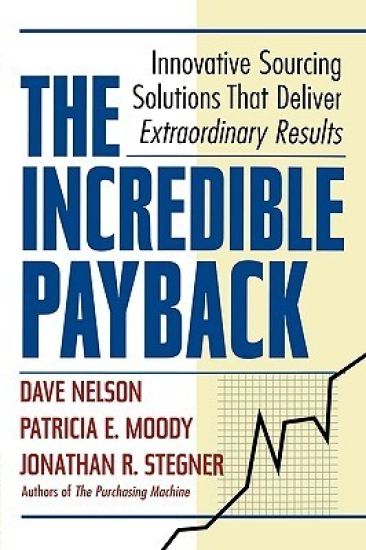
The Incredible Payback

The Incredible Payback

Dave NELSON; Patricia E. MOODY; Jonathan R. STEGNER

Amacom
2004
nidottu
"The authors of the widely acclaimed "The Purchasing Machine" deliver an eye-opening look at the power of supply management with " The Incredible Payback." This timely book presents amazing success stories from best-of-the-best procurement organizations like Honda, Delphi, John Deere, and others. Using the same cost-management strategies implemented at these leading organizations, "The Incredible Payback"shows how any company can reap benefits including: * saving up to 30 percent on material and service expenses * leveraging technology to accelerate savings * high-yield supplier development programs * extension of financial opportunities throughout the highest levels of the enterprise, exponentially increasing savings potential Great companies save money every day. Now every organization can realize " The Incredible Payback""
Culture and Science in the Nineteenth-Century Media

Culture and Science in the Nineteenth-Century Media

Louise Henson; Geoffrey Cantor; Gowan Dawson; Richard Noakes; Sally Shuttleworth; Jonathan R. Topham

Routledge
2016
nidottu
Written by literary scholars, historians of science, and cultural historians, the twenty-two original essays in this collection explore the intriguing and multifaceted interrelationships between science and culture through the periodical press in nineteenth-century Britain. Ranging across the spectrum of periodical titles, the six sections comprise: 'Women, Children, and Gender', 'Religious Audiences', 'Naturalizing the Supernatural', 'Contesting New Technologies', 'Professionalization and Journalism', and 'Evolution, Psychology, and Culture'. The essays offer some of the first 'samplings and soundings' from the emergent and richly interdisciplinary field of scholarship on the relations between science and the nineteenth-century media.
The Mathematics Behind Biological Invasions

The Mathematics Behind Biological Invasions

Mark A. Lewis; Sergei V. Petrovskii; Jonathan R. Potts

Springer International Publishing AG
2016
sidottu
This book investigates the mathematical analysis of biological invasions. Unlike purely qualitative treatments of ecology, it draws on mathematical theory and methods, equipping the reader with sharp tools and rigorous methodology. Subjects include invasion dynamics, species interactions, population spread, long-distance dispersal, stochastic effects, risk analysis, and optimal responses to invaders. While based on the theory of dynamical systems, including partial differential equations and integrodifference equations, the book also draws on information theory, machine learning, Monte Carlo methods, optimal control, statistics, and stochastic processes. Applications to real biological invasions are included throughout. Ultimately, the book imparts a powerful principle: that by bringing ecology and mathematics together, researchers can uncover new understanding of, and effective response strategies to, biological invasions. It is suitable for graduate students and established researchers in mathematical ecology.