
Kirjahaku
Etsi kirjoja tekijän nimen, kirjan nimen tai ISBN:n perusteella.
1000 tulosta hakusanalla Jonathan Swift

Building upon recent research on the history of women, Jonathan Swift in the Company of Women examines Swift, both as man and writer, in terms of women: women as intimates, acquaintances, subjects of satire, and those who have written about Swift. It considers women as mothers and nurses in Swift's personal life and his fictions, and it explores the issue that has persisted from the eighteenth century into our own time: the subject of misogyny in Swift's writings.

Jonathan Swift and Thomas Sheridan: The Intelligencer
Clarendon Press
1992
sidottu
In 1728-9, Jonathan Swift and his friend Thomas Sheridan anonymously published the Intelligencer. This Dublin periodical offered trenchant and often witty commentary on the Irish social and political scene in the year before A Modest Proposal. The frequently anthologized review of The Beggar's Opera (no. 3) is not only the best contemporary criticism of it but also Swift's central pronouncement on satire. Several essays lash important enemies, anger being always a great creative stimulus to both Swift and Sheridan. This is the first collected edition of the Intelligencer since 1730. It is based on the rare original Dublin pamphlets, each known copy of which has been collated. Full commentary and appendices draw upon contemporary pamphlets, broadsides, newspapers, and manuscripts to site the Intelligencer papers in the personal, social, and political controversies in which they are engaged. There is also a fresh bibliographical analysis of the Intelligencer's textual transmission.

Ann Kelly's provocative book breaks the mold of Swift studies. Twentieth century Swift scholars have tended to assess Jonathan Swift as a pillar of the eighteenth-century 'republic of letter', a conservative, even reactionary voice upholding classical values against the welling tide of popularization in literature. Kelly looks at Swift instead as a practical exponent of the popular and impressario of the literary image. She argues that Swift turned his back on the elite to write for a popular audience, and that he annexed scandals to his fictionalized print alter ego, creating a continual demand for works by or about this self-mythologized figure. A fascinating look at print culture, the commodification of the author, and the history of popular culture, this book should provoke lots of discussion.
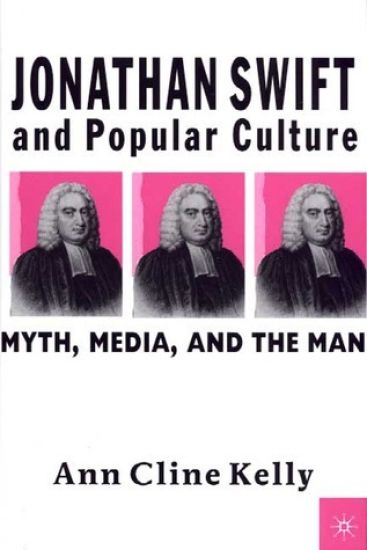
Ann Kelly's provocative book breaks the mold of Swift studies. Twentieth century Swift scholars have tended to assess Jonathan Swift as a pillar of the eighteenth-century 'republic of letter', a conservative, even reactionary voice upholding classical values against the welling tide of popularization in literature. Kelly looks at Swift instead as a practical exponent of the popular and impressario of the literary image. She argues that Swift turned his back on the elite to write for a popular audience, and that he annexed scandals to his fictionalized print alter ego, creating a continual demand for works by or about this self-mythologized figure. A fascinating look at print culture, the commodification of the author, and the history of popular culture, this book should provoke lots of discussion.
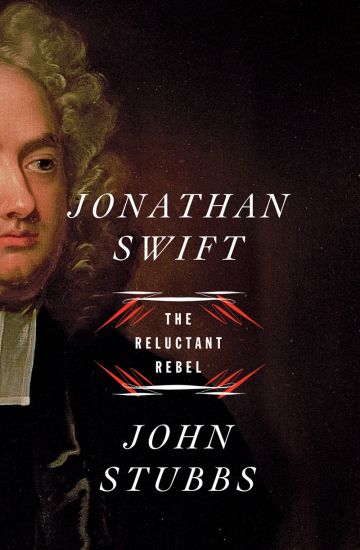
One of Europe's most important literary figures, Jonathan Swift was also an inspired humorist, a beloved companion, and a conscientious Anglican minister--as well as a hoaxer and a teller of tales. His anger against abuses of power would produce the most famous satires of the English language: Gulliver's Travels as well as the Drapier Papers and the unparalleled Modest Proposal, in which he imagined the poor of Ireland farming their infants for the tables of wealthy colonists.John Stubbs's biography captures the dirt and beauty of a world that Swift both scorned and sought to amend. It follows Swift through his many battles, for and against authority, and in his many contradictions, as a priest who sought to uphold the dogma of his church; as a man who was quite prepared to defy convention, not least in his unshakable attachment to an unmarried woman, his "Stella"; and as a writer whose vision showed that no single creed holds all the answers.Impeccably researched and beautifully told, in Jonathan Swift Stubbs has found the perfect subject for this masterfully told biography of a reluctant rebel--a voice of withering disenchantment unrivaled in English.
Jonathan Swift's Gulliver's Travels
Routledge
2006
sidottu
An extremely complex, yet widely studied text, Jonathan Swift’s Gulliver’s Travels ranks as one of the most scathing satires of British and European society ever published. Students will therefore welcome the publication of Roger Lund’s sourcebook, which provides a clear way through the wealth of contextual and critical material that surounds the text. This indispensable guide presents: extensive introductory comment on the contexts and many interpretations of the text, from publication to present annotated extracts from key contextual documents, reviews, critical works and the text itself cross-references between documents and sections of the guide, in order to suggest links between texts, contexts and criticism suggestions for further reading.Part of the Routledge Gudies to Literature series, this volume is essential reading for all those beginning detailed study of Swift’s controversial novel.
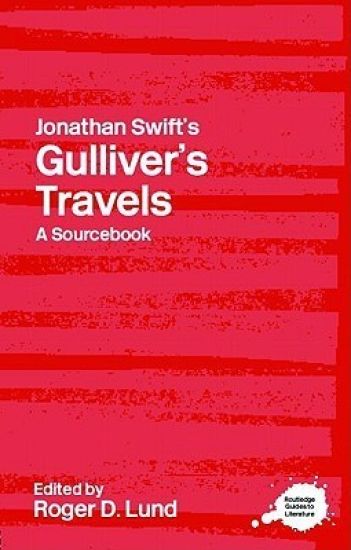
Jonathan Swift's Gulliver's Travels
Routledge
2006
nidottu
An extremely complex, yet widely studied text, Jonathan Swift’s Gulliver’s Travels ranks as one of the most scathing satires of British and European society ever published. Students will therefore welcome the publication of Roger Lund’s sourcebook, which provides a clear way through the wealth of contextual and critical material that surounds the text. This indispensable guide presents: extensive introductory comment on the contexts and many interpretations of the text, from publication to present annotated extracts from key contextual documents, reviews, critical works and the text itself cross-references between documents and sections of the guide, in order to suggest links between texts, contexts and criticism suggestions for further reading.Part of the Routledge Gudies to Literature series, this volume is essential reading for all those beginning detailed study of Swift’s controversial novel.

In this concise critical survey, Professor Donoghue looks at Swift's whole output, and expresses a fresh sense of his literary character. In particular, he questions the widespread view that Swift is to be understood in terms of irony, persona or mask. He points out, for instance, that Swift's irony is not continuous, and that his sense of form is not ours. We should not see him as producing elaborate artistic structures, but as meeting particular needs which forced themselves upon him. We need also to identify the 'gestures' through which Swift revealed his characteristic mental attitudes, and behind them to sense his general life-stance; to understand his devices - such as the choice and change of perspective; his deeper pre-occupations - such as the relationship between the body, the mind and the soul; his attitude to and use of language; his conception of the nature of humanity; the characteristics of his verse.

The study of Jonathan Swift's works has most often focused on print publication, with less scholarly attention devoted to manuscript circulation. Based on extensive research into the manuscript versions of Swift's poetry, Stephen Karian's analysis suggests new ways of interpreting the different choices Swift made to circulate his texts in either print or manuscript form. He explains Swift's relationships with his publishers in England and Ireland; the ways in which his writings circulated in hand-written form; and the effect that political censorship had on the manner in which his most outspoken political poems were published. Working at the intersection of book history, bibliography, and textual and literary criticism, this book will open up new areas of study for Swift scholars, as well as developing an important methodology for the study of the distribution and reception of literary texts in the eighteenth century.
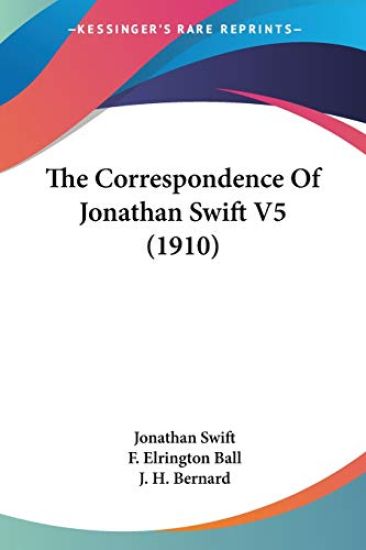
The Correspondence Of Jonathan Swift
Jonathan Swift; F. Elrington (EDT) Ball; J. H. (INT) Bernard
Kessinger Pub
2007
pokkari

Jonathan Swift and the Vested Word
Wyrick Deborah Baker
The University of North Carolina Press
2012
nidottu
In Jonathan Swift and the Vested Word, Deborah Wyrick argues that modern Continental and American literary theory is ""tantalizingly applicable to Swiftian texts."" Its applicability, she writes, ""stems from Swift's interest in and exploration of what are now though of as phenomenological, structuralist, poststructuralist, and new historicist concerns: how a life in language comes into being, how semiotic systems determine meaning, how texts open up their own systems to other texts and to multiple interpretations.""Wyrick investigates Swift's confrontations with three theories of language current in his day, theories that locate meaning in the thing named, in the idea behind the word, or in the response of the audience. She concludes that Swift fashioned a fourth theory of meaning, one that locates meaning in and among words themselves. Because of his fear of the anarchic potential of language, Swift attempted to invest his words with extratextual authority; yet a powerful counterforce was his desire to exploit the possibilities of language divested of stable significance. These divestitures, particularly the word-play and language games, ultimately served serious personal and social purposes.A crucial personal purpose was Swift's ability to create a textual self, which he did, Wyrick maintains, by constructing defensive transvestitures centered on clothes and money. These parallel sign systems produced Swift's greatest achievement in using the resources of language and history to effect political action. By using the entire Swift canon -- poems and prose narratives, letters and essays, sermons and satires -- Wyrick presents Swift's struggle with the inadequacies of language and its inability to answer the tremendous demands he made upon it.A UNC Press Enduring Edition -- UNC Press Enduring Editions use the latest in digital technology to make available again books from our distinguished backlist that were previously out of print. These editions are published unaltered from the original, and are presented in affordable paperback formats, bringing readers both historical and cultural value.
Jonathan Swift, a List of Critical Studies Published From 1895 to 1945
Louis a. 1901- Landa
Hassell Street Press
2021
sidottu