Kirjahaku
Etsi kirjoja tekijän nimen, kirjan nimen tai ISBN:n perusteella.
601 tulosta hakusanalla Kali Muscle
"Goddess Kali God Thoughts Sri Sri Ramakrishna and A Few Slices of Sri Sri Ramakrishna's Soul (Introducing 'SoulOlogy') "
Siddhartha Ganguli
Allied Publishers Pvt Ltd
2024
pokkari

The Kali Yuga, Kali and Kalki -Conscious Internet and Cyborgs
Ravikumar Kurup
Lap Lambert Academic Publishing
2025
nidottu

Translating Kali's Feast is an interdisciplinary study of the Goddess Kali bringing together ethnography and literature within the theoretical framework of translation studies. The idea for the book grew out of the experience and fieldwork of the authors, who lived with Indo-Caribbean devotees of the Hindu Goddess in Guyana. Using a variety of discursive forms including oral history and testimony, field notes, songs, stories, poems, literary essays, photographic illustrations, and personal and theoretical reflections, it explores the cultural, aesthetic and spiritual aspects of the Goddess in a diasporic and cross-cultural context. With reference to critical and cultural theorists including Walter Benjamin and Julia Kristeva, the possibilities offered by Kali (and other manifestations of the Goddess) as the site of translation are discussed in the works of such writers as Wilson Harris, V.S. Naipaul and R.K. Narayan. The book articulates perspectives on the experience of living through displacement and change while probing the processes of translation involved in literature and ethnography and postulating links between ‘rite' and ‘write,' Hindu ‘leela' and creole ‘play.' The author wrote the description of the Big Puja (namely chapter 9, 10, 11, and 13) and the Guyana Kali Puja Lexicon (chapter 17) in collaboration with Guyanese scholar Karna Singh.
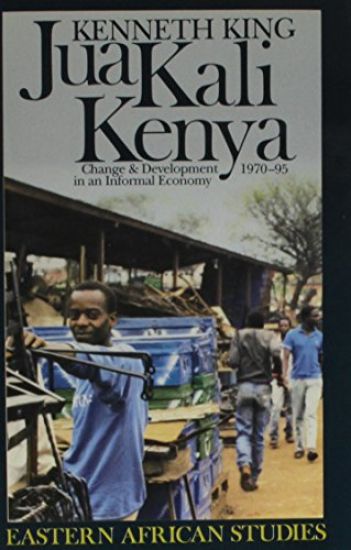
Kenya was where the term "informal sector" was first used in 1971. During the 1980s the term "jua kali"—in Swahili "hot sun"—came to be used of the informal sector artisans, such as carworkers and metalworkers, who were working under the hot sun because of a lack of premises. Gradually it came to refer to anybody in self-employment. And in 1988 the government set up the Jua Kali Development Programme. In this remarkable book Kenneth King brings the subject alive through the photographs and life histories of jua kali people. He has also revisited, twenty years later, many of the artisans whom he interviewed exhaustively in the period from 1972 to 1974 and about whom he wrote in The African Artisan, one of the first full-length studies to be published on the informal sector. For donors, NGOs, and national governments, the book offers many relevant examples, and some cautions, about what has been achieved by ordinary Kenyans, mostly without government support. It will prove equally valuable for students and teachers of development policy, technology policy, and education and training policies not least because of its superb bibliography of over 700 entries related to small enterprise development.

Le kali-yuga ou l'ambivalence de l'âge sombre
Dominique Wohlschlag
Editions L'Harmattan
2025
nidottu
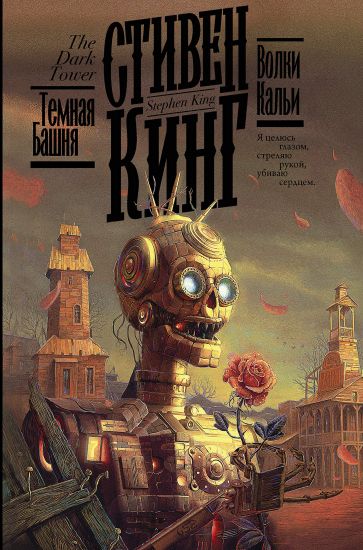
Stranstvie Rolanda Diskejna i ego druzej prodolzhaetsja...I teper na puti ikh lezhit malenkij gorodok Kalja Brin Sterdzhis, zhiteli kotorogo raz v pokolenie platjat strashnuju dan poslannikam Tmy - Volkam Kali!

Vallam Kali
VDM Publishing House
2010
nidottu
Observera att förlaget som ger ut denna produkt baserar innehållet i sina produkter på fria källor som Wikipedia. Boken är med stor sannolikhet endast ett utdrag ur dessa informationskällor, alltså inte en vanlig bok i den bemärkelsen.
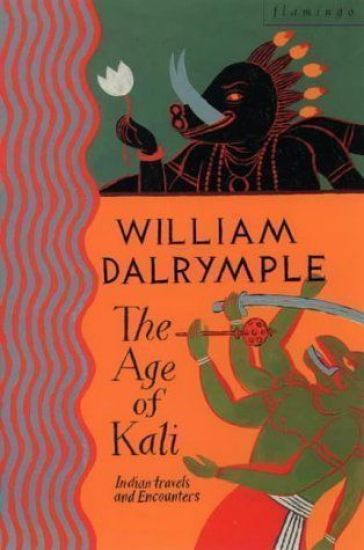
William Dalrymple, who wrote so magically about India in â??City of Djinnsâ??, returns to the country in a series of remarkable essays.
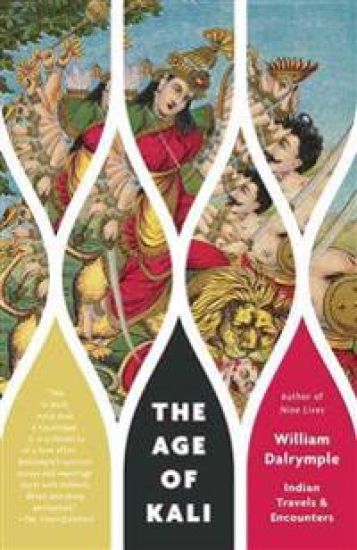
From the author of The Last Mughal and Nine Lives the classic stories he gathered during the ten years he spent journeying across the Indian subcontinent, from Sri Lanka and southern India to the North West Frontier of Pakistan. As he searched for evidence of Kali Yug, the "age of darkness" predicted by an ancient Hindu cosmology in a final epoch of strife and corruption, Dalrymple encountered a region that thrilled and surprised him. Venturing to places rarely visited by foreigners, he presents compelling portraits of a diverse range of figures--from a Hindi rap megastar through the Tamil Tigers to the drug lords of Pakistan. Dalrymple's love for the subcontinent comes across in every page, which makes its chronicles of political corruption, ethnic violence and social disintegration all the more poignant. The result is a dark yet vibrant travelogue, and a unique look at a region that continues to be marked by rapid change and unlimited possibilities as it struggles to reconcile the forces of modernity and tradition.
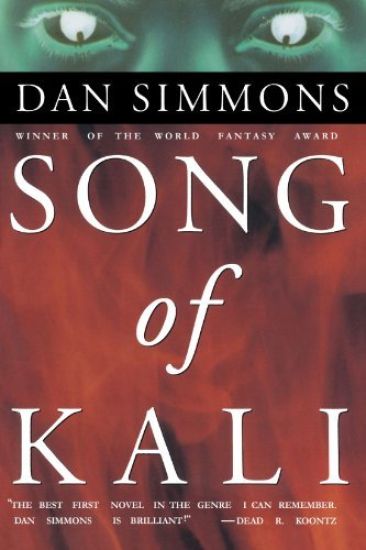
Dan Simmon's Song of Kali is a bone-chilling novel that fans of horror fiction won't want to missThink you know true fear? You don't. Think you've read the most chilling book? Not even close. Think you can't be shocked? Good luck Maybe you're ready for the most truly frightening reading experience of your life, the World Fantasy Award-winning novel that's been terrifying readers for over thirty years.

As news spread that more women died from breast and cervical cancer in India than anywhere else in the world in the early twenty-first century, global public health planners accelerated efforts to prevent, screen, and treat these reproductive cancers in low-income Indian communities. Cancer and the Kali Yuga reveals that women who are the targets of these interventions in Tamil Nadu, South India, hold views about cancer causality, late diagnosis, and challenges to accessing treatment that differ from the public health discourse. Cecilia Coale Van Hollen's critical feminist ethnography centers and amplifies the voices of Dalit Tamil women who situate cancer within the nexus of their class, caste, and gender positions. Dalit women's narratives about their experiences with cancer present a powerful and poignant critique of the sociocultural and political-economic conditions that marginalize them and jeopardize their health and well-being in twenty-first-century India.
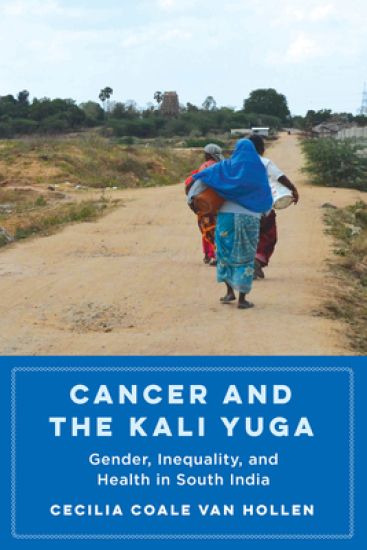
As news spread that more women died from breast and cervical cancer in India than anywhere else in the world in the early twenty-first century, global public health planners accelerated efforts to prevent, screen, and treat these reproductive cancers in low-income Indian communities. Cancer and the Kali Yuga reveals that women who are the targets of these interventions in Tamil Nadu, South India, hold views about cancer causality, late diagnosis, and challenges to accessing treatment that differ from the public health discourse. Cecilia Coale Van Hollen's critical feminist ethnography centers and amplifies the voices of Dalit Tamil women who situate cancer within the nexus of their class, caste, and gender positions. Dalit women's narratives about their experiences with cancer present a powerful and poignant critique of the sociocultural and political-economic conditions that marginalize them and jeopardize their health and well-being in twenty-first-century India.

A Terror Eight title: dark reads for hot summer nights!

When Wally looks for the path to love, he finds a naked yogini, a smiling guru, and a ruthless goddess lighting the way. Wally can't figure out how to transcend his life-long string of not quite right relationships. His latest mismatch introduces him to yoga, and while she's soon gone, Wally is hooked and books a vacation at an ashram. There Molly, naked and 20 years old, befriends him, then confounds his fatherly inclination toward her with a profession of love. But it's Molly's mom, Jane who ends up taking Wally to the altar. Life is bliss for Jane and Wally; for Jane's teenage son Dink; and even for Molly, who is surprised by her attraction to a girl. Havoc ensues when Dink's girlfriend leaves him, and he falls under the torturous spell of unrequited desire, a torment reflected in an intertwined tale in the language of his job at the comic book store. Walt finds the challenge around this new kind of relationship -- that with a son -- the darkest he's ever faced, and the whole family is pulled in. Enter Kali, goddess of transformation. A joyful guru gets Dink to yoga class, and a tantric yogini-- or is she a goddess?-- takes the entire family on an unexpected journey.