
Kirjahaku
Etsi kirjoja tekijän nimen, kirjan nimen tai ISBN:n perusteella.
1000 tulosta hakusanalla Kenneth C Springirth; David L Weber
The stories in this volume present some life-changing episodes from the lives of characters associated with the fictional town of Menninger, North Dakota, first created in the novel The Song Is Ended.

Leading Picasso: The Art and Science of Managing IT, Part 3
Kenneth C. Abernethy Phd; Suzzanne B. Summers Phd; Stephen K. Wiggins Cio
Createspace Independent Publishing Platform
2016
nidottu
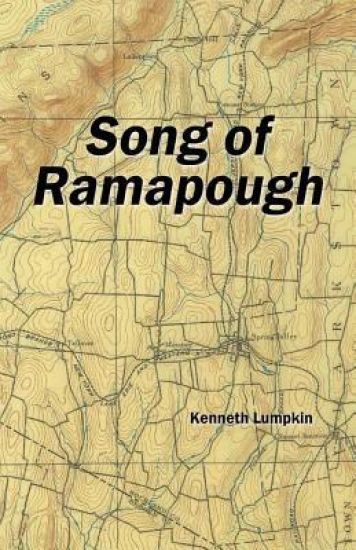
Song of Ramapough: A Poetics of Place
Kenneth C. Lumpkin
Createspace Independent Publishing Platform
2016
nidottu
BUY THE BOOK THAT INSPIRED A COLLEGE COURSE, NOW IN ITS 4th EDITION, WITH 4 NEW POEMS ADDED. Song of Ramapough is a poetic celebration of land and life. This collection of poems, centered around a particular place, the Ramapo Mountains of New York and New Jersey, is inspired, in part, by the local geology, biology and human history. With such precedents as Charles Olson's "Maximus Poems" and William Carlos Williams' "Paterson", the poet seeks a deeper connection with the greater Earth processes for both himself and the reader.

A great gift for the one you love, especially if they enjoy light verse poems of love, romance and passion. "Love Lake" is the right book of poems for you or someone very special Written while living on Greenwood Lake, New York, while awaiting emigration to Canada. These .are poems of love, passion and place. Also wrote and published "Song of Ramapough", a Poetics of Place, also available on Amazon.
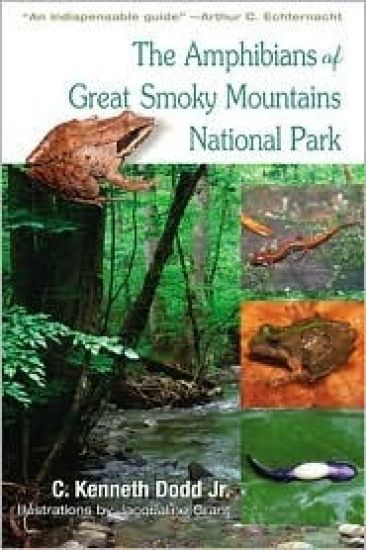
“Most guides to animals in parks are intended primarily as identification aids and include relatively little on the biology of the species. Dodd’s book is much more, with detailed information on all aspects of the natural history of these species. Biologists, students, and visitors to Great Smoky Mountains National Park will find this an indispensable guide.”—Arthur C. EchternachtProfessor of Ecology and Evolutionary BiologyUniversity of TennesseeThe Amphibians of Great Smoky Mountains National Park is the first book devoted entirely to the natural history of the forty-four species of amphibians known to occur presently or historically in the Great Smoky Mountains of North Carolina and Tennessee, in the most-visited national park in the United States. Features• The only comprehensive book on the natural history of the amphibians of Great Smoky Mountains National Park• Beautiful original illustrations of salamander and frog larvae taken from specimens within the park• History of research and management effects on amphibians within the park• Extensive new information on the natural history of amphibians, based on four years of intensive field research• Simplified identification table guide to amphibian larvae• Summary of information on distribution (with range maps) and biogeography• Comprehensive bibliography of the literature on amphibians within the park• Summary of new data on the conservation of southern Appalachian amphibians, particularly with regard to land use, the effects of UV light, and diseaseC. Kenneth Dodd is a research zoologist with the U.S. Geological Survey at the Florida Integrated Science Center and is president of The Herpetologists’ League. He is the author of North American Box Turtles: A Natural History and numerous articles in Journal of Herpetology, Biological Conservation, Herpetologica, and other publications. He lives in Gainesville, Florida.
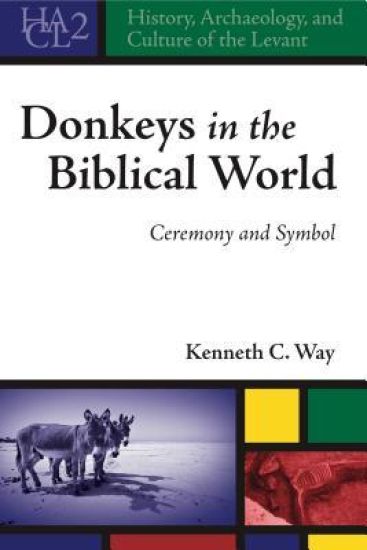
In this volume, Kenneth Way explores the role of donkeys in the symbolism and ceremonies of the biblical world. His study stands alone in providing a comprehensive examination of donkeys in ancient Near Eastern texts, the archaeological record, and the Hebrew Bible. Way demonstrates that donkeys held a distinct status in the beliefs and rituals of the ancient Near East and especially Canaan-Israel.The focus on ceremony and symbol encompasses social and religious thoughts and practices that are reflected in ancient texts and material culture relating to the donkey. Ceremonial considerations include matters of sacrifice, treaty ratification, consumption, death, burial, “scapegoat” rituals, and foundation deposits; symbolic considerations include matters of characterization, association, function, behavior, and iconographic depiction. However, the distinction between ceremony and symbol is not strict. In many cases, these two categories are symbiotic. The need for this study on donkeys is very apparent in the disciplines that study the biblical world. There is not a single monograph or article that treats this subject comprehensively. Philologists have discussed the meaning of the Amorite phrase “to kill a jackass,” and archaeologists have discussed the phenomenon of equid burials. But until now, neither philologists nor archaeologists have attempted to pull together all the ceremonial and symbolic data on donkeys from burials, ancient Near Eastern texts, and the Hebrew Bible. Way’s study fills this void.

Managing Water Main Breaks Field Guide
Kenneth C. Morgan
American Water Works Association,US
2012
nidottu
Although every water utility knows how to repair water main breaks, some utilities are better at managing main breaks to minimize both disruptions to the public and lost consumer confidence in the utility. How can a water utility “manage” something as unknowable as when and where water main breaks will happen? Can the negative impacts of main breaks be mitigated? Preparation is vitalManaging Water Main Breaks Field Guide will help water utilities to better prepare for pipeline breaks. Utilities should be proactive, rather than reactive. Becoming proactive will reduce the number of main breaks, as well as the negative impacts to the community. This concise book will help you prepare by telling you • kinds of breaks and their causes• where main breaks are most likely to occur• how to respond quickly or in a timely manner• how to identify and locate leaks and breaks• how to maintain safety at repair sites• how to mitigate impacts on the utility, on customers, and on other utilities• how to make repairs efficiently and expertly• when to replace a pipe rather than repair it• how to notify all those affected and keep them informed during repairs• how to record main-break informationMoreManaging Water Main Breaks Field Guide includes excerpts from related AWWA books, manuals of practice, and periodicals. These provide additional useful information about corrosion, water pressure, leak detection, repair costs, and other related topics. Numerous photos illustrate types, causes, and impacts of main breaks. Each chapter concludes with a “Questions to Consider,” section – a series of questions to help the reader to evaluate specific processes, issues, or programs. These questions will help utilities provide best-in-class service.


My inspiration for writing this book are the men and women whose lives 'happen" within the pages. They are extraordinary people. All have appeared on the Death Or Prison podcast and have given their remarkable, inspiring testimonies of restoration before the camera. Good portions of their lives have been lived behind bars for crimes they committed in an earlier life. Some of the crimes were heinous. Murder, drugs, armed robberies and desperation were once what their lives were driven by and revolved around. Their stories are in many cases overwhelmingly sad until they get to the point in which they detail how their thinking changed, and redemption happened the moment they invited Jesus Christ into their lives. Surprisingly, many during the interviews confessed that they are grateful for being locked up because as they saw it, incarceration was the only way they would have found salvation. These stories have been taken directly from interviews before a camera and transcribed into this book The stories to be theirs, not mine, all to the glory of God.
The modern manifestation of mummy studies began to take shape in the 1970s and has experienced significant growth during the last several decades, largely due to biomedical interest in soft tissue pathology. Although this points to a vibrant field, there are indications that we need to take stock of where it is today and how it may develop in the future, and this volume responds to those demands. In many ways, mummy studies and skeletal bioarchaeology are "sister-disciplines," sharing data sources, methodologies, and practitioners. Given these close connections, this book considers whether paradigmatic shifts that influenced the development of the latter also impacted the former. Whilst there are many available books discussing mummy research, most recent field-wide reviews adopt a biomedical perspective to explore a particular mummy or collection of mummies. The Bioarchaeology of Mummies is a unique attempt at a synthetic, state-of-the-field critical analysis which considers the field from an explicitly anthropological perspective.This book is written for both skeletal bioarcheologists that may not be familiar with the scope of mummy research, and mummy researchers from biomedical fields that may not be as acquainted with current research trends within bioarchaeology.
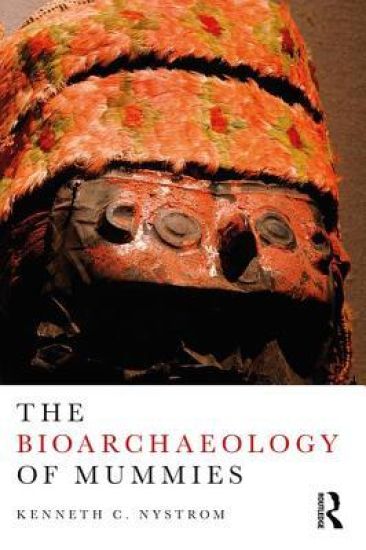
The modern manifestation of mummy studies began to take shape in the 1970s and has experienced significant growth during the last several decades, largely due to biomedical interest in soft tissue pathology. Although this points to a vibrant field, there are indications that we need to take stock of where it is today and how it may develop in the future, and this volume responds to those demands. In many ways, mummy studies and skeletal bioarchaeology are "sister-disciplines," sharing data sources, methodologies, and practitioners. Given these close connections, this book considers whether paradigmatic shifts that influenced the development of the latter also impacted the former. Whilst there are many available books discussing mummy research, most recent field-wide reviews adopt a biomedical perspective to explore a particular mummy or collection of mummies. The Bioarchaeology of Mummies is a unique attempt at a synthetic, state-of-the-field critical analysis which considers the field from an explicitly anthropological perspective.This book is written for both skeletal bioarcheologists that may not be familiar with the scope of mummy research, and mummy researchers from biomedical fields that may not be as acquainted with current research trends within bioarchaeology.

By working with this book, within a year, you will cover the whole Bible and discover three vital truths. The Book of Proverbs tells of these three progressive steps toward wisdom. Three questions are the probing essentials. What does it say? (you gain knowledge). What does it mean? (you gain understanding). How does it apply? (you gain wisdom). Kenneth C. Rowley, a credential minister for over fifty years, he earned a B.A. degree from the Humboldt State University and a master's degree from Southern Oregon College. He also earned California elementary and secondary teaching credentials plus an Administrator's credential. Beside academic experiences, he spent two years at Bethany Bible College with in-depth study in the Scriptures. He pastored various churches, been an evangelist and founded a college ministry. His life has been graced by his marriage to Reverend Flynn, his daughter Deborah Broadway (her husband: Jeremy; granddaughters: Erika and Peyton) and his son, Philip Jason.
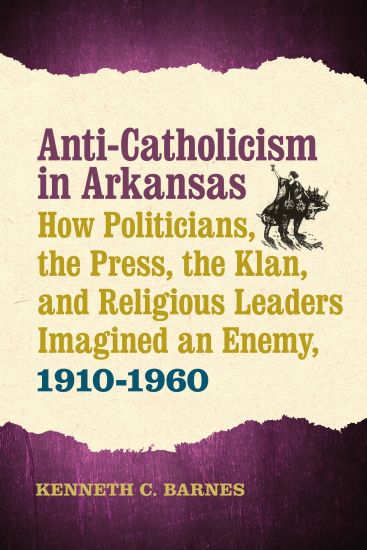
The masthead of the Liberator, an anti-Catholic newspaper published in Magnolia, Arkansas, displayed from 1912 to 1915 an image of the Whore of Babylon. She was an immoral woman sitting on a seven-headed beast, holding a golden cup “full of her abominations,” and intended to represent the Catholic Church.Propaganda of this type was common during a nationwide surge in antipathy to Catholicism in the early twentieth century. This hostility was especially intense in largely Protestant Arkansas, where for example a 1915 law required the inspection of convents to ensure that priests could not keep nuns as sexual slaves.Later in the decade, anti-Catholic prejudice attached itself to the campaign against liquor, and when the United States went to war in 1917, suspicion arose against German speakers—most of whom, in Arkansas, were Roman Catholics.In the 1920s the Ku Klux Klan portrayed Catholics as “inauthentic” Americans and claimed that the Roman church was trying to take over the country’s public schools, institutions, and the government itself. In 1928 a Methodist senator from Arkansas, Joe T. Robinson, was chosen as the running mate to balance the ticket in the presidential campaign of Al Smith, a Catholic, which brought further attention.Although public expressions of anti-Catholicism eventually lessened, prejudice was once again visible with the 1960 presidential campaign, won by John F. Kennedy.Anti-Catholicism in Arkansas illustrates how the dominant Protestant majority portrayed Catholics as a feared or despised “other,” a phenomenon that was particularly strong in Arkansas.
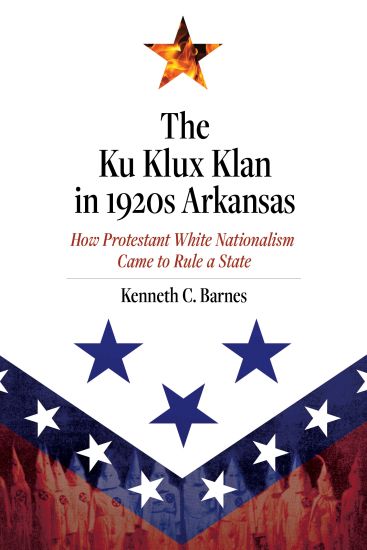
The Ku Klux Klan established a significant foothold in Arkansas in the 1920s, boasting more than 150 state chapters and tens of thousands of members at its zenith. Propelled by the prominence of state leaders such as Grand Dragon James Comer and head of Women of the KKK Robbie Gill Comer, the Klan established Little Rock as a seat of power second only to Atlanta. In The Ku Klux Klan in 1920s Arkansas, Kenneth C. Barnes traces this explosion of white nationalism and its impact on the state's development.Barnes shows that the Klan seemed to wield power everywhere in 1920s Arkansas. Klansmen led businesses and held elected offices and prominent roles in legal, medical, and religious institutions, while the women of the Klan supported rallies and charitable activities and planned social gatherings where cross burnings were regular occurrences. Inside their organization, Klan members bonded during picnic barbeques and parades and over shared religious traditions. Outside of it, they united to direct armed threats, merciless physical brutality, and torrents of hateful rhetoric against individuals who did not conform to their exclusionary vision.By the mid-1920s, internal divisions, scandals, and an overzealous attempt to dominate local and state elections caused Arkansas's Klan to fall apart nearly as quickly as it had risen. Yet as the organization dissolved and the formal trappings of its flamboyant presence receded, the attitudes the Klan embraced never fully disappeared. In documenting this history, Barnes shows how the Klan's early success still casts a long shadow on the state to this day.
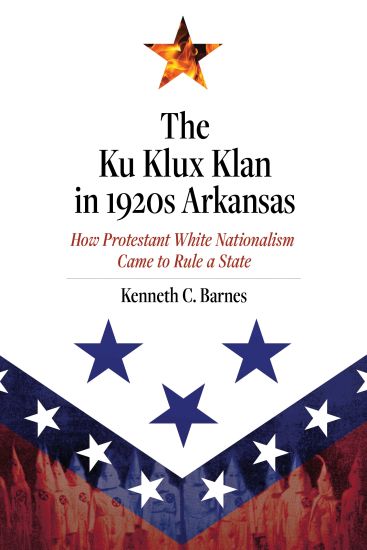
The Ku Klux Klan established a significant foothold in Arkansas in the 1920s, boasting more than 150 state chapters and tens of thousands of members at its zenith. Propelled by the prominence of state leaders such as Grand Dragon James Comer and head of Women of the KKK Robbie Gill Comer, the Klan established Little Rock as a seat of power second only to Atlanta. In The Ku Klux Klan in 1920s Arkansas, Kenneth C. Barnes traces this explosion of white nationalism and its impact on the state’s development.Barnes shows that the Klan seemed to wield power everywhere in 1920s Arkansas. Klansmen led businesses and held elected offices and prominent roles in legal, medical, and religious institutions, while the women of the Klan supported rallies and charitable activities and planned social gatherings where cross burnings were regular occurrences. Inside their organization, Klan members bonded during picnic barbeques and parades and over shared religious traditions. Outside of it, they united to direct armed threats, merciless physical brutality, and torrents of hateful rhetoric against individuals who did not conform to their exclusionary vision.By the mid-1920s, internal divisions, scandals, and an overzealous attempt to dominate local and state elections caused Arkansas’s Klan to fall apart nearly as quickly as it had risen. Yet as the organization dissolved and the formal trappings of its flamboyant presence receded, the attitudes the Klan embraced never fully disappeared. In documenting this history, Barnes shows how the Klan’s early success still casts a long shadow on the state to this day.
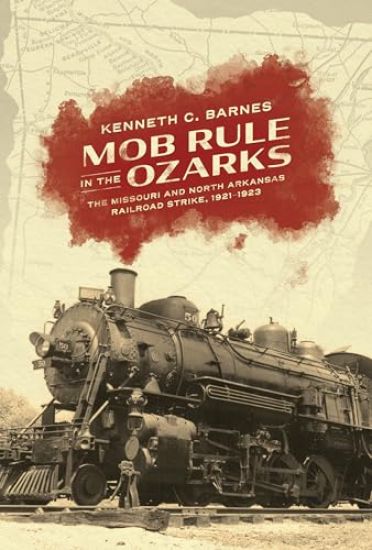
On January 15, 1923, a crowd of more than a thousand angry men assembled in Harrison, Arkansas, near the headquarters of the M&NA Railroad, which ran through the heart of the Ozark Mountains. The mob was prepared to use any measure necessary to end the strike of railroad employees that had dragged on for nearly two years, endangering livelihoods and businesses in an area with few other means of transportation. Supported by local officials, the mob terrorized strikers and sympathizers—many were stripped and beaten, and one man was lynched, hanged from the railroad bridge south of town. Over the next several days, similar riots broke out in other towns along the M&NA line, including Leslie and Heber Springs. This violence effectively brought to a close one of the longest rail strikes in American history—the only one, in fact, ended by a mob uprising. In Mob Rule in the Ozarks, Kenneth C. Barnes documents how the M&NA Railroad strike reflected some of the major economic concerns that preoccupied the United States in the wake of World War I, and created a rupture within communities of the Ozarks that would take years to heal. The conflict also foreshadowed, for both the region and the country, the pendulum’s swing back to moneyed interests, away from Progressive Era gains for labor. Poignantly for Barnes, who sees parallels between this historic struggle and present-day political tensions, the strike revealed the fragile line between civil order and mob rule.