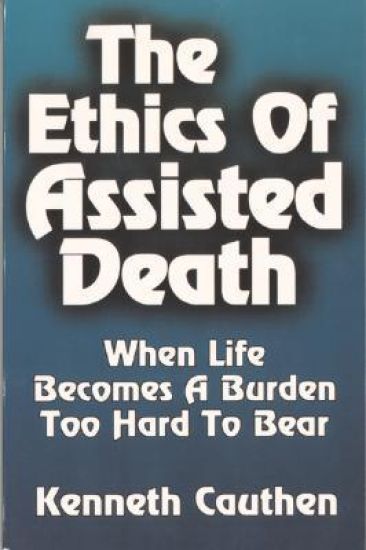
Are we ever justified in choosing to die by deliberate action? Is it ever right to aid those who request assistance in dying? These questions are widely debated today, and in this book Cauthen sets forth the major arguments for and against physician-assisted death. Readers will find here all the essential information they need to approach this problem and form their own personal point of view. Cauthen writes from a religious perspective and makes explicit the biblical and philosophical foundations for his thinking. He presents a cautious and reasoned case for changing the current law with respect to physician-assisted suicide and physician-administered death. Kenneth Cauthen, Ph.D., is John Price Crozer Griffith Emeritus Professor of Theology, Colgate-Rochester Divinity School/Bexley Hall/Crozer Theological Seminary. A recognized authority in theology and ethics, his book The Many Faces Of Evil, which breaks new ground in exploring the torments and terrors of evil and suffering in this life, has become a standard resource in schools and for private study. Cauthen received his education from Mercer University (magna cum laude), Yale Divinity School (B.D.), Emory University (M.A.), and Vanderbilt University (Ph.D.). He is the author of fourteen books and contributing author to seven others.
"To those outside the military, and even to those serving, the rank structure can sometimes be over simplified. It appears that we rack and stack everyone in the organization, and the person with the most rank “wins”—he or she is in charge, and everyone else has to follow orders that flow from the top. While there is certainly benefit in adhering to a chain of command, the interaction between the various ranks up and down that chain, officer and enlisted, becomes the connective tissue that creates a cohesive, successful organization inside of which good decisions and high morale thrive. The most senior member of a unit has the responsibility—and the honor—of leading. But to be successful, the planning and decision-making at the top must reflect a thorough understanding of the strengths at every level of the organization, for it is the enlisted leaders who will ultimately execute those plans in battle, and win."—Foreword by General Peter Pace, U.S. Marine Corps, 16th Chairman of the Joint Chiefs of Staff.This book brings together the stories of six former senior enlisted advisors to the Joint Chiefs of Staff. Each tells in their own words how they got their start, how mentors encouraged them along the way, and how they eventually became the highest-ranking enlisted member in their respective service."With invaluable lessons this is a book for junior service members, senior enlisted leaders, officers, but also for those with no connection to the military.“Books on leadership are many, but none are as practical, clear, and proven as Breaching the Summit. Sure to be of value to every level of military leader, it is equally relevant and valuable to leaders in government, in businesses of every size, and in every boardroom. The uniquely experienced, gifted, and tested authors have led, inspired, and mentored thousands in their extraordinary careers of service to our nation. They lived, observed, and led from the most junior ranks to the pinnacle of military service - they walked the talk. This book should be at the very top of every leader’s list, to be read and reread.” — Adm. Gary Roughead, U.S. Navy (retired)Chief of Naval Operations (2007–2011)“Six outstanding American military leaders served our nation admirably and now share their life experiences and the leadership lessons they learned. This book is a must-read for all service members - both enlisted and officer - aspiring to be successful leaders in uniform and beyond. Thank you to each of the authors for selflessly sharing their experiences and insights on leadership and life.” — Gen. Frank J. Grass, U.S. Army (retired), 27th Chief of the National Guard Bureau (2012–2016)“These extraordinary enlisted leaders have ‘walked the talk,’ and we should listen. Senior noncommissioned officers are the backbone of the finest armed forces in the world. This book shows why.” — Adm. Thad W. Allen, U.S. Coast Guard (retired), 23rd Commandant of the U.S. Coast Guard (2006–2010)“A collection of personal vignettes that teach practical leadership lessons, Breaching the Summit is a must-read for leaders at all levels. The authors have served as their services’ highest-ranking noncommissioned officers and are the epitome of the U.S. military’s professional, all-volunteer force.” — Gen. Ed Eberhart, U.S. Air Force (retired), Commander, NORAD/USNORTHCOM (2002–2005), CEO, Armed Forces Benefit Association“The stories in this book are riveting, powerful, and, best of all, true. The leaders who share their stories shaped our armed forces to be the greatest in the history of our nation. I had the privilege of working very closely with Jim and Paula Roy for over two years. They represent the very finest examples of great parents, humble and inspirational leaders, and compassionate partners, and they showed us all how to have fun while performing at the very highest levels of command.” — Adm. Timothy J. Keating, U.S. Navy (retired), Commander, NORAD/USNORTHCOM (2004–2007), USPACOM (2007–2009)“This book is a catalyst to renew the reader’s commitment to reach and exceed their potential—personally and professionally—while also taking joy in fulfilling their respective duties and responsibilities.” — Col. Paul H. Atterbury, U.S. Marine Corps (retired), Judge Advocate (1994–2014)“I found this book inspiring, interesting, and instructive. Six remarkably accomplished authors share their powerful personal narratives, and their diverse and compelling stories lift up essential leadership lessons for us all, whether military or civilian. If you are anywhere along the continuum of leadership—from leading yourself to leading organizations—and want to become a better leader, read this book!” — Vice Adm. Manson K. Brown, U.S. Coast Guard (retired), Assistant Secretary of Commerce (2010–2014)“Of all the books I’ve read on military leadership, this is one of the absolute best. It’s a great opportunity to learn from some of our nation’s top enlisted leaders—a must-read for all service members.” — Chief Master Sgt. W. Allen Usry, U.S. Air Force (retired), Command Senior Enlisted Leader, NORAD/USNORTHCOM (2009–2011)“Breaching the Summit is a motivating and inspiring read. The life lessons and stories shared will serve readers from any walk of life. The wisdom of these senior enlisted leaders in our U.S. military, tempered with their great sense of humility, reaffirms what makes our nation great. The advice these remarkable patriots have given has personally and professionally benefited me.” — Chief Master Sgt. James A. Cody, U.S. Air Force (retired), 17th Chief Master Sergeant of the Air Force (2013–2017)“Breaching the Summit is a must-read for those in leadership, those striving to become leaders, or those who want to become a better version of themselves. You will learn traits you want to possess, traits you already have and have forgotten, and traits that will guide you through your own leadership. You will connect and reminisce through the stories that helped mold these average individuals to become six of our top enlisted military leaders. Learn from their lessons of leadership as you become familiar with who they were before they became who they are now.” — Pam Swan, Director, Military Relations for Veterans United Home Loans“Brilliantly illustrating the concept ‘grow where you’re planted,’ Breaching the Summit highlights six disparate individuals’ adaptation of the basic tenets of leadership on their journey to the top of their respective services. Whether you are just beginning your own journey, or merely searching for additional inspiration to refine your own leadership style, the principles stressed in these pages provide a solid foundation for success.” — Force Master Chief Johnny Walker, U.S. Navy (retired), Naval Education and Training Command (2007–2009), MCPON Executive Assistant (2009–2011)“Written by proven senior enlisted leaders, Breaching the Summit is a compendium of personal and professional experiences that distills success for all who choose the life of servant leadership in our military.” — Command Sgt. Maj. Mark Ripka, U.S. Army (retired), Command Senior Enlisted Leader, USJFCOM/USAFRICOM (2007–2011)“Breaching the Summit is an insightful, informative walk through the phases of an enlisted career from some of the most successful leaders in modern history. This is a must-read primer for anyone on a journey through the ranks of our glorious military. Read this book. Learn from the real-life lessons that molded some of our greatest enlisted leaders.” — Chief Master Sgt. John M. Harris, U.S. Air National Guard (retired), Command Chief Master Sergeant, Louisiana ANG (2006–2010), President, EANGUS“I thoroughly enjoyed this book. This is not just for the ‘seasoned’ leader - anyone can relate to these lessons, no matter their level of leadership. I felt as though I were sitting in a Leadership 101 symposium!” — Fleet Master Chief April Beldo, U.S. Navy (retired)Manpower, Personnel, Training, and Education Command (2013–2017)“As I’m passing 10 years since I left my own naval service behind, I am amazed at how the leadership truths in this book apply to any industry, not just the military. Making sure everyone knows their individual role in the unit’s success, take the time to get the little things right, coach each other up, down, and all around, and all the other lessons. MCPON West said it best: don’t just take care of your crew, challenge them to grow and be ready to take the reins. This book is not just for practitioners of the art of war—it is for anyone who wants to lead their organization to excellence!” — Capt. Bob Schuetz, U.S. Navy (retired), Deputy Commander and Chief of Staff, COMSUBPAC (2006–2008), Plant GM, Columbia Generating Station“CMSAF Roy’s anecdote of re-digging the water line in Michigan at age 10 was a foretaste of his sense of duty and doing the right things right throughout his AF career. His is a life well lived that resulted in Airmen being well led—including this one.” — Lt. Gen. Loren M. Reno, U.S. Air Force (retired), Deputy Chief of Staff, USAF Logistics, Installations and Mission Support (2009–2012)“MCPOCG Skip Bowen has a truly remarkable legacy of principled leadership built over an incredible career in the Coast Guard. His story, and the stories of the other leaders who reached the top positions in our military, are inspiring examples of linking personal and organizational success from the entry level to the summit. This book is a great read!” — Vice Adm. David P. Pekoske, U.S. Coast Guard (retired), Vice Commandant, USCG (2009–2010), Administrator, TSA“What an amazing opportunity to read about these great leaders! MCPON Rick West’s story shines light onto his sacrifice and compassion for the U.S. Sailor. Mentor, motivator, and total compassion describe MCPON West. His understanding of tactical and strategic level of knowledge provided excellence across the fleet. Most importantly, he is a chief’s chief who connected and continues to connect with the CPO Mess at large.” — Fleet Master Chief Susan Whitman, U.S. Navy (retired), U.S. Pacific Fleet (2015–2018)“This book offers exceptional insight into what has shaped some of the finest senior enlisted leaders in modern history. Through easy-to-follow stories, Breaching the Summit showcases the impact small life events have in developing leaders. This team of authors has captured service-specific leadership challenges that have significance in today’s joint warfighting environment, and I would consider Breaching the Summit a must-read for officers and senior enlisted looking to lead the military into the future.” — Fleet Master Chief Mark Rudes, U.S. Navy (retired), Senior Enlisted Leader, PACOM (2012–2016)“Breaching the Summit is a colorful and compelling look at the formative years, experiences, and philosophies behind our nation’s preeminent senior enlisted leaders. America’s faith in and empowerment of its enlisted corps has long been recognized as our true strategic advantage when it comes to military success at sea, in the air, and on land. Preston, Barrett, West, Roy, Jelinski-Hall, and Bowen show how humble beginnings and solid, consistent principles fueled their journeys and struck a chord with a generation of troops inclined to question the motives and methods of leadership. A must-read for anyone seeking insight on how to get the most out of people, or for anyone who doubts the tenacity of our young men and women wearing the uniform today.” — Command Master Chief Scott Fleming, U.S. Navy (retired), Joint Task Force Guantanamo, MCPON Executive Assistant (2011–2013)“From their humble beginnings to the pinnacle of their careers as the most senior noncommissioned officers of the U.S. Armed Forces, nowhere else will you find a compilation of lessons learned like those included here. These six senior enlisted leaders provide insights from which service members of all ages and ranks can learn, and that can serve as guides to a successful military career. I am proud to have served alongside these fine NCOs.” — Command Sgt. Maj. Richard J. Burch, U.S. Army (retired), 9th Command Sergeant Major of the Army National Guard (2010–2012)“With stories from the lives and experiences of six of our top enlisted military leaders, Breaching the Summit offers the gift of leadership honing. This book is not only a must–read for current and future military leaders, but for those in the civilian sector as well. These warriors allow you to experience their personal stories of highs and lows on their way to the top enlisted leadership billet of each military branch. Though different in the challenges they faced, they are the same in telling the reason for their successes. Patton once said: ‘Your character is defined by how high you bounce when you hit bottom.’ Each chapter illustrates how they took challenges head on and bounced to the pinnacle position of their respective professions. They suffered the pain of discipline to not suffer the pain of regret. I have added this to my professional library of leadership and urge all leaders - present and future - to do the same.” — 1st Sgt. Mark Gordon, U.S. Marine Corps (retired), Subject matter expert for combat profiling, Camp Lejeune“Whenever a new initiative was considered, I knew no one had their finger on the pulse of the fleet like the MCPON and the SGTMAJ of the USMC. The troops see in these senior enlisted leaders a role model, parental figure, and most importantly, their potential best selves. Their hard-earned insights have value for any aspiring leader in any walk of life. HOOYAH!” — Juan Garcia, 17th Assistant Secretary of the Navy, Manpower and Reserve Affairs (2009–2016)“Breaching the Summit is an amazing blend of leadership lessons from six very successful military leaders who started in humble beginnings and advanced to the highest levels of the enlisted corps. Their ability to weave personal and professional insights on their journey to mastering their tradecraft and leadership skills provides a blueprint of success for others. The evolutionary journey of learning leadership, practicing leadership, and then executing leadership is highlighted through their experiences. For those just starting their leadership journey and those who are seasoned leaders, there is much to be learned in this book.” — Chief Master Sgt. Steve McDonald, U.S. Air Force (retired), Command Chief, Air Combat Command (2014–2017)“It has been my pleasure to be associated with CMSAF James Roy for the last 25 years, beginning on the island of Guam, where he led the CE ‘dirt boyz’ in support of that critical infrastructure mission. Chief Roy possessed a keen insight into personal leadership then, which served our squadron well through five typhoon encounters and continued to serve him well throughout his successful military career, culminating as the Chief Master Sergeant of the Air Force. I’m proud to have played a small part in such a superb leader’s life.” — Col. D. H. “Scott” Showers, U.S. Air Force (retired), Commander, 36th Civil Engineer Squadron, Andersen AFB, Guam (1994–1996)“Breaching the Summit gives a rare glimpse into the lives of leaders who served in the highest enlisted positions in the U.S. military. A must-read for any leader who’d like to make a difference in their organization—there’s more common ground than you might think! Problem solvers, influencers, getting pushed out of their comfort zones, and passing it along were a few chunks that jumped out at me. Bravo on this collaboration of some AWESOME human beings!” — Chief Master Sgt. Marty Klukas, U.S. Air Force (retired), Command Senior Enlisted Leader, USTRANSCOM (2011-2014)“MCPON Rick West’s leadership style is more than a pillar from which many grew their naval careers—his motivation to challenge yourself is the foundation by which I continue to live and approach complex situations. His ability to build a cohesive, winning team is second to none. HOOYAH COB!” — Machinist’s Mate 1st Class Rich Hawkins, U.S. Navy (retired), Captain, Delta Air Lines“The U.S. military has long been a preeminent organization for producing leaders of exceptional capability and character. The authors of this book are among the best the military has to offer. It comes as no surprise that their thoughts would be insightful and well worth the attention of both aspiring and experienced leaders from all backgrounds and areas of interest.” — Mike Watt, CEO, Scientific Research Corporation
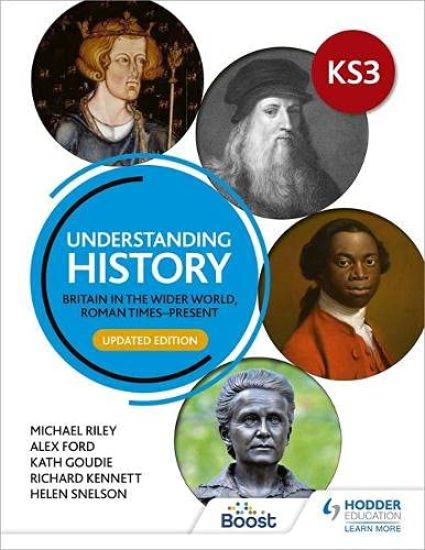
Help every pupil to know more, look closer, think deeper and write better as they develop their historical knowledge and skills throughout Key Stage 3 and get 'GCSE-ready'.Exploring the stories of fascinating people, places and events through an enquiry approach, this Student Book familiarises KS3 pupils with the different ways of thinking required for thematic, period, depth and site studies at GCSE.> Easily and cost-effectively implement a new KS3 curriculum. This coherent single-book course contains 120 lessons that experienced and non-specialist teachers can deliver with confidence, across a two or three-year KS3> Establish strong foundational knowledge of British History. The content has been meticulously selected to provide a chronological spine that contextualises GCSE content, saving you valuable time when teaching GCSE> Focus on building writing skills. GCSE-style command words and question types are introduced gradually, developing the extended writing skills that pupils need to reach the highest marks, whichever GCSE specification you follow> Effectively assess and demonstrate progress. Regular activities throughout the Student Book lead to end-of-enquiry tasks, supporting both formative and summative assessment of pupils' conceptual understanding and writing skills> Generate enthusiasm and respect for historical evidence. Pupils are encouraged to use sources and interpretations as part of their historical investigations, leading to a natural improvement in their analytical and evaluative skills
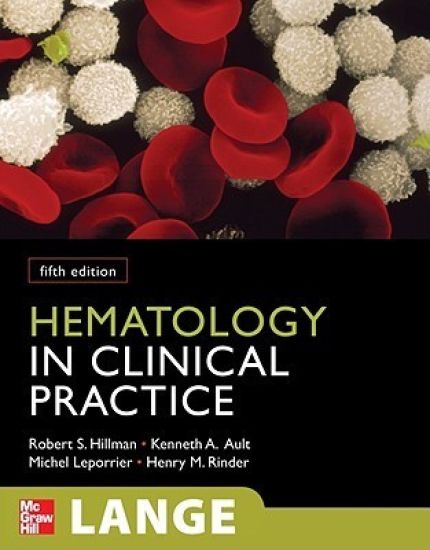
Publisher's Note: Products purchased from Third Party sellers are not guaranteed by the publisher for quality, authenticity, or access to any online entitlements included with the product.The most practical and efficient guide to the diagnosis and management of blood disorders – now in full color200 full-color illustrations!Hematology in Clinical Practice is a succinct, cutting-edge guide to the diagnosis and treatment of disorders of red blood cells, white blood cells, and hemostasis, and the use of blood components for transfusion. Each disease state is discussed in detail, incorporating the pathophysiology, clinical features, up-to-date laboratory testing, and current management strategies into a comprehensive and practical approach to hematologic disorders. Features:New full-color presentation includes over 200 superb illustrations and classic images of blood morphology, tissue pathology, and clinical findingsNew Case Histories introduce and continue through relevant chapters, highlighting critical clinical points for diagnosis and managementNew end-of-chapter Points to Remember encapsulate key clinical information New chapters include Anemia in the Elderly and expanded and updated coverage of Transplantation and treatment of hematologic malignanciesOutstanding collection of tables, charts, and illustrations that translate basic science into valuable clinical contextStrong focus on practical clinical management and supportive careCoverage of state-of-the-art drugs and chemotherapies and thelatest advances in genetic testing and molecular pathwaysConveniently organized into sections on Red Cells, White Cells, Hemostasis, and Transfusion Medicine
Semisolid metallurgy (SSM) is now some 37-years-old in terms of time from its conception and ?rst reduction to practice in the laboratory. In the intervening years, there has been a steadily growing body of research on the subject and the beginning of signi?cant industrial applications. The overall ?eld of SSM comprises today a large number of speci?c process routes, almost all of which fall in the category of either “Rheocasting” or Thi- casting.” The former begins with liquid metal and involves agitation during partial solidi?cation followed by forming. The latter begins with solid metal of suitable structure and involves heating to the desired fraction solid and forming. Research over the past 37 years, and particularly over the last decade, has provided a detailed picture of process fundamentals and led to a wide range of speci?c SSM processes and process innovations. Industrial studies and actual p- duction experience are providing a growing picture of the process advantages and limitations. At this time, the conditions for eventual wide adoption of SSM appear favorable, both for nonferrous and ferrous alloys. It must, however, be recognized that major innovations, such as SSM become adopted only slowly by industries where capital costsarehigh,pro?tmarginsaremodest,andfailuretomeetcustomercommitments carries a high penalty.
Semisolid metallurgy (SSM) is now some 37-years-old in terms of time from its conception and ?rst reduction to practice in the laboratory. In the intervening years, there has been a steadily growing body of research on the subject and the beginning of signi?cant industrial applications. The overall ?eld of SSM comprises today a large number of speci?c process routes, almost all of which fall in the category of either “Rheocasting” or Thi- casting.” The former begins with liquid metal and involves agitation during partial solidi?cation followed by forming. The latter begins with solid metal of suitable structure and involves heating to the desired fraction solid and forming. Research over the past 37 years, and particularly over the last decade, has provided a detailed picture of process fundamentals and led to a wide range of speci?c SSM processes and process innovations. Industrial studies and actual p- duction experience are providing a growing picture of the process advantages and limitations. At this time, the conditions for eventual wide adoption of SSM appear favorable, both for nonferrous and ferrous alloys. It must, however, be recognized that major innovations, such as SSM become adopted only slowly by industries where capital costsarehigh,pro?tmarginsaremodest,andfailuretomeetcustomercommitments carries a high penalty.
The extraordinary life and career of Kenneth Battelle, pioneering hairstylist to the stars in the 1950's and beyond. Kenneth Battelle, known simply as “Kenneth,” was a pioneering hairstylist who obliterated the once-omnipresent hat and transformed the fashion industry through his A-list clients at his iconic 54th Street Salon. His 50-year career started in the early 1950s in New York City. The loyal client list he built, which included Jacqueline Kennedy, Marilyn Monroe, Judy Garland, Countess Consuelo Crespi, Diana Vreeland, Lucille Ball, and Gloria Vanderbilt, swore by his skills. Kenneth: Shear Elegance is a biography that not only celebrates Kenneth's extraordinary talent but examines his behind-the-scenes life and career struggles, including the disastrous fire that destroyed his salon, and his perseverance moving forward. Through personal memories of those closest to him, including friends, clients, and former employees, the man who created a cult of classic, timeless women comes to life. Previously unpublished photographs, notes, clippings, and original Joe Eula illustrations richly exhibit both his myriad achievements and America's 20th-century high-fashion scene.
Historia om Kenneth Sivertsen er ei historie om eit uvanleg talent, absurde innfall og ville påfunn, intense kjærleikshistorier, men også om alt som kan bryte ned eit menneske. Kenneth Sivertsen døydde julaftan 2006, berre 45 år gammal. Mange hugsar ein brutal nedtur og eit halvt hovud, men Sivertsen var mykje meir enn eit fall for open scene. Han var gitarist, komponist, songar og humorist. Han voks opp på Mosterøy i Bømlo, med Jesus og englar som ein sjølvsagd del av kvardagen. Alt som 22-åring skreiv han sin første symfoni. Kenneth Sivertsen var klassisk komponist, skreiv viser, spelte med dei fremste amerikanske jazzmusikarane, vart rikskjendis som kabaretartist saman med kjærasten Herborg Kråkevik og turnerte ein periode saman med 47 teddybjørnar.
â??Iâ??ll put you in my diary!â?? comedian Kenneth Williams was known to threaten on occasion, although tantalisingly he kept the journal to himself during his lifetime. Here at last, in one spellbinding volume, are four million words of it.
Following the bestselling publication of THE KENNETH WILLIAMS DIARIES, the devastating self-portrait of one of our most loved and complex performers is completed with this marvellous selection of his letters.
Sunday Times Art Book of the Year The astonishing life of Kenneth Clark - the greatest British art historian of his time. As writer and presenter of the TV series Civilisation he was responsible for the greatest syntheses of art, music, literature and thought ever made - 'a contribution to civilisation itself'.
Kenneth Waltz (1924–2013) is perhaps the most enduringly influential figure in international relations theory of the second half of the twentieth century. He is considered the father of the structural-realist or neorealist school, and his views on core questions, such as the causes of war and the structure of the international system, are foundational to the field today and likely will remain so for decades to come. Waltz’s writings on both theoretical and policy-related topics, from the balance of power to the spread of nuclear weapons, continue to fuel debate.This book is a groundbreaking intellectual biography of Kenneth Waltz, shedding new light on the development and significance of his key contributions. Paul R. Viotti draws on extensive, candid interviews with Waltz as well as Waltz’s personal files and archival research to provide a nuanced account of the great scholar’s life and thought. He traces the intellectual sources and personal experiences that shaped Waltz’s work, including an intense Lutheran upbringing; service in World War II and the Korean War; and the academic environments of Oberlin College, Columbia University, and the University of California, Berkeley. Viotti examines the key influences on Waltz’s major works, Man, the State, and War and Theory of International Politics, and analyzes their distinctive insights. Engaging with the views of Waltz’s critics and featuring reminiscences from his colleagues, this book is a compelling portrait of an intellectual titan.
Kenneth Waltz (1924–2013) is perhaps the most enduringly influential figure in international relations theory of the second half of the twentieth century. He is considered the father of the structural-realist or neorealist school, and his views on core questions, such as the causes of war and the structure of the international system, are foundational to the field today and likely will remain so for decades to come. Waltz’s writings on both theoretical and policy-related topics, from the balance of power to the spread of nuclear weapons, continue to fuel debate.This book is a groundbreaking intellectual biography of Kenneth Waltz, shedding new light on the development and significance of his key contributions. Paul R. Viotti draws on extensive, candid interviews with Waltz as well as Waltz’s personal files and archival research to provide a nuanced account of the great scholar’s life and thought. He traces the intellectual sources and personal experiences that shaped Waltz’s work, including an intense Lutheran upbringing; service in World War II and the Korean War; and the academic environments of Oberlin College, Columbia University, and the University of California, Berkeley. Viotti examines the key influences on Waltz’s major works, Man, the State, and War and Theory of International Politics, and analyzes their distinctive insights. Engaging with the views of Waltz’s critics and featuring reminiscences from his colleagues, this book is a compelling portrait of an intellectual titan.
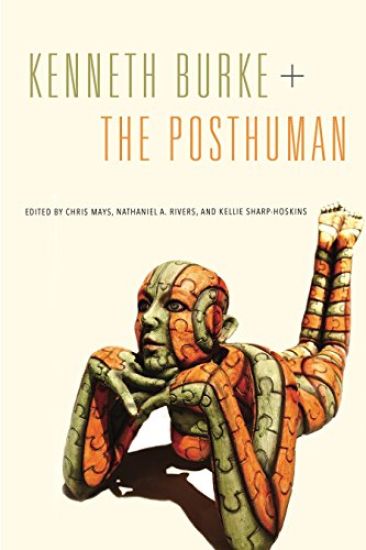
While rhetoric as a discipline is firmly planted in humanism and anthropology, posthumanism seeks to leave the human behind. This highly original examination of Kenneth Burke’s thought grapples with these ostensibly contradictory concepts as opportunities for invention, revision, and, importantly, transdisciplinary knowledge making.Rather than simply mapping posthumanist rhetorics onto Burke’s scholarship, Kenneth Burke + The Posthuman focuses on the multiplicity of ideas found both in his work and in the idea of posthumanism. Taking varied approaches organized within a framework of boundaries and futures, the contributors show that studying the humanist theories of Burke in this way creates a satisfyingly chaotic web of interconnections. The essays look at how Burke’s writing on the human mind and technology, from his earliest works to his very latest revisions, interrelates with current concepts such as new materiality and coevolution. Throughout, the contributors pay close attention to the fluidity, concerns, and contradictions inherent in language, symbolism, and subjectivity.A unique, illuminating exploration of the contested relationship between bodies and language, this inherently transdisciplinary book will propel important future inquiry by scholars of rhetoric, Burke, and posthumanism.In addition to the editors, the contributors are Casey Boyle, Kristie Fleckenstein, Nathan Gale, Julie Jung, Steven B. Katz, Steven LeMieux, Jodie Nicotra, Jeff Pruchnic, Timothy Richardson, Thomas Rickert, and Robert Wess.
While rhetoric as a discipline is firmly planted in humanism and anthropology, posthumanism seeks to leave the human behind. This highly original examination of Kenneth Burke’s thought grapples with these ostensibly contradictory concepts as opportunities for invention, revision, and, importantly, transdisciplinary knowledge making.Rather than simply mapping posthumanist rhetorics onto Burke’s scholarship, Kenneth Burke + The Posthuman focuses on the multiplicity of ideas found both in his work and in the idea of posthumanism. Taking varied approaches organized within a framework of boundaries and futures, the contributors show that studying the humanist theories of Burke in this way creates a satisfyingly chaotic web of interconnections. The essays look at how Burke’s writing on the human mind and technology, from his earliest works to his very latest revisions, interrelates with current concepts such as new materiality and coevolution. Throughout, the contributors pay close attention to the fluidity, concerns, and contradictions inherent in language, symbolism, and subjectivity.A unique, illuminating exploration of the contested relationship between bodies and language, this inherently transdisciplinary book will propel important future inquiry by scholars of rhetoric, Burke, and posthumanism.In addition to the editors, the contributors are Casey Boyle, Kristie Fleckenstein, Nathan Gale, Julie Jung, Steven B. Katz, Steven LeMieux, Jodie Nicotra, Jeff Pruchnic, Timothy Richardson, Thomas Rickert, and Robert Wess.
Since its publication in 1950, Kenneth Burke’s A Rhetoric of Motives has been one of the most influential texts of theory and criticism. Critics have discovered in its pages concepts that reveal new dimensions of human motivation. And yet, despite its obvious genius, critics have interpreted A Rhetoric of Motives as a collection of provocations rather than a systematic treatment of rhetoric.In this book, Kyle Jensen argues that the coherence in Burke’s thought has yet to be fully appreciated. Drawing on unpublished drafts and voluminous correspondence, he reconstructs Burke’s drafting and revision process for A Rhetoric of Motives as well as its recently discovered second volume, The War of Words. Jensen’s extensive archival analysis reveals that Burke relied on the concept of myth to draw together the loose ends in his argument. For Burke, all general theories of rhetoric are formed and structured using mythic images and terms.By exploring what Burke added and omitted, and by putting his writing process into the context of daily life after the Second World War—including Burke’s attempts to clear the weeds from his Andover farm—Jensen sheds new light on the key problems that Burke encountered and the methods he used to overcome them. Kenneth Burke’s Weed Garden is essential for those who study Burke and the tradition of modern rhetoric that he helped found.