
Kirjahaku
Etsi kirjoja tekijän nimen, kirjan nimen tai ISBN:n perusteella.
1000 tulosta hakusanalla Landry Signe


La critique africaine renouvelée
Landry Kituba; Evariste Mputu Mokuba
Editions Universitaires Europeennes
2025
pokkari

Kansas played an outsized role in the Cold War, when civilization's survival hung in the balance. Forbes Air Force Base operated nine Atlas E intercontinental ballistic missile launch sites. Schilling Air Force Base was the hub for twelve Atlas F ICBMs. McConnell Air Force Base operated eighteen Titan II ICBMs. A Kansas State University engineering professor converted a discarded Union Pacific Railroad water tank into his family's backyard fallout shelter. A United States president from Kansas faced several nuclear war scares as the Cold War moved into the thermonuclear age. Landry Brewer tells the fascinating story of highest-level national strategy and how everyday Kansans lived with threats to their way of life.

Les marchands du sacré.
Landry Roselin Asseni Ngboh Anguin'mbi
Landry Roselin Asseni Ngboh A.
2026
pokkari
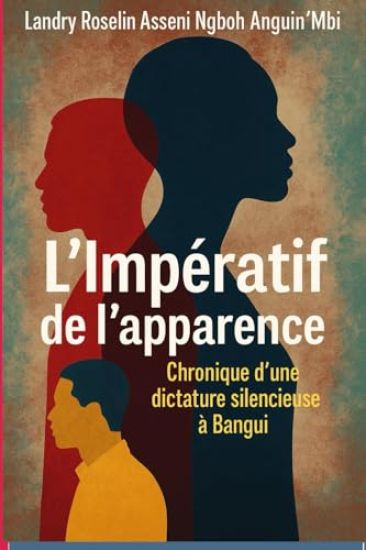
L'Impératif de l'apparence
Landry Roselin Asseni Ngboh Anguin'mbi
Landry Roselin Asseni Ngboh Anguin'mbi
2026
pokkari

Québec, un réfrigérateur à ciel ouvert?
Landry Roselin Asseni Ngboh Anguin'mbi
Landry Roselin Asseni Ngboh
2026
pokkari

The evening beyond each chain-lit match seemed to crouch in the shapes of houses, then rose to play havoc in a veil of dogwoods. In among the lapses, deer stooped on their stilts to eat the tulips which, under these circumstances, turned away from the source like moths losing themselves in folded wool. Are we alone? If so, Particle and Wave insists that we need not be lonely. Here the periodic table of elements-a system familiar to many of us from high school chemistry-unfolds in a series of unexpected meanings with connotations public, personal, and existential. Based on a logic that considers the atomic symbol an improvised phoneme, Particle and Wave is keenly attuned to the qualities of voice and concerned with how these improvisations fall on the listening ear. From the most recent housing bust, to the artistic visions of Christo and Jeanne Claude, to the labors of the Curies, to Pliny the Younger's account of the eruption of Vesuvius, culture and world histories are recontextualized through the lens of personal experience. Muscular, precise, structurally varied, and imagistic, these poems engage in lyricism yet resist mere confession. In doing so they project the self as a composite, speaking in a variety of registers, from the nursery rhyme songster, to the ascetic devotee, to the unapologetic sensualist. They welcome all comers and elbow the bounded physical world to make way for a dynamic, new subjectivity.
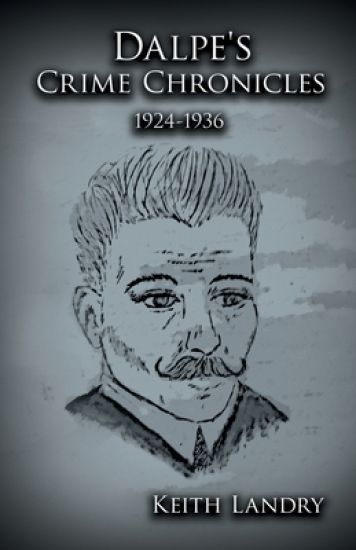
Detective J. P. Dalpe, later promoted to Sergeant Detective, is assigned in the early 1920s to a special detective squad of the Quebec Provincial Police to fight crime in Hull, Quebec. The crime was so rampant in the 1920s and 30s that the New York Times called Hull "Little Chicago." Dalpe's first major homicide investigation is the death of a man known in the St. Pierre de Wakefield area as the Hermit. The mutilated body is discovered in the dirt cellar of his small isolated cabin. Whilst this investigation is being pursued, Dalpe is sent south of Montreal to solve the murder of a man whose body is found at a town's nuisance grounds. He tracks down the murderer in Vermont and brings him back to Quebec to face justice. Dalpe is later called upon to investigate the suspicious poisoning of a young woman in the village of Maniwaki. He suspects the sister has a hand in the death. This investigation is followed by the shooting of a man by his nephew in the same region of Quebec. With the end of the Roaring Twenties and the arrival of the Great Depression in the 30s, Dalpe is called upon to solve one of the most heinous crimes to have ever occurred in Hull. An unemployed lumberjack is brutally beaten to death in the bush off Aylmer Road on the outskirts of Hull. Dalpe needs to coordinate the investigation with the Hull City Police Force and the Ottawa Police Force to track down suspects. He learns that organized crime is behind the murder. The last case of Dalpe's distinguished career involves many men who are engaged in treachery, robbery, and murder. A young bank clerk is murdered while he is carrying a large sum of money from the Hull bank where he is employed to an Ottawa clearinghouse. Dalpe, as the senior officer in Hull, is once again brought into a case that is followed by Canadians across the country. He must demonstrate much tact when his boss in Montreal, Chief Detective Jargaille pushes Dalpe to the background and assumes the lead detective role in the case.
Detective J. P. Dalpe, later promoted to Sergeant Detective, is assigned in the early 1920s to a special detective squad of the Quebec Provincial Police to fight crime in Hull, Quebec. The crime was so rampant in the 1920s and 30s that the New York Times called Hull "Little Chicago." Dalpe's first major homicide investigation is the death of a man known in the St. Pierre de Wakefield area as the Hermit. The mutilated body is discovered in the dirt cellar of his small isolated cabin. Whilst this investigation is being pursued, Dalpe is sent south of Montreal to solve the murder of a man whose body is found at a town's nuisance grounds. He tracks down the murderer in Vermont and brings him back to Quebec to face justice. Dalpe is later called upon to investigate the suspicious poisoning of a young woman in the village of Maniwaki. He suspects the sister has a hand in the death. This investigation is followed by the shooting of a man by his nephew in the same region of Quebec. With the end of the Roaring Twenties and the arrival of the Great Depression in the 30s, Dalpe is called upon to solve one of the most heinous crimes to have ever occurred in Hull. An unemployed lumberjack is brutally beaten to death in the bush off Aylmer Road on the outskirts of Hull. Dalpe needs to coordinate the investigation with the Hull City Police Force and the Ottawa Police Force to track down suspects. He learns that organized crime is behind the murder. The last case of Dalpe's distinguished career involves many men who are engaged in treachery, robbery, and murder. A young bank clerk is murdered while he is carrying a large sum of money from the Hull bank where he is employed to an Ottawa clearinghouse. Dalpe, as the senior officer in Hull, is once again brought into a case that is followed by Canadians across the country. He must demonstrate much tact when his boss in Montreal, Chief Detective Jargaille pushes Dalpe to the background and assumes the lead detective role in the case.

Breaking down recent films about the dark side of motherhood Twenty-first century contemporary films like Emily Atef’s Das Fremde in mir and Savannah Leaf’s Earth Mama portray motherhood as a source of regret, exhaustion, rage, shame, guilt, and disgust. Olivia Landry analyzes this new feminist cinema and the ways it embraces and explores the crushing burden of mothering children. Landry surveys films released in North America, Europe, and Australia over a period beginning in 2007. As she shows, revelation and the expression of negative feelings upend the traditional image of the perfect, self-sacrificial, and happy mother. Landry tracks how radical positions like maternal regret and family abolition have replaced age-old tropes while also going beyond portrayals of maternal ambivalence. Her feminist method casts off psychoanalysis and renounces pathological approaches to motherhood to show how a generation of filmmakers have insisted on the subjective position and experience of the mother rather than that of the child. Bold and groundbreaking, Cinema of Crushing Motherhood looks at taboo-breaking films and illuminates the emotions and affects that make them so powerful.

Breaking down recent films about the dark side of motherhood Twenty-first century contemporary films like Emily Atef’s Das Fremde in mir and Savannah Leaf’s Earth Mama portray motherhood as a source of regret, exhaustion, rage, shame, guilt, and disgust. Olivia Landry analyzes this new feminist cinema and the ways it embraces and explores the crushing burden of mothering children. Landry surveys films released in North America, Europe, and Australia over a period beginning in 2007. As she shows, revelation and the expression of negative feelings upend the traditional image of the perfect, self-sacrificial, and happy mother. Landry tracks how radical positions like maternal regret and family abolition have replaced age-old tropes while also going beyond portrayals of maternal ambivalence. Her feminist method casts off psychoanalysis and renounces pathological approaches to motherhood to show how a generation of filmmakers have insisted on the subjective position and experience of the mother rather than that of the child. Bold and groundbreaking, Cinema of Crushing Motherhood looks at taboo-breaking films and illuminates the emotions and affects that make them so powerful.
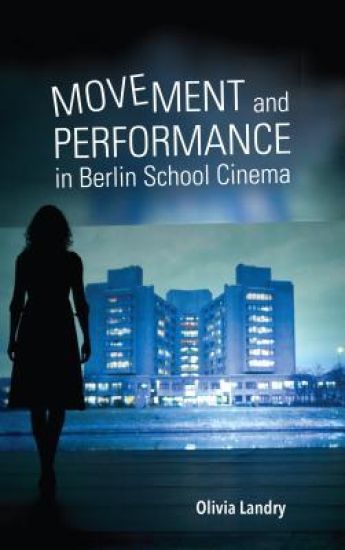
Movement and Performance in Berlin School Cinema
Olivia Landry
Indiana University Press
2019
sidottu
Through a study of the contemporary German film movement the Berlin School, Olivia Landry examines how narrative film has responded to our highly digitalized and mediatized age, not with a focus on stasis and realism, but by turning back to movement, spectacle, and performance. She argues that a preoccupation with presence, liveness, and affect—all of which are viewed as critical components of live performance—can be found in many of the films of the Berlin School. Challenging the perception that the Berlin School is a sheer adherent of "slow cinema," Landry closely analyzes the use of movement, dynamism, presence, and speed in a broad selection of films to show how filmmakers such as Christian Petzold, Angela Schanelec, Thomas Arslan, and Christoph Hochhäusler invoke the pulse of the kinesthetic and the tangibly affective. Her analysis draws on an array of film theories from early materialism to body theories, phenomenology, and contemporary affect theories. Arguing that these theories readily and energetically forge a path from film to performance, Landry traces a trajectory between the two through which live experience, presence, spectacle, intersubjectivity, and the body in motion emerge and powerfully intersect. Ultimately, Movement and Performance in Berlin School Cinema expands the methodological and disciplinary boundaries of film studies by offering new ways of articulating and understanding movement in cinema.
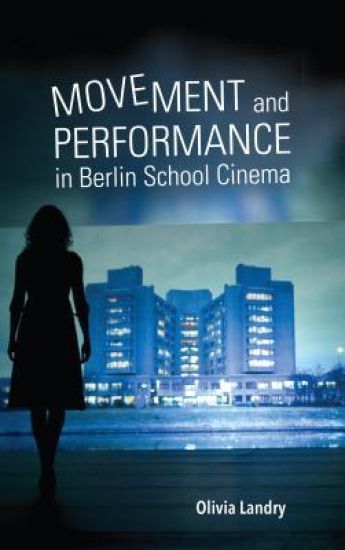
Movement and Performance in Berlin School Cinema
Olivia Landry
Indiana University Press
2019
pokkari
Through a study of the contemporary German film movement the Berlin School, Olivia Landry examines how narrative film has responded to our highly digitalized and mediatized age, not with a focus on stasis and realism, but by turning back to movement, spectacle, and performance. She argues that a preoccupation with presence, liveness, and affect—all of which are viewed as critical components of live performance—can be found in many of the films of the Berlin School. Challenging the perception that the Berlin School is a sheer adherent of "slow cinema," Landry closely analyzes the use of movement, dynamism, presence, and speed in a broad selection of films to show how filmmakers such as Christian Petzold, Angela Schanelec, Thomas Arslan, and Christoph Hochhäusler invoke the pulse of the kinesthetic and the tangibly affective. Her analysis draws on an array of film theories from early materialism to body theories, phenomenology, and contemporary affect theories. Arguing that these theories readily and energetically forge a path from film to performance, Landry traces a trajectory between the two through which live experience, presence, spectacle, intersubjectivity, and the body in motion emerge and powerfully intersect. Ultimately, Movement and Performance in Berlin School Cinema expands the methodological and disciplinary boundaries of film studies by offering new ways of articulating and understanding movement in cinema.
This book is a meticulous argument for the contemporary value of Marx's democratic theory as an interpretive key for the postmodernism debates. Landry uses the works of Derrida, Foucault, and Lyotard to represent the poststructuralist camp and the writings of Habermas to represent the rationalist camp. Viable social critique, argues Landry, mediates between pure social constructivist and pure realist metaphysics. Postmodernism, although critical of Marx, aided the broader project of critical social theory, particularly Marx's critique of social-material contexts of oppression. Indeed, significant positive affiliations among Marx, Habermas, and the poststructuralists are found in their commitment to criticizing ideological aspects of bourgeois Enlightenment rationality and modernity.Landry employs a fruitful tension strategy as seeking rapprochement among the modern and postmodern positions on hotly debated contemporary issues such as subjectivity, criticism, and the nature of reason. Marxism continues to provide critical tools for articulating productive conflict within the postmodernism debates, advancing of strategies of critique beyond identity politics toward a more self-reflective ideological discussion of the multiple axes of power and oppression in political struggles over democracy. In this unique study, complex philosophical issues are described lucidly and their relevance for today is established compellingly.

Male-male rivalry and female passive choice, the two principal tenets of Darwinian sexual selection, raise important ethical questions in The Descent of Man--and in the decades since--about the subjugation of women. If female choice is a key component of evolutionary success, what impact does the constraint of women's choices have on society? The elaborate courtship plots of 19th century Spanish novels, with their fixation on suitors and selectors, rivalry, and seduction, were attempts to grapple with the question of female agency in a patriarchal society. By reading Darwin through the lens of the Spanish realist novel and vice versa, Travis Landry brings new insights to our understanding of both: while Darwin's theories have often been seen as biologically deterministic, Landry asserts that Darwin's theory of sexual selection was characterized by an open ended dynamic whose oxymoronic emphasis on "passive" female choice carries the potential for revolutionary change in the status of women.

Male-male rivalry and female passive choice, the two principal tenets of Darwinian sexual selection, raise important ethical questions in The Descent of Man--and in the decades since--about the subjugation of women. If female choice is a key component of evolutionary success, what impact does the constraint of women's choices have on society? The elaborate courtship plots of 19th century Spanish novels, with their fixation on suitors and selectors, rivalry, and seduction, were attempts to grapple with the question of female agency in a patriarchal society. By reading Darwin through the lens of the Spanish realist novel and vice versa, Travis Landry brings new insights to our understanding of both: while Darwin's theories have often been seen as biologically deterministic, Landry asserts that Darwin's theory of sexual selection was characterized by an open ended dynamic whose oxymoronic emphasis on "passive" female choice carries the potential for revolutionary change in the status of women.