
Kirjahaku
Etsi kirjoja tekijän nimen, kirjan nimen tai ISBN:n perusteella.
1000 tulosta hakusanalla Leonard Woolf
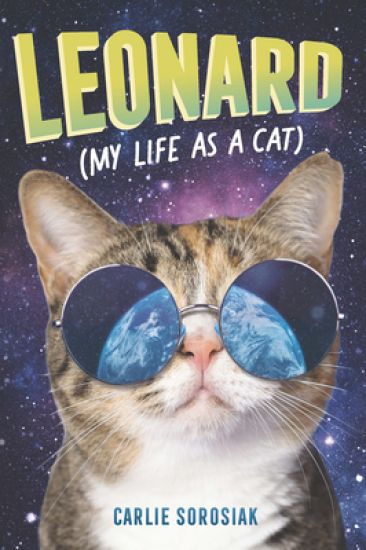
He's not a stray house cat, he's an immortal being. And now he must choose whether to return to his planet or remain with his new human friend in a humorous, heart-tugging story from the author of I, Cosmo. The cat that Olive rescues from a flood has a secret: he's not really a cat at all, but an alien who crashed to Earth on a beam of light. The cat, whom Olive names Leonard, was prepared to visit the planet as a human--but something went wrong. Now Leonard may never know what it's like to hold an umbrella, go bowling, or host a dinner party. (And his human jokes still need some work: Knock, knock. Who's there? Just Leonard. It is me.) While Olive worries about whether she will have to move after her mom and her new boyfriend get back from their summer vacation, Leonard tries to figure out how to get from South Carolina to Yellowstone National Park, because if he's not there at the end of the month, he'll miss his ride home. But as Olive teaches Leonard about the beautiful and confusing world of humans, he starts to realize how much he cares about this particular one. A sweet and dryly funny story about what it means to be human--and what it means to be home.

An affirming and inspirational story for readers of ALL ages! A kind and creative chameleon named Leonard lives with his chameleon tribe and practices their ancient chameleon ways. Then one day, through a series of incredible events, Leonard finds his way out of the ritual of camouflage to express his creativity and sing his own song in the world. By singing his song and finding his unique sparkle, Leonard ultimately finds freedom in true self-expression. Leonard and his whole chameleon tribe discover the joy of sharing their gifts and shining their light! A great story for anyone at any age who is experiencing change, exploring self-discovery, expressing creativity, or simply seeking a cozy "feel good" book that celebrates their happy perfect divine nature!

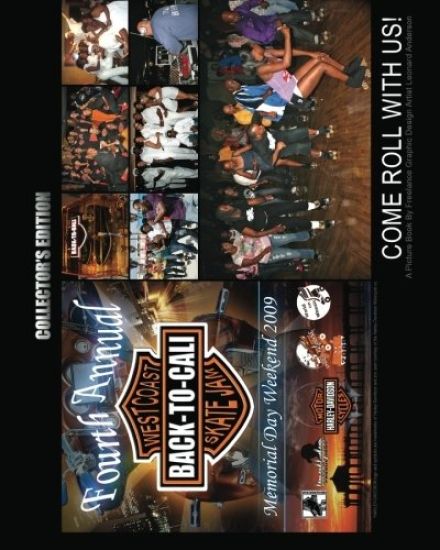
Come Roll with Us!: A Picture Book by Freelance Graphic Design Artist Leonard Anderson
Leonard L. Anderson
Createspace Independent Publishing Platform
2011
nidottu
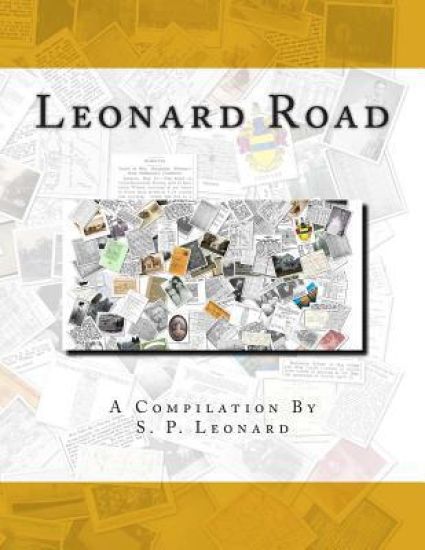
Charles Russell Leonard lived in Cayuga County, New York in the early 1800's. He had at least two children and is said to have died in 1836 in Genoa. Learn about this Leonard family with maps, news clippings, census records, photos and more. Plus a detailed look at the Leonard's living nearby, which hopefully contains clues and references to help link our Charles Russell Leonard to one of the early New England Leonard families. 8.5" x 11", 222 pages.
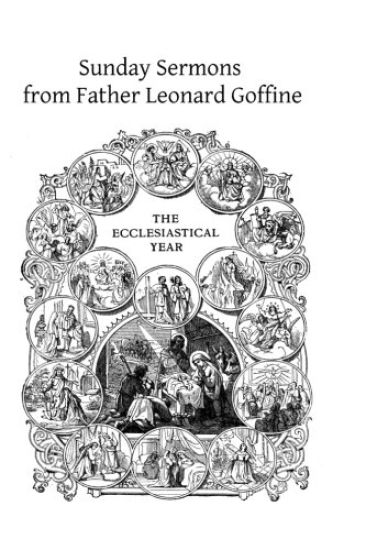
Sunday Sermons from Father Leonard Goffine
Leonard Goffine
Createspace Independent Publishing Platform
2013
nidottu
Father Leonard Goffin (pronounced Goof fee nee) (6 December 1648 - 11 August 1719) was a German Catholic priest who wrote devotional texts which remain influential to this day amongst sincere Catholics. Many of the early settlers of the United States brought Goffine's instructions for the Sundays of the Year with them to the United States from the old country. When they were unable to assist at Mass on Sundays or Holydays of Obligation, they would stay at home to pray and keep the these days holy. They would recite the holy Rosary and read the sermon from Goffine for the day. One woman, whose parents and grandparents immigrated to the central part of the United States related the following story. Her family lived on a farm ten miles from the nearest church. On good days they could make the journey by wagon, but even then one of the older girls had to stay home with the babies and care of for them and thus could not assist at Mass. When weather was bad such a journey was impossible, so they would pray at home. She also related that for her first Communion, she went to a relatives house in the town near the church in order to prepare and for Holy Communion. She remarked that they took the dipper out of the water barrel so none of the children would violate the Communion fast, which was absolute at that time. It is with great pleasure that we bring this work back into print for the use of Catholic faithful today. Let us consider this on Advent: "How was Advent formerly observed? Very differently from now. It then commenced with the Feast of St. Martin, and was observed by the faithful like the Forty Days' Fast, with strict penance and devotional exercises, as even now most of the religious communities do to the present day. The Church has forbidden all turbulent amusements, weddings, dancing and concerts, during Advent. Pope Sylverius ordered that those who seldom receive Holy Communion should, at least, do so on every Sunday in Advent. "How should this solemn time be spent by Christians? They should recall, during these four weeks, the four thousand years in which the just under the Old Law expected and desired the promised Redeemer, think of those days of darkness in which nearly all nations were blinded by saran and drawn into the most horrible crimes, then consider their own sins and evil deeds and purify their souls from them by a worthy reception of the Sacraments, so that our Lord may come with His grace to dwell in their hearts and be merciful to them in life and in death. Further, to awaken in the faithful the feelings of repentance so necessary for the reception of the Savior in their hearts, the Church orders that besides the observance of certain fast days, the altar shall be draped in violet, that Mass shall be celebrated in violet vestments, that the organ shall be silent and no Gloria sung. Unjust to themselves, disobedient to the Church and ungrateful, indeed, to God are those Christians who spend this solemn time of grace in sinful amusements without performing any good works, with no longing for Christ's Advent into their hearts." And this on Lent: "Who instituted Lent? According to the fathers of the Church, Justin and Irenaeus, the fast before Easter was instituted and sanctified by Christ Himself; according to the saints Leo and Jerome, the holy apostles ordained it given by Jesus."
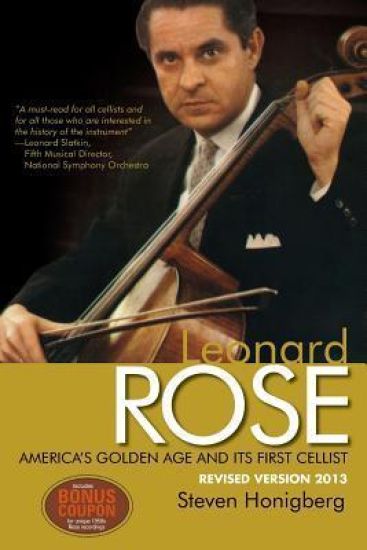
Leonard Rose America's Golden Age and Its First Cellist
Steven Honigberg
Createspace Independent Publishing Platform
2013
nidottu
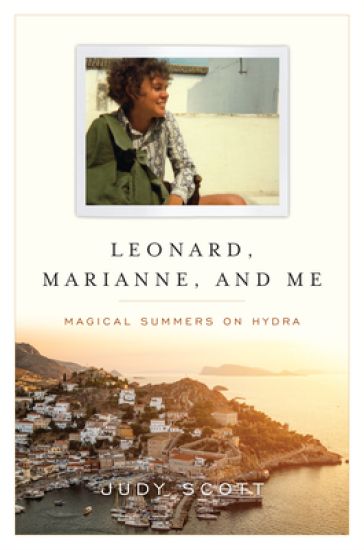
In 1973, Judy Scott was intent on traveling to Istanbul, but serendipitously she stumbled onto the incomparable Greek island of Hydra and the people who would continue, over many subsequent visits, to enhance and influence her life ever after.This memoir, based on notebooks and journals Scott kept during various times and visits to her favorite place on earth, recounts in very intimate detail her interactions and developing relationships with singer/songwriter Leonard Cohen and his beautiful muse and “love of his life” Marianne Ihlen. As Leonard himself observed of this book when Scott sent the manuscript to him for his approval: “I particularly admire the detail and honesty of the piece.” One of the more unique features in this recounting is the emerging acknowledgment the author confronts of her own sexuality, as she recounts: “It did not take long for Leonard to recognize that I was more attracted to Marianne than I was to him, though I came to love him too in the end.” And indeed it was Marianne herself, who sought out and fostered Scott’s interest and affection. After a shocking interlude at Marianne’s 38th birthday party, Scott writes: “After that, my life on Hydra was all about Marianne.” But it was Leonard’s interest, his kindness and generosity that signified her lifelong love and respect for the real private person who was Leonard Cohen. Robert Kory, Leonard’s executor, told Scott when they met to discuss several edits the Cohen family had requested: “Your story details a side of Leonard and a phase in his life that no other biography or coverage of the public person he was captures. And it lovingly depicts and lets me see the person he was at 38, long before I made his acquaintance and got to experience the musical and literary genius, and whose legacy I’m now dedicated to preserving.”The book also goes into a detailed description of Hydra in the early 1970s. A unique place filled with astonishing physical beauty and an incomparable atmosphere of serenity and peaceful energy. Hydra is the only inhabited Greek island with no cars (they are forbidden), no automotive transportation at all. All the roads on the three large hills that circle the small deep-water yacht port contain stairs or steps that make traversing by wheeled vehicles impossible. This absence of gas-powered vehicles and motors was also the reason Hydra attracted so many artists; it was the light, the unfiltered magical “Greek light” absent noxious fumes that presented some of the purist images on earth. The island also contained a small foreign community of like-minded creative souls, artists, musicians, writers and their supporters and admirers. As Scott explains: “Hydra in the late ’60s early ’70s was at its creative zenith. Like Paris in the ’30s, Harlem in the ’40s, Greenwich Village in the ’50s, San Francisco in the ’60s—Hydra in the ’70s was the place to be.”The memoir, though it centers on her most important, most impactful interactions with Leonard and Marianne, also contains several portraits of other Hydra habitués, all members of the same small ex-pat community, all close friends (and occasional lovers) of Leonard and Marianne, all uniquely interesting in their own right. From George Lialios, the wealthy Greek man the book is dedicated to (whom Scott met first on the island and who introduced her to all the others contained in these pages) to Alexis Bolens, the Swiss/Greek handsome lothario, who’d worked as a mercenary in Rhodesia and a plantation manager in South Africa, from Lindsey Callicoatt, the writer, artisan and most beloved of all the foreign community, to George Slater, irascible poet, sea captain and brilliant curry maker—there are many characters who all contributed to the “Hydra family” that Scott lovingly recalls. This book is both a story of a special time, place and cast of characters—a travelogue of an enchanted island as it was back then and still is to this day, backlit by the glow of Leonard Cohen and his muse, Marianne.
Leonard the Magnificent: Life Story of the Man Who Made Himself King of the Lightweights
Nat Fleischer
Literary Licensing, LLC
2013
nidottu
Leonard and Soule Experiments in Psychical Research: Also Experiments with Sanders, Brittain, Peters and Dowden
Lydia W. Allison
Literary Licensing, LLC
2013
nidottu