Published in 1893"A WOMAN'S PHILOSOPHY OF LOVE" is the outcome of thirty-five years of thought, study, and experience. It is not a book for babes, nor possibly for persons of a darkened and prurient mind; but it is believed that there is, both in this country and elsewhere, a large and growing class of cultivated and thoughtful people, who see in the relations between men and women, the elementary principle of all civil order, the keynote of all social progress, and who will welcome a thoughtful and dispassionate discussion of some of those vexed questions of right and priority, which are forcing themselves into every field of thought and labor in Christendom.Such a discussion, if it be at all thorough, must necessarily include some topics which it is difficult to present without offence; but the author has at least conscientiously endeavored to do justice to the truth, without disregarding those principles of delicacy which are rightly recognized as the safeguards of society. The measure of her success, it must be left for the public to decide.
Books can change lives -- and here are more than fifty powerful letters from young readers to authors revealing some of the ways that is true. Annie Schnitzer tells Elie Wiesel, "Reading your story allowed me to connect with my own history," explaining how reading his memoir deepened her understanding of her grandparents' plight during the Holocaust. After reading The House on Mango Street, Julia Mueller writes to Sandra Cisneros, "You didn't tell me how to pull myself back together; you just showed me that I could. I was tired of trying to be somebody else's definition of beautiful, and you told me that was okay." Culled from the Letters About Literature contest of the Library of Congress Center for the Book, the fifty-two letters in this collection -- written by students in grades four through twelve -- reveal how deeply books and poetry affect the lives of readers. Offering letters that are as profound as they are personal and as moving as they are enlightening, this collection, which also features artwork by some of the contest entrants, provides a glimpse into young people's lives and their connections -- both expected and unexpected -- to the written word.
Formal Name: People's Democratic Republic of Algeria (Al Jumhuriyah al Jazairiyah ad Dimuqratiyah ash Shabiyah). Short Form: Algeria (Al Jazair). Term for Citizen(s): Algerian(s). Capital: Algiers, with a population of about 1.7 million, or 3 million including suburbs, in 2004. Major Cities: After Algiers, the most populous cities are Oran, Constantine, and Annaba. According to 2004 estimates, Oran has a population of 700,000; Constantine, 350,000; and Annaba, 235,000. Independence: Algeria celebrates independence from France on July 5, 1962.
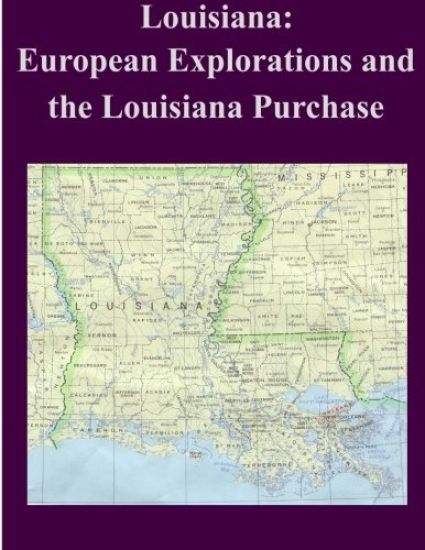
The Louisiana of today bears little resemblance to the vaguely defined territory acquired by the United States from France in 1803 for $15 million. At the time of the Louisiana Purchase no one could present any maps or documents that delineated the boundaries of the province with reasonable accuracy. As a result of that uncertainty, the United States was more or less free to advance its claims beyond the Mississippi River on terms favorable to its own interests.Louisiana as a province had a colorful and dramatic history in its roles as a European colony, a pawn in European diplomacy, and a territory coveted by the young United States. Over the centuries Louisiana has represented various possibilities to different interested nationalities-both geographically and politically. To the Spanish, Louisiana formed their northernmost borderland in an empire stretching from Buenos Aires to California. For the French, whose ambitions envisioned a North American colony encompassing the entire Mississippi Valley and the Great Lakes Region into Canada, Louisiana and its immense resources held out a great deal of promise, but in reality offered very little in return. For the British, Louisiana represented a challenge to Spain's authority in the Mississippi Valley.Louisiana's boundaries periodically were shifted and redrawn to suit circumstances of empire. The first officially sanctioned geographic and political limits associated with the Louisiana Purchase were not laid down until the state of Louisiana was admitted to the union in 1812-the first state carved out of the Purchase as well as the first state west of the Mississippi.The one prominent feature of Louisiana upon which all powers agreed as being both markedly fixed and of utmost significance for advancing national interests further west was the Mississippi River. The largest and most important river in North America, the Mississippi held the key to controlling the vast interior of the continent. Indeed, the boundaries of the Louisiana Purchase recognized today are formed by the western watershed of the Mississippi River in its entirety. Because diplomacy and accepted standards failed to define Louisiana in the early 19th century, the Mississippi and its tributaries delimit it.Spanish explorers sailed along Louisiana's coast as early as 1520 and encountered the Mississippi River for the first time on land in 1542. The Spanish, however, never gained a foothold in the region. Nearly a century and a half later, in 1682, the famous French explorer Ren Robert Cavelier, Sieur de La Salle, descended the Mississippi to its mouth and by right of discovery promptly claimed the entire region for Louis XIV of France (reigned 1643-1715). Not long thereafter, in 1699, a permanent French colony was planted on the Gulf Coast. Proving unprofitable for the French Crown, control of the colony was transferred successively to the merchant Antoine Crozat and to the Scottish financier John Law. Under the latter, the colony experienced some development, such as the founding of New Orleans in 1718 and the introduction of slaves from Africa. In 1731, beset by Indian wars and continuing economic losses, the company returned Louisiana to Louis XV (reigned 1715-74), under whom it remained for the next three decades.