Kirjojen hintavertailu. Mukana 11 515 399 kirjaa ja 12 kauppaa.

Kirjahaku

Etsi kirjoja tekijän nimen, kirjan nimen tai ISBN:n perusteella.

1000 tulosta hakusanalla Lorna Cook

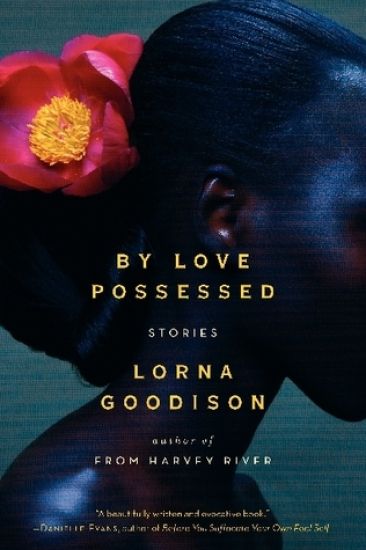
By Love Possessed: Stories

By Love Possessed: Stories

Lorna Goodison

Amistad Press
2012
nidottu
"A beautifully written and evocative book."--Danielle Evans, author of Before You Suffocate Your Own Fool Self, winner of the PEN/Robert W. Bingham Prize"Written by the hand of a poet, the prose in this collection is consistently beautiful."--Elizabeth Nunez, author of Prospero's Daughter and Boundaries"I love the tender beautiful writing; I love the characters, and in many ways it felt as if I had met them before....I just love this book."--Uwem Akpan, author of Say You're One of Them, an Oprah Book Club selectionInternationally renowned and award-winning poet Lorna Goodison brings us By Love Possessed, her long-anticipated collection of short fiction. Making dazzling use of the Creole patois of Jamaica, Goodison limns the beauty and despair of the human condition and explores the unique power of love to both uplift and destroy. Goodison's powerfully moving stories explore the pain, the struggle, and the triumph of Jamaicans--particularly women--those still living on their Caribbean island and those who have emigrated elsewhere. By Love Possessed is a rare and beautiful gift from an extraordinary writer who was mentored by the legendary Derek Walcott and who stands with Edwidge Danticat as a brave and breathtaking voice in contemporary literature.
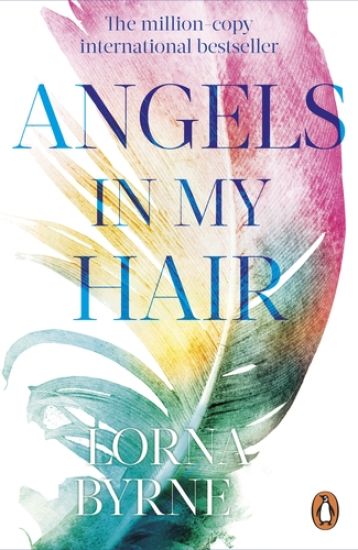
Angels in My Hair

Angels in My Hair

Lorna Byrne

Cornerstone
2010
pokkari
An autobiography of a modern day mystic, an Irish woman with powers of the saints of old. It presents the testimony of a woman who sees things, beyond the range of our everyday experience.
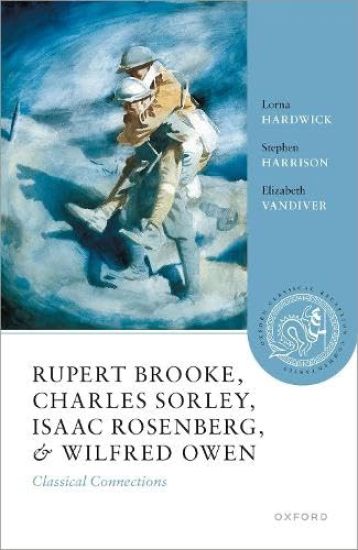
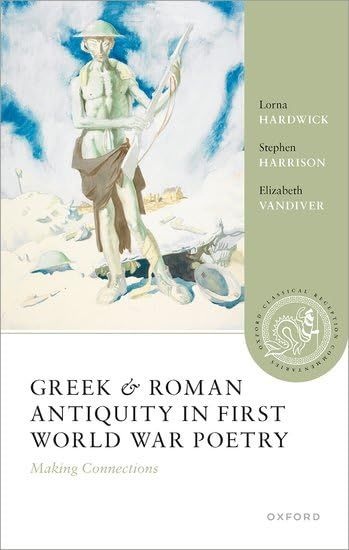
Rupert Brooke, Charles Sorley, Isaac Rosenberg, and Wilfred Owen

Rupert Brooke, Charles Sorley, Isaac Rosenberg, and Wilfred Owen

Lorna Hardwick; Stephen Harrison; Elizabeth Vandiver

Oxford University Press
2024
sidottu
Rupert Brooke, Wilfred Owen, Isaac Rosenberg, and Charles Sorley all died in the First Word War. They came from diverse social, educational, and cultural backgrounds, but for all of the writers, engagement with Greek and Roman antiquity was decisive in shaping their war poetry. The world views and cultural hinterlands of Brooke and Sorley were framed by the Greek and Latin texts they had studied at school, whereas for Owen, who struggled with Latin, classical texts were a part of his aspirational literary imagination. Rosenberg's education was limited but he encountered some Greek and Roman literature through translations, and through mediations in English literature. The various ways in which the poets engaged with classical literature are analysed in the commentaries, which are designed to be accessible to classicists and to users from other subject areas. The extensive range of connections made by the poets and by subsequent readers is explained in the Introduction to the volume. The commentaries illuminate relationships between the poems and attitudes to the war at the time, in the immediate post-war years, and subsequently. They also probe how individual poems reveal various facets of the poetry of unease, the poetry of survival, and the poetics of war and ecology. References to the accompanying online Oxford Classical Receptions Commentaries will enable readers to follow up their special interests. This volume differs from the shorter volume Greek and Roman Antiquity in First World War Poetry: Making Connections in that it covers the whole output of the four poets, and not just their war poems.
Thomas Nashe in Context

Thomas Nashe in Context

Lorna Hutson

Clarendon Press
1989
sidottu
Challenging the tendency to disparage Nashe's writing as the product of an eccentric sensibility and to explain his texts in journalistic terms more appropriate to modern commercial publishing, this work provides an entirely new interpretation of the economic context of sixteenth-century literature. Lorna Hutson reveals hitherto overlooked links between humanist approaches to the literary text and the transformation of the English economy through humanist-inspired policies of ethical and social reform; from this context, Nashe's textual prodigality emerges as an assault upon the contemporary impoverishment of literary activity caused by the political over-valuing of the printed word. Generic precedents turn out to be festive; each of Nashe's apparently unstructured pamphlets derives shaping energy from traditions of popular-festive mockery. The pamphlets bring an older conception of seasonal prosperity into subversive dialogue with the newer discourse of provident individualism. For Nashe, stylistic experiment is shown to mean more than a choice of style; it is, rather, the expression of an intricate, socially engaged imagination.
OxfordAQA International GCSE English as a Second Language (9280)

OxfordAQA International GCSE English as a Second Language (9280)

Lorna Pepper; Mike Gould

Oxford University Press
2017
muu
The only textbook that fully supports the OxfordAQA International GCSE English as a Second Language specification (9280), for first teaching from September 2017. Enable your students to communicate clearly with a thematic, skills-focused approach that builds reading, writing, listening and speaking skills. Ensure students can confidently read, understand and analyse a wide variety of texts. A dedicated exam preparation chapter packed with exam-style practice and advice will build your students assessment confidence. The enclosed listening CD allows students to refine their listening ability. Plus, effectively deliver the new syllabus with comprehensive support in the Teacher Guide.
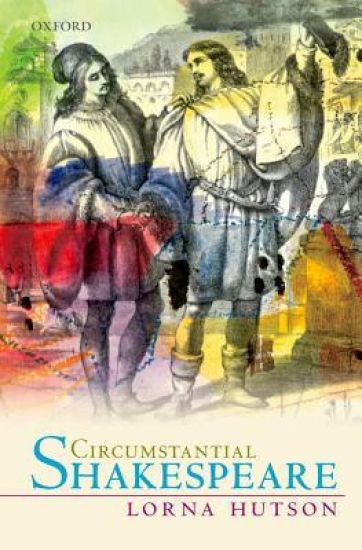
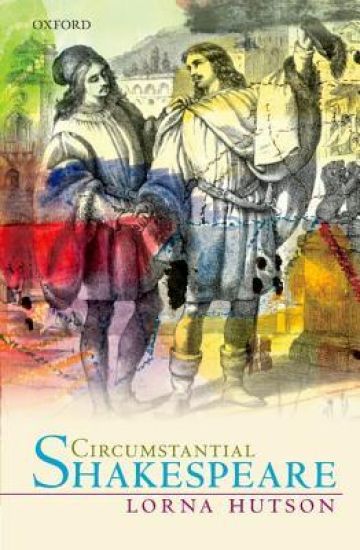
Circumstantial Shakespeare

Circumstantial Shakespeare

Lorna Hutson

Oxford University Press
2018
nidottu
Shakespeare's characters are thought to be his greatest achievement--imaginatively autonomous, possessed of depth and individuality, while his plots are said to be second-hand and careless of details of time and place. This view has survived the assaults of various literary theories and has even, surprisingly, been revitalized by the recent emphasis on the collaborative nature of early modern theatre. But belief in the autonomous imaginative life of Shakespeare's characters depends on another unexamined myth: the myth that Shakespeare rejected neoclassicism, playing freely with theatrical time and place. Circumstantial Shakespeare explodes these venerable critical commonplaces. Drawing on sixteenth-century rhetorical pedagogy, it reveals the importance of topics of circumstance (of Time, Place, and Motive, etc.) in the conjuring of compelling narratives and vivid mental images. 'Circumstances' -- which we now think of as incalculable contingencies -- were originally topics of forensic inquiry into human intention or passion. In drawing on the Roman forensic tradition of circumstantial proof, Shakespeare did not ignore time and place. His brilliant innovation was to use the topics of circumstance to imply offstage actions, times and places in terms of the motives and desires we attribute to the characters. His plays thus create both their own vivid and coherent dramatic worlds and a sense of the unconscious feelings of characters inhabiting them. Circumstantial Shakespeare offers new readings of Romeo and Juliet, King Lear, Lucrece, Two Gentlemen of Verona and Macbeth, as well as new interpretations of Sackville and Norton's Gorboduc and Beaumont and Fletcher's The Maid's Tragedy. It engages with eighteenth-century Shakespeare criticism, contemporary Shakespeare criticism, semiotics of theatre, Roman forensic rhetoric, humanist pedagogy, the prehistory of modern probability, psychoanalytic criticism and sixteenth-century constitutional thought.
Detention and its Alternatives under International Law

Detention and its Alternatives under International Law

Lorna McGregor

Oxford University Press
2023
sidottu
In theory, international law provides a clear framework for ensuring the rarity of detention by either characterising a detention practice as inherently arbitrary or treating it as a measure of last resort. However, some critics have argued that international law prioritises procedural safeguards, leaving the international law on the legitimacy, necessity, and proportionality of detention and its alternatives underdeveloped. Detention and its Alternatives under International Law analyses the current state of the international law on detention and its alternatives within national law and policy. It addresses armed conflict, counterterrorism, criminal justice, mental health, migration, public health, and social care. The book discusses a number of topics such as: shortcomings in how international law addresses structural inequality and discrimination; the level of scrutiny applied to the evidence supporting decisions to detain; and the availability and proportionality of alternatives to detention and their compatibility with human rights. All chapters analyse how new and emerging technologies affect decisions to detain, as well as the nature of alternatives to detention. Without conflating different forms of detention, the book proposes key means of making detention a true measure of last resort. Detention and its Alternatives under International Law will be a valuable resource to practitioners and scholars working on the right to liberty or the underlying policy areas in which detention is employed as a tool.
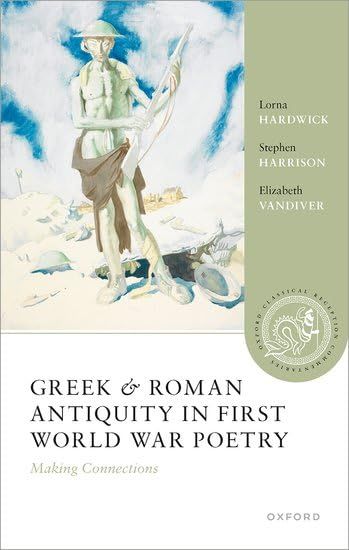
Greek and Roman Antiquity in First World War Poetry

Greek and Roman Antiquity in First World War Poetry

Lorna Hardwick; Stephen Harrison; Elizabeth Vandiver

Oxford University Press
2024
sidottu
Rupert Brooke, Wilfred Owen, Isaac Rosenberg, and Charles Sorley all died in the First Word War. They came from diverse social, educational, and cultural backgrounds, but for all of the writers, engagement with Greek and Roman antiquity was decisive in shaping their war poetry. The world views and cultural hinterlands of Brooke and Sorley were framed by the Greek and Latin texts they had studied at school, whereas for Owen, who struggled with Latin, classical texts were a part of his aspirational literary imagination. Rosenberg's education was limited but he encountered some Greek and Roman literature through translations, and through mediations in English literature. The various ways in which the poets engaged with classical literature are analysed in the commentaries, which are designed to be accessible to classicists and to users from other subject areas. The extensive range of connections made by the poets and by subsequent readers is explained in the Introduction to the volume. The commentaries illuminate relationships between the poems and attitudes to the war at the time, in the immediate post-war years, and subsequently. They also probe how individual poems reveal various facets of the poetry of unease, the poetry of survival, and the poetics of war and ecology.
Greek and Roman Antiquity in First World War Poetry

Greek and Roman Antiquity in First World War Poetry

Lorna Hardwick; Stephen Harrison; Elizabeth Vandiver

Oxford University Press
2024
nidottu
Rupert Brooke, Wilfred Owen, Isaac Rosenberg, and Charles Sorley all died in the First Word War. They came from diverse social, educational, and cultural backgrounds, but for all of the writers, engagement with Greek and Roman antiquity was decisive in shaping their war poetry. The world views and cultural hinterlands of Brooke and Sorley were framed by the Greek and Latin texts they had studied at school, whereas for Owen, who struggled with Latin, classical texts were a part of his aspirational literary imagination. Rosenberg's education was limited but he encountered some Greek and Roman literature through translations, and through mediations in English literature. The various ways in which the poets engaged with classical literature are analysed in the commentaries, which are designed to be accessible to classicists and to users from other subject areas. The extensive range of connections made by the poets and by subsequent readers is explained in the Introduction to the volume. The commentaries illuminate relationships between the poems and attitudes to the war at the time, in the immediate post-war years, and subsequently. They also probe how individual poems reveal various facets of the poetry of unease, the poetry of survival, and the poetics of war and ecology.
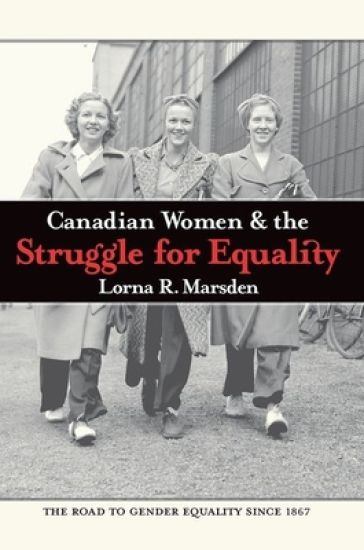
Canadian Women and the Struggle for Equality

Canadian Women and the Struggle for Equality

Lorna R. Marsden

Oxford University Press, Canada
2016
nidottu
What range of possibilities might appear on the horizon to a young woman today as she contemplates her future compared to those envisioned by a young woman 150 years ago? And how would her daily life be different? The degree of change in women's lives in Canada over the last 150 years is staggering, and much is the result of the fight for greater equality. How did this change take place? Establishing equality as a fact of daily life has been a protracted struggle, and one that remains far from finished. Over the last century and a half since Confederation, this struggle has taken on a unique character in Canada, given our country's peculiar circumstances. Lorna R. Marsden, sociologist and activist - who has herself been involved in the action - chronicles the circumstances, the people, and the social changes that have characterized women's journey down the long road toward equality. Her account considers changes brought about by such forces as war, immigration, and public health, as well as other complex historical changes, such as legal evolution and employment opportunities. This fascinating book is full of insight, little known facts (for example, many women could vote as early as 1791 in some parts of Canada), and an understanding of the complex ways that a society like Canada can and does change. It also reminds us that there is still a distance to go in the journey toward equality.
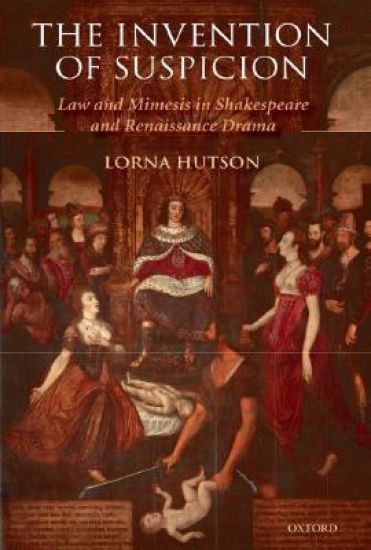
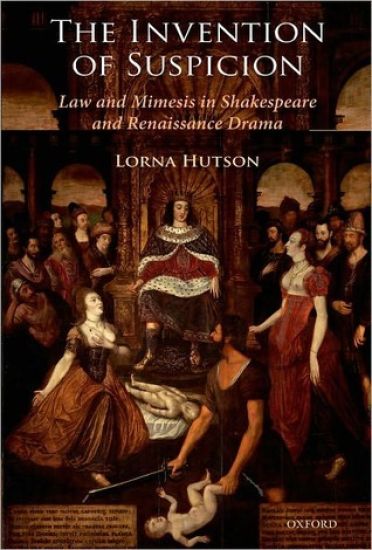
The Invention of Suspicion

The Invention of Suspicion

Lorna Hutson

Oxford University Press
2007
sidottu
The Invention of Suspicion argues that the English justice system underwent changes in the sixteenth century that, because of the system's participatory nature, had a widespread effect and a decisive impact on the development of English Renaissance drama. These changes gradually made evidence evaluation a popular skill: justices of peace and juries were increasingly required to weigh up the probabilities of competing narratives of facts. At precisely the same time, English dramatists were absorbing, from Latin legal rhetoric and from Latin comedy, poetic strategies that enabled them to make their plays more persuasively realistic, more 'probable'. The result of this enormously rich conjunction of popular legal culture and ancient forensic rhetoric was a drama in which dramatis personae habitually gather evidence and 'invent' arguments of suspicion and conjecture about one another, thus prompting us, as readers and audience, to reconstruct this 'evidence' as stories of characters' private histories and inner lives. In this drama, people act in uncertainty, inferring one another's motives and testing evidence for their conclusions. As well as offering an overarching account of how changes in juridical epistemology relate to post-Reformation drama, this book examines comic dramatic writing associated with the Inns of Court in the overlooked decades of the 1560s and 70s. It argues that these experiments constituted an influential sub-genre, assimilating the structures of Roman comedy to current civic and political concerns with the administration of justice. This sub-genre's impact may be seen in Shakespeare's early experiments in revenge tragedy, history play and romance comedy, in Titus Andronicus, Henry VI and The Comedy of Errors , as well as Jonson's Every Man in his Humour, Bartholomew Fair and The Alchemist. The book ranges from mid-fifteenth century drama, through sixteenth century interludes to the drama of the 1590s and 1600s. It draws on recent research by legal historians, and on a range of legal-historical sources in print and manuscript.
Circumstantial Shakespeare

Circumstantial Shakespeare

Lorna Hutson

Oxford University Press
2015
sidottu
Shakespeare's characters are thought to be his greatest achievement--imaginatively autonomous, possessed of depth and individuality, while his plots are said to be second-hand and careless of details of time and place. . This view has survived the assaults of various literary theories and has even, surprisingly, been revitalized by the recent emphasis on the collaborative nature of early modern theatre. But belief in the autonomous imaginative life of Shakespeare's characters depends on another unexamined myth: the myth that Shakespeare rejected neoclassicism, playing freely with theatrical time and place. Circumstantial Shakespeare explodes these venerable critical commonplaces. Drawing on sixteenth-century rhetorical pedagogy, it reveals the importance of topics of circumstance (of Time, Place and Motive, etc.) in the conjuring of compelling narratives and vivid mental images. 'Circumstances'--which we now think of as incalculable contingencies--were originally topics of forensic inquiry into human intention or passion. In drawing on the Roman forensic tradition of circumstantial proof, Shakespeare did not ignore time and place. His brilliant innovation was to use the topics of circumstance to imply offstage actions, times and places in terms of the motives and desires we attribute to the characters. His plays thus create both their own vivid and coherent dramatic worlds and a sense of the unconscious feelings of characters inhabiting them. Circumstantial Shakespeare offers new readings of Romeo and Juliet, King Lear, Lucrece, Two Gentlemen of Verona and Macbeth, as well as new interpretations of Sackville and Norton's Gorboduc and Beaumont and Fletcher's The Maid's Tragedy. It engages with eighteenth-century Shakespeare criticism, contemporary Shakespeare criticism, semiotics of theatre, Roman forensic rhetoric, humanist pedagogy, the prehistory of modern probability, psychoanalytic criticism and sixteenth-century constitutional thought.
The Invention of Suspicion

The Invention of Suspicion

Lorna Hutson

Oxford University Press
2011
nidottu
The Invention of Suspicion argues that the English justice system underwent changes in the sixteenth century that, because of the system's participatory nature, had a widespread effect and a decisive impact on the development of English Renaissance drama. These changes gradually made evidence evaluation a popular skill: justices of peace and juries were increasingly required to weigh up the probabilities of competing narratives of facts. At precisely the same time, English dramatists were absorbing, from Latin legal rhetoric and from Latin comedy, poetic strategies that enabled them to make their plays more persuasively realistic, more 'probable'. The result of this enormously rich conjunction of popular legal culture and ancient forensic rhetoric was a drama in which dramatis personae habitually gather evidence and 'invent' arguments of suspicion and conjecture about one another, thus prompting us, as readers and audience, to reconstruct this 'evidence' as stories of characters' private histories and inner lives. In this drama, people act in uncertainty, inferring one another's motives and testing evidence for their conclusions. As well as offering an overarching account of how changes in juridical epistemology relate to post-Reformation drama, this book examines comic dramatic writing associated with the Inns of Court in the overlooked decades of the 1560s and 70s. It argues that these experiments constituted an influential sub-genre, assimilating the structures of Roman comedy to current civic and political concerns with the administration of justice. This sub-genre's impact may be seen in Shakespeare's early experiments in revenge tragedy, history play and romance comedy, in Titus Andronicus, Henry VI and The Comedy of Errors, as well as Jonson's Every Man in his Humour, Bartholomew Fair and The Alchemist. The book ranges from mid-fifteenth century drama, through sixteenth century interludes to the drama of the 1590s and 1600s. It draws on recent research by legal historians, and on a range of legal-historical sources in print and manuscript.
To Us, All Flowers Are Roses

To Us, All Flowers Are Roses

Lorna Goodison

University of Illinois Press
1995
nidottu
Writing in The Hudson Review, David Mason has characterized Lorna Goodison's work as a "revelation to me, much of it beautiful for its simple negotiation of the line between life and art." One of the most distinguished contemporary poets of the Caribbean, Goodison draws on both African and European inheritances in her finely crafted poems, which often carry a sense of language's healing power in the face of the pain of the past. She deals thematically with the struggle of Caribbean women and writes in a fashion that has developed from conversational to more ritualistic. From reviews of Goodison's earlier works: "The evocative power of Lorna Goodison's poetry derives its urgency and appeal from the heart-and-mind concerns she has for language, history, racial identity, and gender." Andrew Salkey -- World Literature Today "A marvelous poet, one to savor and to chant aloud." -- Pat Monaghan, Booklist
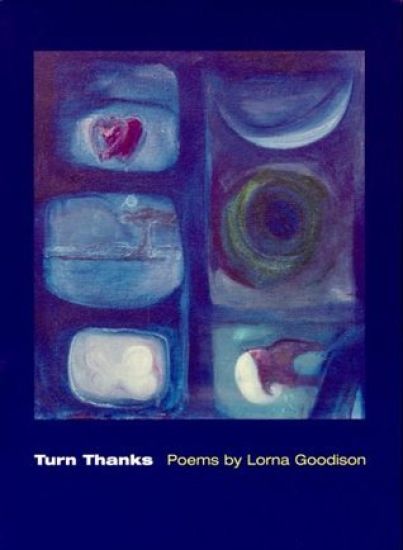
Turn Thanks

Turn Thanks

Lorna Goodison

University of Illinois Press
1999
nidottu
The lyric energy, compassion, humor, and tenderness that characterize Lorna Goodison's work are once again in evidence in Turn Thanks, her seventh collection. Here the Jamaican poet turns to acknowledge her own ancestors and those of her craft: mother and father, aunts and uncles, Africa, William Wordsworth, Vincent Van Gogh, the Wild Woman. "Whether you will receive this letter or not I cannot tell," she writes. "Still, I intend to send it . . . "
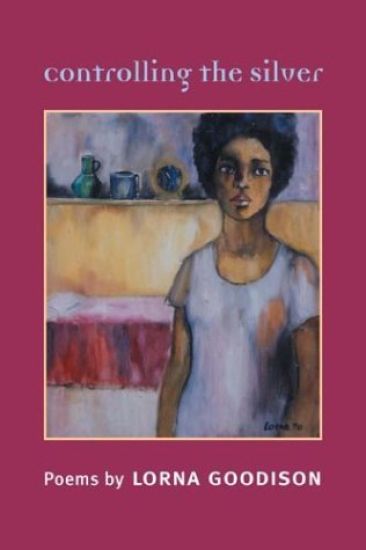
Controlling the Silver

Controlling the Silver

Lorna Goodison

University of Illinois Press
2004
nidottu
Renowned poet Lorna Goodison has written a new collection of elegies and praise songs which explore the close link between history and genealogy in the Caribbean experience. Her subjects range from the economic genius of market women to the complex beauty of the natural world.
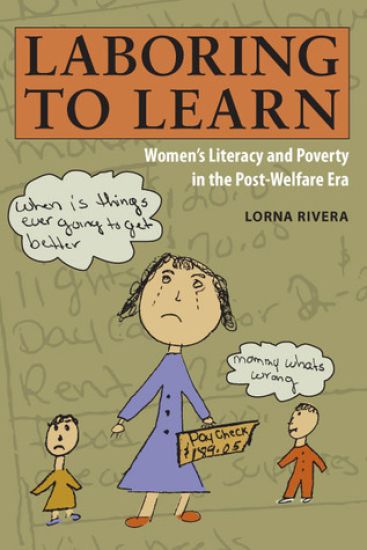
Laboring to Learn

Laboring to Learn

Lorna Rivera

University of Illinois Press
2008
nidottu
The American adult education system has become an alternative for school dropouts, with some state welfare policies requiring teen mothers and women without high school diplomas to participate in adult education programs to receive aid. Currently, low-income women of color are more likely to be enrolled in the lowest levels of adult basic education. Very little has been published about women's experiences in these mandatory programs and whether the programs reproduce the conditions that forced women to drop out in the first place. Lorna Rivera bridges the gap with this important study, the product of ten years' active ethnographic research with formerly homeless women who participated in adult literacy education classes before and after welfare reform. She draws on rich interviews with organizers and participants in the Adult Learners Program at Project Hope, a women's shelter and community development organization in Boston's Dudley neighborhood, one of the poorest in the city. Analyzing the web of ideological contradictions regarding "work first" welfare reform policies, Rivera argues that poverty is produced and reproduced when women with low literacy skills are pushed into welfare-to-work programs and denied education. She examines how various discourses about individual choice and self-sufficiency shape the purposes of literacy, how low-income women express a sense of personal responsibility for being poor, and how neoliberal ideologies and practices compromise the goals of critical literacy programs. Throughout this study, the voices and experiences of formerly homeless women challenge cultural stereotypes about poor women, showing in personal and structural terms how social and economic forces shape and restrict opportunities for low-income women of color.
Birds Up Close

Birds Up Close

Lorna Gibson

MIT PRESS LTD
2026
sidottu
A renowned engineer and ornithologist reveals the marvel of how birds work from the tips of their beaks to the sheen of their tailfeathers. With over 150 full-color illustrations, a unique gift book for everyone from the avid birder to the bird beginner. Consider feathers: They define birds wings, enabling flight. They insulate against cold. They repel water. They even control sound. And how feathers work is just one aspect of the wonders of birds explained by pathbreaking researcher and lifelong birder Lorna Gibson in Birds Up Close. Feathers, bones, bills, eggs, flight: all come in for scrutiny in this engaging book. What produces the iridescence of plumage? How does the internal structure of a bird s bones make them lightweight? How do different birds use their bills and tongues from woodpeckers penetrating the holes they drill to hummingbirds imbibing nectar, to sandpipers needling the sand, and to phalaropes drawing water droplets containing plankton into their mouths without sucking (no lips!)? Drawing on her expertise and personal experience in both engineering and ornithology, the author explores the hidden microscopic structures and engineering principles that keep birds aloft and alive how an egg is formed, how a bird generates lift; how raptors soar and glide, albatrosses fly thousands of miles, hummingbirds hover, puffins and penguins fly underwater. She also considers the longer view of birds in their habitats and natural history. Her up-close look at avian mysteries provides a perspective like no other for the expert ornithologist and curious observer alike.
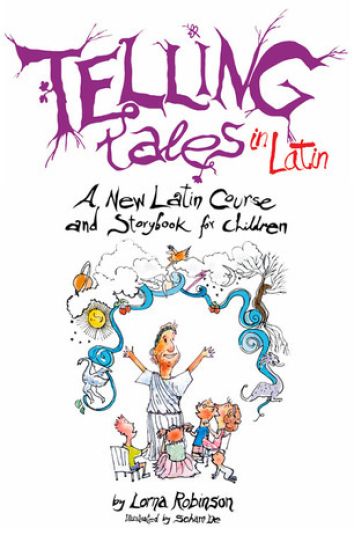
Telling Tales in Latin

Telling Tales in Latin

Lorna Robinson

Souvenir Press Ltd
2013
pokkari
Telling Tales in Latin teaches Latin through the magic of storytelling. Narrated by the chatty and imaginative Roman poet Ovid (who lived in the Rome of the first century B.C), this new course takes young learners on a journey through some of the tales from Ovid's Metamorphoses. Along the way, they pick up Latin words and grammar, explore the connections between Latin and English and discover how Ovid's stories still speak to us today. Each chapter introduces one of Ovid's much-loved stories, encouraging children to begin reading Latin immediately while exploring the literary and mythic context of the stories. At the end of each chapter there are suggested activities to help learners to think about what they have just read, and to understand how the stories connect to ideas and issues that are still relevant today, from relationships with others and philosophy, to science and caring for the planet. Soham De's illustrations bring Ovid's stories alive for a wide range of learners and make learning Latin a colourful journey of discovery. Telling Tales in Latin outlines how Latin is the basis for English grammar, unlocking the complexities of learning English (and other languages) along the way. It also contains the vocabulary and grammar needed for the OCR Entry Level Latin qualification, making this book the ideal first introduction to Latin. Visit the website for The Iris Project, the charity established by Lorna Robinson to promote Latin and Classics teaching in state schools.
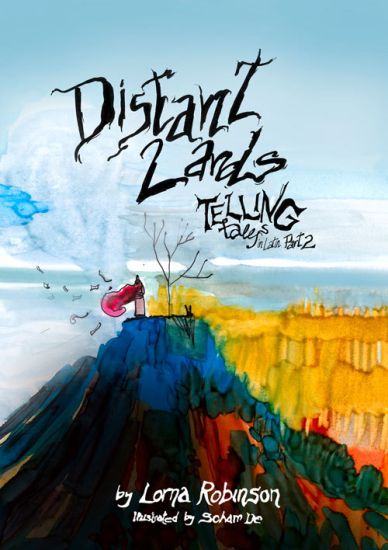
Distant Lands

Distant Lands

Lorna Robinson

Souvenir Press Ltd
2016
pokkari
Narrated by the chatty and imaginative Roman poet Ovid who tells the tale of his own exile, interspersed with more well-loved tales from his Metamorphoses. The book introduces readers to the Ovid's exile, the history of Ovid's life and introduction to the geography of the Roman Empire will engage pupils. Children will be enthralled by stories such as Lycaon, the wild man who became a wolf, and Pyramus and Thisbe, the love-struck pair who whisper through a crack in their adjoining wall. These are woven into Ovid's account of his last night in Rome, his dramatic journey across the seas, and the strangeness of his new world. Along the way, readers pick up Latin words and grammar and are encouraged to explore the connections between Latin and English, as well as the ways in which Ovid's stories still speak to us today. Metamorphoses is one of the most important works of Roman literature, and is familiar to all teachers of Classics (and a core text in most Latin courses).