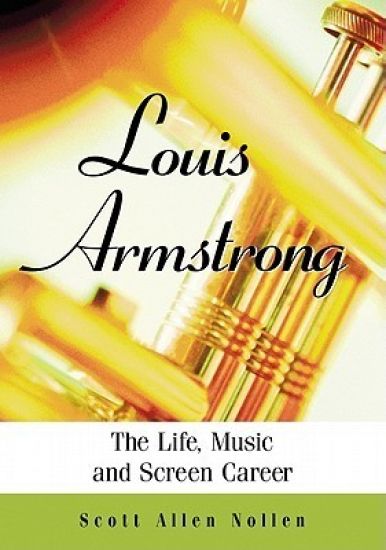
Louis Armstrong was not only a virtuoso musician, singer, composer and actor, but also a dedicated writer who carried a typewriter with him on his constant travels around the globe, turning out hundreds of letters and reminiscences. The man never stopped creating. His unique verbal, musical and visual content and style permeated everything he touched. Included in this career biography are the major events of his life, his artistic innovations and cultural achievements, a detailed survey of his recordings and live performances, and in-depth discussions of his screen performances--not only Hollywood feature films but short films, European concert films, and dozens of television shows.
Louis XVI was a gentle and unassuming man who did not want to be king but attempted to work for the welfare of his people--until his government was engulfed by the violent upheavals of the French Revolution. Facing the rapidly changing desires of his subjects, he gave way to the policies they demanded. Few rulers have acquiesced to such startling changes of government within such a brief span of time. Louis XVI lacked the charisma of Marie Antoinette, but he is remarkable for the courage he exhibited when facing violent armed men only a few feet away. The quiet dignity with which he approached his execution has been praised by countless people, including Albert Camus and Victor Hugo. This biography traces the painfully exciting events involving Louis XVI, Marie Antoinette and their two children. The royal family was first taken by a violent mob from Versailles to Paris. They attempted an escape but it failed when they had almost reached safety. A year later the king and queen were guillotined.
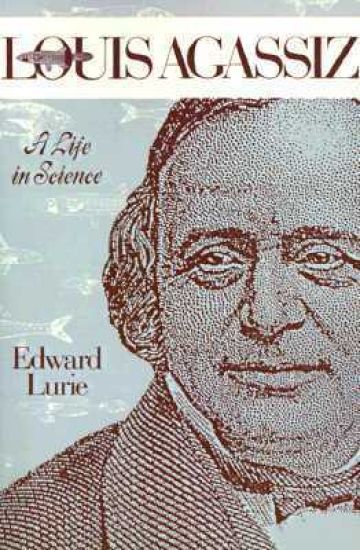
A giant of nineteenth-century natural history study, Louis Agassiz made major contributions to modern knowledge of geology, paleontology, and zoology. Agassiz's fame in America was largely as a popularizer of natural history and teacher of advanced students. Founding the Museum of Comparative Zoology at Harvard was his lasting teaching and research achievement, and the Smithsonian Institution and National Academy of Sciences benefited from his impulse to professionalize science. A life-long opponent of the theory of evolution. Agassiz affirmed the magnificence of God's plan to all who would "study nature, not books".
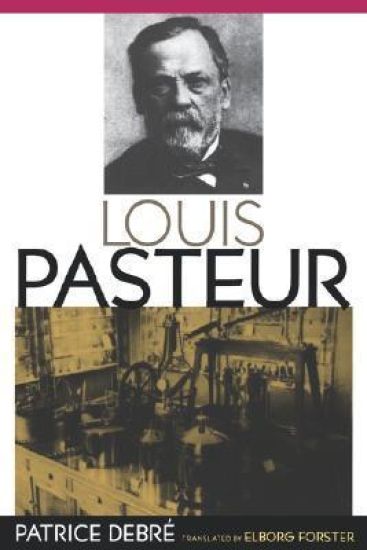
Distinguished French immunologist and physician Patrice Debre offers an extensive, balanced, and detailed account of Louis Pasteur's life, struggles, and contributions. Drawing heavily on Pasteur's own scientific notebooks and writings, Debre presents a complete critical account of his discoveries and the controversies they raised with other scientists and occasionally with his closest associates.
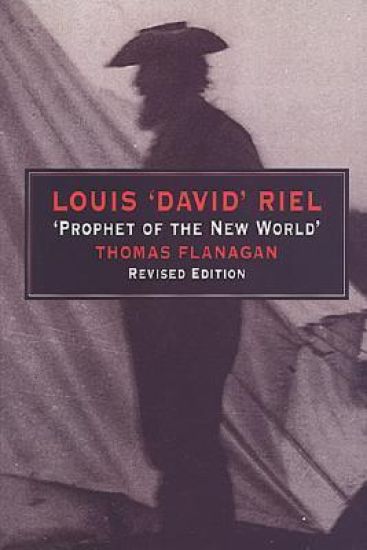
Louis Riel believed that on 8 December 1875 he received a divine commission authorizing him to save the Métis and reform the Catholic Church. He was a prophet, inspired by the Holy Spirit, and the Métis were the new chosen people. A new branch of the Catholic Church would be founded in North America, with its first Holy See in Montreal, and its second in Riel's birthplace of St. Vital. When Riel expressed these views in 1876, he was committed to a lunatic asylum. After his release, he suppressed his ideas for several years, only to reveal them again to his Métis followers during the North-West Rebellion. The Rebellion thus became as much a religious as a political movement; Riel believed himself a prophet to the end of his life, and he went to his death thinking that he, like Christ, would be resurrected on the third day. Earlier writers about Louis Riel have noted his religious beliefs but have not taken them seriously. They have usually dismissed Riel's attempt to found a new religion as the symptom of a deranged mind. Thomas Flanagan takes Riel's religion seriously and analyses it using categories developed in the literature about millenarian movements. He shows that Riel's religion, far from being simply individual madness, is typical of the nativistic and millenarian movements described by one author as the 'religions of the oppressed.' This is also a biography, tracing Riel's thinking on religious subjects from his childhood to the end of his life and paying particular attention to events in his life that influenced his thinking. This developmental approach is necessary because Riel's ideas changed frequently; he never arrived at a fixed 'system.' The research is based on primary sources throughout. Much new documentation has become available over the past thirty years and in the sixteen years since this volume was initially published. In particular, new information is presented about Riel's youth in Montreal, his time in insane asylums, his years in Montana, and the North-West Rebellion. Flanagan also re-interprets well-known documents. While this revised edition does not alter the fundamentals of his interpretation, it improves the historical backdrop against which it is presented through use of a wealth of new primary sources. Flanagan has updated his citings of Riel's manuscripts to current sources.
In paperback for the first time, this second volume of Louis L'Amour's collected stories showcases thirty more classic tales of the American frontier. Inside you will find the stories of heroism, honor and sacrifice that L'Amour made uniquely his own: like that of a young man sent out alone into a blizzard to face a deadly stampede, or a lawman who finds the bullet-riddled body of an infamous Mexican bandit and knows duty demands he track down a far more dangerous predator. Featuring L'Amour's signature stories of Texas Ranger Chick Bowdrie, this collection captures men and women at the crossroads of friendship and suspicion, loyalty or betrayal.
In paperback for the first time, this third volume of Louis L'Amour's collected stories gathers twenty-eight timeless tales of the American West. Whether following the exploits of a couple taking refuge in a cabin with a group of outlaws, a drifter who poses as a murdered man to solve a mystery, or the soft-spoken young suitor accused of cowardice who proves his courage when the guns are against him--without firing a shot--these gripping tales all have one thing in common: you won't be able to put them down until the last page. For lovers of great storytelling everywhere, this exciting collection features the unforgettable characters, heart-stopping drama, and careful attention to historical detail that have entertained readers for decades and earned Louis L'Amour a permanent place among our finest American writers.
The Collected Short Stories of Louis L'Amour, Volume 4, Part 1 kicks off this collection of L'Amour's classic adventures and includes his very first published short story. Here are timeless tales of danger and daring, wanderlust and heroism, filled with ordinary men and women facing often life-threatening challenges with courage, dignity, and honor. The first of two parts, this volume contains breathtaking thrills and dynamic characters: from the down-on-his-luck fortune hunter who risks everything to save a married couple in the wilds of Borneo to the mysterious hero aboard a downed airliner dangling six hundred feet above certain doom. This unique collection is guaranteed to delight readers again and again, proving why Louis L'Amour remains America's favorite storyteller.
Unsurpassed for sheer storytelling excitement, Louis L'Amour's tales of adventure continue in this new paperback series. Whether joining an American captain navigating a cargo ship through pirate-infested Japanese-controlled waters during World War II or marveling at the resourcefulness of a young woman pushed to the limits of endurance as she flees a killer through a primeval forest, these adrenaline-fueled tales of mystery, suspense, murder, and survival will keep your heart pounding long after their final pages. From stories numbering just a few intense pages to novella-length works, the tales in this action-packed anthology bear all the trademarks of the master's touch: the historical accuracy, memorable characters, and timeless themes that have earned L'Amour his unique place among American authors.
The stories of Louis L'Amour are built around the dramatic moments when men and women cast their fears, doubts, and pasts behind them and plunge into the unknown--into split-second decisions with life-and-death consequences. Nowhere is that more evident than in this quintessential collection of stories set on the American frontier. Here L'Amour takes us across a bold, beautifully rendered landscape where old scores haunt new lives, the wrong choice leaves unwitting victims, and strangers may come to trust--or kill--one another. Fugitives, visionaries, fortune seekers, drifters, and young women trying to build homes on a lawless frontier, the characters in these pulse-pounding stories are vintage L'Amour. Together in this vivid, rollicking collection, they bring to life the spirit of adventure and confirm Louis L'Amour's place in the pantheon of American writers.
The vibrant tales of adventure by Louis L'Amour, one of America's most beloved storytellers, have brought the American West to life. In The Collected Short Stories of Louis L'Amour, Volume 6, Part 1, L'Amour takes us beyond the frontier with gripping stories of crime, sports, and the murky world where the two often meet. These electrifying stories roam from the naked glare of boxing arenas rife with corruption, and freight docks where laborers toil to earn just enough to get by, to the penthouses of the rich and arrogant who calculate the odds of how to get even more. From suspenseful whodunits to rueful tales of fortunes gained and lost, this remarkable collection will enthrall and entertain L'Amour fans old and new.
Traversing a vivid landscape, from sunblasted hills and canyons to the nighttime streets of America's greatest cities, some of Louis L'Amour's most compelling fiction was set in his own time. Here are tales of innocents caught in the schemes of criminals, detectives hunting down truths that hide even more lies, gamblers and beauties, wiseguys and cops. Here is a world populated by the kinds of people who risk their lives to right a wrong, make a buck, or save a friend. Brimming with thought-provoking characters and situations--from a man who regains consciousness in a burning house surrounded by a fortune in cash, to an innocent in a seedy diner who meets a vicious killer who is supposed to be long dead--these thrilling, atmospheric stories course with authenticity and bear the mark of a timeless master.
There is no story more distinctly American than the western and no writer as great a master of the form as Louis L'Amour. In this seventh volume of L'Amour's collected short stories, you'll find some of his most popular characters, heroes who have become a part of our cultural legacy, as well as the ordinary men and women whose adventures are chronicled with an immediacy no reader can resist-or ever forget. In Louis L' Amour's frontier stories, the American West is the crucible in which character is tested, reputations are won or lost, and life always hangs in the balance. Struggling to survive against the elements, hostile Indians, or outlaws who prey upon the honest and hardworking, the men and women in these tales each come face-to-face with what they're made of-often in moments that explode with the violence of an avalanche or the speed of a drawn gun. Here L'Amour demonstrates the unerring touch for detail and keen insight into human nature that lend these stories the power to thrill, surprise, and entertain readers of every generation. A man driven by his faith in the woman he loves survives war, Indian massacre, and near starvation only to find his homecoming delayed by one last battle-under his own roof. To stop a range war, a ranch foreman stands up to his boss, his men, and conspirators who seem to have both right and might on their side. And in a town where fourteen men have already died under suspicious circumstances, a new sheriff by the name of Utah Blaine patiently sets a trap for a frontier serial killer. Here are stories of honest thieves and crooked lawmen, of dream chasers and treasure hunters, of men and women hoping for a second chance and others down to their last. This rich and varied cast embodies not only the spirit of the West but the timeless struggle of the best and worst in us all, on a stage as big as the frontier itself. Full of suspense, mystery, adventure, this remarkable collection has everything that's earned Louis L'Amour his well-deserved reputation as America's favorite storyteller.
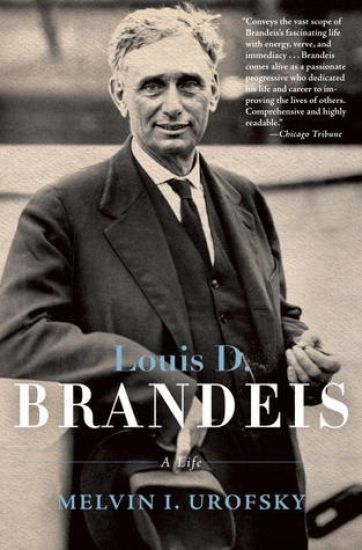
As a young lawyer in the late nineteenth and early twentieth centuries, Louis Brandeis, born into a family of reformers who came to the United States to escape European anti-Semitism, established the way modern law is practiced. He was an early champion of the right to privacy and pioneer the idea of pro bono work by attorneys. Brandeis invented savings bank life insurance in Massachusetts and was a driving force in the development of the Clayton Antitrust Act, the Federal Reserve Act, and the law establishing the Federal Trade Commission. Brandeis witnessed and suffered from the anti-Semitism rampant in the United States in the early twentieth century, and with the outbreak of World War I, became at age fifty-eight the head of the American Zionist movement. During the brutal six-month congressional confirmation battle that ensued when Woodrow Wilson nominated him to the Supreme Court in 1916, Brandeis was described as "a disturbing element in any gentlemen's club." But once on the Court, he became one of its most influential members, developing the modern jurisprudence of free speech and the doctrine of a constitutionally protected right to privacy and suggesting what became known as the doctrine of incorporation, by which the Bill of Rights came to apply to the states. In this award-winning biography, Melvin Urofsky gives us a panoramic view of Brandeis's unprecedented impact on American society and law.
Louis Owens (1948-2002) achieved worldwide recognition with his humorous and fearless novels that explored themes close to Owens's own upbringing as a mixed-blood Choctaw, Cherokee, and Irish-American. His critical works were equally substantive. Readers of his criticism find his work challenging, and casual readers find his fiction highly enjoyable - a remarkable combination that speaks well of Owens's intellectual and creative abilities.In a new collection of essays, Louis Owens: Literary Reflections on His Life and Work, editor Jacquelyn Kilpatrick and eleven other contributors examine Owens's fiction and nonfiction from widely varying viewpoints to address issues such as identity, place, literary theory, trickster motifs, and the environment. This text aids the reader in understanding the theories Owens articulated and how he followed those theories in his own writing. Also included is the last interview Owens gave, appearing in print for the first time, which provides insights into this complex man's personal life.
Forbidden Planet is a product of the MGM studio, which at the time of the production of this film was hardly in the business of making science-fiction films. Originally planned as a "B" picture, the 1956 Forbidden Planet was praised for its spectacular special effects and brilliant color cinematography. The plot practically tingles with sexual innuendo and the dialogue is rich in references to Freudian psychology. However, in spite of all this, the film was marketed to a juvenile audience. Notwithstanding its uncommon look and "feel," perhaps the most unusual aspect of the film is the way it sounds. Never before had a major Hollywood effort utilized a score generated entirely by electronic means, yet seldom does one find commentary on how Louis and Bebe Barron's score again and again challenges Hollywood norms. In addition to placing the composers and film in historical context, James Wierzbicki's study offers a deep and thorough analysis of not only the music as used in the film, but also of the decontextualized music as presented by the Barrons on the 1977 "original soundtrack album." The text is generously illustrated with transcriptions and graphs, and can serve as a model for the examination of other extended works of electronic music for which no written score has ever existed.
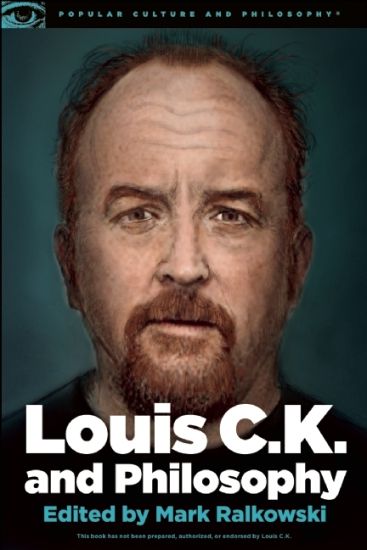
Charlie Rose has called Louis C.K. "the philosopher-king of comedy," and many have detected philosophical profundity in his material. Twenty-five philosophers examine the wisdom of Louis C.K. from a variety of philosophical perspectives. The chapters draw upon C.K.'s standup comedy, the show Louie, and C.K.'s other writings. One writer looks at the different meanings of C.K.'s statement, "You're gonna be dead way longer than you were alive." One chapter shows the affinity of C.K.'s "sick of living this bullshit life" with Kierkegaard's "sickness unto death." Another pursues Louis's thought that we may by our lack of moral concern "live a really evil life without thinking about it." C.K.'s insistence that "things that are not can't be" points to the philosophical problem of nothingness in relation to being. His religion is "apathetic agnostic," conveyed in his thought experiment that God began work in 1982. Louis's argument that you can have the kind of body you want if you make yourself want a disgusting, shitty body, is the Stoic ethics of Epictetus. And, as C.K. has shown in so many ways, the fact that we're soon going to die has its funny side.
The man who envisioned and realized such landmark buildings as the Salk Institute, the Kimbell Art Museum, and the National Assembly complex in Bangladesh, Louis Kahn was born in what is now Estonia, immigrated to America, and became one of the towering figures in his adopted country's built world. His works are unmistakable in their elegance, monolithic power, and architectural honesty.Written by Carter Wiseman, one of Kahn's most respected commentators, this book offers a succinct, accessible examination of the life and work of one of America's greatest architects. It traces the influence on Kahn's architecture of his immigrant origins, his upbringing in poverty, his education, and the impact of the Great Depression and the arrival of Modernism on his life and work. Finally, it provides insight into why, as the legacy of many of his contemporaries has receded in importance, Kahn's has remained so durably influential. Louis Kahn: A Life in Architecture provides the best concise introduction available to this singular life and achievement.