Kirjahaku
Etsi kirjoja tekijän nimen, kirjan nimen tai ISBN:n perusteella.
1000 tulosta hakusanalla Louis N Boudrye


Anwendungen der Variationsrechnung auf makroökonomische Modelle
Luis N.de Matos Pimentao
Springer-Verlag Berlin and Heidelberg GmbH Co. K
1986
nidottu
1. 1 Einleitung und Uberblick Diese Arbeit befaBt sich mit neuen Anwendungen der klassi- schen Variationsrechnung auf die Makrookonomie. Die Verwen- dung von Hilfsmitteln aus der Variationsrechnung zur Losung von Aufgaben der normativen Wirtschaftstheorie war erstmals erfolgreich am Anfang des zweiten Viertels dieses Jahrhun- derts. Aus dieser Zeit stammen je ein berUhmtes Beispiel aus der Makrookonomie 1) und der Mikrookonomie. 2) Zahlreiche Modelle, Uberwiegend aus der neoklassischen Wachstums-, Pro- duktions- oder Investitionstheorie, folgten in den fUnziger und sechziger Jahren. Die Qualitat und FUlle der erzielten Ergebnisse ist ein Beleg fUr die Leistungsfahigkeit der in- terdisziplinaren Kommunikation im allgemeinen und fUr die Ergiebigkeit der Anwendungen der Variationsrechnung auf volkswirtschaftliche Aufgabenstellungen im besonderen. Seit- her ist die Benutzung der Methoden der klassischen Variations- rechnung zur Behandlung wirtschaftstheoretischer Optimierungs- modelle viel seltener geworden. Das Ziel der vorliegenden Arbeit ist zu zeigen, daB die An- wendungsmoglichkeiten der Variationsrechnung auf makrookono- mische Aufgabenstellungen bei weitem noch nicht erschopft sind. Dies wird mit verschiedenen Modellen belegt. Die gewon- nenen neuen Erkenntnisse scheinen die als Leitwort gewahlte Behauptung aus Courant/Hilbert [1924J (Vorwort zur ersten deutschen Ausgabe) auch heute zu bekraftigen. Jedoch wird nicht unterstellt, daB die Variationsrechnung eine umfassende, geschlossene Behandlung der normativen Makrookonomie gestat- tet, wie das in mehreren Gebieten der theoretischen Physik der Fall ist. 3) 1) S. Ramsey [1928J. 2) S. Evans [1930J und vgl. S. 10. 3) S. etwa Courant/Hilbert [1953J, [1962J, Landau/Lifschitz [1962J und Michlin [1962 J .

Luis N. Rivera Pag n en su libro Historia de la conquista de Am rica: Evangelizaci n y violencia nos describe c mo este libro se concibi en medio de los intensos debates sobre el quinto centenario del "descubrimiento de Am rica". Esos debates estimularon y fertilizaron la investigaci n hist rica sobre los pueblos americanos. Tambi n propici la publicaci n de grandes textos relativos al descubrimiento y la conquista, algunos in ditos durante varios siglos.El libro se divide en tres partes. La primera --Descubrimiento, conquista y evangelizaci n-- relata los hechos desde una perspectiva cr tica, ante la cual se desvela el v nculo ntimo entre el descubrimiento y la conquista, como una toma de posesi n de tierras y personas, legitimada por conceptos, im genes y s mbolos religiosos. La segunda --Libertad y servidumbre en la conquista de Am rica-- analiza los elementos centrales de la gran porf a te rica de la conquista: la licitud de la abrogaci n de la autonom a de los pueblos abor genes y los sistemas de trabajo forzoso --esclavitud y encomienda-- que se les impuso, tanto a ellos como a las comunidades africanas que se importaban en gran n mero, como seres desprovistos de libertad pol tica y autonom a personal. La tercera --Hacia una cr tica teol gica de la conquista-- intenta desarrollar justamente lo que su t tulo sugiere: una evaluaci n no paneg rica de la conquista a la luz de los conceptos, im genes y s mbolos evang licos que ella misma enarbol como su paradigma de legitimidad.History of the conquest of AmericaLuis N. Rivera Pag n in his book, The Conquest of America: Evangelization and violence, describes how this book was conceived in the midst of the intense debates on the fifth centenary of the "discovery of America". These debates stimulated and fertilized historical research on the American peoples. It also encouraged the publication of the great texts relating to the discovery and conquest, some of which had remained unpublished for several centuries.The book is divided into three parts. The first - "Discovery, Conquest and Evangelization"- relates the facts from a critical perspective, revealing the intimate link between discovery and conquest, as a takeover of land and people, legitimized by religious concepts, images and symbols. The second - "Freedom and servitude in the conquest of America"- analyzes the central elements of the great theoretical challenge of the conquest: the lawfulness of the abrogation of the autonomy of the aboriginal peoples and the systems of forced labor -slavery and encomienda- imposed on them and on the African communities that were imported in great numbers, as beings devoid of political freedom and personal autonomy. The third - "Towards a theological critique of the conquest"- attempts to develop precisely what its title suggests: a non-panegyric evaluation of the conquest in the light of the evangelical concepts, images and symbols that the conquest itself raised as its paradigm of legitimacy.


Stressing major themes in the history of medicine, this Second Edition stimulates further exploration of the events, methodologies, and theories that shaped medical practices in decades past and in modern clinical practice-highlighting the practices of civilizations around the world, as well as the research of pioneering scientists and physicians who contributed to our current understanding of health and disease.

These essays emerge from different crucial and complex conflicts: from the memory of a bishop, Bartolome de las Casas, urging the pope of his time to cleanse the church of complicity with violence, oppression, and slavery; from the lament and defiance of so many Middle Eastern women, victims of male domination and too many wars; from the voices bursting out from the colonial margins that dare to question and transgress the norms and laws imposed by colonizers and conquerors; from the emerging and diverse theological disruptions of traditional orthodoxies and rigid dogmatisms; from the denial of human rights to immigrant communities, living in the shadows of opulent societies; from the use of the sacred Hebrew Scriptures to displace and dispossess the indigenous peoples of Palestine. The essays belong to different intellectual genres and conceptual crossroads and are thus illustrative of the dialogic imagination that the Russian intellectual Mikhail Bakhtin considered basic to any serious intellectual enterprise. They are also the literary sediment of years of sharing lectures, dialogues, and debates in several academic institutions in the United States, Mexico, Argentina, Chile, Costa Rica, Malaysia, Switzerland, Germany, and Palestine.

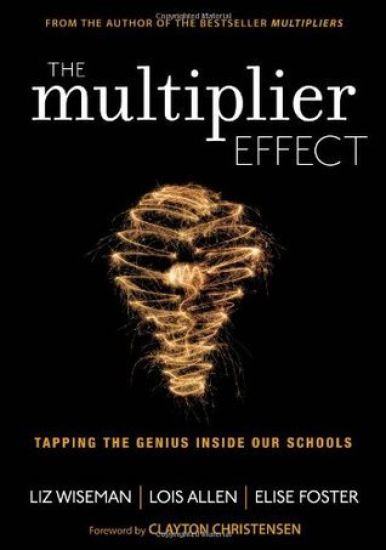
Why are some leaders able to double their team’s effectiveness, while others seem to drain the energy right out of the room? In this engaging and highly practical book, leadership expert Liz Wiseman, leadership coach Elise Foster, and veteran principal Lois Allen team up to offer compelling research showing the overwhelmingly positive and exponential effect on schools – getting more done without increasing the number of teachers and resources. Taking a deep dive with more than 100 of education’s best leaders, the authors explore the five disciplines that distinguish Multipliers from Diminishers and how these leaders attract and develop talent, as well as harness new ideas and energy to drive educational innovation. These five disciplines are not based on innate talent; indeed they are skills that every educator can learn to use – even when steeped in lifelong Diminisher settings. By practicing these disciplines, leaders learn how to - Attract top teachers to their school - Create an intense environment that demands people’s best thinking - Drive sound decisions by constructing debate and decision-making forums - Give their team a sense of ownership for responsibilities and results
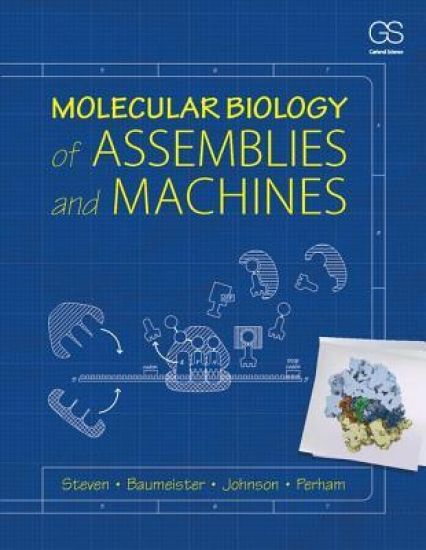
Molecular Biology of Assemblies and Machines
Alasdair Steven; Wolfgang Baumeister; Louise N. Johnson; Richard N. Perham
CRC Press Inc
2016
sidottu
Molecular Biology of Assemblies and Machines presents a comprehensive narrative describing the structures of macromolecular complexes and how they assemble and interact. Richly illustrated, it is written for advanced undergraduates, graduate students, and researchers in biochemistry, structural biology, molecular biology, biophysics, cell biology, and microbiology, and will also appeal to those in chemistry, immunology, and medicine.Essentially all major biological activities are performed by assemblies of macromolecules (proteins, RNA, and DNA) acting in concert. These assemblies are dynamic and many are endowed with machine-like properties. This unique book explores the molecular mechanisms employed at the critical level between individual macromolecules and cells and organelles.
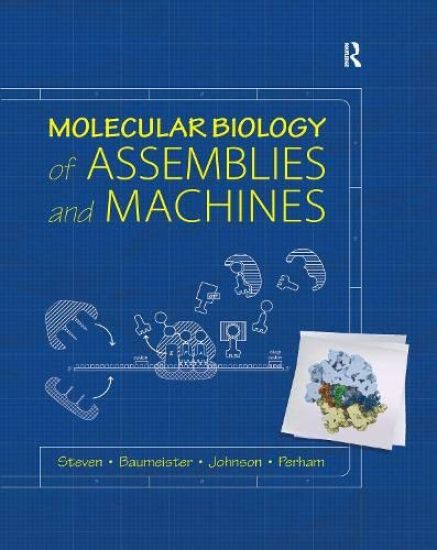
Molecular Biology of Assemblies and Machines
Alasdair Steven; Wolfgang Baumeister; Louise N. Johnson; Richard N. Perham
TAYLOR FRANCIS LTD
2022
nidottu
Molecular Biology of Assemblies and Machines presents a comprehensive narrative describing the structures of macromolecular complexes and how they assemble and interact. Richly illustrated, it is written for advanced undergraduates, graduate students, and researchers in biochemistry, structural biology, molecular biology, biophysics, cell biology, and microbiology, and will also appeal to those in chemistry, immunology, and medicine.Essentially all major biological activities are performed by assemblies of macromolecules (proteins, RNA, and DNA) acting in concert. These assemblies are dynamic and many are endowed with machine-like properties. This unique book explores the molecular mechanisms employed at the critical level between individual macromolecules and cells and organelles.
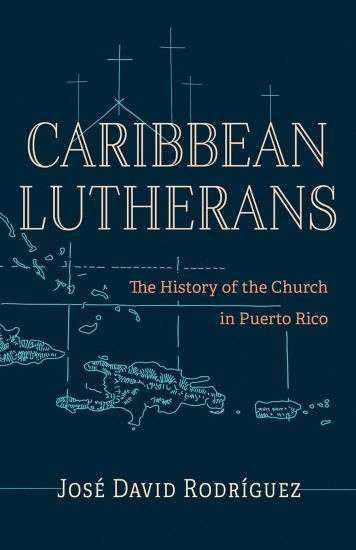
Caribbean Lutherans
José David Rodríguez; Idalia Negrón; Luis N. Rivera-Pagán
AUGSBURG FORTRESS PUBLISHERS
2024
pokkari
Aesthetics I
Ramona Cormier; Shannon Dubose; James K. Feibleman; John D. Glenn; Harold N. Lee; Marian L. Pauson; Louise N. Roberts; John Sallis
Kluwer Academic Publishers
1970
nidottu

Philosophical Logic
Robert L. Arrington; Peter M. Burkholder; Shannon Dubose; James W. Dye; James K. Feibleman; Bertrand P. Helm; Max Hocutt; Harold N. Lee; Louise N. Roberts; John C. Sallis; Donald H. Weiss
Kluwer Academic Publishers
1968
nidottu
With this issue we initiate the policy of expanding the scope of Tulane Studies in Philosophy to include, in addition to the work of members of the department, contributions from philosophers who have earned advanced degrees from Tulane and who are now teaching in other colleges and universities. The Editor THE LOGIC OF OUR LANGUAGE ROBERT L. ARRINGTON Wittgenstein wrote in the Tractatus that "logic is not a body of doctrine, but a mirror-image of the world. " 1 In line with his suggestion that a proposition is a 'picture', Wittgenstein argued that propositions 'show' the logical structure of the real. He was insistent, however, that "the apparent logical form of a proposition need not be its real one. " 2 As a result of this we can misunderstand the structure of fact. Philosophical problems arise just when "the logic of our language is mis understood. " 3 It is common knowledge that much of this view of logic was rejected by Wittgenstein himself in the Philosophical Investi gations. There we are told that language has no ideal or sublime 4 logic which mirrors the structure of the extra-linguistic world. Consequently, inferences from the structure of language to the structure of that extra-linguistic world are invalid. Reality can be 'cut up' in any of a number of ways by language. Wittgenstein adopted a view of philosophy which would render that discipline a non-explanatory, non-critical study of the multiple ways in which language can be used.

Obras Del V. P. M. Fray Luis De Granada
Josã(c) Joaquã-N de Mora; Saint John; Josã(c) Joaquã-N Luis
Hutson Street Press
2025
sidottu

Obras Del V. P. M. Fray Luis De Granada
Josã(c) Joaquã-N de Mora; Saint John; Josã(c) Joaquã-N Luis
Hutson Street Press
2025
pokkari