Kirjojen hintavertailu. Mukana 11 342 296 kirjaa ja 12 kauppaa.

Kirjahaku

Etsi kirjoja tekijän nimen, kirjan nimen tai ISBN:n perusteella.

1000 tulosta hakusanalla Maral Atmaca

Moral Responsibility in Collective Contexts

Moral Responsibility in Collective Contexts

Tracy Isaacs

Oxford University Press Inc
2011
sidottu
Genocide, global warming, organizational negligence, and oppressive social practices are four examples of moral contexts in which the interplay between individuals and collectives complicate how we are to understand moral responsibility. Moral Responsibility in Collective Contexts is a philosophical investigation of the complex moral landscape we find in collective situations such as these. Tracy Isaacs argues that an accurate understanding of moral responsibility in collective contexts requires attention to responsibility at the individual and collective levels. Part One establishes the normative significance of collective responsibility. Isaacs argues that collective responsibility is indispensible to providing a morally adequate account of collective actions such as genocide, and that without it even individual responsibility in genocide would not make sense. Isaacs explains the concepts of collective intention and collective intentional action, provides accounts of collective moral responsibility and collective guilt, and defends collective responsibility against objections, including the objection that collective responsibility holds some responsible for the actions of others. Part Two focuses on individual responsibility in collective contexts. Isaacs claims that individuals are not morally responsible for collective actions as such, but they can be responsible in collective actions for the parts they play. She argues that the concept of collective obligation can help to address large scale global challenges such as global warming, environmental degradation, and widespread poverty and malnutrition. Finally, Isaacs discusses cases of widespread ignorance and participation in wrongful social practice, whether it constitutes an excuse, and how to effect social change in those conditions.
Moral Aggregation

Moral Aggregation

Iwao Hirose

Oxford University Press Inc
2014
sidottu
Some ethical theories tolerate or require aggregation -- a trade-off between benefits to a group of individuals and losses to another group of individuals. Since aggregation is an essential feature of utilitarianism, many critics of utilitarianism -- including John Rawls, Thomas Nagel, T. M. Scanlon, and others -- rule out aggregation from their proposed theories. However, critics encounter what has become known as the number problem-the problem that non-aggregative theories are insensitive to the number of people affected by actions even in the cases where the number of people is clearly relevant to what we ought to do. In this book, Iwao Hirose elucidates the theoretical nature of interpersonal and intra-personal aggregation and defends a form of aggregation, formal aggregation, as distinguished from substantive aggregation in utilitarianism. Substantive aggregation combines the morally relevant factors that are determined prior to, and independently of, aggregative process, and identifies the goal to be pursued. In contrast, formal aggregation represents the overall ethical judgment in terms of individuals' morally relevant factors and gives a structure to our ethical thinking. Hirose's view of formal aggregation is broader than substantive aggregation and avoids problems for utilitarianism. Furthermore, formal aggregation can satisfy the demands of critics of the conventional understanding of aggregation, thus being more attractive than substantive aggregation and the unqualified rejection of aggregation. Hirose's analysis thus elucidates the far-reaching scope of aggregation and offers a new insight to one of the fundamental elements in ethical theory.
Moral Sentimentalism

Moral Sentimentalism

Michael Slote

Oxford University Press Inc
2013
nidottu
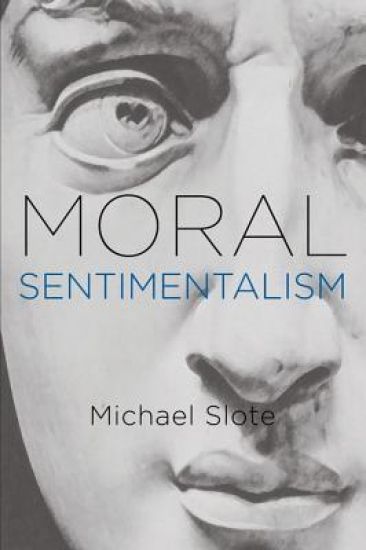
There has recently been a good deal of interest in moral sentimentalism, but most of that interest has been exclusively either in metaethical questions about the meaning of moral terms or in normative issues about benevolence and/or caring and their place in morality. In Moral Sentimentalism Michael Slote attempts to deal with both sorts of issues and to do so, primarily, in terms of the notion or phenomenon of empathy. Hume sought to do something like this over two centuries ago, though he didn't have the term "empathy" and used "sympathy" instead; and in effect Slote is seeking to give moral sentimentalism a "second wind" in and for contemporary circumstances. By relying systematically on empathy in its account of normative morality and in what it has to say about the meaning of moral vocabulary, Moral Sentimentalism offers a unified overall ethical picture that can then be tested against ethical rationalism. Rationalism has recently dominated the scene in ethics, but by showing how sentimentalism can make coherent and intuitive sense of such preferred rationalist notions as autonomy, respect, and justice--and by showing how a sentimentalism based in empathy can deal with ethically significant aspects of the moral life that rationalism tends to ignore or skimp on--Slote hopes a wider and more active debate between rationalism and sentimentalism can be set in motion. There are signs that sentimentalist modes of thought are gaining new footholds on the way ethics is done, and this new book is very hopeful about these possibilities.
Moral Order and Social Disorder
Drawing upon both classical insights and more recent writings, Hearn provides a compelling account of social breakdown in the United States. The book examines the conditions most responsible for the deterioration of social institutions, notably the family, and of communitarian interdependencies, such as those that support neighborhoods. More specifically, Hearn analyzes the defining forces of liberal modernity--among them, especially, the market economy (favored by the political right) and the democratic welfare state (endorsed by the political left)--whose steady expansion has diminished the social contexts that nurture trust, mutuality, and a robust sense of both personal responsibility and social obligation. The originality of Hearn's book lies in the solutions he proposes, which differ from those rooted in what Hearn calls "the languages of modernity." Hearn advocates modes that would serve instead to renew solidarity and reclaim social virtue, a repertory of strategies that would answer Emile Durkheim's call for the creation of moral individualism. He assesses various approaches to revitalizing the social settings, the social institutions, and communitarian structures within which people become moral individuals capable of care about and taking responsibility for the fates of others. Readers of this book are invited to draw their own conclusions by relying in larger part on themselves as parents, neighbors, community members, and citizen-participants in a civil society in restoration. As the American Journal of Sociology notes, "the book succeeds in its goals, and it deserves to be widely read."Frank Hearn was professor of sociology at the State University of New York, College of Cortland, and the author of Reason and Freedom in Sociological Thought and The Transformation of Industrial Organization.
Moral Order and Social Disorder
Drawing upon both classical insights and more recent writings, Hearn provides a compelling account of social breakdown in the United States. The book examines the conditions most responsible for the deterioration of social institutions, notably the family, and of communitarian interdependencies, such as those that support neighborhoods. More specifically, Hearn analyzes the defining forces of liberal modernity--among them, especially, the market economy (favored by the political right) and the democratic welfare state (endorsed by the political left)--whose steady expansion has diminished the social contexts that nurture trust, mutuality, and a robust sense of both personal responsibility and social obligation. The originality of Hearn's book lies in the solutions he proposes, which differ from those rooted in what Hearn calls "the languages of modernity." Hearn advocates modes that would serve instead to renew solidarity and reclaim social virtue, a repertory of strategies that would answer Emile Durkheim's call for the creation of moral individualism. He assesses various approaches to revitalizing the social settings, the social institutions, and communitarian structures within which people become moral individuals capable of care about and taking responsibility for the fates of others. Readers of this book are invited to draw their own conclusions by relying in larger part on themselves as parents, neighbors, community members, and citizen-participants in a civil society in restoration. As the American Journal of Sociology notes, "the book succeeds in its goals, and it deserves to be widely read."Frank Hearn was professor of sociology at the State University of New York, College of Cortland, and the author of Reason and Freedom in Sociological Thought and The Transformation of Industrial Organization.
Moral Stealth

Moral Stealth

Arnold Goldberg

University of Chicago Press
2007
sidottu
A psychiatrist writes a letter to a journal explaining his decision to marry a former patient. Another psychiatrist confides that most of his friends are ex-patients. Both practitioners felt they had to defend their behavior, but psychoanalyst Arnold Goldberg couldn’t pinpoint the reason why. What was wrong about the analysts’ actions? In Moral Stealth, Goldberg explores and explains that problem of “correct behavior.” He demonstrates that the inflated and official expectations that are part of an analyst’s training—that therapists be universally curious, hopeful, kind, and purposeful, for example—are often of less help than simple empathy amid the ambiguous morality of actual patient interactions. Being a good therapist and being a good person, he argues, are not necessarily the same. Drawing on case studies from his own practice and from the experiences of others, as well as on philosophers such as John Dewey, Slavoj Žižek, and Jürgen Habermas, Goldberg breaks new ground and leads the way for therapists to understand the relationship between private morality and clinical practice.
Moral Entanglements

Moral Entanglements

Stefan Bargheer

University of Chicago Press
2018
sidottu
At the center of Stefan Bargheer’s account of bird watching, field ornithology, and nature conservation in Britain and Germany stands the question of how values change over time and how individuals develop moral commitments. Using life history data derived from written narratives and oral histories, Moral Entanglements follows the development of conservation from the point in time at which the greatest declines in bird life took place to the current efforts in large-scale biodiversity conservation and environmental policy within the European Union. While often depicted as the outcome of an environmental revolution that has taken place since the 1960s, Bargheer demonstrates to the contrary that the relevant practices and institutions that shape contemporary conservation have evolved gradually since the early nineteenth century. Moral Entanglements further shows that the practices and institutions in which bird conservation is entangled differ between the two countries. In Britain, birds derived their meaning in the context of the game of bird watching as a leisure activity. Here birds are now, as then, the most popular and best protected taxonomic group of wildlife due to their particularly suitable status as toys in a collecting game, turning nature into a playground. In Germany, by contrast, birds were initially part of the world of work. They were protected as useful economic tools, rendering services of ecological pest control in a system of agricultural production modeled after the factory shop floor. Based on this extensive analysis, Bargheer formulates a sociology of morality informed by a pragmatist theory of value.
Moral Imagination

Moral Imagination

Mark Johnson

University of Chicago Press
1994
nidottu
Using path-breaking discoveries of cognitive science, Mark Johnson argues that humans are fundamentally imaginative moral animals, challenging the view that morality is simply a system of universal laws dictated by reason. According to the Western moral tradition, we make ethical decisions by applying universal laws to concrete situations. But Johnson shows how research in cognitive science undermines this view and reveals that imagination has an essential role in ethical deliberation. Expanding his innovative studies of human reason in Metaphors We Live By and The Body in the Mind, Johnson provides the tools for more practical, realistic, and constructive moral reflection.
Moral Politics

Moral Politics

George Lakoff

University of Chicago Press
2016
nidottu
When Moral Politics was first published two decades ago, it redefined how Americans think and talk about politics through the lens of cognitive political psychology. Today, George Lakoff's classic text has become all the more relevant, as liberals and conservatives have come to hold even more vigorously opposed views of the world, with the underlying assumptions of their respective worldviews at the level of basic morality. Even more so than when Lakoff wrote, liberals and conservatives simply have very different, deeply held beliefs about what is right and wrong. Lakoff reveals radically different but remarkably consistent conceptions of morality on both the left and right. Moral worldviews, like most deep ways of understanding the world, are unconscious part of our "hard-wired" brain circuitry. When confronted with facts that don't fit our moral worldview, our brains work automatically and unconsciously to ignore or reject these facts, and it takes extraordinary openness and awareness of this phenomenon to pay critical attention to the vast number of facts we are presented with each day. For this new edition, Lakoff has added a new preface and afterword, extending his observations to major ideological conflicts since the book's original publication, from the Affordable Care Act to the wars in Iraq and Afghanistan, the recent financial crisis, and the effects of global warming. One might have hoped such massive changes would bring people together, but the reverse has actually happened; the divide between liberals and conservatives has become stronger and more virulent. To have any hope of bringing mutual respect to the current social and political divide, we need to clearly understand the problem and make it part of our contemporary public discourse. Moral Politics offers a much-needed wake-up call to both the left and the right.
Moral Conscience Through the Ages: Fifth Century Bce to the Present
In Moral Conscience through the Ages, Richard Sorabji brings his erudition and philosophical acumen to bear on a fundamental question: what is conscience? Examining the ways we have conceived of that little voice in our heads-our self-directed judge-he teases out its most enduring elements, the aspects that have survived from the Greek playwrights in the fifth century BCE through St Paul, the Church Fathers, Catholics and Protestants, all the way to the 17th century's political unrest and the critics and champions of the eighteenth to twentieth centuries. Sorabji examines an impressive breadth of topics: the longing for different kinds of freedom of conscience, the proper limits of freedom itself, protests at conscience's being 'terrorized, ' dilemmas of conscience, the value of conscience to human beings, its secularization, its reliability, and ways to improve it. These historical issues are alive today, with fresh concerns about topics such as conscientious objection, the force of conscience, or the balance between freedoms of conscience, religion, and speech. The result is a stunningly comprehensive look at a central component of our moral understanding.
Moral Entanglements

Moral Entanglements

Stefan Bargheer

University of Chicago Press
2018
nidottu
At the center of Stefan Bargheer’s account of bird watching, field ornithology, and nature conservation in Britain and Germany stands the question of how values change over time and how individuals develop moral commitments. Using life history data derived from written narratives and oral histories, Moral Entanglements follows the development of conservation from the point in time at which the greatest declines in bird life took place to the current efforts in large-scale biodiversity conservation and environmental policy within the European Union. While often depicted as the outcome of an environmental revolution that has taken place since the 1960s, Bargheer demonstrates to the contrary that the relevant practices and institutions that shape contemporary conservation have evolved gradually since the early nineteenth century. Moral Entanglements further shows that the practices and institutions in which bird conservation is entangled differ between the two countries. In Britain, birds derived their meaning in the context of the game of bird watching as a leisure activity. Here birds are now, as then, the most popular and best protected taxonomic group of wildlife due to their particularly suitable status as toys in a collecting game, turning nature into a playground. In Germany, by contrast, birds were initially part of the world of work. They were protected as useful economic tools, rendering services of ecological pest control in a system of agricultural production modeled after the factory shop floor. Based on this extensive analysis, Bargheer formulates a sociology of morality informed by a pragmatist theory of value.
Moral Responsibility and the Boundaries of Community

Moral Responsibility and the Boundaries of Community

Marion Smiley

University of Chicago Press
1992
sidottu
The question of responsibility plays a critical role not only in our attempts to resolve social and political problems, but in our very conceptions of what those problems are. Who, for example, is to blame for apartheid in South Africa? Is the South African government responsible? What about multinational corporations that do business there? Will uncovering the "true facts of the matter" lead us to the right answer? In an argument both compelling and provocative, Marion Smiley demonstrates how attributions of blame--far from being based on an objective process of factual discovery--are instead judgments that we ourselves make on the basis of our own political and social points of view. She argues that our conception of responsibility is a singularly modern one that locates the source of blameworthiness in an individual's free will. After exploring the flaws inherent in this conception, she shows how our judgments of blame evolve out of our configuration of social roles, our conception of communal boundaries, and the distribution of power upon which both are based. The great strength of Smiley's study lies in the way in which it brings together both rigorous philosophical analysis and an appreciation of the dynamics of social and political practice. By developing a pragmatic conception of moral responsibility, this work illustrates both how moral philosophy can enhance our understanding of social and political practices and why reflection on these practices is necessary to the reconstruction of our moral concepts.
Moral Responsibility and the Boundaries of Community

Moral Responsibility and the Boundaries of Community

Marion Smiley

University of Chicago Press
1992
nidottu
The question of responsibility plays a critical role not only in our attempts to resolve social and political problems, but in our very conceptions of what those problems are. Who, for example, is to blame for apartheid in South Africa? Is the South African government responsible? What about multinational corporations that do business there? Will uncovering the "true facts of the matter" lead us to the right answer? In an argument both compelling and provocative, Marion Smiley demonstrates how attributions of blame—far from being based on an objective process of factual discovery—are instead judgments that we ourselves make on the basis of our own political and social points of view. She argues that our conception of responsibility is a singularly modern one that locates the source of blameworthiness in an individual's free will. After exploring the flaws inherent in this conception, she shows how our judgments of blame evolve out of our configuration of social roles, our conception of communal boundaries, and the distribution of power upon which both are based. The great strength of Smiley's study lies in the way in which it brings together both rigorous philosophical analysis and an appreciation of the dynamics of social and political practice. By developing a pragmatic conception of moral responsibility, this work illustrates both how moral philosophy can enhance our understanding of social and political practices and why reflection on these practices is necessary to the reconstruction of our moral concepts.
Moral Minefields

Moral Minefields

Shai M. Dromi; Samuel D. Stabler

THE UNIVERSITY OF CHICAGO PRESS
2023
sidottu
An analysis of the effects of moral debates on sociological research. Few academic disciplines are as contentious as sociology. Sociologists routinely turn on their peers with fierce criticisms not only of their empirical rigor and theoretical clarity but of their character as well. Yet despite the controversy, scholars manage to engage in thorny debates without being censured. How? In Moral Minefields, Shai M. Dromi and Samuel D. Stabler consider five recent controversial topics in sociology—race and genetics, secularization theory, methodological nationalism, the culture of poverty, and parenting practices—to reveal how moral debates affect the field. Sociologists, they show, tend to respond to moral criticism of scholarly work in one of three ways. While some accept and endorse the criticism, others work out new ways to address these topics that can transcend the criticism, while still others build on the debates to form new, more morally acceptable research. Moral Minefields addresses one of the most prominent questions in contemporary sociological theory: how can sociology contribute to the development of a virtuous society? Rather than suggesting that sociologists adopt a clear paradigm that can guide their research toward neatly defined moral aims, Dromi and Stabler argue that sociologists already largely possess and employ the repertoires to address questions of moral virtue in their research. The conversation thus is moved away from attempts to theorize the moral goods sociologists should support and toward questions about how sociologists manage the plurality of moral positions that present themselves in their studies. Moral diversity within sociology, they show, fosters disciplinary progress.
Moral Minefields

Moral Minefields

Shai M. Dromi; Samuel D. Stabler

THE UNIVERSITY OF CHICAGO PRESS
2023
nidottu
An analysis of the effects of moral debates on sociological research. Few academic disciplines are as contentious as sociology. Sociologists routinely turn on their peers with fierce criticisms not only of their empirical rigor and theoretical clarity but of their character as well. Yet despite the controversy, scholars manage to engage in thorny debates without being censured. How? In Moral Minefields, Shai M. Dromi and Samuel D. Stabler consider five recent controversial topics in sociology—race and genetics, secularization theory, methodological nationalism, the culture of poverty, and parenting practices—to reveal how moral debates affect the field. Sociologists, they show, tend to respond to moral criticism of scholarly work in one of three ways. While some accept and endorse the criticism, others work out new ways to address these topics that can transcend the criticism, while still others build on the debates to form new, more morally acceptable research. Moral Minefields addresses one of the most prominent questions in contemporary sociological theory: how can sociology contribute to the development of a virtuous society? Rather than suggesting that sociologists adopt a clear paradigm that can guide their research toward neatly defined moral aims, Dromi and Stabler argue that sociologists already largely possess and employ the repertoires to address questions of moral virtue in their research. The conversation thus is moved away from attempts to theorize the moral goods sociologists should support and toward questions about how sociologists manage the plurality of moral positions that present themselves in their studies. Moral diversity within sociology, they show, fosters disciplinary progress.
Moral Issues

Moral Issues

Paul Goren; Christopher Chapp

THE UNIVERSITY OF CHICAGO PRESS
2024
sidottu
A new perspective on how beliefs about abortion and gay rights reshaped American politics. Many believe that religious and partisan identities undergird American public opinion. However, when it comes to abortion and gay rights, the reverse may be closer to the truth. Drawing on wide-ranging evidence, Paul Goren and Christopher Chapp show that views on abortion and gay rights are just as durable and politically impactful—and often more so—than political and religious identities. Goren and Chapp locate the lasting strength of stances on abortion and gay rights in the automatic, visceral emotions that the media has primed since the late 1980s. Moral Issues examines how attitudes toward these moralized issues affect, and can sometimes even disrupt, religious and partisan identities. Indeed, over the last thirty years, these attitudes have accelerated the rise of the religious “nones,” who have no religious affiliation, and promoted moral sorting into the Democratic and Republican parties.
Moral Issues

Moral Issues

Paul Goren; Christopher Chapp

THE UNIVERSITY OF CHICAGO PRESS
2024
nidottu
A new perspective on how beliefs about abortion and gay rights reshaped American politics. Many believe that religious and partisan identities undergird American public opinion. However, when it comes to abortion and gay rights, the reverse may be closer to the truth. Drawing on wide-ranging evidence, Paul Goren and Christopher Chapp show that views on abortion and gay rights are just as durable and politically impactful—and often more so—than political and religious identities. Goren and Chapp locate the lasting strength of stances on abortion and gay rights in the automatic, visceral emotions that the media has primed since the late 1980s. Moral Issues examines how attitudes toward these moralized issues affect, and can sometimes even disrupt, religious and partisan identities. Indeed, over the last thirty years, these attitudes have accelerated the rise of the religious “nones,” who have no religious affiliation, and promoted moral sorting into the Democratic and Republican parties.
Moral Reflection

Moral Reflection

W. Ransome

Palgrave Macmillan
2008
sidottu
This exploration of virtue ethics offers an original theory in moral philosophy, identifying a 'moral reflection' as a virtue that has not yet been considered properly by philosophers. The author argues that taking our moral lives seriously must involve some reflection on our moral past.
Moral Emotions and Intuitions

Moral Emotions and Intuitions

S. Roeser

Palgrave Macmillan
2010
sidottu
The author presents a new philosophical theory according to which we need intuitions and emotions in order to have objective moral knowledge, which is called affectual intuitionism. Affectual Intuitionism combines ethical intuitionism with a cognitive theory of emotions.