Kirjojen hintavertailu. Mukana 11 717 486 kirjaa ja 12 kauppaa.

Kirjahaku

Etsi kirjoja tekijän nimen, kirjan nimen tai ISBN:n perusteella.

1000 tulosta hakusanalla Margo Bates

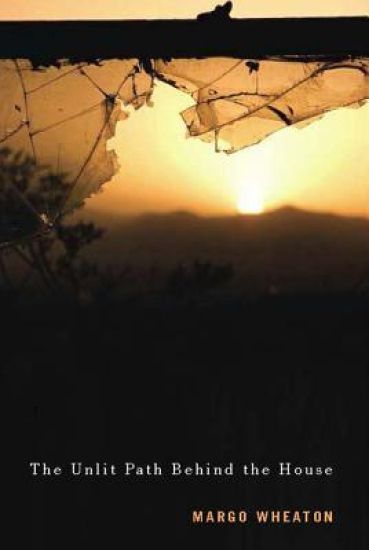
The Unlit Path Behind the House

The Unlit Path Behind the House

Margo Wheaton

McGill-Queen's University Press
2016
nidottu
The day's an old room / stripped of its furniture; there are / never enough beds in winter. / By late afternoon, the shadows / are forming a blue inconsolable hall // as sparrows retreat to makeshift / cots of pine bark and eaves. // Even the parched marsh grass / has stilled, every blade / become an ear. Sensuous, atmospheric, and spare, The Unlit Path Behind the House collects poems that seek light in difficult places. In lines filled with an intense music, Margo Wheaton listens for the lyricism inside the day's blessings and catastrophes. Wheaton's poems sing at the intersections where public and private worlds collide: the steady cadence of a boy carrying an unconscious girl in his arms, the afternoon journey of a woman taking books to prisoners, the rhythmic breathing of a homeless man asleep in a parking lot. In these works, fireflies pulse in the dark, lovers clasp and unclasp, and street signs sing like Blake's angels. Deeply informed by the natural world, Wheaton's writing is marked by great meditative depth; while passionately engaged, these poems evoke a field of mystery and stillness. Whether exploring themes of isolation, spiritual dispossession, desire, or the sanctity of daily rituals, The Unlit Path Behind the House conveys our longing for home and the different ways we try to find it.
Beyond the Myths and Magic of Mentoring

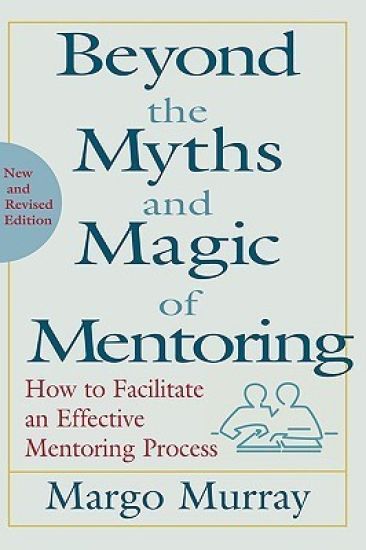
Beyond the Myths and Magic of Mentoring

Margo Murray

Jossey-Bass Inc.,U.S.
2001
sidottu
Many managers believe that effective mentoring is most often the lucky result of personal chemistry between two people. But in this book, author Margo Murray lays that myth to rest. Her guide gives you all the expert advice, tools, and case studies you'll need to harness the power of mentoring. Building on the solid principles outlined in the first book, this revised edition adds examples of mentoring from recent publications and the author's client experience. It also includes international examples. It reveals how mentoring can maximize employee productivity and provides information on how to assess organizational needs and link them to the mentoring process. Includes all the information needed to evaluate the effectiveness of a mentoring program.
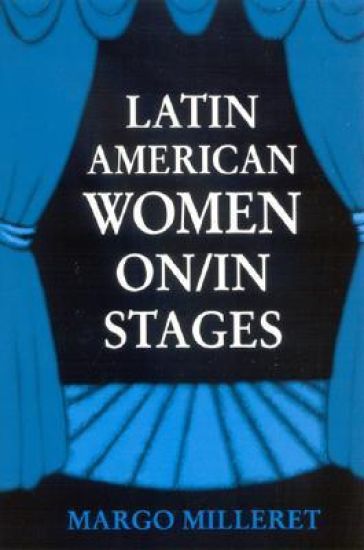
Latin American Women On/In Stages

Latin American Women On/In Stages

Margo Milleret

State University of New York Press
2004
sidottu
Compares plays by Latin American women dramatists born after 1945.While a feminine perspective has become more common on Latin American stages since the late 1960s, few of the women dramatists who have contributed to this new viewpoint have received scholarly attention. Latin American Women On/In Stages examines twenty-four plays written by women living in Argentina, Brazil, Chile, Costa Rica, Mexico, Puerto Rico, and Venezuela. While all of the plays critique the restraints placed on being female, several also offer alternatives that emphasize a broader and healthier range of options. Margo Milleret, using an innovative comparative and thematic approach, highlights similarities in the techniques and formats employed by female playwrights as they challenged both theatrical and social conventions. She argues that these representations of women's lives are important for their creativity and their insights into both the personal and public worlds of Latin America.
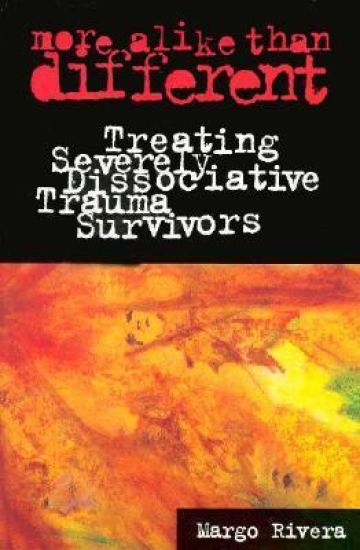
More Alike Than Different

More Alike Than Different

Margo Rivera

University of Toronto Press
1997
pokkari
Just as the prevalence of incest and child sexual abuse was a well-kept secret until recently, the phenomenon of multiple personality disorder (MPD) – recently re-labelled dissociative identity disorder [DID] – has been minimized. In her practice as a psychologist, Margo Rivera has found this to be no coincidence. Confirming that the root of most severe dissociative conditions lies in severe trauma, most commonly child abuse, Rivera first discusses the general historical and social contexts of dissociation and proceeds through clinical theory, case vignettes, and recorded personal experience to provide practical guidance to assessment and treatment. Rivera covers such topics as 'therapeutic frame,' 'transference and countertransference,' and how to understand and make use of these concepts. She discusses the controversies around 'False Memory Syndrome' and ritual abuse, issues which currently divide professionals treating trauma survivors. Rivera makes a unique contribution to the treatment of lesbian and gay abuse survivors. She theorizes that all sexuality is a social construct, subject to change over an individual's lifetime, a reality that is nowhere more clear than in those with MPD who may experience themselves as alternately heterosexual female, homosexual male, lesbian, and heterosexual male. Insightful and provocative, this important therapeutic guide will be of interest to professionals who treat trauma survivors as well as to their clients.
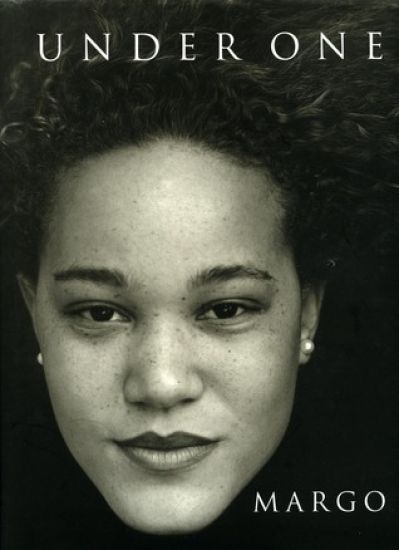
Under One Sky

Under One Sky

Margo Davis

Stanford University Press
2004
sidottu
Reach into the heart and soul of people from every inhabited continent through sixty tour de force black-and-white portraits by Margo Davis. Under One Sky is a collection of nearly forty years of portrait making by one of the inheritors of California's photographic legacy. Esthetically powerful and convincing were words used by Ansel Adams in 1968 to describe the work of Davis (née Baumgarten) and her fellow students. Indeed, the same words can be used today in describing these portraits. As Davis says in her accompanying essay, "A portrait that has the power to truly look inward can shake us up and make us question our assumptions. Like the finest literature, a powerful photographic portrait permits us to leap into the other's mind and heart."
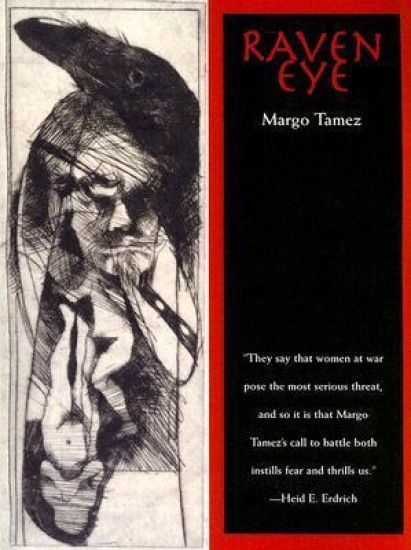
Raven Eye

Raven Eye

Margo Tamez

University of Arizona Press
2007
nidottu
Written from thirteen years of journals, psychic and earthly, this poetry maps an uprising of a borderland indigenous woman battling forces of racism and sexual violence against Native women and children. This lyric collection breaks new ground, skillfully revealing an unseen narrative of resistance on the Mexico?U.S. border. A powerful blend of the oral and long poem, and speaking into the realm of global movements, these poems explore environmental injustice, sexualized violence, and indigenous women's lives. These complex and necessary themes are at the heart of award-winning poet Margo Tamez's second book of poetry. Her poems bring forth experiences of a raced and gendered life along the border. Tamez engages the experiences of an indigenous life, refusing labels of Mexican or Native American as social constructs of a colonized people. This book is a challenging cartography of colonialism, poverty, and issues of Native identity and demonstrates these as threats to the environment, both ecological and social, in the borderlands. Each poem is crafted as if it were a minute prayer, dense with compassion and unerring optimism. But the hope that Tamez serves is not blind. In poem after poem, she draws us into a space ruled by mythic symbolism and the ebb and flow of the landscape, place where comfort is compromised and where we must work to relearn the nature of existence and the value of life.
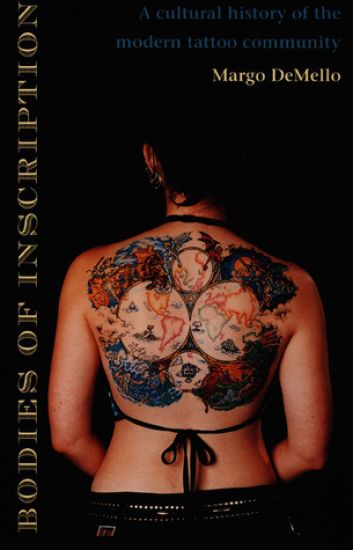
Bodies of Inscription

Bodies of Inscription

Margo DeMello

Duke University Press
2000
pokkari
Since the 1980s, tattooing has emerged anew in the United States as a widely appealing cultural, artistic, and social form. In Bodies of Inscription Margo DeMello explains how elite tattooists, magazine editors, and leaders of tattoo organizations have downplayed the working-class roots of tattooing in order to make it more palatable for middle-class consumption. She shows how a completely new set of meanings derived primarily from non-Western cultures has been created to give tattoos an exotic, primitive flavor. Community publications, tattoo conventions, articles in popular magazines, and DeMello’s numerous interviews illustrate the interplay between class, culture, and history that orchestrated a shift from traditional Americana and biker tattoos to new forms using Celtic, tribal, and Japanese images. DeMello’s extensive interviews reveal the divergent yet overlapping communities formed by this class-based, American-style repackaging of the tattoo. After describing how the tattoo has moved from a mark of patriotism or rebellion to a symbol of exploration and status, the author returns to the predominantly middle-class movement that celebrates its skin art as spiritual, poetic, and self-empowering. Recognizing that the term “community” cannot capture the variations and class conflict that continue to thrive within the larger tattoo culture, DeMello finds in the discourse of tattooed people and their artists a new and particular sense of community and explores the unexpected relationship between this discourse and that of other social movements.This ethnography of tattooing in America makes a substantive contribution to the history of tattooing in addition to relating how communities form around particular traditions and how the traditions themselves change with the introduction of new participants. Bodies of Inscription will have broad appeal and will be enjoyed by readers interested in cultural studies, American studies, sociology, popular culture, and body art.
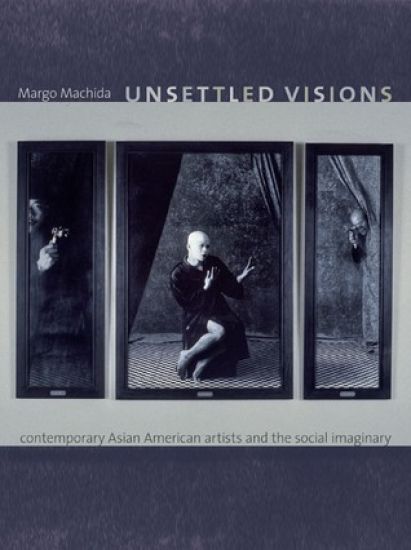
Unsettled Visions

Unsettled Visions

Margo Machida

Duke University Press
2009
sidottu
In Unsettled Visions, the activist, curator, and scholar Margo Machida presents a pioneering, in-depth exploration of contemporary Asian American visual art. Machida focuses on works produced during the watershed 1990s, when surging Asian immigration had significantly altered the demographic, cultural, and political contours of Asian America, and a renaissance in Asian American art and visual culture was well underway. Machida conducted extensive interviews with ten artists working during this transformative period: women and men of Chinese, Filipino, Indian, Vietnamese, Korean, and Japanese descent, most of whom migrated to the United States. In dialogue with the artists, Machida illuminates and contextualizes the origins of and intent behind bodies of their work. Unsettled Visions is an engrossing look at a vital art scene and a subtle account of the multiple, shifting meanings of “Asianness” in Asian American art.Analyses of the work of individual artists are grouped around three major themes that Asian American artists engaged with during the 1990s: representations of the Other; social memory and trauma; and migration, diaspora, and sense of place. Machida considers the work of the photographers Pipo Nguyen-duy and Hanh Thi Pham, the printmaker and sculptor Zarina Hashmi, and installations by the artists Tomie Arai, Ming Fay, and Yong Soon Min. She examines the work of Marlon Fuentes, whose films and photographs play with the stereotyping conventions of visual anthropology, and prints in which Allan deSouza addresses the persistence of Orientalism in American popular culture. Machida reflects on Kristine Aono’s museum installations embodying the multigenerational effects of the internment of Japanese Americans during World War II and on Y. David Chung’s representations of urban spaces transformed by migration in works ranging from large-scale charcoal drawings to multimedia installations and an “electronic rap opera.”
Unsettled Visions

Unsettled Visions

Margo Machida

Duke University Press
2009
pokkari
In Unsettled Visions, the activist, curator, and scholar Margo Machida presents a pioneering, in-depth exploration of contemporary Asian American visual art. Machida focuses on works produced during the watershed 1990s, when surging Asian immigration had significantly altered the demographic, cultural, and political contours of Asian America, and a renaissance in Asian American art and visual culture was well underway. Machida conducted extensive interviews with ten artists working during this transformative period: women and men of Chinese, Filipino, Indian, Vietnamese, Korean, and Japanese descent, most of whom migrated to the United States. In dialogue with the artists, Machida illuminates and contextualizes the origins of and intent behind bodies of their work. Unsettled Visions is an engrossing look at a vital art scene and a subtle account of the multiple, shifting meanings of “Asianness” in Asian American art.Analyses of the work of individual artists are grouped around three major themes that Asian American artists engaged with during the 1990s: representations of the Other; social memory and trauma; and migration, diaspora, and sense of place. Machida considers the work of the photographers Pipo Nguyen-duy and Hanh Thi Pham, the printmaker and sculptor Zarina Hashmi, and installations by the artists Tomie Arai, Ming Fay, and Yong Soon Min. She examines the work of Marlon Fuentes, whose films and photographs play with the stereotyping conventions of visual anthropology, and prints in which Allan deSouza addresses the persistence of Orientalism in American popular culture. Machida reflects on Kristine Aono’s museum installations embodying the multigenerational effects of the internment of Japanese Americans during World War II and on Y. David Chung’s representations of urban spaces transformed by migration in works ranging from large-scale charcoal drawings to multimedia installations and an “electronic rap opera.”
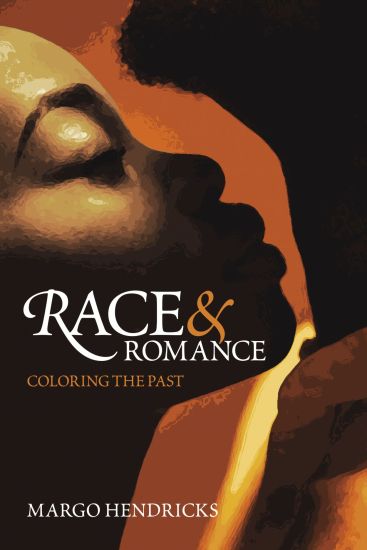
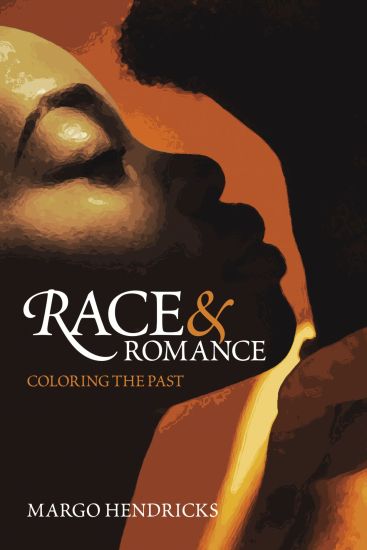
Race and Romance: Coloring the Past

Race and Romance: Coloring the Past

Margo Hendricks

Arizona Center for Medieval Renaissance Studies,US
2022
nidottu
This study brings race and the literary tradition of romance into dialogue.Race and Romance: Coloring the Past explores the literary and cultural genealogy of colorism, white passing, and white presenting in the romance genre. The scope of the study ranges from Heliodorus’ Aithiopika to the short novels of Aphra Behn, to the modern romance novel Forbidden by Beverly Jenkins. This analysis engages with the troublesome racecraft of “passing” and the instability of racial identity and its formation from the premodern to the present. The study also looks at the significance of white settler colonialism to early modern romance narratives. A bridge between studies of early modern romance and scholarship on twenty-first-century romance novels, this book is well-suited for those interested in the romance genre.
Race and Romance: Coloring the Past

Race and Romance: Coloring the Past

Margo Hendricks

Arizona Center for Medieval Renaissance Studies,US
2022
sidottu
This study brings race and the literary tradition of romance into dialogue.Race and Romance: Coloring the Past explores the literary and cultural genealogy of colorism, white passing, and white presenting in the romance genre. The scope of the study ranges from Heliodorus’ Aithiopika to the short novels of Aphra Behn, to the modern romance novel Forbidden by Beverly Jenkins. This analysis engages with the troublesome racecraft of “passing” and the instability of racial identity and its formation from the premodern to the present. The study also looks at the significance of white settler colonialism to early modern romance narratives. A bridge between studies of early modern romance and scholarship on twenty-first-century romance novels, this book is well-suited for those interested in the romance genre.
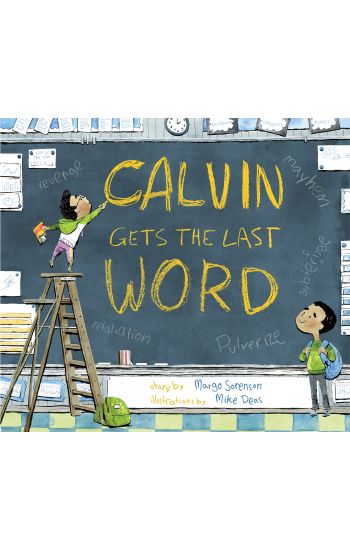
Calvin Gets the Last Word

Calvin Gets the Last Word

Margo Sorenson

Tilbury House,U.S.
2020
sidottu
Calvin’s dictionary is proud to be carried everywhere Calvin goes—the breakfast table, school then home again—because Calvin is determined to find the perfect word to attach to his annoying older brother. The word isn’t exactly revenge, mayhem, bewilderment, subterfuge, pulverise or even retaliation, though all those words are close and very tempting. When Calvin finally finds the right word for his rascally brother, his dictionary is surprised and delighted, and readers will enjoy celebrating the triumphant discovery of Calvin’s perfect word along with his dictionary.
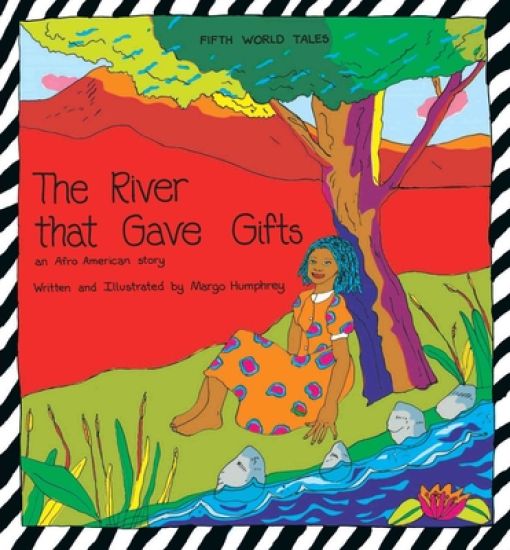
The River That Gave Gifts: An Afro American Story

The River That Gave Gifts: An Afro American Story

Margo Humphrey

Children's Book Press (CA)
2022
nidottu
In this vibrant children's book by Margo Humphrey, a renowned printmaker, a young girl wants to give something special to the beloved elderly woman who cares for her, and discovers her own unique gift.Yanava and her friends want to make gifts for Neema, the wise woman who looks after them, before her eyesight worsens. Each of Yanava's friends crafts a handmade object for Neema. Yanava is creative and thoughtful, but she isn't crafty like her friends. She sits by the river and thinks aloud about what kind of gift Neema truly needs. Soon Yanava hears the river whispering to her, instructing her to take its water into her hands. Yanava complies and finds that by washing her hands in the river, she is able to emit a rainbow of light from her fingers The wise river has answered her questions by revealing Yanava's gift of light. The time comes for the children to present their gifts. Yanava's friends offer their handmade presents to Neema, who is thankful to receive them but unable to fully appreciate the gifts because her vision is poor and the room is dim. After waiting patiently, Yanava reveals her gift by rinsing her hands in a jar of river water and casting vibrant colors of light from her fingers. With the room brightly lit, Neema can finally see all of her thoughtful presents from the children, including Yanava's special gift Margo Humphrey combines her many storytelling talents to present young readers with a unique tale about the power of thoughtfulness and the light that shines when we care for others.
Miles Lassiter (Circa 1777-1850): An Early African-American Quaker from Lassiter Mill, Randolph County, North Carolina: My Research Journey to Home
Although antebellum African Americans were sometimes allowed to attend Quaker services, they were almost never admitted to full "meeting" membership, as was Miles Lassiter. His story illuminates the unfolding of the 19th-century color line into the 20th. It reminds us that, while traditional texts recount grand events, true history tells of everyday people who do extraordinary things quietly, not even realizing that they have left their mark.Margo Williams had only a handful of stories and a few names her mother remembered from her childhood about her family's home in Asheboro, North Carolina. Her research would soon help her to make contact with long lost relatives and a pilgrimage "home" with her mother in 1982. Little did she know she would discover a large loving family and a Quaker ancestor--a Black Quaker ancestor. This story follows her research journey through records and Carolina countryside as she uncovers her roots.
Here's to Your Health

Here's to Your Health

Margo Drummond

Sandra Principe
2006
nidottu
"That's meat and drink to me (from Shakespeare's As You Like It) was the adopted slogan for Horlikc's, a health product that became known internationally, a product that likely was one of the first processed foods ever invented. From their childhood spent in the bucolic village of Ruardean, brothers James and William Horlick would go on to know a world of riches and royalty, of luxury and leisure, a world which, as the 19th century gave way to the 20th, would offer them experiences and opportunities beyond all imagining. As with their product, the lives of James and William Horlick would take on global dimensions. Here is the story of how it all happened.