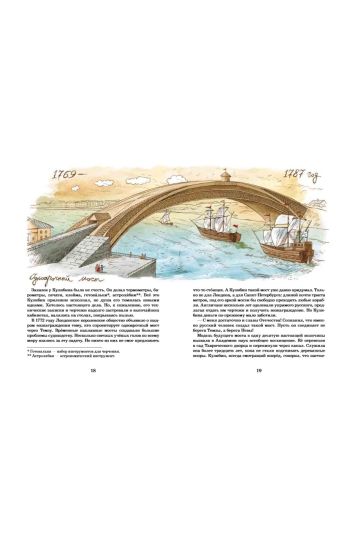
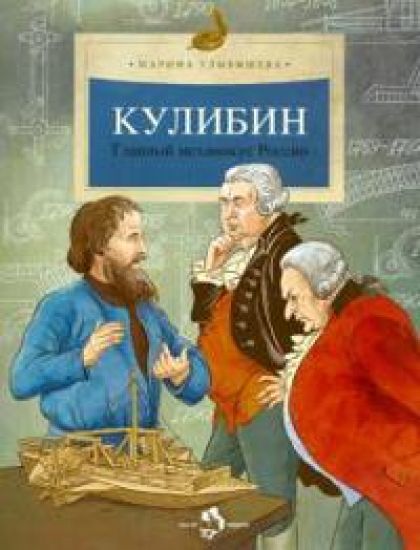
Eto legenda i gordost russkoj kultury, nizhegorodskij master-samouchka, sozdatel unikalnykh mekhanizmov, izobretatel, idei kotorogo obognali svoe vremja i byli voploscheny spustja gody i dazhe veka. Inostrantsy okhotilis za ego chertezhami, a on vsju svoju zhizn dumal ne o lichnoj vygode, a o slave Otechestva. Mozhet byt, vpervye figura Kulibina, zhizn i sudba russkogo genija v etoj knige predstajut tak zhivo, dostupno i po-chelovecheski teplo. Dlja mladshego shkolnogo vozrasta. 4-e izdanie.Redaktor: Legojda Vladimir RomanovichKhudozhnik: Gromova Olga
Eto legenda i gordost russkoj kultury, nizhegorodskij master-samouchka, sozdatel unikalnykh mekhanizmov, izobretatel, idei kotorogo obognali svoe vremja i byli voploscheny spustja gody i dazhe veka. Inostrantsy okhotilis za ego chertezhami, a on vsju svoju zhizn dumal ne o lichnoj vygode, a o slave Otechestva. Mozhet byt, vpervye figura Kulibina, zhizn i sudba russkogo genija v etoj knige predstajut tak zhivo, dostupno i po-chelovecheski teplo. Redaktor: Legojda Vladimir RomanovichKhudozhnik: Gromova Olg
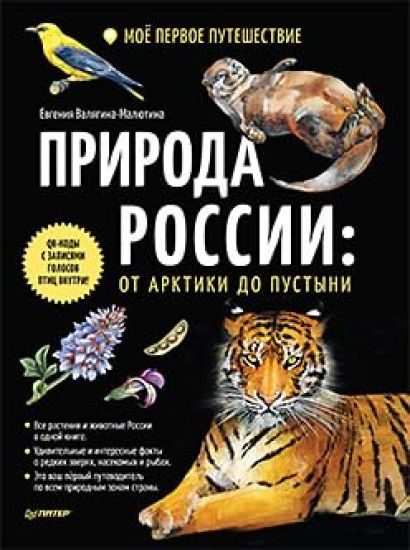
Eto kniga-vpechatlenie, kotoraja pokazhet prirodu Rossii glazami nastojaschego puteshestvennika! Uchjonyj-biolog Evgenija Valjagina-Maljutina pobyvala v samykh raznykh ugolkakh Rossii: v tundre, tajge, na Dalnem Vostoke i dazhe v pustyne! Vo vsekh ekspeditsijakh ona vela putevoj dnevnik, v kotorom sokhranila tsennye nabljudenija i risunki redkikh zhivotnykh, rastenij i nasekomykh. Vse eti zapisi avtor prevratila v pisma dlja sovremennykh chitatelej. Vy poznakomites so mnogimi obitateljami kholodnoj tundry, tajozhnykh lesov, stepej i pustyn, morej i okeanov. Uvidite belogo medvedja, amurskogo tigra, irbisa, gornogo gusja, kashalota i drugikh redkikh zhivotnykh v odnoj knige. Vy uznaete, kak silno menjaetsja pejzazh ot severa do juga Rossii. Raznoobrazie i krasota prirody ne ostavit vas ravnodushnymi. Realistichnye akvarelnye illjustratsii, zakhvatyvajuschie otkrytija i dostovernye fakty nauchat junogo chitatelja zabotitsja o nashej prirode i okhranjat ejo. Esli puteshestvie po Rossii dlja vas - mechta, to eta kniga pomozhet ejo ispolnit i stanet pervym shagom k otkrytiju novykh gorizontov. Dlja detej srednego shkolnogo vozrasta Evgenija Valjagina-Maljutina - kandidat biologicheskikh nauk, avtor bolee 50 nauchnykh statej i 30 knig o flore i faune Rossii, izvestnyj populjarizator nauki. Khudozhnik: Valjagina-Maljutina Evgenija, Medvedeva M.
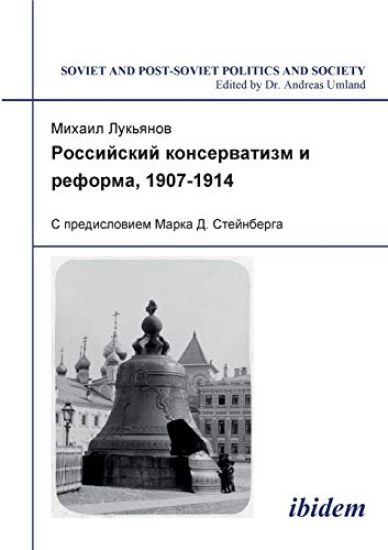
Conservatives displayed deep dissatisfaction with the state of affairs in Russia in 1907-1914. A critical attitude toward reality was expressed more strongly by extreme right-wing supporters of the All-Russian Dubrovinist Union of Russian People and less strongly by relatively moderate sympathizers of the All-Russian National Union. Over time, dissatisfaction spread from the right to the left, capturing even representatives of the left flank of Russian conservatism by the beginning of World War I. Their negative mood increased especially after the death of Stolypin, who was accepted as a symbol of conservative reform implemented in a national spirit. Conservatives of various persuasions, advocates and opponents of reform, came together in a negative evaluation of the current uncertain situation which satisfied neither.An explanation for this must be sought above all in the conservatives' attitude toward Russian modernization. Although Russian conservatism did not, in principle, reject the need to adapt to new realities, it was extremely difficult for conservatives to accept that variant of socioeconomic and political modernization that was taking place in Russia in practice.The social base of Russian conservatism was patently inadequate for the new trends. According to statistical data about the deputies of the Third and Fourth Duma conservative factions attracted individuals from the dominating ethno-confessional group, who, at the same time due to poverty, low level of education, and connection with stagnating agriculture were deprived of real chances for success in a quickly modernizing Russia. Russian conservatism had become the political expression of the interests of social strata that were losing their influence and were those least adapted to the new conditions.There existed another, ideological-value dimension to the conflict between conservatives and the status quo. The ideals of Russian conservatives on the eve of World War I were openly archaic and, in essence, presented themselves as variations of the notorious Uvarov's triad orthodoxy, autocracy, nationality. Describing their vision of an optimal political organization, they allotted the central place to autocracy, insisted on the necessity to secure the dominant position for the Russian and Orthodox majority. They argued that agriculture was destined to remain eternally the key branch of national economy.The introduction of representative legislative institutions, rise of economic influence of some national minorities, rapid industrial growth, and serious problems in agriculture directly contradicted the conservatives' notion of the optimal model for the state's structure. Political and socio-economic modernization was looked at as at mortal danger to the old regime, or even as the beginning of a G tterd mmerung. In this situation, conservatives worked out a series of political and socio-economic programs which became alternatives to official policies. Their rejection gave rise to a wave of gloomy forecasts and eschatological expectations; the famous Durnovo memorandum was only one example of documents expressing emotions of this kind. Conservative viewed the future with pessimism, and this pessimistic mood turned to be justified by the catastrophic events in a few years.Before the Great War, conservatives had stopped viewing themselves as buttresses of the Russian political system. This condition, no less than pressure from the left, brought about the quick and irreversible disintegration of the 3rd-of-June Regime. The pre-1917 status-quo definitely did not suit socialists or liberals, but neither did it satisfy the conservatives.
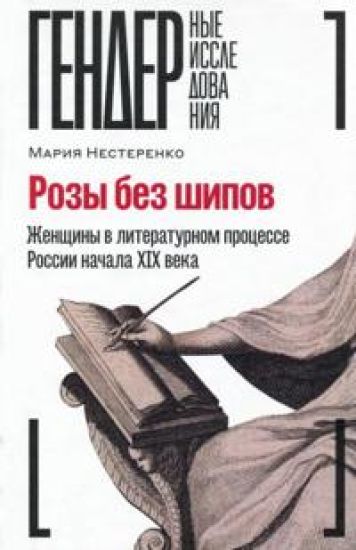
Pervaja tret XIX veka otmechena rostom diskussij o meste zhenschin v literature i granitsakh ikh dozvolennogo uchastija v literaturnom protsesse. Budet izvestnym preuvelicheniem schitat etot period nachalom stanovlenija istorii pisatelnits v Rossii, no bolshinstvo suzhdenij o dopustimosti zanjatij zhenschin slovesnostju, kotorye vposledstvii vzjali na vooruzhenie kritiki 1830-1860 kh godov, vpervye bylo sformulirovany imenno v to vremja. Tsel, kotoruju stavit pered soboj Marija Nesterenko, - proanalizirovat, kak proiskhodila postepennaja konventsionalizatsija uchastija zhenschin v literaturnom protsesse v Rossii pervoj treti XIX veka i kak eta evoljutsija vzgljadov otrazilas na pisatelskoj sudbe i reputatsii poetessy Anny Petrovny Buninoj. Dlja etogo issledovatelnitsa obraschaetsja k razlichnym istochnikam, prezhde vsego k zhurnalnoj periodike, pokazyvaja, chto pri obschem pozitivnom otnoshenii karamzinistov k kulturnoj missii prosveschennykh dvorjanok sredi nikh ne bylo edinodushija po etomu voprosu. Marija Nesterenko - filolog, doktorant Tartuskogo universiteta (PhD), spetsialistka po tvorchestvu zabytykh pisatelnits XIX - nachala XX veka.
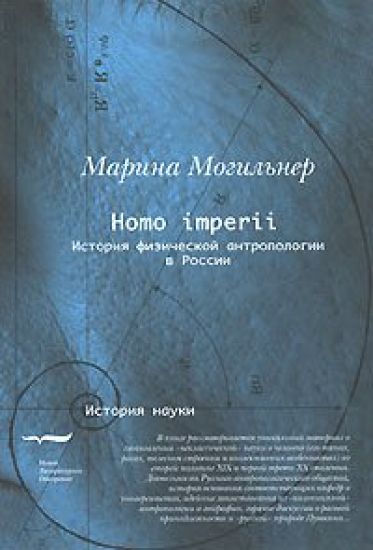
Homo imperii. Teos käsittelee Venäjän antropologian historiaa. Marina Mogilnerin teoksessa käsitellään ainutlaatuista materiaalia siitä, miten syntyi "ei-klassinen" ihmistiede (ihmistyyppi, rodut, ruumiinrakenne, kollektiiviset ominaisuudet) 1800-luvun lopussa ja 1900-luvun alussa. Kirjassa analysoidaan myös venäläisen antropologisen yhteisön aktiivisuutta, aiheeseen liittyvien professuurien perustamista yliopistoihin, ideologisia suunnitelmia "koloniaalisesta" antropologiasta ja maantieteestä, innokkaita väittelyitä eri rotuihin kuuluvista ominaisuuksista, Pushkinin "venäläisestä" luonnosta ja niin edelleen - ja analyysin taustalla ovat väittelyt etnograafisesta monimuotoisuudesta ja kokonaisvaltaisesta imperiumista, ja lisäksi prosessi liittää antropologia neuvostoaikaisiin rajoituksiin.
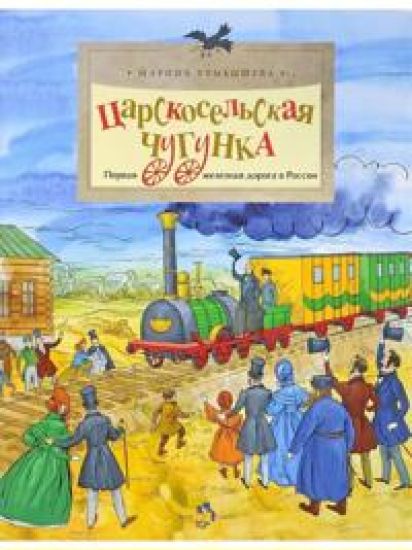
Eta kniga interesna ne tolko detjam, no i vzroslym. Mnogo novogo i neozhidannogo uznaem my o pervoj v Rossii zheleznoj doroge, stroitelstvo kotoroj nachalos v 1836 godu - pochti dva veka nazad. Ona svjazala Peterburg s Tsarskim Selom. "Tsarskoselskoj chugunke" posvjaschena znamenitaja "Poputnaja pesnja" Glinki, napisannaja na stikhi poeta Kukolnika.