Kirjojen hintavertailu. Mukana 12 390 323 kirjaa ja 12 kauppaa.

Kirjahaku

Etsi kirjoja tekijän nimen, kirjan nimen tai ISBN:n perusteella.

1000 tulosta hakusanalla Massimo Mazzitelli

A Century of Portuguese Fertility

A Century of Portuguese Fertility

Massimo Livi Bacci

Princeton University Press
2016
sidottu
This book treats aspects of the social and demographic history of Portugal in the last century, giving particular attention to the transition from a situation of very high fertility to the moderate pattern prevailing in recent times. Originally published in 1971. The Princeton Legacy Library uses the latest print-on-demand technology to again make available previously out-of-print books from the distinguished backlist of Princeton University Press. These editions preserve the original texts of these important books while presenting them in durable paperback and hardcover editions. The goal of the Princeton Legacy Library is to vastly increase access to the rich scholarly heritage found in the thousands of books published by Princeton University Press since its founding in 1905.
Never Trust A Skinny Italian Chef

Never Trust A Skinny Italian Chef

Massimo Bottura

Phaidon Press Ltd
2014
sidottu
Never Trust a Skinny Italian Chef is a tribute to three-michelin star restaurant, Osteria Francescana and the twenty-five year career of its chef, Massimo Bottura, 'the Jimi Hendrix of Italian chefs'. Voted #1 in the S. Pellegrino World's 50 Best Restaurants Awards 2016.Osteria Francescana is Italy's most celebrated restaurant. At Osteria Francescana, chef Massimo Bottura (as featured on Netflix's Chef's Table) takes inspiration from contemporary art to create highly innovative dishes that play with Italian culinary traditions.Never Trust a Skinny Italian Chef is a tribute to Bottura's twenty-five year career and the evolution of Osteria Francescana. Divided into four chapters, each one dealing with a different period, the book features 50 recipes and accompanying texts explaining Bottura's inspiration, ingredients and techniques. Illustrated with photography by Stefano Graziani and Carlo Benvenuto, Never Trust a Skinny Italian Chef is the first book from Bottura - the leading figure in modern Italian gastronomy.
Bread Is Gold

Bread Is Gold

Massimo Bottura

Phaidon Press Ltd
2017
nidottu
Massimo Bottura, the world's best chef, prepares extraordinary meals from ordinary and sometimes 'wasted' ingredients inspiring home chefs to eat well while living well.'These dishes could change the way we feed the world, because they can be cooked by anyone, anywhere, on any budget. To feed the planet, first you have to fight the waste', Massimo BotturaBread is Gold is the first book to take a holistic look at the subject of food waste, presenting recipes for three-course meals from 45 of the world's top chefs, including Daniel Humm, Mario Batali, René Redzepi, Alain Ducasse, Joan Roca, Enrique Olvera, Ferran & Albert Adrià and Virgilio Martínez. These recipes, which number more than 150, turn everyday ingredients into inspiring dishes that are delicious, economical, and easy to make.
El Pan Es Oro: Recetas Extraordinarias Con Ingredientes Ordinarios (Bread Is Gold) (Spanish Edition)
Mas de 150 recetas caseras y faciles de elaborar ordenadas en 45 menus a cargo de los mejores chefs del mundo (Rene Redzepi, Ferran y Albert Adria, Alain Ducasse, Daniel Humm, Joan Roca, Andoni Luis Aduriz, Gaston Acurio, y Virgilio Martinez entre otros) realizadas con ingredientes diarios que tenemos en todas las neveras y despensas.El origen del proyecto es una invitacion que recibieron estos 45 chefs para cocinar en un Refectorio en Miln que Massimo Bottura habia reformado para dar de comer a personas que lo necesitaran. La premisa: Los ingredientes debian ser unicamente los que una furgoneta recibiera ese dia de los productos que los supermercados fueran a tirar. El resultado: Increibles recetas sorprendentes con los productos del dia a dia muy faciles de elaborar.Cada menu se acompana de fotografias de cada plato, fotografias de la visita del chef al refectorio en Milan y un pequeno texto / entrevista recordando la experiencia.
Native American Oracle Cards

Native American Oracle Cards

Massimo Rotundo; Lo Scarabeo

Llewellyn Publications
2015
muu
Tap into the collective imagination of Native American inspired imagery and symbols. The stylized artwork in this exciting deck provides a unique entry into your own spiritual work. From divination to journeying between worlds, this oracle is sure to help you understand more about yourself and the nature of our world.The companion booklets for most Lo Scarabeo decks are in five languages: English, Spanish, French, Italian, and German.
A Centaur in Auschwitz

A Centaur in Auschwitz

Massimo Giuliani; Richard Brilliant

Lexington Books
2003
sidottu
In A Centaur in Auschwitz, Massimo Giuliani sheds new light on Primo Levi's rational, demythologizing approach to suffering and survival. Whether working in narrative or poetic form, Levi grappled with the ambiguities and complexities of innocence and guilt, triumph and loss. Giuliani presents a powerful new means to understand Levi's thought: employing the neologism of salvaction (conveying "salvation" through one's own "action"), Giuliani has developed a "star of salvaction"—a diagram in the shape of a star of David, in which each of the six points leads to a strategy Levi learned for seeking meaning, and thereby salvation, in the misery of Auschwitz. This unique book, with its concise overview of Levi's expression and development as a writer, reveals Primo Levi for what he was: scientist, intellectual, Jew, and dedicated seeker of the roots of human dignity.
A Centaur in Auschwitz

A Centaur in Auschwitz

Massimo Giuliani; Richard Brilliant

Lexington Books
2003
nidottu
In A Centaur in Auschwitz, Massimo Giuliani sheds new light on Primo Levi's rational, demythologizing approach to suffering and survival. Whether working in narrative or poetic form, Levi grappled with the ambiguities and complexities of innocence and guilt, triumph and loss. Giuliani presents a powerful new means to understand Levi's thought: employing the neologism of salvaction (conveying 'salvation' through one's own 'action'), Giuliani has developed a 'star of salvaction'—a diagram in the shape of a star of David, in which each of the six points leads to a strategy Levi learned for seeking meaning, and thereby salvation, in the misery of Auschwitz. This unique book, with its concise overview of Levi's expression and development as a writer, reveals Primo Levi for what he was: scientist, intellectual, Jew, and dedicated seeker of the roots of human dignity.
The Beginning of History

The Beginning of History

Massimo De Angelis

Pluto Press
2006
pokkari
Francis Fukuyama may declare the 'end of history', and neoliberal capital embraces this belief. However, the diverse struggles for commons and dignity around the planet reveal a different reality: that of the beginning of history. The clash between these two perspectives is the subject matter of this book. This book analyses the frontline of this struggle. On one side, a social force called capital pursues endless growth and monetary value. On the other side, other social forces strive to rearrange the web of life on their own terms. This book engages with alternative modes of co-production recently posed by the alter-globalisation movement, and it examines what these movements are up against. This account explores groundbreaking new critical political economic theory and its role in bringing about radical social change.
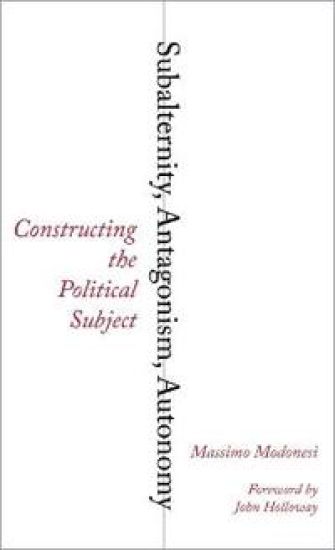
Subalternity, Antagonism, Autonomy

Subalternity, Antagonism, Autonomy

Massimo Modonesi

Pluto Press
2013
pokkari
In this bold and innovative book, Massimo Modonesi weaves together theory and political practice by relating the concepts of subalternity, antagonism and autonomy to contemporary movements in Latin America and elsewhere. In a sophisticated account, Modonesi reconstructs the debates between Marxist authors and schools of thought in order to sketch out informed strategies of resistance. He reviews the works of Gramsci, Negri, Castoriadis and Lefort, and engages with the arguments made by E. P. Thompson, Spivak, Laclau and Mouffe. Subalternity, Antagonism, Autonomy firmly roots key theoretical arguments from a range of critical thinkers within specific political movements in order to recover these concepts as analytical instruments which can help to guide contemporary struggles.
Subalternity, Antagonism, Autonomy

Subalternity, Antagonism, Autonomy

Massimo Modonesi

Pluto Press
2013
sidottu
In this bold and innovative book, Massimo Modonesi weaves together theory and political practice by relating the concepts of subalternity, antagonism and autonomy to contemporary movements in Latin America and elsewhere. In a sophisticated account, Modonesi reconstructs the debates between Marxist authors and schools of thought in order to sketch out informed strategies of resistance. He reviews the works of Gramsci, Negri, Castoriadis and Lefort, and engages with the arguments made by E. P. Thompson, Spivak, Laclau and Mouffe. Subalternity, Antagonism, Autonomy firmly roots key theoretical arguments from a range of critical thinkers within specific political movements in order to recover these concepts as analytical instruments which can help to guide contemporary struggles.
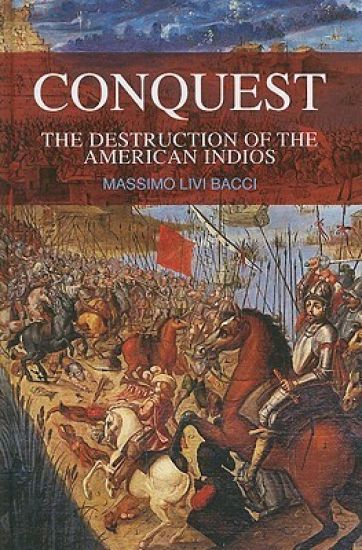
Conquest

Conquest

Massimo Livi-Bacci

Polity Press
2007
sidottu
The arrival of Europeans in the Americas brought with it a demographic catastrophe of vast proportions for the native populations. What were the causes? The surviving documentation is extraordinarily rich: conquistadors, religious figures, administrators, officials, and merchants kept records, carried out inquiries, and issued edicts. The native world, for its part, has also left eloquent traces of events as well as direct testimony of its harsh subjugation at the hands of the Europeans. Drawing on these sources, Livi-Bacci shows how not only the 'imported' diseases but also a series of economic and social factors played a role in the disastrous decline of the native populations. He argues that the catastrophe was not the inevitable outcome of contact with Europeans but was a function of both the methods of the conquest and the characteristics of the subjugated societies. This gripping narrative recounts one of the greatest tragedies of human history, one whose protagonists include figures like Columbus, Montezuma, Atahuallpa, Pizarro, Corts and Tupac Amaru.
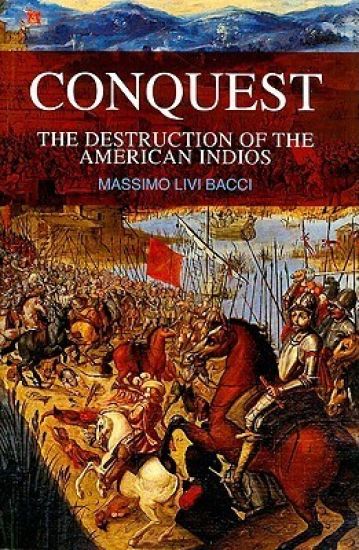
Conquest

Conquest

Massimo Livi-Bacci

Polity Press
2007
nidottu
The arrival of Europeans in the Americas brought with it a demographic catastrophe of vast proportions for the native populations. What were the causes? The surviving documentation is extraordinarily rich: conquistadors, religious figures, administrators, officials, and merchants kept records, carried out inquiries, and issued edicts. The native world, for its part, has also left eloquent traces of events as well as direct testimony of its harsh subjugation at the hands of the Europeans. Drawing on these sources, Livi-Bacci shows how not only the 'imported' diseases but also a series of economic and social factors played a role in the disastrous decline of the native populations. He argues that the catastrophe was not the inevitable outcome of contact with Europeans but was a function of both the methods of the conquest and the characteristics of the subjugated societies. This gripping narrative recounts one of the greatest tragedies of human history, one whose protagonists include figures like Columbus, Montezuma, Atahuallpa, Pizarro, Corts and Tupac Amaru.
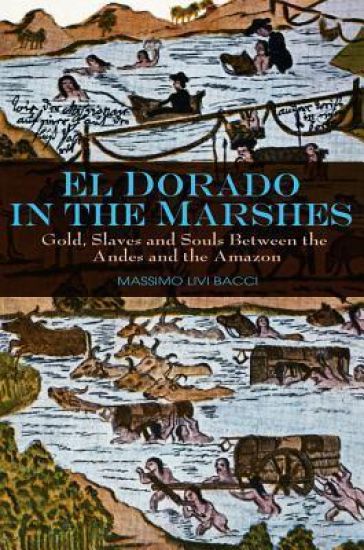
El Dorado in the Marshes

El Dorado in the Marshes

Massimo Livi-Bacci

Polity Press
2009
sidottu
The search for gold and for the mythical El Dorado gripped the imagination of the conquistadors from the beginning of the sixteenth century. Crossing over the Andes, they explored the unknown eastern forests and jungles, launching expeditions that were often disastrous and always disappointing. As the range of exploration expanded, El Dorado retreated, always just beyond the horizon. The last goal of these explorations was the land of the Mojos, a land located in the upper Amazon basin and which lies many months of the year submerged under water. It is a mysterious land and, as legend had it, inhabited by a people rich in gold and precious stones. Yet all the Spaniards found – as narrated in these compelling pages – was a limitless swamp, sparsely inhabited by a small number of people and so ill suited to usual system of productive forced labor. It was the Jesuits instead who established here a network of missions second in size and population only to that or Paraguay and so went in search of souls rather than gold.
El Dorado in the Marshes

El Dorado in the Marshes

Massimo Livi-Bacci

Polity Press
2009
nidottu
The search for gold and for the mythical El Dorado gripped the imagination of the conquistadors from the beginning of the sixteenth century. Crossing over the Andes, they explored the unknown eastern forests and jungles, launching expeditions that were often disastrous and always disappointing. As the range of exploration expanded, El Dorado retreated, always just beyond the horizon. The last goal of these explorations was the land of the Mojos, a land located in the upper Amazon basin and which lies many months of the year submerged under water. It is a mysterious land and, as legend had it, inhabited by a people rich in gold and precious stones. Yet all the Spaniards found – as narrated in these compelling pages – was a limitless swamp, sparsely inhabited by a small number of people and so ill suited to usual system of productive forced labor. It was the Jesuits instead who established here a network of missions second in size and population only to that or Paraguay and so went in search of souls rather than gold.
The End of Finance

The End of Finance

Massimo Amato; Luca Fantacci

Polity Press
2011
sidottu
This new book by two distinguished Italian economists is a highly original contribution to our understanding of the origins and aftermath of the financial crisis. The authors show that the recent financial crisis cannot be understood simply as a malfunctioning in the subprime mortgage market: rather, it is rooted in a much more fundamental transformation, taking place over an extended time period, in the very nature of finance. The ‘end’ or purpose of finance is to be found in the social institutions by which the making and acceptance of promises of payment are made possible - that is, the creation and cancellation of debt contracts within a specified time frame. Amato and Fantacci argue that developments in the modern financial system by which debts are securitized has endangered this fundamental credit/debt structure. The illusion has been created that debts are universally liquid in the sense that they need not be redeemed but can be continually sold on in increasingly extensive global markets. What appears to have reduced the riskiness of default for individual agents has in fact increased the fragility of the system as a whole. The authors trace the origins of this profound transformation backwards in time, not just to the neoliberal reforms of the 1980s and 90s but to the birth of capitalist finance in the mercantile networks of the sixteenth and seventeenth centuries. This long historical perspective and deep analysis of the nature of finance enables the authors to tackle the challenges we face today in a fresh way - not simply by tinkering with existing mechanisms, but rather by asking the more profound question of how institutions might be devised in which finance could fulfil its essential functions.
The End of Finance

The End of Finance

Massimo Amato; Luca Fantacci

Polity Press
2011
nidottu
This new book by two distinguished Italian economists is a highly original contribution to our understanding of the origins and aftermath of the financial crisis. The authors show that the recent financial crisis cannot be understood simply as a malfunctioning in the subprime mortgage market: rather, it is rooted in a much more fundamental transformation, taking place over an extended time period, in the very nature of finance. The ‘end’ or purpose of finance is to be found in the social institutions by which the making and acceptance of promises of payment are made possible - that is, the creation and cancellation of debt contracts within a specified time frame. Amato and Fantacci argue that developments in the modern financial system by which debts are securitized has endangered this fundamental credit/debt structure. The illusion has been created that debts are universally liquid in the sense that they need not be redeemed but can be continually sold on in increasingly extensive global markets. What appears to have reduced the riskiness of default for individual agents has in fact increased the fragility of the system as a whole. The authors trace the origins of this profound transformation backwards in time, not just to the neoliberal reforms of the 1980s and 90s but to the birth of capitalist finance in the mercantile networks of the sixteenth and seventeenth centuries. This long historical perspective and deep analysis of the nature of finance enables the authors to tackle the challenges we face today in a fresh way - not simply by tinkering with existing mechanisms, but rather by asking the more profound question of how institutions might be devised in which finance could fulfil its essential functions.
A Short History of Migration

A Short History of Migration

Massimo Livi-Bacci

Polity Press
2012
sidottu
Translated by Carl Ipsen. This short book provides a succinct and masterly overview of the history of migration, from the earliest movements of human beings out of Africa into Asia and Europe to the present day, exploring along the way those factors that contribute to the successes and failures of migratory groups. Separate chapters deal with the migration flows between Europe and the rest of the world in the 19th and 20th centuries and with the turbulent and complex migratory history of the Americas. Livi Bacci shows that, over the centuries, migration has been a fundamental human prerogative and has been an essential element in economic development and the achievement of improved standards of living. The impact of state policies has been mixed, however, as states have each established their own rules of entry and departure - rules that today accentuate the differences between the interests of the sending countries, the receiving countries, and the migrants themselves. Lacking international agreement on migration rules owing to the refusal of states to surrender any of their sovereignty in this regard, the positive role that migration has always played in social development is at risk. This concise history of migration by one of the world's leading demographers will be an indispensable text for students and for anyone interested in understanding how the movement of people has shaped the modern world.
A Short History of Migration

A Short History of Migration

Massimo Livi-Bacci

Polity Press
2012
nidottu
Translated by Carl Ipsen. This short book provides a succinct and masterly overview of the history of migration, from the earliest movements of human beings out of Africa into Asia and Europe to the present day, exploring along the way those factors that contribute to the successes and failures of migratory groups. Separate chapters deal with the migration flows between Europe and the rest of the world in the 19th and 20th centuries and with the turbulent and complex migratory history of the Americas. Livi Bacci shows that, over the centuries, migration has been a fundamental human prerogative and has been an essential element in economic development and the achievement of improved standards of living. The impact of state policies has been mixed, however, as states have each established their own rules of entry and departure - rules that today accentuate the differences between the interests of the sending countries, the receiving countries, and the migrants themselves. Lacking international agreement on migration rules owing to the refusal of states to surrender any of their sovereignty in this regard, the positive role that migration has always played in social development is at risk. This concise history of migration by one of the world's leading demographers will be an indispensable text for students and for anyone interested in understanding how the movement of people has shaped the modern world.
Saving the Market from Capitalism

Saving the Market from Capitalism

Massimo Amato; Luca Fantacci

Polity Press
2014
sidottu
This new book by two leading economists is a far-reaching analysis of the role and organization of the financial system in the aftermath of the economic crisis. The authors argue that the financial markets, as currently organized, hinder genuine market transactions and therefore harm the economy, along with any chance of sustained recovery.Despite the crisis, the power of the financial markets has continued to grow. Far from being subjected to major restructuring or regulation, they continue to rule largely unchecked - laying down economic policies, deposing governments, disrupting social contracts and reshaping international alliances. The time has come to think through more radical proposals for reform - to save other markets from the overwhelming power of the one market that has come to dominate them all, the financial market. Through a detailed examination of specific measures - from policies aimed at reigning in financial markets to the idea of local currencies that could be used to foster economic development within localities and regions - the authors develop a set of proposals that would help to revitalize markets, free them from the domineering power of finance and re-establish the relationship between creditor and debtor that was severed by the rise of the modern financial system. Building on their very successful work The End of Finance, this new and timely book will appeal to students of economics, politics and sociology as well as to general readers interested in one of the key issues of our time.
Saving the Market from Capitalism

Saving the Market from Capitalism

Massimo Amato; Luca Fantacci

Polity Press
2014
nidottu
This new book by two leading economists is a far-reaching analysis of the role and organization of the financial system in the aftermath of the economic crisis. The authors argue that the financial markets, as currently organized, hinder genuine market transactions and therefore harm the economy, along with any chance of sustained recovery.Despite the crisis, the power of the financial markets has continued to grow. Far from being subjected to major restructuring or regulation, they continue to rule largely unchecked - laying down economic policies, deposing governments, disrupting social contracts and reshaping international alliances. The time has come to think through more radical proposals for reform - to save other markets from the overwhelming power of the one market that has come to dominate them all, the financial market. Through a detailed examination of specific measures - from policies aimed at reigning in financial markets to the idea of local currencies that could be used to foster economic development within localities and regions - the authors develop a set of proposals that would help to revitalize markets, free them from the domineering power of finance and re-establish the relationship between creditor and debtor that was severed by the rise of the modern financial system. Building on their very successful work The End of Finance, this new and timely book will appeal to students of economics, politics and sociology as well as to general readers interested in one of the key issues of our time.