
Kirjahaku
Etsi kirjoja tekijän nimen, kirjan nimen tai ISBN:n perusteella.
1000 tulosta hakusanalla Matthew FitzSimmons

Miscellaneous Works Of His Late Excellency Matthew Prior
Matthew Prior; Adrian (FRW) Drift
Kessinger Pub
2007
pokkari
Selected Poems Of Matthew Arnold
Matthew Arnold; Hereford B. (EDT) George; A. M. (EDT) Leigh
Kessinger Pub
2007
pokkari

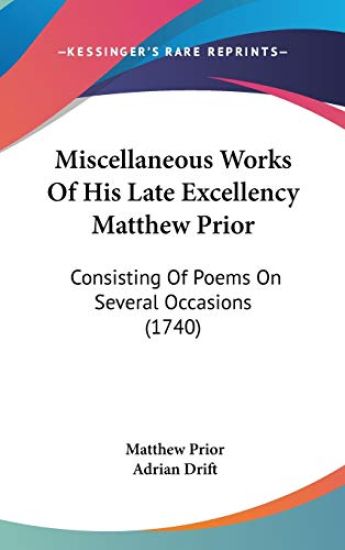
Miscellaneous Works Of His Late Excellency Matthew Prior: Consisting Of Poems On Several Occasions (1740)
Matthew Prior
KESSINGER PUBLISHING, LLC
2008
sidottu

When Matthew's beloved wife Molly died, long before her time, her son Mark grieved as much as anyone. Since he was a small boy his mother had been sickening with the illness that eventually carried her off, and now at the age of sixteen Mark longed to earn his father's respect by assisting with the family business, a prosperous antiques shop.
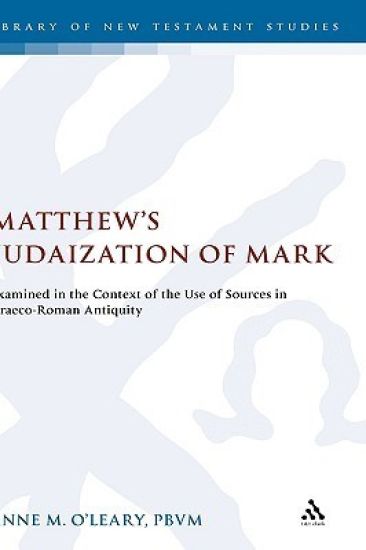
Creative imitation (Gk., mimesis; Lt., imitatio) was the primary literary convention of the ancient world of the first century CE. The first part of the book demonstrates that it was the principal means by which classical authors, such as Virgil, Seneca, Plutarch, and Livy, composed their works. An examination of the use of sources in both Jewish and Christian Sacred Scriptures in the light of this convention provides a new and fruitful approach to scripture scholarship. The Book of Tobit and Paul's First Letter to the Corinthians (1 Cor 8-10) are examined to demonstrate this thesis. This sets the context for an examination of Matthew's use of Mark as a literary source in the light of Graeco-Roman literary conventions in part two of the book. Such a use is entirely plausible when one considers that, "penned in Greek, probably to Diaspora audiences, the canonical gospels reflect Greco-Roman rather than strictly Palestinian Jewish literary conventions." Both the way in which Matthew incorporates his Markan source into his text, and the function and effect of this source in its new Matthean context are examined. This methodology provides compelling evidence that Matthew's use of Mark as a source was toward the Judaization of his Gospel.

This detailed commentary presents the gospel of matthew as a counter-narrative, showing that it is a work of resistance written from and for a minority community of disciples committed to Jesus, the agent of God's saving presence. It was written and functions to shape the identity and lifestyle of the early community of jesus' followers as an alternative community that can resist the dominant authorities both in rome and in the synagogue. The Gospel anticpates the time when Jesus will return and establish God's reign over all, including the powers in Rome.
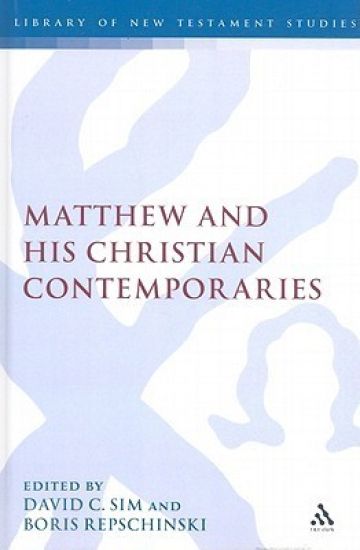
Matthew and his Christian Contemporaries
BLOOMSBURY PUBLISHING PLC
2008
sidottu
This volume aims to compare the author of Matthew's Gospel with a selection of contemporary Christian authors and/or texts. Recent Matthean scholarship has highlighted the distinctiveness of this early Christian writer by emphasising his clear Jewish perspective in addition to his Christian affiliation. He can accurately be perceived as both Jewish and Christian because he holds that Christian commitment demands both observance of the Mosaic Law and faith in Jesus as the Messiah. But if Matthew is distinctively Jewish and Christian, how does he compare with other early Christian writers? Much of the New Testament literature was composed by Paul himself or by his later followers, and these Christians held the view that the Mosaic Law no longer had relevance in the light of the Christ event. Other New Testament texts that are not Pauline, e.g. the Gospel of John and the letter to the Hebrews, appear to agree with Paul on this point. Consequently, Matthew stands apart from other texts in the canon with the possible exception of the letter of James. The volume will therefore establish the distinctiveness of Matthew by comparing his theological perspective with his major sources, Mark and Q, and with the two remaining Gospels, the Pauline epistles, the letter to the Hebrews and the epistle of James. The comparison of Matthew with non-canonical texts, the Didache and the letters of Ignatius of Antioch, is important because much work has been done in these areas recently. Given Matthew's distinctive portrayal of Jesus, a comparison of Matthew and the historical Jesus is also demanded in the context of this volume.