Kirjojen hintavertailu. Mukana 11 383 854 kirjaa ja 12 kauppaa.

Kirjahaku

Etsi kirjoja tekijän nimen, kirjan nimen tai ISBN:n perusteella.

1000 tulosta hakusanalla Michael J. Perry

The Fight for Status and Privilege in Late Medieval and Early Modern Castile, 1465–1598
In The Fight for Status and Privilege in Late Medieval and Early Modern Castile, 1465–1598, Michael Crawford investigates conflicts about and resistance to the status of hidalgo, conventionally understood as the lowest, most heavily populated rank in the Castilian nobility. It is generally accepted that legal privileges were based on status and class in this premodern society. Crawford presents and explains the contentious realities and limitations of such legal privileges, particularly the conventional claim of hidalgo exemption from taxation. He focuses on efforts to claim these privileges as well as opposing efforts to limit and manage them. Although historians of Spain acknowledge such conflicts, especially lawsuits associated with this status, none have focused a study on this extraordinarily widespread phenomenon. This book analyzes the inevitable contradictions inherent in negotiation for and the implementation of privilege, scrutinizing the many jurisdictions that intervened in these struggles and debates, including the crown, judiciary, city council, and financial authorities. Ultimately, this analysis imparts important insights about the nature of sixteenth-century Castilian society with wide-ranging implications about the relationship between social status and legal privileges in the early modern period as a whole.

The Fight for Status and Privilege in Late Medieval and Early Modern Castile, 1465–1598
In The Fight for Status and Privilege in Late Medieval and Early Modern Castile, 1465–1598, Michael Crawford investigates conflicts about and resistance to the status of hidalgo, conventionally understood as the lowest, most heavily populated rank in the Castilian nobility. It is generally accepted that legal privileges were based on status and class in this premodern society. Crawford presents and explains the contentious realities and limitations of such legal privileges, particularly the conventional claim of hidalgo exemption from taxation. He focuses on efforts to claim these privileges as well as opposing efforts to limit and manage them. Although historians of Spain acknowledge such conflicts, especially lawsuits associated with this status, none have focused a study on this extraordinarily widespread phenomenon. This book analyzes the inevitable contradictions inherent in negotiation for and the implementation of privilege, scrutinizing the many jurisdictions that intervened in these struggles and debates, including the crown, judiciary, city council, and financial authorities. Ultimately, this analysis imparts important insights about the nature of sixteenth-century Castilian society with wide-ranging implications about the relationship between social status and legal privileges in the early modern period as a whole.
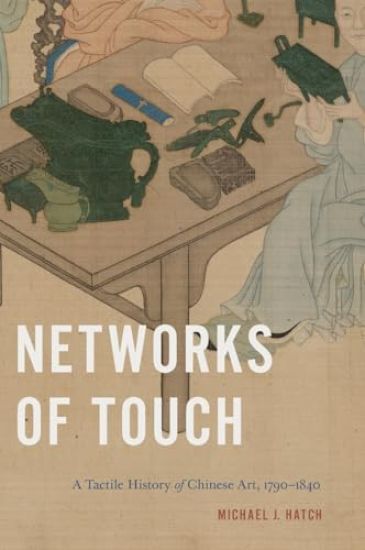
Networks of Touch

Networks of Touch

Michael J. Hatch

Pennsylvania State University Press
2024
sidottu
In early nineteenth-century China, a remarkable transformation took place in the art world: artists among China’s educated elites began to use touch to forge a more authentic relationship to the past, to challenge stagnant artistic canons, and to foster deeper human connections. Networks of Touch is an engaging exploration of this sensory turn.In this book, Michael J. Hatch examines the artistic network of Ruan Yuan (1764–1849), a scholar-official whose patronage supported a generation of artists and learned people who prioritized epigraphic research as a means of truing the warped contours of Confucian heritage. Their work instigated an “epigraphic aesthetic”—an appropriation of the stylistic, material, and tactile features of ancient inscribed objects and their reproductive technologies—in late eighteenth- and early nineteenth-century artwork. Rubbings, a reduplicative technology, challenged the dominance of brushwork as the bearer of artistic authority. While brushwork represented the artist’s physical presence through ink and paper, rubbings were direct facsimiles of tactile experiences with objects. This shift empowered artists and scholars to transcend traditional conventions and explore new mediums, uniting previously separate image-making practices while engaging audiences through the senses.Centering on touch and presenting a fresh perspective on early nineteenth-century literati art in China, this volume sheds light on a period often dismissed as lacking innovation and calls into question optical realism’s perceived supremacy in reshaping the sensory experience of the modern Chinese viewer.
Networks of Touch

Networks of Touch

Michael J. Hatch

Pennsylvania State University Press
2026
pokkari
In early nineteenth-century China, a remarkable transformation took place in the art world: artists among China’s educated elites began to use touch to forge a more authentic relationship to the past, to challenge stagnant artistic canons, and to foster deeper human connections. Networks of Touch is an engaging exploration of this sensory turn. In this book, Michael J. Hatch examines the artistic network of Ruan Yuan (1764–1849), a scholar-official whose patronage supported a generation of artists and learned people who prioritized epigraphic research as a means of truing the warped contours of Confucian heritage. Their work instigated an “epigraphic aesthetic”—an appropriation of the stylistic, material, and tactile features of ancient inscribed objects and their reproductive technologies—in late eighteenth- and early nineteenth-century artwork. Rubbings, a reduplicative technology, challenged the dominance of brushwork as the bearer of artistic authority. While brushwork represented the artist’s physical presence through ink and paper, rubbings were direct facsimiles of tactile experiences with objects. This shift empowered artists and scholars to transcend traditional conventions and explore new mediums, uniting previously separate image-making practices while engaging audiences through the senses. Centering on touch and presenting a fresh perspective on early nineteenth-century literati art in China, this volume sheds light on a period often dismissed as lacking innovation and calls into question optical realism’s perceived supremacy in reshaping the sensory experience of the modern Chinese viewer.
Managerial and Technical Motivation

Managerial and Technical Motivation

Michael J. Stahl

Praeger Publishers Inc
1986
sidottu
One of the most widely accepted theories of motivation is a trichotomy of needs theory popularized by David C. McClelland of Harvard University. Many organizational behavior textbooks today discuss McClelland's need for achievement, need for affiliation, and need for power. The three needs have been found to possess predictive power in a wide variety of settings, particularly organizational ones. Impressed by the ability of the three needs to explain behavior, but aware of the measurement problems associated with the Thematic Apperception Test which is used to assess these needs, the author searched for an alternative measurement approach. This book reports on those design efforts, validation of the instrument, and use of the instrument in organizational settings.
The Politics of External Influence in the Dominican Republic

The Politics of External Influence in the Dominican Republic

Michael J. Kryzanek; Howard J. Wiarda

Praeger Publishers Inc
1988
sidottu
It is to be hoped that this analysis of the Dominican situation by two persons who have given it much attention, . . . will help the understanding of deep problems of the Republic to which the American government may, in its wisdom, address itself. Robert Wesson, Series Editor . . . Wiarda and Kryzanek have written a splended overview that meets a major need in the literature. Recommended for upper-division undergraduate students and general readers. ChoiceAlthough not usually considered one of the major players in Wetern hemispheric affairs, the Dominican Republic offers the student and professional interested in Latin America a nearby laboratory in which to study the effects of dictatorship, economic intervention, and revolutionary change. The Dominican Republic is also at the center of North-South, East-West currents swirling through the Caribbean Basin. This comprehensive study interweaves the complex interrelations between the international scene and the internal character and development of Dominican national life.
Western European Integration

Western European Integration

Michael J. Collins

Praeger Publishers Inc
1992
sidottu
Startling changes are taking place in Western Europe; this study argues that the U.S. strategic response should be no less dramatic. Michael J. Collins describes a creation of a new type of political organization--a new way for nations to integrate themselves politically in Western Europe--and contends that this new model is dynamic enough to rival older historical paradigms. Western Europeans are making massive changes in their international arrangements, with each other and the outside world, to permit a natural evolution of national cultures along with the development of an intra-European culture. This changing political and economic situation in Europe has already affected the way the United States looks at the world diplomatically, and it may soon alter the general thrust of U.S. military strategy with regard to NATO. Europeans and Americans alike are questioning how much longer a united Europe can expect American troops to defend them against the Soviet Union, now that the Cold War era has ended. U.S. military strategy must change because the world is changing, and the increasing power of Western Europe is a major factor in the equation.Collins concludes that the Common Market Countries can no longer be understood as a simple collection of nation-states joined in a cartel or economic alliance, calling for a change in U.S. foreign policy and strategy. Chapter 1 describes the developments in Western Europe since World War II. Chapters 2 and 3 discuss how the new Western European alliance interacts along both military and political lines. Chapter Four describes the character of Western Europe and the replacement of the nation-state concept with a new flexibility in dealing with each other and the surrender of sovereignty by the constituent states in limited but decisive areas. The final two chapters suggest possible policy and strategic responses by the United States. A chapter on strategic implications is bound to be controversial, particularly to traditional military strategists. These thought-provoking analyses and policy implementations will interest scholars and students of European History and Politics, Comparative Politics, United States Foreign Policy and Defense, as well as government policy makers and decision makers in international business.
Multinational Corporations and the North American Free Trade Agreement
This study provides a timely and useful benchmark for analysis of the effects of the recently negotiated North American Free Trade Agreement on investment flows. It also presents a unified history of foreign investment in Canada, Mexico, and the United States over the twentieth century, stressing interactions among these countries and their changing policies towards inward and outward investment. Twomey analyzes economic theories of foreign investment from the perspectives of neoclassical economics and political science and places them in the context of the ongoing debate over neo-protectionist policies and the role of the United States in the global economy.
The Evolution of National Wildlife Law

The Evolution of National Wildlife Law

Michael J. Bean; Melanie Rowland

Praeger Publishers Inc
1997
sidottu
When the first edition of this book was published in 1977—to overwhelming critical and popular acclaim—it was the only publication to analyze wildlife law comprehensively as a distinct component of federal environmental law. The second edition, published in 1983, provided a thorough and authoritative update. Since then the intense public interest in wildlife law has been reflected in a tremendous growth in both litigation and new legislation. This, the third edition, thoroughly revises and updates the earlier edition in light of current legal perspectives on the conservation of wildlife and biological diversity. Two decades after its first publication, this book remains the standard reference for anyone seeking to understand the statutes, regulations, and court decisions governing wildlife law. Like the two that preceded it, the new edition of The Evolution of National Wildlife Law monumental achievement that will serve lawmakers, administrators, educators, conservationists, and scholars for years to come. — From the Foreword by Bruce Babbitt.
The Evolution of National Wildlife Law

The Evolution of National Wildlife Law

Michael J. Bean; Melanie Rowland

Praeger Publishers Inc
1997
nidottu
When the first edition of this book was published in 1977—to overwhelming critical and popular acclaim—it was the only publication to analyze wildlife law comprehensively as a distinct component of federal environmental law. The second edition, published in 1983, provided a thorough and authoritative update. Since then the intense public interest in wildlife law has been reflected in a tremendous growth in both litigation and new legislation. This, the third edition, thoroughly revises and updates the earlier edition in light of current legal perspectives on the conservation of wildlife and biological diversity. Two decades after its first publication, this book remains the standard reference for anyone seeking to understand the statutes, regulations, and court decisions governing wildlife law. Like the two that preceded it, the new edition of The Evolution of National Wildlife Law monumental achievement that will serve lawmakers, administrators, educators, conservationists, and scholars for years to come. — From the Foreword by Bruce Babbitt.
The Lochner Court, Myth and Reality

The Lochner Court, Myth and Reality

Michael J. Phillips

Praeger Publishers Inc
2000
sidottu
Conventional wisdom holds that the Lochner Court illegitimately used the Constitution's due process clauses to strike down Progressive legislation designed to protect the poor and powerless against big business. This book systematically examines all of the U.S. Supreme Court's substantive due process cases from 1897 through 1937 and finds that they do not support long-held beliefs about the Lochner Court. The Court was more Progressive than commonly imagined, striking down far fewer laws on substantive due process grounds than is generally believed. The laws it overturned were not invariably social legislation, and relatively few due process cases involved freedom of contract. Moreover, Holmes, despite his reputation as a Great Dissenter, joined many of the cases striking down government action. The book attacks three familiar normative criticisms of the Lochner Court. It accerts that (1) the Court's substantive due process decisions almost certainly were not motivated by a conscious desire to assist business by suppressing social legislation; only sometimes did the justices' nostalgia for laissez-faire lead to this result; (2) the conservative justices' understanding of business and government often exceeded that found in the typical Brandeis Brief; and (3) most applications of Lochner-era substantive due process cannot readily be described as illegitimate assertions of judicial power lacking justification in the due process clauses.
American Adventurism Abroad

American Adventurism Abroad

Michael J. Sullivan

Praeger Publishers Inc
2004
sidottu
This book provides a comparative analysis of 30 American interventions into Third World countries. An historical approach is used to place the featured cases into a more general history of American Diplomacy. The author uses his assessments to prove that U.S. foreign policy has been driven by the goal of being the ultimate power in the global capitalist economic system. The author makes his work unique by giving a critical view of America's place in the world during an anticipated time of war and raised patriotism. He provides a scholarly look at U.S. diplomacy leading up to the era of the War on Terror.Sullivan explains how over the past 50 years the U.S. has come to succeed Europe as ruler of the global economic system. The political systems which have been promoted by the U.S. to preserve worldwide capitalism range from one-party rule to monarchies and recurring civil war. The interventions discussed have proved to be short-term successes for U.S. policy, but more often tragic for the local societies affected. Sullivan draws on his 1996 release Comparing State Polities to create a number of tables that place U.S. involvement into geographic and hierarchic perspective. The reader is ultimately provided with a provocative thesis that challenges traditional interpretations of America's role in the world. This book will be an asset to any undergraduate college student taking classes in political science or history. It will also appeal to a general audience.
Independent Radicalism in Early Victorian Britain

Independent Radicalism in Early Victorian Britain

Michael J. Turner

Praeger Publishers Inc
2004
sidottu
The reasons why people arise to express dissatisfaction with their present situation, and how they imagine and work towards an alternative, have enduring relevance. The reform campaigns of 19th-century Britain are of interest not only in their own right, but also because of what they reveal about processes of political and social change. This book examines the personal, social, political, ideological, and tactical components of radicalism in Britain between the 1820s and 1860s, and casts new light on the meaning, nature, and reception of reform during this period. The main avenues of inquiry are provided by the career of Thomas Perronet Thompson, a prominent MP, political economist, and writer who helped to shape and articulate an independent radicalism, which, with its distinctive commitments, outlook, and identity, has not previously been defined or explained.By relating Thompson's career to wider developments, and investigating the generation and impact of independent radicalism, this book deepens our understanding of 19th-century British reformers and clarifies the relationship between parliament and people and the extent to which decisions taken at the top were made in response to—or in spite of—pressure from below. Turner's findings will be of interest not only to students of the past, but also to observers of current and ongoing struggles between forces of conservatism and reform.
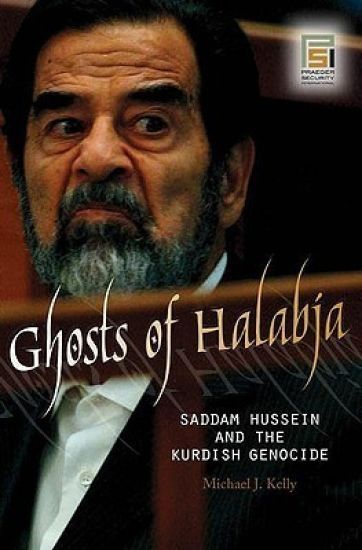
Ghosts of Halabja

Ghosts of Halabja

Michael J. Kelly

Praeger Publishers Inc
2008
sidottu
Saddam Hussein's execution for his crimes against Iraq's Shia not only brought an end to his reign of oppression, but also to the justice that was to be served to the Iraqi Kurds. The unspeakable atrocities visited by Saddam upon the Kurds of Iraq are explored here, together with the trials of Saddam by the Iraqi High Tribunal. However, this work is more than a litigation history. It is also an exploration of the motivations behind and the depths of organized evil in the context of a single, brutal despot at the helm of an artificially created multi-ethno/religious state lying atop massive oil wealth. Saddam's background and the context of his rule explain much about his actions, but not all. He remained an unpredictable tyrant to the end of his reign.The Kurds have continually been subject to adversity since the end of World War I, when they were denied their own homeland, splitting them among three countries: Turkey, Iran, and Iraq. During Saddam's 24-year reign, the Kurds of Iraq were frequently under the knife of injustice. Between 1987 and 1989, Saddam unleashed genocide, razing over 2,000 villages and murdering at least 50,000 Kurds. As his dictatorship came to an end, the Kurds long-awaited opportunity to hold Saddam responsible for the atrocities against them seemed to have come, only to be sidetracked by the Iraqi High Tribunal, the Iraqi government, and the U.S. government. While the Shia rejoiced in their victory, the Kurds continued to be left behind. Saddam's death freed him of the charges against him by the Kurds. The world had turned its back on the Kurds in their age of genocide, and now appeared to turn a blind eye to the justice that was denied.The unspeakable atrocities visited by Saddam upon the Kurds of Iraq are explored here together with the trials of Saddam by the Iraqi High Tribunal—both the completed prosecution for the Dujail massacre against the Shites and the incomplete one for the Anfal Campaigns against the Kurds. However, this work is more than a litigation history. It is also an exploration of the motivations behind and the depths of organized evil in the context of a single, brutal despot at the helm of an artificially created multi-ethno/religious state lying atop massive oil wealth, but situated in the most dangerous part of the world. Saddam's background and the context of his rule explain much about his actions, but not all. He remained an unpredictable tyrant to the end of his reign.
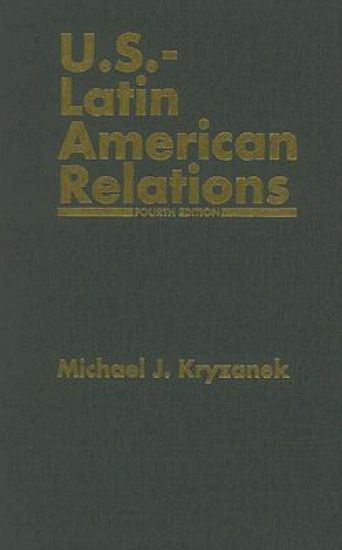
U.S.-Latin American Relations, 4th Edition

U.S.-Latin American Relations, 4th Edition

Michael J. Kryzanek

Praeger Publishers Inc
2008
nidottu
Since the third edition was published in 1996, there have been significant developments in this key strategic and economic relationship. Kryzanek builds on the text and themes of previous editions and further examines the ties between the United States and the nations of Latin America. These ties reveal new opportunities, challenges, and tensions. During the second term of President Bill Clinton and now in the Bush presidency, hemispheric relations have been centered on issues of trade, investment, and resource development. The impact of globalization on the region was only beginning to be felt when the third edition of the text went to print, but now it is clear that the rules and demands of a globalized economy have changed the face of Latin America. Numerous areas of public policy that are critical ingredients to the national interests of both the United States and Latin America, such as immigration, drug smuggling, gang violence, leftist revolution, cultural transformations, and regional security continue to test the relationships between the United States and Latin American governments.Because this text has in the past concentrated on the foreign policy process within the United States government, the proposed new edition will not only update this process but add discussion of new participants in the shaping and implementation of policies toward Latin America. For example, there will be an accent on the growing role of Hispanics within the United States in pressuring for changes in United States policy in a number of areas. Institutionally, there will be new discussion of the role that the Department of Homeland Security plays in United States-Latin American relations, particularly with respect to border and anti-terrorism issues. Key chapters will be reformulated in order to show how the United States makes policy toward Latin America and how the Latin Americans respond to policy initiatives. Presenting how policy is made toward the region is an essential pathway toward understanding how this relationship has evolved and why there have been both successes and failures between the United States and the countries of Latin America.
U.S.-Latin American Relations, 4th Edition

U.S.-Latin American Relations, 4th Edition

Michael J. Kryzanek

Praeger Publishers Inc
2008
sidottu
Since the third edition was published in 1996, there have been significant developments in this key strategic and economic relationship. Kryzanek builds on the text and themes of previous editions and further examines the ties between the United States and the nations of Latin America. These ties reveal new opportunities, challenges, and tensions. During the second term of President Bill Clinton and now in the Bush presidency, hemispheric relations have been centered on issues of trade, investment, and resource development. The impact of globalization on the region was only beginning to be felt when the third edition of the text went to print, but now it is clear that the rules and demands of a globalized economy have changed the face of Latin America. Numerous areas of public policy that are critical ingredients to the national interests of both the United States and Latin America, such as immigration, drug smuggling, gang violence, leftist revolution, cultural transformations, and regional security continue to test the relationships between the United States and Latin American governments.Because this text has in the past concentrated on the foreign policy process within the United States government, the proposed new edition will not only update this process but add discussion of new participants in the shaping and implementation of policies toward Latin America. For example, there will be an accent on the growing role of Hispanics within the United States in pressuring for changes in United States policy in a number of areas. Institutionally, there will be new discussion of the role that the Department of Homeland Security plays in United States-Latin American relations, particularly with respect to border and anti-terrorism issues. Key chapters will be reformulated in order to show how the United States makes policy toward Latin America and how the Latin Americans respond to policy initiatives. Presenting how policy is made toward the region is an essential pathway toward understanding how this relationship has evolved and why there have been both successes and failures between the United States and the countries of Latin America.
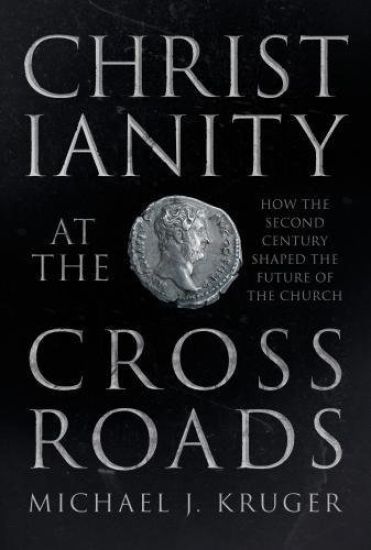
Christianity at the Crossroads

Christianity at the Crossroads

Michael J. Kruger

SPCK Publishing
2017
nidottu
It is the second century. Everyone who knew Jesus is now dead. Christianity has begun to spread, but there are serious threats to its survival. Christianity at the Crossroads examines the crucial issues that faced the second-century Church – a period often neglected or overlooked in other studies. It was during this period that the fledgling Church struggled to work out its identity and stay true to the vision of Christ and the apostles. Threatened by divisive controversies from within and fierce persecution from without, the Church’s response to these and other issues not only determined its survival; it was to shape the beliefs, values and lives of millions of Christians throughout the world over the next two millennia.
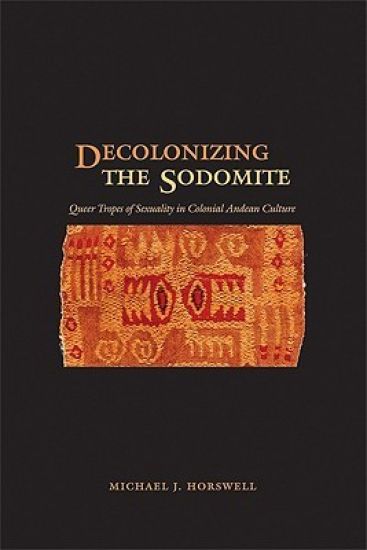
Decolonizing the Sodomite

Decolonizing the Sodomite

Michael J. Horswell

University of Texas Press
2006
pokkari
Early Andean historiography reveals a subaltern history of indigenous gender and sexuality that saw masculinity and femininity not as essential absolutes. Third-gender ritualists, Ipas, mediated between the masculine and feminine spheres of culture in important ceremonies and were recorded in fragments of myths and transcribed oral accounts. Ritual performance by cross-dressed men symbolically created a third space of mediation that invoked the mythic androgyne of the pre-Hispanic Andes. The missionaries and civil authorities colonizing the Andes deemed these performances transgressive and sodomitical. In this book, Michael J. Horswell examines alternative gender and sexuality in the colonial Andean world, and uses the concept of the third gender to reconsider some fundamental paradigms of Andean culture. By deconstructing what literary tropes of sexuality reveal about Andean pre-Hispanic and colonial indigenous culture, he provides an alternative history and interpretation of the much-maligned aboriginal subjects the Spanish often referred to as "sodomites." Horswell traces the origin of the dominant tropes of masculinist sexuality from canonical medieval texts to early modern Spanish secular and moralist literature produced in the context of material persecution of effeminates and sodomites in Spain. These values traveled to the Andes and were used as powerful rhetorical weapons in the struggle to justify the conquest of the Incas.
Elements of the Scientific Paper

Elements of the Scientific Paper

Michael J. Katz

Yale University Press
1977
pokkari
Shared knowledge is indispensable to the practice of science, and the scientific paper—whether published in a journal or collation volume—is the chief means by which scientists communicate ideas and results to their colleagues. Mastering the genre is thus an essential element in every scientist’s training.Using a published paper as a guide, Michael J. Katz takes the reader through every step of the writing process, including the use of standard formats (abstract, introduction, materials and methods, results, discussion, acknowledgments, and references), language (style and word usage), and publication (choosing the appropriate journal, the review process, and revising). Other chapters discuss figures (photographs, schematic diagrams, and graphs), writing with a computer, and numbers (algorithms and statistics). Nine appendices provide a handy reference to commonly needed information such as scientific abbreviations, non-technical words, and mathematic formulae. While recognizing that the scientific paper is constrained within a well-defined form, the book also stresses that the genre is narrative prose requiring a lucid, precise, and careful style. The elements of composition—gestation, diction, revision, and rewriting—are discussed in detail.Elements of the Scientific Paper is a useful handbook for young scientists and graduate students beginning their publishing careers, as well as for anyone wishing a review of or introduction to the elements of scientific style.
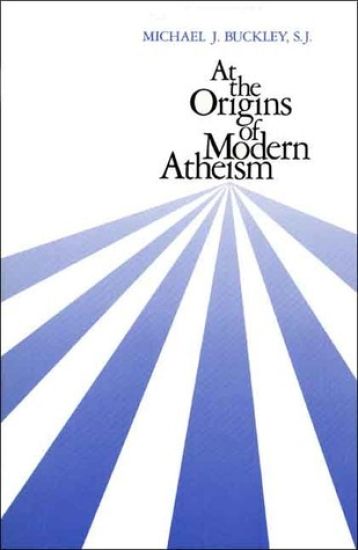
At the Origins of Modern Atheism

At the Origins of Modern Atheism

Michael J. Buckley

Yale University Press
1990
pokkari
The rise of atheism in the modern world is a religious phenomenon unprecedented in history, both in the number of its adherents and in the security of its cultural establishment. How did so revolutionary a conviction as this arise? What can theological reflection learn from this massive shift in religious consciousness? In this book, Michael J. Buckley investigates the origins and development of modern atheism and argues convincingly that its impetus lies paradoxically in the very attempts to counter it. Although modern atheism finds its initial exponents in Denis Diderot and Paul d’Holbach in the eighteenth century, their works bring to completion a dialectical process that reaches back to the theologians and philosophers of an earlier period. During the seventeenth century, theologians such as Leonard Lessius and Marin Mersenne determined that in order to defend the existence of god, religious apologetics must become philosophy, surrendering as its primary warrant any intrinsically religious experience or evidence. The most influential philosophers of the period, René Descartes and Isaac Newton, and the theologians who followed them accepted this settlement, and the new sciences were enlisted to provide the foundation for religion. Almost no one suspected the profound contradictions that this process entailed and that would eventually resolve themselves through the negation of god. In transferring to other areas of human experience and inquiry its fundamental responsibility to deal with the existence of god, religion dialectically generated its own denial. The origins and extraordinary power of modern atheism lie with this progressive self-alienation of religion itself.