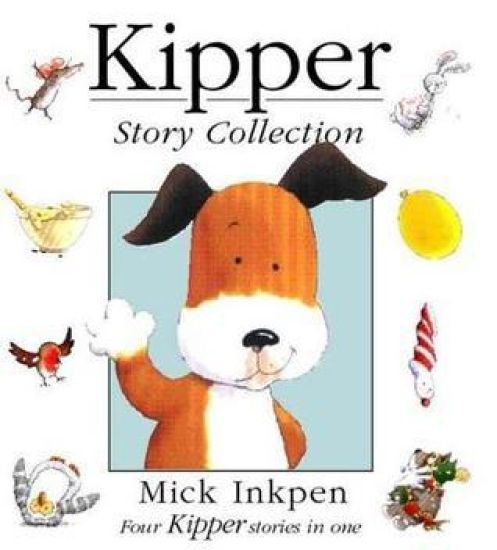
In this delightful story collection, you will find the four classic Kipper picture books: Kipper, Kipper's Toybox, Kipper's Birthday and Kipper's Snowy Day. It is the perfect gift for old and new Kipper fans!
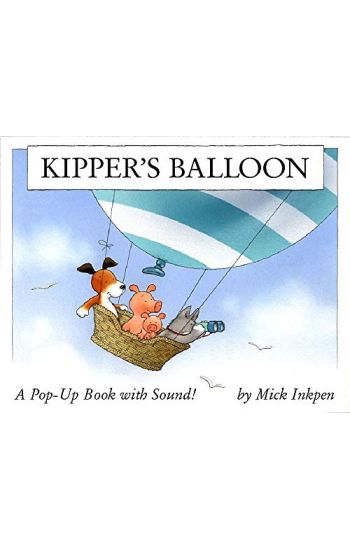
A fabulous pop-up book with sound, which will delight all Kipper fans. Would you like to hunt for a dinosaur or feed polar bears at the North Pole? Then this is the book for you! Hurry up or you might miss the journey of a lifetime! So climb aboard!
Wibbly Pig isn't tired at all! He wants to splash in the bath, count the stairs to the bedroom and bounce around on his bed. But in the end, he snuggles down to sleep with his cuddly toys.Cuddle up and read this stunning new edition of a bedtime favourite. Children everywhere will identify with Wibbly as he puts off bedtime again and again!
Appeals to the ‘common good’ or ‘public interest’ have long been used to justify planning as an activity. While often criticised, such appeals endure in spirit if not in name as practitioners and theorists seek ways to ensure that planning operates as an ethically attuned pursuit. Yet, this leaves us with the unavoidable question as to how an ethically sensitive common good should be understood. In response, this book proposes that the common good should not be conceived as something pre-existing and ‘out there’ to be identified and applied or something simply produced through the correct configuration of democracy. Instead, it is contended that the common good must be perceived as something ‘in here,’ which is known by engagement with the complexities of a context through employing the interpretive tools supplied to one by the moral dimensions of the life in which one is inevitably embedded. This book brings into conversation a series of thinkers not normally mobilised in planning theory, including Paul Ricoeur, Alasdair MacIntyre and Charles Taylor. These shine light on how the values carried by the planner are shaped through both their relationships with others and their relationship with the ‘tradition of planning’ – a tradition it is argued that extends as a form of reflective deliberation across time and space. It is contended that the mutually constitutive relationship that gives planning its raison d’être and the common good its meaning are conceived through a narrative understanding extending through time that contours the moral subject of planning as it simultaneously profiles the ethical orientation of the discipline. This book provides a new perspective on how we can come to better understand what planning entails and how this dialectically relates to the concept of the common good. In both its aim and approach, this book provides an original contribution to planning theory that reconceives why it is we do what we do, and how we envisage what should be done differently. It will be of interest to scholars, students and practitioners in planning, urban studies, sociology and geography.
Appeals to the ‘common good’ or ‘public interest’ have long been used to justify planning as an activity. While often criticised, such appeals endure in spirit if not in name as practitioners and theorists seek ways to ensure that planning operates as an ethically attuned pursuit. Yet, this leaves us with the unavoidable question as to how an ethically sensitive common good should be understood. In response, this book proposes that the common good should not be conceived as something pre-existing and ‘out there’ to be identified and applied or something simply produced through the correct configuration of democracy. Instead, it is contended that the common good must be perceived as something ‘in here,’ which is known by engagement with the complexities of a context through employing the interpretive tools supplied to one by the moral dimensions of the life in which one is inevitably embedded. This book brings into conversation a series of thinkers not normally mobilised in planning theory, including Paul Ricoeur, Alasdair MacIntyre and Charles Taylor. These shine light on how the values carried by the planner are shaped through both their relationships with others and their relationship with the ‘tradition of planning’ – a tradition it is argued that extends as a form of reflective deliberation across time and space. It is contended that the mutually constitutive relationship that gives planning its raison d’être and the common good its meaning are conceived through a narrative understanding extending through time that contours the moral subject of planning as it simultaneously profiles the ethical orientation of the discipline. This book provides a new perspective on how we can come to better understand what planning entails and how this dialectically relates to the concept of the common good. In both its aim and approach, this book provides an original contribution to planning theory that reconceives why it is we do what we do, and how we envisage what should be done differently. It will be of interest to scholars, students and practitioners in planning, urban studies, sociology and geography.
Develop your creative voice whilst acquiring the practical skills and confidence to use it with this new and fully updated edition of Mick Hurbis-Cherrier's filmmaking bible, Voice & Vision. Providing a solid grounding in the tools, techniques, and processes of narrative film, this comprehensive manual covers all the essentials whilst foregrounding artistic vision throughout. Gustavo Mercado joins Hurbis-Cherrier to walk the reader through every step of the process – from the transformation of an idea into a cinematic story, to the intricacies of promotion and distribution.Key features include:Comprehensive technical information on video production and postproduction tools, allowing filmmakers to express themselves with any camera, in any format, and on any budgetAn emphasis on the collaborative filmmaking process, including the responsibilities and creative contributions of every principal member of the crew and castA focus on learning to work successfully with available resources (time, equipment, budget, personnel, etc.) in order to turn limitations into opportunitiesUpdated digital filmmaking workflow breakdowns for Rec. 709 HD, Log Format, and D-Cinema productionsSubstantial coverage of the sound tools and techniques used in film production and the creative impact of postproduction sound designAn extensive discussion of digital cinematography fundamentals, including essential lighting and exposure control tools, common gamma profiles, the use of LUTs, and the role of color gradingAbundant examples referencing contemporary and classic films from around the worldIndispensible information on production safety, team etiquette, and set proceduresA robust companion website that includes eight award-winning example short films; interactive and high-resolution figures; extra tachnical chapters; forms and logs for preproduction, production, and postproduction; video examples that illustrate key concepts found within the book, and moreThe fourth edition has been fully revised and includes updates to video formats, camera technology, and lighting tools; expanded sections on multi-camera shooting, smartphone filmmaking, and drone cinematography; a new example short film for streaming and analysis; discussions on emerging AI applications for film production; additional information and resources on film set safety including best practices for intimacy scenes; and updates to contemporary funding, and distribution strategies.Whether using it in the classroom or looking for a comprehensive reference, Voice & Vision details all that’s needed to know about the filmmaking process, delivered in an accessible and reader-friendly format.
Develop your creative voice whilst acquiring the practical skills and confidence to use it with this new and fully updated edition of Mick Hurbis-Cherrier's filmmaking bible, Voice & Vision. Providing a solid grounding in the tools, techniques, and processes of narrative film, this comprehensive manual covers all the essentials whilst foregrounding artistic vision throughout. Gustavo Mercado joins Hurbis-Cherrier to walk the reader through every step of the process – from the transformation of an idea into a cinematic story, to the intricacies of promotion and distribution.Key features include:Comprehensive technical information on video production and postproduction tools, allowing filmmakers to express themselves with any camera, in any format, and on any budgetAn emphasis on the collaborative filmmaking process, including the responsibilities and creative contributions of every principal member of the crew and castA focus on learning to work successfully with available resources (time, equipment, budget, personnel, etc.) in order to turn limitations into opportunitiesUpdated digital filmmaking workflow breakdowns for Rec. 709 HD, Log Format, and D-Cinema productionsSubstantial coverage of the sound tools and techniques used in film production and the creative impact of postproduction sound designAn extensive discussion of digital cinematography fundamentals, including essential lighting and exposure control tools, common gamma profiles, the use of LUTs, and the role of color gradingAbundant examples referencing contemporary and classic films from around the worldIndispensible information on production safety, team etiquette, and set proceduresA robust companion website that includes eight award-winning example short films; interactive and high-resolution figures; extra tachnical chapters; forms and logs for preproduction, production, and postproduction; video examples that illustrate key concepts found within the book, and moreThe fourth edition has been fully revised and includes updates to video formats, camera technology, and lighting tools; expanded sections on multi-camera shooting, smartphone filmmaking, and drone cinematography; a new example short film for streaming and analysis; discussions on emerging AI applications for film production; additional information and resources on film set safety including best practices for intimacy scenes; and updates to contemporary funding, and distribution strategies.Whether using it in the classroom or looking for a comprehensive reference, Voice & Vision details all that’s needed to know about the filmmaking process, delivered in an accessible and reader-friendly format.
For an eighth grader, Molly Williams has more than her fair share of problems. Her father has just died in a car accident, and her mother has become a withdrawn, quiet version of herself. Molly doesn't want to be seen as "Miss Difficulty Overcome"; she wants to make herself known to the kids at school for something other than her father's death. So she decides to join the baseball team. The boys' baseball team. Her father taught her how to throw a knuckleball, and Molly hopes it's enough to impress her coaches as well as her new teammates. Over the course of one baseball season, Molly must figure out how to redefine her relationships to things she loves, loved, and might love: her mother; her brilliant best friend, Celia; her father; her enigmatic and artistic teammate, Lonnie; and of course, baseball. Mick Cochrane is a professor of English and the Lowery Writer-in-Residence at Canisius College in Buffalo, New York, where he lives with his wife and two sons.
Sometimes Fitz would look at himself in the mirror, an expression of pathetic eagerness on his face. He was a dog in the pound, wanting to be adopted. He'd smile. What father wouldn't want this boy? Fifteen-year-old Fitzgerald--Fitz, to his friends--has just learned that his father, whom he's never met, who supports him but is not a part of his life, is living nearby. Fitz begins to follow him, watch him, study him, and on an otherwise ordinary May morning, he executes a plan to force his father, at gunpoint, to be with him. Over the course of one spring day, Fitz and his father become real to one another. Fitz learns about his father, why he's chosen to remain distant and what really happened between him and Fitz's mother. And his father learns what sort of boy his son has grown up to become.
From four-term Oklahoma City Mayor Mick Cornett, a hopeful and illuminating look at the dynamic and inventive urban centers that will lead the United States in coming years. Oklahoma City. Indianapolis. Charleston. Des Moines. What do these cities have in common? They are cities of modest size but outsized accomplishment, powered by a can-do spirit, valuing compromise over confrontation and progress over political victory. These are the cities leading America . . . and they're not waiting for Washington's help. In The Next American City, four-term Oklahoma City Mayor Mick Cornett offers a hopeful and illuminating look at the innovative urban centers that will lead the United States in coming years. As mayor of one of America's most improved cities, Cornett used a bold, creative, and personal approach to orchestrate his city's renaissance. Once regarded as a forgettable city in "flyover country," Oklahoma City has become one of our nation's most dynamic places--and it is not alone. In this book, Cornett translates his city's success--and the success of cities like his--into a vision for the future. An invigorating look at how American cities are reinventing themselves and redirecting the future of the nation by way of civic engagement, inventive public policy, and smart urban design, The Next American City is a look at the changes re-shaping American urban life--and a blueprint for those to come.
The fully updated second edition of Troublesome Behaviour in the Classroom is the most comprehensive and practical guide available on the subject of behaviour management in schools. Distinguished by Mick McManus' lively and witty writing style, it is packed with practical ideas, activities, insights and solutions which will be invaluable to all teacher training students and classroom teachers.
Elite Sport Development addresses important sport policy questions and explores the emergence, development and current status of elite sport development policy with detailed examination of Australia, Canada and the UK. The sports compared are swimming, track and field athletics, and sailing. The book looks at the problems faced in establishing an elite sport development infrastructure covering facilities, coaching, sports science and competition. Likewise, full-time athletes are considered and the tensions that a pre-occupation with elite achievement generates within the sports is also examined. Includes: * why governments invest heavily in elite sport* the relationship between Government and NGB's* the impact of elite investment on 'sport for all' * the selection of individual sports for priority funding.This detailed text will be of interest to students, researchers and professionals working in sports development and policy.
Elite Sport Development addresses important sport policy questions and explores the emergence, development and current status of elite sport development policy with detailed examination of Australia, Canada and the UK. The sports compared are swimming, track and field athletics, and sailing. The book looks at the problems faced in establishing an elite sport development infrastructure covering facilities, coaching, sports science and competition. Likewise, full-time athletes are considered and the tensions that a pre-occupation with elite achievement generates within the sports is also examined. Includes: * why governments invest heavily in elite sport* the relationship between Government and NGB's* the impact of elite investment on 'sport for all' * the selection of individual sports for priority funding.This detailed text will be of interest to students, researchers and professionals working in sports development and policy.
This qualitative study explores the meaning of working-class origin in the life and career of university graduates. Social transition from a working-class background to a middle-class milieu results in loyalty conflicts and communication barriers. The lack of social and cultural capital and the absent sense of an assertive self-presentation are pivotal barriers to gaining management functions. Positions in certain key sectors are not necessarily allocated according to professional capacity, but to obscure social connections, regulated by cultural codes and tests. Matthys approaches social mobility as a trajectory of identity construction in which different classes are integrated, and uses the notion of identity capital to interpret and discuss the meaning of the individual drive in social mobility.
The main objective of this research is to investigate the governing processes and characteristics that drive morphodynamic evolution in alluvial estuaries by application of a process-based numerical model (Delft3D). It is of utmost importance to understand estuarine processes so that impact of human interference (like dredging and land reclamation) and long-term changes (like sea level rise) can be evaluated.The research addresses a number of cases ranging from an rectangular basins to real estuaries like the Western Scheldt in the Netherlands or San Pablo Bay in California. The more schematized approach allow to study morphodynamic evolution over several millennia under constant forcing and answers more fundamental questions related to conditions of equilibrium and related time scales. The more realistic cases give insight into the skill of the approach in predicting decadal morphodynamic developments. More processes are included to mimic realistic conditions and model results are compared to bathymetric measurements over the last century.The research shows that the modeling approach is good capable of describing stable morphodynamic calculations over a timescale of millennia with patterns similar to patterns observed in reality. Additionally, the approach shows that it is possible to predict decadal morphodynamic developments in real estuaries with significant skill.
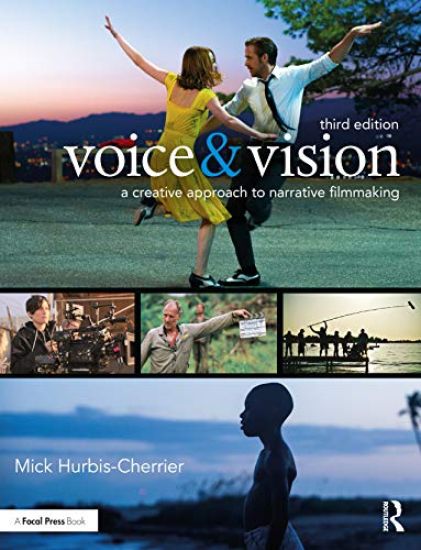
Develop your creative voice while acquiring the practical skills and confidence to use it with this new and fully updated edition of Mick Hurbis-Cherrier’s filmmaking bible, Voice & Vision. Written for independent filmmakers and film students who want a solid grounding in the tools, techniques, and processes of narrative film, this comprehensive manual covers all of the essentials while keeping artistic vision front and center. Hurbis-Cherrier walks the reader through every step of the process—from the transformation of an idea into a cinematic story, to the intricacies of promotion and distribution—and every detail in between.Features of this book include: Comprehensive technical information on video production and postproduction tools, allowing filmmakers to express themselves with any camera, in any format, and on any budget An emphasis on the collaborative filmmaking process, including the responsibilities and creative contributions of every principal member of the crew and cast A focus on learning to work successfully with available resources (time, equipment, budget, personnel, etc.) in order to turn limitations into opportunities Updated digital filmmaking workflow breakdowns for Rec. 709 HD, Log Format, and D-Cinema productions Substantial coverage of the sound tools and techniques used in film production and the creative impact of postproduction sound design An extensive discussion of digital cinematography fundamentals, including essential lighting and exposure control tools, common gamma profiles, the use of LUTs, and the role of color grading Abundant examples referencing contemporary and classic films from around the world Indispensible information on production safety, team etiquette, and set procedures. The third edition also features a robust companion website that includes eight award-winning example short films; interactive and high-resolution figures; downloadable raw footage; production forms and logs for preproduction, production, and postproduction; video examples that illustrate key concepts found within the book, and more. Whether you are using it in the classroom or are looking for a comprehensive reference to learn everything you need to know about the filmmaking process, Voice & Vision delivers all of the details in an accessible and reader-friendly format.
Through a focus on history, language, and the child-as-writer, this book grapples with changing approaches to creativity in the classroom. Gowar places the teaching of creative writing in schools within the context of the history of ideas, tracing the idea that pupils should be engaged creatively when learning to write, from the teaching of classical rhetoric in Tudor grammar schools, through the philosophies of Comenius and Pestalozzi, to the ‘progressive’ educational theories of Montessori and Dewey. The book focuses on the development of creative writing as a significant element in literary and literacy teaching in schools during the second half of the twentieth century, concentrating on four distinct approaches to the theory and practice of creative writing teaching by examining Ted Hughes’s Poetry In The Making; Kenneth Koch’s Wishes, Lies and Dreams; Sandy Brownjohn’s Does it Have to Rhyme? and Michael Rosen’s Did I Hear You Write? It visits the neglect of creativity in the present regimes of performance targets, league tables, training and testing, and poses a series of questions that need to be addressed if creativity and enjoyment in writing and reading is not to be banished entirely from European, North American, and Antipodean classrooms. Also visiting the implications of new media on creative production and new modes of writing, this timely book considers both the ways in which institutions construct and constrain childhood creativity, and how children respond and fashion their own sense of creativity.
Adieu to God examines atheism from a psychological perspective and reveals how religious phenomena and beliefs are psychological rather than supernatural in origin. Answers the psychological question of why, in the face of overwhelming scientific evidence to the contrary, do religions continue to prosper?Looks at atheism and religion using a fair and balanced approach based on the latest work in psychology, sociology, anthropology, psychiatry and medicineAcknowledges the many psychological benefits of religion while still questioning the validity of its supernatural belief systems and providing atheist alternatives to a fulfilling life