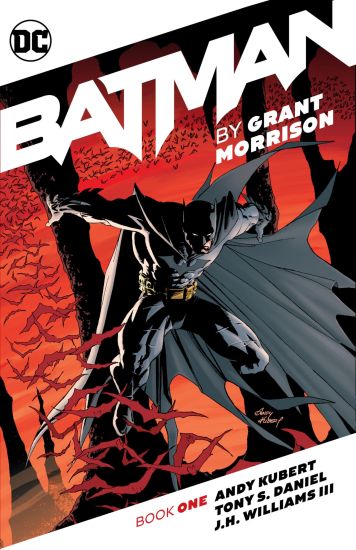
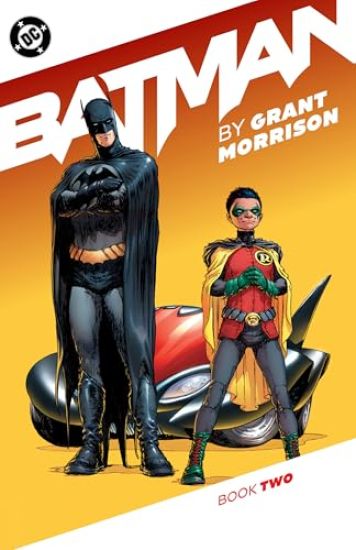
Acclaimed storyteller Grant Morrison and superstar artist Andy Kubert take on the Dark Knight in stories that redefined the Caped Crusader forever! Eisner-Award winning writer and comics legend Grant Morrison, who redefined Animal Man and Doom Patrol, alongside legendary artist Andy Kubert, take Batman to the edge of madness, the grave, and beyond, in this . With the introduction of the fan-favorite Robin, Damian Wayne, Morrison and Kubert delivered fans an epic tale that has inspired fans and creators alike! Stories collected in this volume include Batman and Son, the ground-breaking introduction of fan-favorite Robin, Damian Wayne! When the mysterious Talia, daughter of arch villain Ra's al Ghul and Batman's one-time love, returns with a boy named Damian and claims the child is Batman's, the Bat-mythos is changed for good! Stunned, the Dark Knight takes the child in, but the boy, raised among the brutal dictates of the League of Assassins, has his own agenda. Is Damian really just a misguided boy trying to prove himself to his father or have long years of Talia's indoctrination left him an operative solely designed to destroy Batman? Under the masterly skills of Morrison and Kubert, BATMAN AND SON is one of the most intriguing Batman tales ever told. These influential stories have been cited by James Gunn, co-CEO of DC Studios, as a major inspiration for the upcoming film The Brave and the Bold! This volume collects Batman #655-658 and #663-675; 52 #30, #47; Batman Unwrapped by Andy Kubert #1; and Batman Unwrapped: R.I.P. #1.
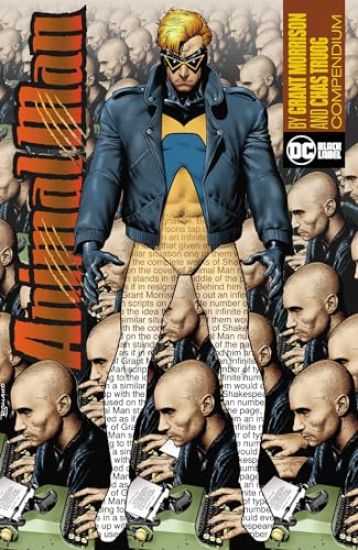
From legendary writer Grant Morrison and acclaimed artist Chaz Truog comes the character-defining epic that took Animal Man from standard superhero into the strange and bizarre! Eisner Award-winning and New York Times bestselling writer Grant Morrison redefined DC s Animal Man for an entire generation. The groundbreaking series follows Buddy Baker, the hero with animalistic powers wrestling between his life as a caped crusader and supporting animal rights. With the pressure of being both a father and the world famous Animal Man, Buddy Baker s life is about to change in ways that could only be told through pen and paper. It was the tale that not only rocked the world of comics but changed the way stories are told. The genre-bending tale from Grant Morrison, Chaz Truog, and inker Doug Hazlewood influenced a generation of creators and continues to inspire and captivate readers across the globe. Read the story that broke down the barriers of storytelling in one stunning compendium!
**Back-of-the-Book Summary: **Uncover the inspiring journey of Jamiyah Morrison in A Force for Change, a powerful narrative on rising above adversity and redefining gender norms. Witness Jamiyahs path from discovering her true identity to becoming a visionary activist who revolutionized transgender representation worldwide. This compelling story highlights her fight against discrimination, advocacy for inclusive policies, and global efforts to empower marginalized communities. With resilience and determination, Jamiyah breaks barriers within the LGBTQ community, making an indelible mark on society. This is an essential read for those seeking to understand the profound impact of authenticity and activism on our world today.
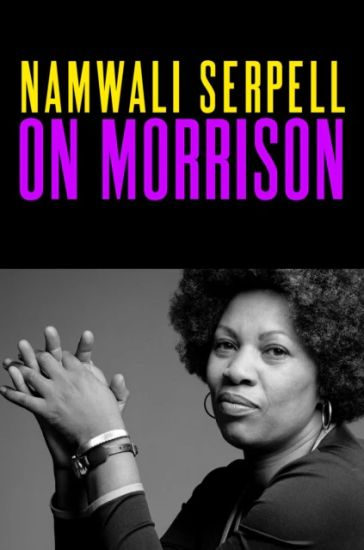
The essential companion to Toni Morrison's work, written by Namwali Serpell, ‘one of the most innovative and intelligent writers today’ (Financial Times)A giant in American letters, and one of our most beloved writers, Nobel laureate Toni Morrison has inspired generations. But her artistic genius is often overshadowed by her monumental public persona, perhaps because, as Serpell puts it, ‘she is our only truly canonical black, female writer—and her work is complex.’ In On Morrison, Serpell brings her unique experience as both an award-winning writer and a professor of literature at Harvard University, to illuminate Morrison’s masterful experiments with literary form.This is Morrison as you’ve never encountered her before, a journey through her oeuvre—her fiction, poetry, dramatic works, and criticism—with contextual guidance, archival discoveries, and original close readings. At once accessible and uncompromisingly rigorous, On Morrison is a primer not only on how to read one of the most significant black American authors of all time, but also on how to read great works of literature.Stylish, edifying, and electrifying in its intelligence, this dialogue on the page between two artist-readers is literary criticism at its very best.'Stunning reconsiderations of Morrison…incisive, tender, and also honest and unsparing’ HANIF ABDURRAQIB, author of A Little Devil in America
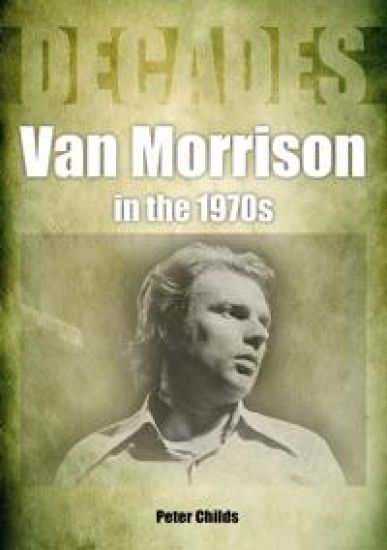
After the singularity of Astral Weeks in 1968, the 1970s were the formative years for the solo career of one of the acknowledged giants of modern music. Van Morrison was one of the music legends who defined the decade, with every album bringing out different aspects to Morrison's vast musical spectrum. His story in the 1970s is a chronicle of a Belfast artist coming to terms with the voice, the call, the dream of America. The decade saw Morrison work through the promise of the land of the blues and jazz, westerns and railroads, big cities and backwoods. It also saw his own spiritual quest and the reimagining of a nordic North European heritage and Caledonian Irish roots alongside the realisation of emigration and exile. Morrison forged a rich and complex artistic catalogue that continues down the years to the present day. Beginning with smash hit Moondance in 1970, his output in the decade continued through Tupelo Honey via Hard Nose the Highway to 1979's Into the Music. By the end of the 1970s, he was again using Europe to recast his music and imagination for another half century in the business, but throughout most of the decade his songs centred on America as he created the foundation of an unparalleled legacy
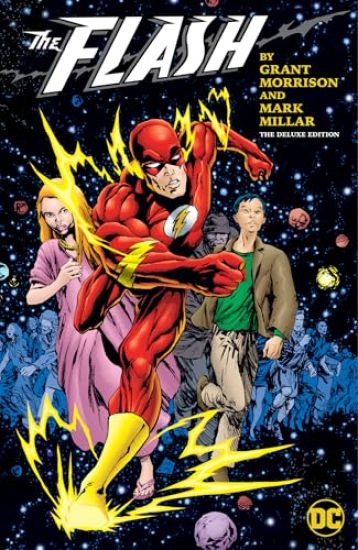
Confined to a wheelchair after a run-in with the mystery villain known only as The Suit, how can The Flash protect Keystone City from evil run amok? Plus, The Flash is forced to represent Earth in an cosmos-spanning race against an alien being called Krakkl! Writers Grant Morrison and Mark Millar put their distinctive mark on the Scarlet Speedster in this run on THE FLASH from issues #130-141, plus the crossover issues GREEN ARROW #130 and GREEN LANTERN #96!
The next chapter of Grant Morrison s groundbreaking Batman epic arrives! Experience the bold, genre-defying storytelling of Grant Morrison s Batman saga in the second installment of this celebrated era of the Dark Knight. In Batman R.I.P., Bruce Wayne s life spirals out of control as the mysterious Jezebel Jet enters his world, and the Club of Villains rises to plunge Gotham into chaos. This psychological tour-de-force lays the groundwork for Morrison s sweeping narrative. After the Dark Knight s apparent demise in Final Crisis, the torch is passed to a new Dynamic Duo in Batman and Robin. Dick Grayson dons the cape and cowl, while Damian Wayne s ruthless upbringing challenges their partnership as they confront brutal new threats and uncover secrets surrounding Bruce Wayne s disappearance. This collection is the definitive way to explore this modern masterpiece of action and intrigue. Collects Batman #676-683, #700; Batman & Robin #1-9; DC Universe #0.
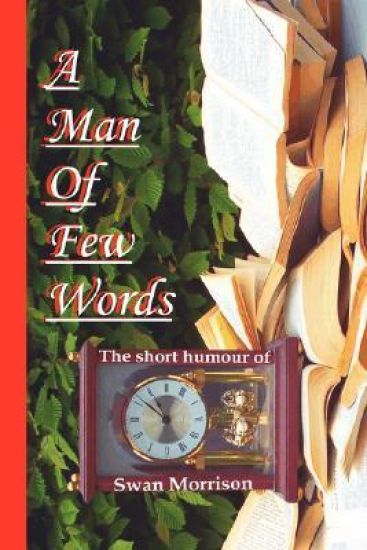
With today's busy lifestyles there can barely be time to read anything. Fears have been expressed that English literature might become the preserve of a few specialist academics, as texts in cuneiform script and hieroglyphic writing. The answer could be Short Humour, which can be read at any time and almost anywhere. Far Eastern, low cost, pirate versions of The Oxferd Inglish Ducksionery explain Short Humour as 'Non-serious writing that is not too long'. Swan Morrison defined 'not too long' as around 500 words, and stories, poems and the like began to be written that could be read in their entirety in less than ninety seconds. A Man of Few Words is a collection of one hundred such examples of SH by Swan Morrison with a connecting theme of life in contemporary Britain. In addition, The Short Humour Site has been created at www.short-humour.org.uk. This site aims to promote the reading and writing of SH both in Britain and throughout the world and to showcase the work of writers of the genre.
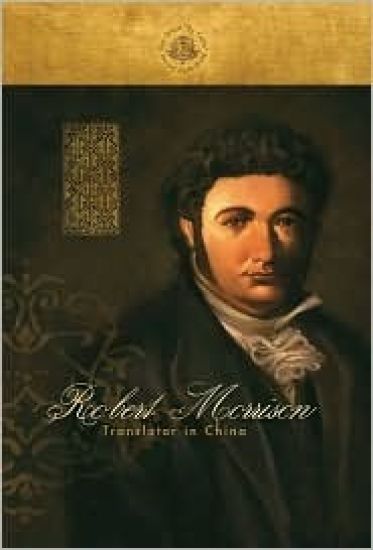
This book is a historical and theological encounter of the first Protestant missionary in China. Robert Morrison was the first Protestant missionary to China and a forerunner of the modern medical missionaries. He accomplished incredible things for God, including a translation of the Bible into Chinese, an Anglo-Chinese dictionary, and hundreds of Chinese tracts and translations.Morrison toiled for twenty-five years in China, and though his ministry was not blessed by great numbers of converts, he paved the way for other missionaries to come to China. His work for Christ was what mattered, not the praise of friends or the blame of his enemies. He worked ceaselessly, never faltering from the path of duty, which enabled him to accomplish work which seemed impossible. To all Christians, Robert Morrison is a wonderful example.
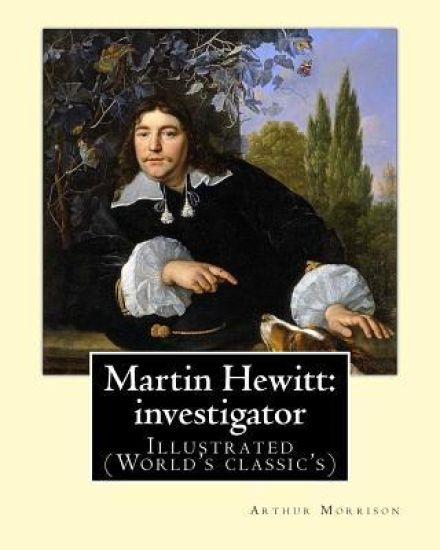
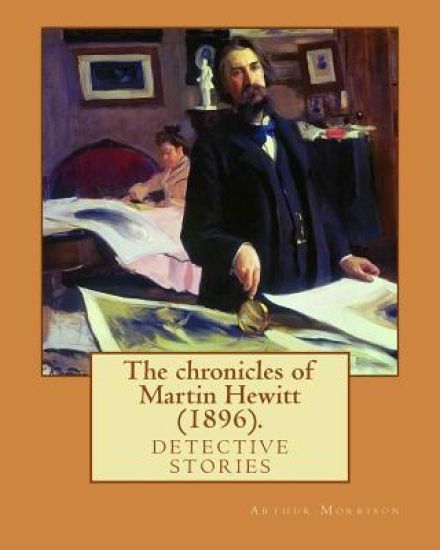
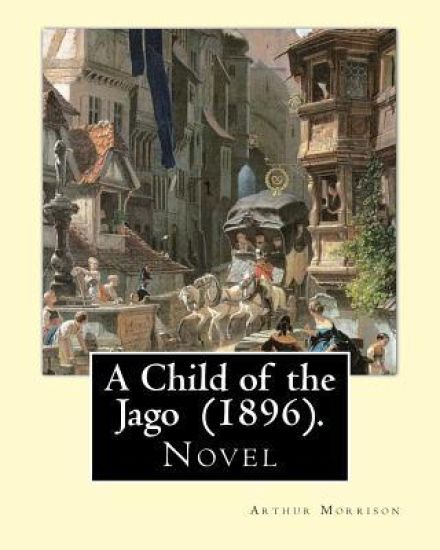
Arthur George Morrison (1 November 1863 - 4 December 1945) was an English writer and journalist known for his realistic novels and stories about working-class life in London's East End, and for his detective stories, featuring the detective Martin Hewitt. He also collected Japanese art and published several works on the subject. He left a large collection of paintings and other works of art to the British Museum after his death in 1945. Morrison's best known work of fiction is his novel A Child of the Jago (1896).
Arthur George Morrison (1 November 1863 - 4 December 1945) was an English writer and journalist known for his realistic novels and stories about working-class life in London's East End, and for his detective stories, featuring the detective Martin Hewitt. He also collected Japanese art and published several works on the subject. He left a large collection of paintings and other works of art to the British Museum after his death in 1945.Morrison's best known work of fiction is his novel A Child of the Jago (1896).
Arthur George Morrison (1 November 1863 - 4 December 1945) was an English writer and journalist known for his realistic novels and stories about working-class life in London's East End, and for his detective stories, featuring the detective Martin Hewitt. He also collected Japanese art and published several works on the subject. He left a large collection of paintings and other works of art to the British Museum after his death in 1945.Morrison's best known work of fiction is his novel A Child of the Jago (1896).
Arthur George Morrison (1 November 1863 - 4 December 1945) was an English writer and journalist known for his realistic novels and stories about working-class life in London's East End, and for his detective stories, featuring the detective Martin Hewitt. He also collected Japanese art and published several works on the subject. He left a large collection of paintings and other works of art to the British Museum after his death in 1945.Morrison's best known work of fiction is his novel A Child of the Jago (1896).
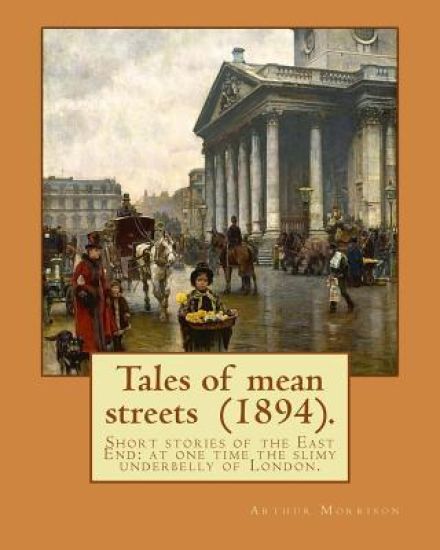
Short stories of the East End: at one time the slimy underbelly of London. The stories vary in style: from the gritty, no-holds-barred tale of Lizerunt, to the light humor of That Brute Simmons. "The greater number of these stories and studies were first printed in The National Observer; the introduction, in a slightly different form, in Macmillan's Magazine; "That Brute Simmons" and "A Conversion" have been published in The Pall Mall Budget; and "The Red Cow Group" is new."... Arthur George Morrison (1 November 1863 - 4 December 1945) was an English writer and journalist known for his realistic novels and stories about working-class life in London's East End, and for his detective stories, featuring the detective Martin Hewitt. He also collected Japanese art and published several works on the subject. He left a large collection of paintings and other works of art to the British Museum after his death in 1945.Morrison's best known work of fiction is his novel A Child of the Jago (1896). Early life: Morrison was born in Poplar, in the East End of London, on 1 November 1863. His father George was an engine fitter at the London Docks. George died in 1871 of tuberculosis, leaving his wife Jane with three children including Arthur. Arthur spent his youth in the East End. In 1879 he began working as an office boy in the Architect's Department of the London School Board. He later remembered frequenting used bookstores in Whitechapel Road around this time. In 1880 Arthur's mother took over a shop in Grundy Street. Morrison published his first work, a humorous poem, in the magazine Cycling in 1880, and took up cycling and boxing. He continued to publish works in various cycling journals. Career: In 1885 Morrison published his first serious journalistic work in the newspaper The Globe. In 1886, after having worked his way up to the rank of a third-class clerk, he was appointed to a position at the People's Palace, in Mile End. In 1888 he was given reading privileges at the British Museum. In the same year he published a collection of thirteen sketches entitled Cockney Corner, describing life and conditions in several London districts including Soho, Whitechapel, and Bow Street. In 1889 he became an editor of the paper Palace Journal, reprinting some of his Cockney Corner sketches, and writing commentaries on books and other subjects including the life of London poor people. In 1890 he left this job and joined the editorial staff of The Globe and moved to lodgings in the Strand. In 1891 he published his first book The Shadows Around Us, a collection of supernatural stories. In October 1891 his short story A Street was published in Macmillan's Magazine. In 1892 he collaborated with illustrator J. A. Sheppard on a collection of animal sketches, one entitled My Neighbors' Dogs, for The Strand Magazine. Later that year he married Elizabeth Thatcher at Forest Gate. He befriended writer and editor William Ernest Henley around this time, publishing stories of working-class life in Henley's National Observer between 1892-94. His son Guy Morrison was born in 1893. In 1894 Morrison published his first detective story featuring the detective Martin Hewitt. In November he published his short story collection Tales of Mean Streets, dedicating the work to Henley. The collection was reviewed in 1896 in America by Jacob Riis. Morrison later said that the work was publicly banned. Reviewers of the collection objected to his story Lizerunt, causing Morrison to write a response in 1895. Later in 1894 he published Martin Hewitt, Investigator. In 1895 he was invited by writer and clergyman Reverend A. O. M. Jay to visit the Old Nichol Street Rookery....
Arthur George Morrison (1 November 1863 - 4 December 1945) was an English writer and journalist known for his realistic novels and stories about working-class life in London's East End, and for his detective stories, featuring the detective Martin Hewitt. He also collected Japanese art and published several works on the subject. He left a large collection of paintings and other works of art to the British Museum after his death in 1945.Morrison's best known work of fiction is his novel A Child of the Jago (1896). Early life: Morrison was born in Poplar, in the East End of London, on 1 November 1863. His father George was an engine fitter at the London Docks. George died in 1871 of tuberculosis, leaving his wife Jane with three children including Arthur. Arthur spent his youth in the East End. In 1879 he began working as an office boy in the Architect's Department of the London School Board. He later remembered frequenting used bookstores in Whitechapel Road around this time. In 1880 Arthur's mother took over a shop in Grundy Street. Morrison published his first work, a humorous poem, in the magazine Cycling in 1880, and took up cycling and boxing. He continued to publish works in various cycling journals. Career: In 1885 Morrison published his first serious journalistic work in the newspaper The Globe. In 1886, after having worked his way up to the rank of a third-class clerk, he was appointed to a position at the People's Palace, in Mile End. In 1888 he was given reading privileges at the British Museum. In the same year he published a collection of thirteen sketches entitled Cockney Corner, describing life and conditions in several London districts including Soho, Whitechapel, and Bow Street. In 1889 he became an editor of the paper Palace Journal, reprinting some of his Cockney Corner sketches, and writing commentaries on books and other subjects including the life of London poor people. In 1890 he left this job and joined the editorial staff of The Globe and moved to lodgings in the Strand. In 1891 he published his first book The Shadows Around Us, a collection of supernatural stories. In October 1891 his short story A Street was published in Macmillan's Magazine. In 1892 he collaborated with illustrator J. A. Sheppard on a collection of animal sketches, one entitled My Neighbors' Dogs, for The Strand Magazine. Later that year he married Elizabeth Thatcher at Forest Gate. He befriended writer and editor William Ernest Henley around this time, publishing stories of working-class life in Henley's National Observer between 1892-94. His son Guy Morrison was born in 1893. In 1894 Morrison published his first detective story featuring the detective Martin Hewitt. In November he published his short story collection Tales of Mean Streets, dedicating the work to Henley. The collection was reviewed in 1896 in America by Jacob Riis. Morrison later said that the work was publicly banned. Reviewers of the collection objected to his story Lizerunt, causing Morrison to write a response in 1895. Later in 1894 he published Martin Hewitt, Investigator. In 1895 he was invited by writer and clergyman Reverend A. O. M. Jay to visit the Old Nichol Street Rookery. Morrison continued to develop his interest in Japanese art, which he had been introduced to by a friend in 1890. Morrison began writing his novel A Child of the Jago in early 1896. The novel was published in November by Henley. It described in graphic detail living conditions in the East End, including the permeation of violence into everyday life (it was a barely fictionalised account of life in the Old Nichol Street Rookery). Morrison also published The Adventures of Martin Hewitt in 1896. A second edition of A Child of the Jago came out in 1897............
Arthur George Morrison (1 November 1863 - 4 December 1945) was an English writer and journalist known for his realistic novels and stories about working-class life in London's East End, and for his detective stories, featuring the detective Martin Hewitt. He also collected Japanese art and published several works on the subject. He left a large collection of paintings and other works of art to the British Museum after his death in 1945.Morrison's best known work of fiction is his novel A Child of the Jago (1896). Early life: Morrison was born in Poplar, in the East End of London, on 1 November 1863. His father George was an engine fitter at the London Docks. George died in 1871 of tuberculosis, leaving his wife Jane with three children including Arthur. Arthur spent his youth in the East End. In 1879 he began working as an office boy in the Architect's Department of the London School Board. He later remembered frequenting used bookstores in Whitechapel Road around this time. In 1880 Arthur's mother took over a shop in Grundy Street. Morrison published his first work, a humorous poem, in the magazine Cycling in 1880, and took up cycling and boxing. He continued to publish works in various cycling journals. Career: In 1885 Morrison published his first serious journalistic work in the newspaper The Globe. In 1886, after having worked his way up to the rank of a third-class clerk, he was appointed to a position at the People's Palace, in Mile End. In 1888 he was given reading privileges at the British Museum. In the same year he published a collection of thirteen sketches entitled Cockney Corner, describing life and conditions in several London districts including Soho, Whitechapel, and Bow Street. In 1889 he became an editor of the paper Palace Journal, reprinting some of his Cockney Corner sketches, and writing commentaries on books and other subjects including the life of London poor people. In 1890 he left this job and joined the editorial staff of The Globe and moved to lodgings in the Strand. In 1891 he published his first book The Shadows Around Us, a collection of supernatural stories. In October 1891 his short story A Street was published in Macmillan's Magazine. In 1892 he collaborated with illustrator J. A. Sheppard on a collection of animal sketches, one entitled My Neighbors' Dogs, for The Strand Magazine. Later that year he married Elizabeth Thatcher at Forest Gate. He befriended writer and editor William Ernest Henley around this time, publishing stories of working-class life in Henley's National Observer between 1892-94. His son Guy Morrison was born in 1893. In 1894 Morrison published his first detective story featuring the detective Martin Hewitt. In November he published his short story collection Tales of Mean Streets, dedicating the work to Henley. The collection was reviewed in 1896 in America by Jacob Riis. Morrison later said that the work was publicly banned. Reviewers of the collection objected to his story Lizerunt, causing Morrison to write a response in 1895. Later in 1894 he published Martin Hewitt, Investigator. In 1895 he was invited by writer and clergyman Reverend A. O. M. Jay to visit the Old Nichol Street Rookery. Morrison continued to develop his interest in Japanese art, which he had been introduced to by a friend in 1890. Morrison began writing his novel A Child of the Jago in early 1896. The novel was published in November by Henley. It described in graphic detail living conditions in the East End, including the permeation of violence into everyday life (it was a barely fictionalised account of life in the Old Nichol Street Rookery). Morrison also published The Adventures of Martin Hewitt in 1896. A second edition of A Child of the Jago came out in 1897. In 1897 Morrison published seven short stories detailing the exploits of Horace Dorrington.........
The novel opens after midnight on a hot summer night, when many of the residents of the Jago, likened to "great rats", prefer to sleep in the street to avoid the oppressive heat and stench of the closely packed houses. A man lured into a dwelling by a woman is brutally coshed, robbed and dragged unconscious into the street where others remove his boots. Dicky Perrott, 8 or 9 years old (the uncertainty is telling) makes his way home to the single room in which his family dwells, where he finds his mother, Hannah Perrott and flea-bitten baby sister, Looey, but only a crust of bread to eat. As dawn breaks his father, Josh Perrott, returns home with a club sticky with blood and hair, suggesting another robbery. Looking for cake and tea Dicky visits the East End Elevation Mission where well-intentioned middle-class 'missionaries' seek to educate and civilise. He dodges the young man on the door and takes the opportunity to steal a gold watch from a bishop. Returning home he proudly hands it to his father, who beats him for stealing but keeps the watch to sell for himself. Two families, the Ranns and the Learys, dominate the Jago, and one of their periodic violent confrontations breaks out. Sally Green, of the Leary clan, whose method of fighting is to hold down her opponent and chew viciously on the back of the neck, triumphs over the Rann's female champion, Nora Walsh, and proudly displays a bunch of her clotted hair as a trophy. Hannah Perrott, taking Looey out with her to buy food, is attacked by Sally Green and only rescued when Nora Walsh breaks a bottle and repeatedly stabs Sally in the face. Elsewhere there is a murder in the street when Fag Dawson is stabbed and the police descend in force on the Jago. Josh Perrott vows to fight Sally Green's brother, Billy Leary. Dicky encounters Aaron Weech, proprietor of a local coffee shop and a 'fence', a handler of stolen goods. Weech has heard about Dicky stealing the watch, and the punishment he received, and offers him coffee and cake. Weech suggests that in future Dicky should bring what he steals straight to him, and points out that Dicky is now in debt to him for the refreshments. Returning home, Dicky passes a clergyman, who, he imagines, has only ventured into the Jago because the police are present. Looey is ill but disregarded by her mother. Dicky sees that the door to the Roper family's room opposite is open, and ventures inside. He steals their clock, but as he descends the stairs he is confronted by the Roper's son, Bobby, and the two struggle before Dicky breaks free and takes the clock to Mr Weech. Other residents of the house also enter the Ropers' room and steal their belongings. The Ropers, already despised and resented due to their perceived relative gentility, return and are attacked by the Jagos, until they are saved by the intervention of the clergyman, Father Sturt, who cows the crowd and retrieves the stolen property. Dicky feels sorry for the Ropers and resolves to replace their clock with something. He steals a music box and is chased back to the Jago, narrowly avoiding capture. Father Sturt arranges for the Ropers to take up lodging in nearby Dove Lane and Dicky secretes the music box in the cart carrying away their belongings. Josh Perrott defeats Billy Leary in their fight, winning 5 in prize money and bets, and celebrates with Hannah in a pub. Looey dies whilst left behind in their room, and as Dicky sobs over his sister's corpse, Josh and Hannah return to the pub. Four years pass. Father Sturt plans to build a church on Jago Court. Although by now a hardened thief who has received a birching, Dicky occasionally attends school. He returns home one day to see the Ropers' clock on the family mantlepiece. Weech has given this to Josh in return for stolen tobacco. Another child has been born, and Looey is "forgotten"........
Arthur George Morrison (1 November 1863 - 4 December 1945) was an English writer and journalist known for his realistic novels and stories about working-class life in London's East End, and for his detective stories, featuring the detective Martin Hewitt. He also collected Japanese art and published several works on the subject. He left a large collection of paintings and other works of art to the British Museum after his death in 1945.Morrison's best known work of fiction is his novel A Child of the Jago (1896). Early life: Morrison was born in Poplar, in the East End of London, on 1 November 1863. His father George was an engine fitter at the London Docks. George died in 1871 of tuberculosis, leaving his wife Jane with three children including Arthur. Arthur spent his youth in the East End. In 1879 he began working as an office boy in the Architect's Department of the London School Board. He later remembered frequenting used bookstores in Whitechapel Road around this time. In 1880 Arthur's mother took over a shop in Grundy Street. Morrison published his first work, a humorous poem, in the magazine Cycling in 1880, and took up cycling and boxing. He continued to publish works in various cycling journals. Career: In 1885 Morrison published his first serious journalistic work in the newspaper The Globe. In 1886, after having worked his way up to the rank of a third-class clerk, he was appointed to a position at the People's Palace, in Mile End. In 1888 he was given reading privileges at the British Museum. In the same year he published a collection of thirteen sketches entitled Cockney Corner, describing life and conditions in several London districts including Soho, Whitechapel, and Bow Street. In 1889 he became an editor of the paper Palace Journal, reprinting some of his Cockney Corner sketches, and writing commentaries on books and other subjects including the life of London poor people. In 1890 he left this job and joined the editorial staff of The Globe and moved to lodgings in the Strand. In 1891 he published his first book The Shadows Around Us, a collection of supernatural stories. In October 1891 his short story A Street was published in Macmillan's Magazine. In 1892 he collaborated with illustrator J. A. Sheppard on a collection of animal sketches, one entitled My Neighbors' Dogs, for The Strand Magazine. Later that year he married Elizabeth Thatcher at Forest Gate. He befriended writer and editor William Ernest Henley around this time, publishing stories of working-class life in Henley's National Observer between 1892-94. His son Guy Morrison was born in 1893. In 1894 Morrison published his first detective story featuring the detective Martin Hewitt. In November he published his short story collection Tales of Mean Streets, dedicating the work to Henley. The collection was reviewed in 1896 in America by Jacob Riis. Morrison later said that the work was publicly banned. Reviewers of the collection objected to his story Lizerunt, causing Morrison to write a response in 1895. Later in 1894 he published Martin Hewitt, Investigator. In 1895 he was invited by writer and clergyman Reverend A. O. M. Jay to visit the Old Nichol Street Rookery. Morrison continued to develop his interest in Japanese art, which he had been introduced to by a friend in 1890. Morrison began writing his novel A Child of the Jago in early 1896. The novel was published in November by Henley. It described in graphic detail living conditions in the East End, including the permeation of violence into everyday life (it was a barely fictionalised account of life in the Old Nichol Street Rookery). Morrison also published The Adventures of Martin Hewitt in 1896. A second edition of A Child of the Jago came out in 1897...