Science as Psychology reveals the complexity and richness of rationality by demonstrating how social relationships, emotion, culture, and identity are implicated in the problem-solving practices of laboratory scientists. In this study, the authors gather and analyze interview and observational data from innovation-focused laboratories in the engineering sciences to show how the complex practices of laboratory research scientists provide rich psychological insights, and how a better understanding of science practice facilitates understanding of human beings more generally. The study focuses not on dismantling the rational core of scientific practice, but on illustrating how social, personal, and cognitive processes are intricately woven together in scientific thinking. The book is thus a contribution to science studies, the psychology of science, and general psychology.
Using a sample of 324 young adults in four urban centres who left high school in the mid-1980s as well as interviews with representative parents, former teachers, and employers, the authors identify factors that ease transition from school to. These include level of education, social class, gender, ethnicity, aspirations of parents, help from role models, participation in co-op education, and most important of all, self-motivation. The authors describe a range of youth profiles -- uncommitted, non-careerists, conservatives, and innovators -- that will help youth, parents, and educators identify present development and how to improve performance. Emphasizing the importance of co-operative education, the authors suggest that closer relations between school and work, such as exist in the United Kingdom and Sweden, facilitate transition into the labour market. On Their Own will guide parents, youth, educators, trustees, employers, and ministries of education and training to prepare a new generation of productive, resilient workers and managers for success in the information age.
Using a sample of 324 young adults in four urban centres who left high school in the mid-1980s as well as interviews with representative parents, former teachers, and employers, the authors identify factors that ease transition from school to. These include level of education, social class, gender, ethnicity, aspirations of parents, help from role models, participation in co-op education, and most important of all, self-motivation. The authors describe a range of youth profiles -- uncommitted, non-careerists, conservatives, and innovators -- that will help youth, parents, and educators identify present development and how to improve performance. Emphasizing the importance of co-operative education, the authors suggest that closer relations between school and work, such as exist in the United Kingdom and Sweden, facilitate transition into the labour market. On Their Own will guide parents, youth, educators, trustees, employers, and ministries of education and training to prepare a new generation of productive, resilient workers and managers for success in the information age.
This title summarizes discussions with over 450 Army officers (lieutenants through colonels) about leader development in Army units. These discussions revealed that the type and extent of leader development activities vary greatly across units, but that they are generally informal and most heavily influenced by the unit commander. The authors conclude with suggestions on how the Army school system can improve leader development.
In this sequel to their bestseller Visible Learning for Literacy, Douglas Fisher, Nancy Frey, and John Hattie help teachers to inspire students by sharing structures and tools that have high-impact on learning, and insights on which stage of learning they have that high impact. With Teaching Literacy in the Visible Learning Classroom, students will go from surface to deep to transfer learning. It's all about using the most effective practices - and knowing WHEN those practices are best leveraged to maximize student learning.
Iván Marinovic; Nancy Cartwright; John Rust; Peter C. Reiss; Charles F. Manski; Jeremy Bertomeu; Anne Beyer; Daniel J. Taylor; R. Jay Kahn; Toni M. Whited; Ivo Welch; Qi Chen; Katherine Schipper
Causal Inferences in Capital Markets Research is an attempt to promote a broad interdisciplinary debate about the notion of causality and the role of causal inference in the social sciences.At the risk of oversimplifying, the issue of causality divides the accounting research community in two polar views: the view that causality is an unattainable ideal for the social sciences and must be given up as a standard, and the view that, on one hand, causality should be the ultimate goal of all scientific endeavors and, on the other hand, theory and causal inference are inextricable. Reflecting and discussing these views was the main motivation for this volume. This volume contains eight articles on three topics: I) Econometrics; III) Accounting, and III) Finance.First, Nancy Cartwright addresses the problem of external validity and the reliability of scientific claims that generalize individual cases. Then, John Rust discusses the role of assumptions in empirical research and the possibility of assumption-free inference. Peter Reiss considers the question how sensitive are instrumental variables to functional form transformations. Finally, Charles Manski studies the logical issues that affect the interpretation of point predictions.Second, Jeremy Bertomeu, Anne Beyer and Daniel Taylor provide a critical overview of empirical accounting research focusing on the benefits of theory-based estimation, while Qi Chen and Katherine Schipper consider the question whether all research should be causal and assess the existing gap between theory and empirical research in accounting.Third, R. Jay Kahn and Toni Whited clarifies and contrasts the notions of identification and causality, whereas Ivo Welch adopts a sociology of science approach to understand the consequences of the researchers’ race for discovering novel and surprising results.This volume allows researchers and Ph.D students in accounting, and the social sciences in general, to acquire a deeper understanding of the notion of causality and the nature, limits, and scope of empirical research in the social sciences.
Science as Psychology reveals the complexity and richness of rationality by demonstrating how social relationships, emotion, culture, and identity are implicated in the problem-solving practices of laboratory scientists. In this study, the authors gather and analyze interview and observational data from innovation-focused laboratories in the engineering sciences to show how the complex practices of laboratory research scientists provide rich psychological insights, and how a better understanding of science practice facilitates understanding of human beings more generally. The study focuses not on dismantling the rational core of scientific practice, but on illustrating how social, personal, and cognitive processes are intricately woven together in scientific thinking. The book is thus a contribution to science studies, the psychology of science, and general psychology.
Published in Cooperation with the Center for Practice Innovations, Mandel School of Applied Social Sciences, Case Western Reserve University How do working parents balance their work and child care responsibilities? What if an employee has responsibilities for adult or elderly family members or friends? How similar or distinct are these dependent-care responsibilities in their rewards and their consequences? What about employees who have multiple caregiving roles? In Balancing Work and Caregiving for Children, Adults, and Elders, the authors explore how employees with caregiver roles juggle the responsibilities of work and family. They suggest that, in our current socio/economic reality, dependent care needs to be addressed as a corporate, family, and community concern. Drawing from literature in the field, as well as their large-scale study, they present a thorough discussion of the stressors experienced by workers caught in the often conflicting demands of dual roles. The authors consider multiple factors that contribute to the experience of stress and work-related outcomes such as absenteeism. These factors include: employee characteristics, demands of caregiving and work roles, and the resources available within the workplace and family. Policies, benefits, and services are reviewed, along with the advantages and disadvantages of each for both the employee and the employer. The authors also analyze methods for assessing employee needs and provide recommendations for national and local policies, along with directions for further research. Balancing Work and Caregiving for Children, Adults, and Elders will be essential reading for students and professionals in family studies, management studies, social work, sociology, aging, and public health. "Balancing Work and Caregiving for Children, Adults, and Elders is the most complete and informative book on caregiving I have read. It has a combination of attributes not found, to my knowledge, in any other text on caregiving. It looks not only at people with one caregiving role but also at those with multiple roles; it provides not only a thorough overview of the research, but also a review of a major study on caregiving; and it examines the personal characteristics, demands, resources, and sources of stress in each caregiver category. As a result, the research is extended in an interesting and exciting manner, enabling the authors to draw important comparisons." -Industrial and Labor Relations Review "This book provides excellent documentation - from an extremely comprehensive empirical study by the authors and an exhaustive review of previous research - for the need for more extensive support for employee caregivers. . . . The issues addressed in the book are clearly laid out. The empirical work is sophisticated and provides important information. It also presents suggestions about how employers and communities can provide assistance." --Monthly Labor Review "This is an interesting and important new book, which, for the first time, assembles in one place the most up-to-date information regarding the needs of employees with dependent care responsibilities. Unlike previous volumes, this book adopts a 'life cycle' approach to dependent care, including the separate and overlapping demands of caring for children, young and middle-aged adults, and elderly persons. In so doing, it integrates existing knowledge and new research regarding the disparate fields of child care, elder care, physical disabilities, developmental disabilities, and chronic mental illness. . . . The authors provide human resource professionals, policy makers, and counselors with the tools to develop realistic, cost-effective policies and programs that have the potential to enhance productivity, alleviate role strain, and improve the quality of life for our children, our elders, and ourselves." --Andrew E. Scharlach, Eugene and Rose Kleiner Professor of Aging, University of California, Berkeley "[This volume] is without question a very impressive addition to the literature in this domain. The authors, Margaret Neal, Nancy Chapman, Berit Ingersoll-Dayton, and Arthur Emlen, represent a multidisciplinary team that has produced one of the most integrative and informative books on the issue of caregiving in the work-family context in the last decade. . . . This book is unique in two important dimensions. First, the findings and implications are based on a relatively large sample of employees (about 10,000), and secondly, the authors examine the critical issue of those working family members who occupy multiple caregiving roles. This book fills an obvious niche in the literature by comparing employees with responsibilities for the dependents of different age groups (e.g., children, adults, and elders). . . . [the first] two sections alone are incredibly rich in information regarding the impact of family caregiving on work responsibilities and are well worth the price of the book, but the third and fourth sections of the book are indispensable and should be "required reading" for those involved in studying and implementing kincare programs in the corporate sector. . . The entire investigation is couched in solid theoretical framework and the nethodological design is clear and concise. . . . this volume represents a quantum leap forward in understanding the complex dynamics of mutiple-role responsibilities for family caregivers. The entire presentation of the material from cover to cover is presented in a seamless fashion and could well serve as a text for a graduate level course in family policy." --Journal of Marriage and the Family "The results [of their research] and their analysis present a vital element in furthering our understanding of the interface between work and home. . . . The book deserves a wide audience and should be a reference not least to management students." --Ageing & Society
The use of protocols has quickly spread from conferences and workshops to everyday school and university settings. Now in its third edition, this perennial bestseller features substantial updates that take into account recent developments in the field of facilitative leadership. The authors have also added eleven totally new protocols, including the “Peer Review Protocol” and “Looking at Student Work with Equity in Mind.”This essential teaching and professional development tool includes: step-by-step descriptions of how educators can use protocols to study together, work on problems of practice, teach well, and explore students' work, explanations of the particular purpose of each protocol, discussions of the value that educators have found in using them, and helpful tips for facilitators, a free supplement on the Teachers College Press website with ""Abbreviated Protocols"" that can be downloaded and customised to suit each facilitator's needs.
This updated edition examines the latest regulatory and judicial developments involving the Resource Conservation and Recovery Act (RCRA) and provides a clear, practical explanation of its requirements. Using this book, you will learn how to manage the "field side" of RCRA compliance, including identifying hazardous waste, transporting hazardous materials under EPA and DOT regulations, and disposing of solid wastes. You will also learn how to manage the "paperwork side" of RCRA compliance, working with such documents as RCRA permits, manifests and land ban documents, and underground-storage-tank notices. New issues addressed in this edition include the new provisions regarding recycling, the corrective action program, and the regulation of combustion units; changes in enforcement policy, civil and criminal liability, and citizen suits; and new regulations regarding land disposal, underground storage tanks, facilities siting, and municipal solid waste management.
Cities and Citadels provides an urgent update of archaeology’s engagement with economic theory.Recent events have forced a major reassessment of economic thinking. In the wake of the 2008 Great Recession and the economic impact of the Covid-19 Pandemic, the world finds itself in unprecedented times. Even though archaeology typically concerns itself with the remote past, it must also help us understand how we got to where we are today. This book takes up the challenging new theories of scholars like Thomas Piketty, Mariana Mazzucato and David Graeber and explores their importance for the study of human economies in ancient and prehistoric contexts. Drawing on case studies from the Neolithic to the Classical Era and spanning the globe, the authors put forward a new narrative of economic change that is relevant to the 21st century.This book speaks to the study of economics in all ancient societies and is suitable for researchers of archaeology, economics, economic history and all related disciplines.
Cities and Citadels provides an urgent update of archaeology’s engagement with economic theory.Recent events have forced a major reassessment of economic thinking. In the wake of the 2008 Great Recession and the economic impact of the COVID-19 Pandemic, the world finds itself in unprecedented times. Even though archaeology typically concerns itself with the remote past, it must also help us understand how we got to where we are today. This book takes up the challenging new theories of scholars like Thomas Piketty, Mariana Mazzucato and David Graeber and explores their importance for the study of human economies in ancient and prehistoric contexts. Drawing on case studies from the Neolithic to the Classical Era and spanning the globe, the authors put forward a new narrative of economic change that is relevant to the 21st century.This book speaks to the study of economics in all ancient societies and is suitable for researchers of archaeology, economics, economic history and all related disciplines.
Classroom Research Partnerships guides academic researchers through the conceptualization, implementation, and dissemination of studies based in school communities. As dynamic, complex contexts, classrooms are rich with the potential for deepening our understanding of teaching and learning processes and creating robust, ecologically valid innovations in education. Designed for both first-time and experienced classroom researchers, this book’s unique framework will move readers toward more responsive, reflexive, and mutually beneficial collaborations. Each chapter presents background on key research decisions, logistical and ethical considerations, and objectives for advancing knowledge and professional practice. Examples are drawn from the research experiences of the authors as well as classroom researchers interviewed for the book, which collectively provides an array of project designs in different cultural settings from early childhood through high school. Researchers from universities, school districts, and nonprofits will find renewed inspiration to set goals that pursue positive and equitable change for the students, teachers, and communities at the heart of classroom research partnerships.
Classroom Research Partnerships guides academic researchers through the conceptualization, implementation, and dissemination of studies based in school communities. As dynamic, complex contexts, classrooms are rich with the potential for deepening our understanding of teaching and learning processes and creating robust, ecologically valid innovations in education. Designed for both first-time and experienced classroom researchers, this book’s unique framework will move readers toward more responsive, reflexive, and mutually beneficial collaborations. Each chapter presents background on key research decisions, logistical and ethical considerations, and objectives for advancing knowledge and professional practice. Examples are drawn from the research experiences of the authors as well as classroom researchers interviewed for the book, which collectively provides an array of project designs in different cultural settings from early childhood through high school. Researchers from universities, school districts, and nonprofits will find renewed inspiration to set goals that pursue positive and equitable change for the students, teachers, and communities at the heart of classroom research partnerships.
IBM SPSS for Introductory Statistics is designed to help students learn how to analyze and interpret research. In easy-to-understand language, the authors show readers how to choose the appropriate statistic based on the design, and to interpret outputs appropriately. There is such a wide variety of options and statistics in SPSS, that knowing which ones to use and how to interpret the outputs can be difficult. This book assists students with these challenges. Comprehensive and user-friendly, the book prepares readers for each step in the research process: design, entering and checking data, testing assumptions, assessing reliability and validity, computing descriptive and inferential parametric and nonparametric statistics, and writing about results. Dialog windows and SPSS syntax, along with the output, are provided. Several realistic data sets, available online, are used to solve the chapter problems. This new edition includes updated screenshots and instructions for IBM SPSS 25, as well as updated pedagogy, such as callout boxes for each chapter indicating crucial elements of APA style and referencing outputs.IBM SPSS for Introductory Statistics is an invaluable supplemental (or lab text) book for students. In addition, this book and its companion, IBM SPSS for Intermediate Statistics, are useful as guides/reminders to faculty and professionals regarding the specific steps to take to use SPSS and/or how to use and interpret parts of SPSS with which they are unfamiliar.
IBM SPSS for Introductory Statistics is designed to help students learn how to analyze and interpret research. In easy-to-understand language, the authors show readers how to choose the appropriate statistic based on the design, and to interpret outputs appropriately. There is such a wide variety of options and statistics in SPSS, that knowing which ones to use and how to interpret the outputs can be difficult. This book assists students with these challenges. Comprehensive and user-friendly, the book prepares readers for each step in the research process: design, entering and checking data, testing assumptions, assessing reliability and validity, computing descriptive and inferential parametric and nonparametric statistics, and writing about results. Dialog windows and SPSS syntax, along with the output, are provided. Several realistic data sets, available online, are used to solve the chapter problems. This new edition includes updated screenshots and instructions for IBM SPSS 25, as well as updated pedagogy, such as callout boxes for each chapter indicating crucial elements of APA style and referencing outputs.IBM SPSS for Introductory Statistics is an invaluable supplemental (or lab text) book for students. In addition, this book and its companion, IBM SPSS for Intermediate Statistics, are useful as guides/reminders to faculty and professionals regarding the specific steps to take to use SPSS and/or how to use and interpret parts of SPSS with which they are unfamiliar.
Each new print copy includes Navigate 2 Advantage Access that unlocks a comprehensive and interactive eBook, student practice activities and assessments, a full suite of instructor resources, and learning analytics reporting tools.Gerontology for the Health Care Professional, Fourth Edition is a comprehensive, practical text covering the evolving field of gerontology, developed for healthcare students and professionals. Written by experts across many health disciplines, this text presents an up-to-date and realistic assessment of the aging process.Gerontology for the Health Care Professional, Fourth Edition begins with a review of demographic trends and continues with an overview of key topics such as the physiology, pathology, pharmacotherapy, nutrition, communication, and social concerns related to caring for older patients. This interprofessional resource concludes with future concerns for an aging society and includes an epilogue encouraging all health care professionals to embrace patient or client advocacy, especially for older adults. With new case studies, review questions, and interactive activities, this accessible resource will provide an active learning experience for all health professions students.
Selected as a Doody's Core Title for 2022 and 2023! BMA Medical Book Awards 2017?: Oncology – Highly Commended?The British Medical Association honored Pediatric Radiation Oncology, 6th Edition with this prestigious award.Pediatric Radiation Oncology, Sixth Edition continues to be the premier reference that offers comprehensive coverage of this challenging area for the radiation oncologist in training or practice, medical radiation physicists and dosimetrists, as well as pediatric oncologists and others interested in understanding childhood malignancies. This definitive text has been completely updated to reflect recent advances in the field. Manageable in size and engaging to read, it efficiently synthesizes data on pathogenesis, pathology, diagnostic workup, staging, treatment approaches (particularly radiation therapy—indications, doses, volumes, and treatment planning), and toxic outcomes, as well as guidance on decision making when data is lacking. For 30 years, this standard reference has helped demystify radiation therapy for childhood cancer and contributed to the quality and quantity of life for children affected by this disease. Key Features: Each concise, full-color section focuses on one tumor type and guides you through an understanding of the disease, diagnostic and staging studies, treatment strategies, and, if needed, how to implement radiation therapy. Technological advances in radiation oncology and how they relate to the pediatric patient are incorporated into the text to keep you up to date. All chapters have been fully updated, including integration of the latest clinical trial data. Expert global contributors provide current patient management options and treatment recommendations in each chapter. References are now available both in print and online Now with the print edition, enjoy the bundled interactive eBook edition, which can be downloaded to your tablet and smartphone or accessed online and includes features like: Complete content with enhanced navigation Powerful search tools and smart navigation cross-links that pull results from content in the book, your notes, and even the web Cross-linked pages, references, and more for easy navigation Highlighting tool for easier reference of key content throughout the text Ability to take and share notes with friends and colleagues Quick reference tabbing to save your favorite content for future use
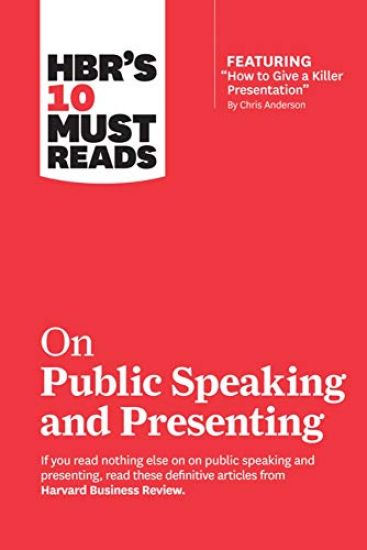
Command the room--whether you're speaking to an audience of one or one hundred.If you read nothing else on public speaking and presenting, read these 10 articles. We've combed through hundreds of Harvard Business Review articles and selected the most important ones to help you find your voice, persuade your listeners, and connect with audiences of any size.This book will inspire you to:Win hearts and minds--and approval for your ideasConquer your nerves and speak with confidenceFocus your message so that people really listenEstablish trust with your audience by being your authentic selfUse data and visuals to persuade more effectivelyMaster the art of storytellingThis collection of articles includes "How to Give a Killer Presentation," by Chris Anderson; "How to Become an Authentic Speaker," by Nick Morgan; "Storytelling That Moves People: A Conversation with Screenwriting Coach Robert McKee," by Bronwyn Fryer; "Connect, Then Lead," by Amy J.C. Cuddy, Matthew Kohut, and John Neffinger; "The Necessary Art of Persuasion," by Jay A. Conger; "The Science of Pep Talks," by Daniel McGinn; "Get the Boss to Buy In," by Susan J. Ashford and James R. Detert; "The Organizational Apology," by Maurice E. Schweitzer, Alison Wood Brooks, and Adam D. Galinsky; "What's Your Story?” by Herminia Ibarra and Kent Lineback; "Visualizations That Really Work," by Scott Berinato; and "Structure Your Presentation Like a Story," by Nancy Duarte.HBR's 10 Must Reads paperback series is the definitive collection of books for new and experienced leaders alike. Leaders looking for the inspiration that big ideas provide, both to accelerate their own growth and that of their companies, should look no further. HBR's 10 Must Reads series focuses on the core topics that every ambitious manager needs to know: leadership, strategy, change, managing people, and managing yourself. Harvard Business Review has sorted through hundreds of articles and selected only the most essential reading on each topic. Each title includes timeless advice that will be relevant regardless of an ever-changing business environment.