Kirjojen hintavertailu. Mukana 11 244 527 kirjaa ja 12 kauppaa.

Kirjahaku

Etsi kirjoja tekijän nimen, kirjan nimen tai ISBN:n perusteella.

1000 tulosta hakusanalla Pascal Root; Achim Schmidtmann

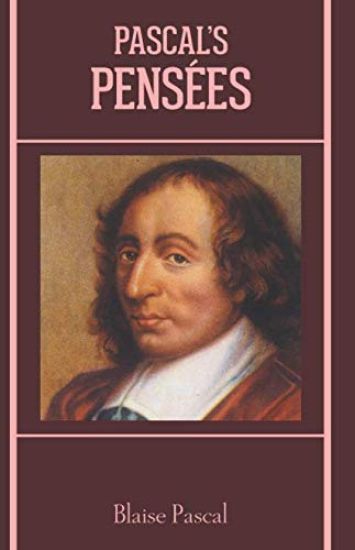
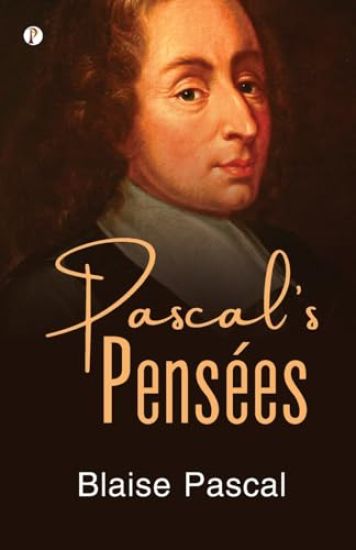
Pascal's Pensées

Pascal's Pensées

Blaise Pascal

ALPHA EDITION
2023
pokkari
Pascal's Pens es by Blaise Pascal has been regarded as significant work throughout human history, and in order to ensure that this work is never lost, we have taken steps to ensure its preservation by republishing this book in a contemporary format for both current and future generations. This entire book has been retyped, redesigned, and reformatted. Since these books are not made from scanned copies, the text is readable and clear.
Pascal's Pensées

Pascal's Pensées

Blaise Pascal

MJP Publisher
2022
pokkari
This work has been selected by scholars as being culturally important, and is part of the knowledge base of civilization as we know it.This work is in the "public domain in the United States of America, and possibly other nations. Within the United States, you may freely copy and distribute this work, as no entity (individual or corporate) has a copyright on the body of the work.Scholars believe, and we concur, that this work is important enough to be preserved, reproduced, and made generally available to the public. We appreciate your support of the preservation process, and thank you for being an important part of keeping this knowledge alive and relevant.
Pascal's Will

Pascal's Will

Haris Vlavianos

The Chinese University Press
2021
nidottu
This pocket-sized paperback is one of the twenty-four titles published for 2017 Hong Kong International Poetry Nights. The theme of IPHHK2017 is “Ancient Enmity”. IPNHK is one of the most influential international poetry events in Asia. From 22–26 November 2017, over 20 invited poets from various countries will be in Hong Kong to read their works based on the theme “Ancient Enmity.” Included in the anthology and box set, these unique works are presented with Chinese and English translations in bilingual or trilingual formats.
Pascal Pensees (Edition1st)

Pascal Pensees (Edition1st)

Blaise Pascal

Pharos Books Private Limited
2023
nidottu
A masterpiece of philosophical depth and spiritual insight, Pascal's Pens es stands as one of the most profound meditations on the human condition ever written. Compiled from the notes and reflections of Blaise Pascal-a 17th-century mathematician, physicist, inventor, and theologian-this posthumously published work is a remarkable fusion of reason and faith, science and spirituality, doubt and conviction. In these fragments, Pascal examines the paradoxes at the heart of human existence: our greatness and our wretchedness, our longing for truth and our inability to grasp it fully without grace. He addresses the restlessness of the human soul, the limits of reason, and the deep yearning for meaning that lies within every person. With piercing clarity, Pascal presents his famous ""wager,"" a daring argument for belief in God based not on proof but on prudence, choice, and hope. More than just a defence of Christianity, Pens es is a luminous exploration of psychology, ethics, mortality, and metaphysics. Pascal's style is both passionate and penetrating, at times poetic, at times aphoristic, but always urgent-driven by a desire to awaken the reader to the deepest truths of life. Whether read as theology, philosophy, or literature, Pascal's Pens es is a timeless work that continues to challenge, inspire, and stir debate. It speaks across centuries to anyone who has ever wrestled with questions: Who am I? Why am I here? What, if anything, lies beyond?
Doctor Pascal

Doctor Pascal

Emile Zola

Oxford University Press
2020
nidottu
'There's something of everything there, the best and the worst, the vulgar and the sublime, flowers, muck, tears, laughter, the river of life itself' Pascal Rougon has served as a doctor in the rural French town of Plassans for thirty years. He lives a quiet life with his faithful servant Martine and young niece Clotilde. Pascal is a man of science, striving to find the ultimate cure for all diseases. This puts him at odds with his niece, who is horrified by his denial of religious faith. Clotilde also distrusts Pascal's lifelong ambition to create a family tree on scientific principles, based upon his theories of heredity. Tensions in the household are fuelled by Pascal's scheming mother, Félicité, as the final episode in the great Rougon-Macquart saga plays out. Dr Pascal is the passionate conclusion to Zola's twenty-novel sequence, and the most eloquent expression of the ideas on heredity and human progress that have underpinned it. Human relations are at its heart, as Pascal and Clotilde are bound ever closer by ties of family and love.
Blaise Pascal on Duplicity, Sin, and the Fall

Blaise Pascal on Duplicity, Sin, and the Fall

William Wood

Oxford University Press
2013
sidottu
Blaise Pascal's account of the cognitive consequences of the Fall is clearly set out by William Wood in the first book on Pascal's theology to appear in English in more than forty years. Wood's central claim is that for Pascal, the Fall is a fall into duplicity. Pascal holds that as fallen selves in a fallen world, human beings have an innate aversion to the truth that is also, at the same time, an aversion to God. According to Pascal, we are born into a duplicitous world that shapes us into duplicitous subjects, and so we find it easy to reject God continually and deceive ourselves about our own sinfulness. Pascal's account of the noetic effects of sin has long been overlooked by theologians, but it is both traditional and innovative. It is robustly Augustinian, with a strong emphasis on the fallen will, the darkened intellect, and the fundamental sin of pride. Yet it also embraces a view of subjectivity that seems strikingly contemporary. For Pascal, the self is a fiction, constructed from without by an already duplicitous world. The human subject is habituated to deception because it is the essential glue that holds his world together. This book offers more than just a novel interpretation of Pascal's Pensées. Wood demonstrates, by exegetical argument and constructive example, that 'Pascalian' theology is both possible and fruitful.
The Thoughts of Blaise Pascal

The Thoughts of Blaise Pascal

Blaise Pascal

Praeger Publishers Inc
1978
sidottu
Pascal was a scientist and man of the world who came to be a passionately devout Christian. The fragments of his great defense of Christianity, left unfinished at his death in 1662, survive in the form of the Pensees. This series of brief, dramatic notes on his religious convictions are here translated into English. These thoughts expose Pascal's vision of the world and display powerful reasoning and a profound faith.
Blaise Pascal

Blaise Pascal

D. Adamson

Palgrave Macmillan
1994
sidottu
This chronological survey explores Pascal's (162362) achievement as mathematician, physicist and religious thinker; it also has a chapter on his life. His work on conic sections, the probability calculus, number theory, cycloid curves and hydrostatics is considered in detail. Analyses of the Provincial Letters and the Thoughts bring out the many distinctive features, thematicnn and technical, of each text. Pascal's lesser known works are also studied. There is a chapter on the Wager argument. A wide-ranging bibliography completes the book.
Mastering Pascal and Delphi Programming

Mastering Pascal and Delphi Programming

William J Buchanan

Red Globe Press
1998
nidottu
The book provides an introduction to programming with Pascal and extends this to show how Borland Delphi is used to development Microsoft Windows programs. It is packed full of real-life application and splits into three main sections:* Pascal programming* Pascal applications* Delphi programmingPractical applications include: software interrupts, hardware interrupts, graphics, date and time, system commands, RS-232 and parallel ports.
Illustrating Pascal

Illustrating Pascal

Donald G. Alcock

Cambridge University Press
1987
pokkari
This book, written entirely by hand, is an introduction to programming in Pascal. It starts with the fundamental concept of a stored program and works through to the manipulation of records in dynamic storage. The style of presentation is pictorial. This book may be used as a self-contained reference manual for Pascal to BS 6192 and ISO 7185. Besides defining the statements and structures of Pascal this book illustrates the use of such features in small but complete programs. These programs introduce fundamental techniques of programming such as symbol-state tables, bubble sort, quicksoft, stacks and queues, reverse Polish notation, linked lists, shortest-route technique, doubly linked rings, binary trees, hashing technique and other tools of the programmer's trade.
Blaise Pascal

Blaise Pascal

Charles Sherrard Mackenzie

University Press of America
2008
nidottu
This book focuses on Blaise Pascal's Pensées, an apology for Christianity, which is regarded as Pascal's crowning achievement. Professor Charles Sherrard MacKenzie maintains that the lens best enabling us to understand Pensées is his fragment on the three orders of life: mental, material, and spiritual. This analysis also highlights the frustrations Pascal encountered while making scientific discoveries, as part of his quest for certainty in his and others' faith.
Bernard Shaw and Gabriel Pascal

Bernard Shaw and Gabriel Pascal

Gabriel Pascal; Bernard Shaw

University of Toronto Press
1996
sidottu
After movie-makers in England bungled film versions of Bernard Shaw's How He Lied to Her Husband and Arms and the Man, producers and directors in Germany and Holland botched those based on Pygmalion, and a Hollywood screenplay desecrated The Devil's Disciple, Shaw took a chance on Gabriel Pascal and gave him permission to produce a movie version of Pygmalion in England. The contract was signed on 13 December 1935 and Pascal, a charming, flamboyant Hungarian emigre with relatively little experience in cinema, did the playwright proud. Shaw's gamble paid off in this Pygmalion, which, to this day, is usually claimed to be the best film version of any of his plays. This first collection of the correspondence of Bernard Shaw and Gabriel Pascal contains 268 letters, the greatest portion of which have not been previously published. They provide an intimate, behind-the-scenes view of the film industry's day-to-day workings and of the art of movie-making, from the signing of the first contract between Shaw and Pascal, to Shaw's death in 1950. The letters reveal the great extent to which Pascal, unlike his predecessors, scrupulously kept Shaw informed of what he did. We learn about whom Pascal negotiated with, the merits of association with certain individuals or businesses, contract problems, the backbiting and backstabbing of the industry, difficulties with casting, and progress throughout the filming. Shaw accepted and embellished some of Pascal's ideas for production, and vehemently disagreed with others. Their correspondence highlights the differences in personality between the two men. Shaw was ever the astute businessman, while Pascal was the eager artist. Shaw the methodical mastermind contrasted sharply with Pascal the entrepreneur with many projects under development, few of which came to fruition. Most important, however, the letters, postal cards, and telegrams collected here reveal how Pascal fought for the integrity of Shavian cinema; how, as a director, he tried to create films that were true to their dramatic sources; and how, in partnership with Pascal, Shaw's cinematic writings flourished.
Blaise Pascal

Blaise Pascal

Marvin R. O'Connell

William B Eerdmans Publishing Co
1997
pokkari
Blaise Pascal (1623-1662), mathematician, physicist, inventor, and religious thinker was a man at odds with his time. The optimism of the Enlightenment and the belief among philosophers and scientists that the universe was both discoverable and rational made them feel invincible. Reason alone, declared the intellectuals, could discover a God of natural religion that was to replace the God of traditional Christianity. Pascal, on the other hand, was not so confident. In his Pensees, he wrote, "The eternal silence of these infinite spaces fills me with dread." For Pascal, the universe was full of a mystery that went far beyond the powers of reason. Blaise Pascal: Reasons of the Heart, the latest addition to Eerdmans LIBRARY OF RELIGIOUS BIOGRAPHY series, captures Pascal's life and times with a chronicle narrative based on the published sources and Pascal's own works. Marvin O'Connell takes readers on an eloquent journey into Pascal's world, showing the passion that drove the man and the radical spirituality he sought in his own heart.In the process, O'Connell also illumines the social, political, and religious intrigue of seventeenth-century Paris, especially the winner-take-all struggle between the Jesuits and the Jansenists, with whom Pascal himself was allied. Written in an enjoyable style accessible to all, this meticulously researched biography will acquaint readers with the life and thought of Blaise Pascal, a remarkable human being and luminous Christian thinker.