

Kirjahaku
Etsi kirjoja tekijän nimen, kirjan nimen tai ISBN:n perusteella.
1000 tulosta hakusanalla Patrick T Rhoads





Patrick Hamilton: A Tragedy of the Reformation in Scotland, 1528
T. P. Johnston
Literary Licensing, LLC
2014
sidottu
""Patrick Hamilton: A Tragedy Of The Reformation In Scotland, 1528"" is a book written by T.P. Johnston. The book is a historical account of the life of Patrick Hamilton, a Scottish nobleman and Protestant reformer who lived during the 16th century. The book chronicles Hamilton's life, from his early years as a student in Paris to his eventual return to Scotland, where he became a leading figure in the Protestant Reformation.The book provides a detailed account of the political and religious climate in Scotland during the 16th century, including the tensions between the Catholic Church and the growing Protestant movement. It also explores Hamilton's relationship with his family, his friends, and his fellow reformers, as well as his interactions with key figures in Scottish history, such as James V and Cardinal Beaton.The book is written in a scholarly style, with extensive footnotes and references to primary sources. It is aimed at readers with an interest in Scottish history, the Protestant Reformation, and the life of Patrick Hamilton. Overall, ""Patrick Hamilton: A Tragedy Of The Reformation In Scotland, 1528"" provides a fascinating insight into a pivotal moment in Scottish history and the life of one of its most important figures.This Is A New Release Of The Original 1882 Edition.This scarce antiquarian book is a facsimile reprint of the old original and may contain some imperfections such as library marks and notations. Because we believe this work is culturally important, we have made it available as part of our commitment for protecting, preserving, and promoting the world's literature in affordable, high quality, modern editions, that are true to their original work.

Patrick Hamilton: A Tragedy of the Reformation in Scotland, 1528
T. P. Johnston
Literary Licensing, LLC
2014
nidottu


T. H. Paul and J.A. Millholland Master Locomotive Builders of Western Maryland
Patrick Stakem
Independently Published
2017
nidottu
This book describes two men whose careers intersected at the Mount Savage Locomotive Works in Western Maryland. T.H. Paul was Master Mechanic of the Works. But left to form his own business based in Frostburg. He focused on narrow gauge locomotives. His break with the Cumberland & Pennsylvania Railroad, owner of the Mount Savage Shops, was amicable. He sent business to Mount Savage, and they sent him business concerning narrow gauge and mining equipment, which they did not manufacture. Its was a win-win. When the Mount Savage Locomotive Works Catalog came out in 1889, Paul's engines were featured prominently.James A. Millholland had come to Mount Savage with his father, also James Millholland, in 1866. He worked at the Mount Savage Locomotive Works and the Cumberland & Pennsylvania Railroad, then for the Georges Creek & Cumberland Railroad.Paul's father was a Mill Wright, and Millholland's was a railroad man. Both Paul & Millholland became Master Mechanics of the Cumberland & Pennsylvania Railroad. And, both men contributed to the state-of-the-art in 19th century railroads, and both had patents granted to them. Both were key figures in the Industrialization that was taking place in western Maryland and the Nation as a whole in the 19th century.
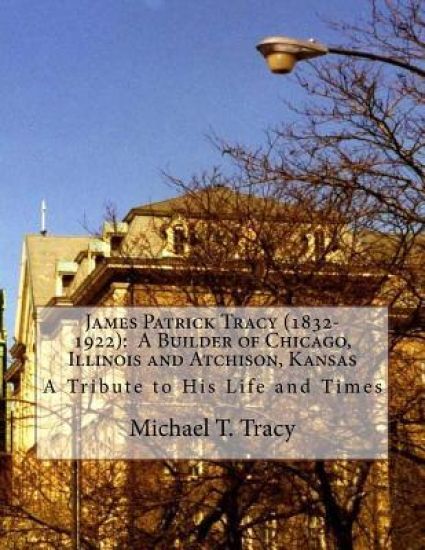
James Patrick Tracy (1832-1922): A Builder of Chicago, Illinois and Atchison, Kansas: A Tribute to His Life and Times
Michael T. Tracy
Createspace Independent Publishing Platform
2016
nidottu

John Patrick Hanna: The Auctioneer of Downpatrick: By His Fourth Great Grandson
Michael T. Tracy
Createspace Independent Publishing Platform
2017
nidottu

You don't have to be crazy to work here, but it sure helps.
Patrick Reeves
Independently Published
2019
nidottu
Sarcastic Quotes For Annoying Boss Or Colleague In Your Office. If you would like to see a sample of the notebook, click on the "Look Inside" feature.Specifications: Cover Finish: Matte Dimensions: 12.48 x 9.25 Inch"Interior: Trim Size 6 x 9 No Bleed, White Lined PaperPages: 100
Executives routinely make major decisions in the face of high uncertainty. In fact, managing risk and uncertainty is one of the key functions of any senior manager. Techniques for estimating the probabilities of multiple scenarios (and the impact of those scenarios) have existed for years, yet many of the men and women in executive positions do not understand how to use the results of these analyses appropriately.This book supplies that understanding in language that non-statisticians can understand. The emphasis is on the practical; real-life examples illustrate the key points throughout the book. Example topics include: why major projects are so often late and over budget, when to spend money on more information (and when not to), the benefits of a risk-neutral approach, psychological weaknesses humans have when dealing with uncertainty, and tools to use and traps to avoid.

This book contains all poems by this author with titles beginning S T and U

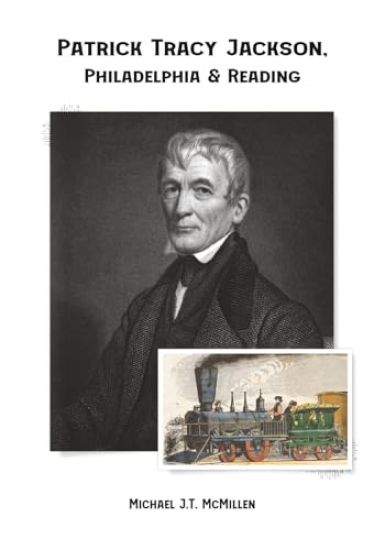
Patrick Tracy Jackson, Philadelphia & Reading
Michael J T McMillen
River Stone Publishing Group
2025
pokkari
After the Panic of 1837, the Locks & Canals machine shop had little work; it was to be sold or converted to a twist mill. The L&C treasurer, Patrick Tracy Jackson, strove to keep the shop busy pending sale or conversion. An 1841 plea to Jackson from Elihu Chauncey, president of the Philadelphia & Reading railroad, seemed salvation. Despite incomplete infrastructure, the P&R would begin operating in 1842. It urgently needed coal cars and locomotives to carry anthracite from Pennsylvania fields to Philadelphia. But its financial situation was dire, its debt in default, its assets being seized by sheriffs. It struggled to borrow. Its bridges suffered arson; its trains were derailed. Statutory completion deadlines loomed. Despite the risks, L&C built P&R cars and engines.There were conditions to award of the teased building contracts. Chauncey wanted L&C to make loans to the P&R. L&C had no interest in lending. Jackson sought P&R equity enabling participation in two infant industries: railroads and coal. Chauncey concocted a surreptitious scheme to acquire P&R stock from the Bank of the United States for sale to L&C, thereby diminishing the bank's power over the P&R.Nine months later, the P&R and L&C entered into the 1842 Running Gear Contract for running gear for wood jimmies. Developing a financial structure for the locomotives transaction consumed a year: the Engines Contract for locomotives and coal cars was signed in 1843. For the contracts, Jackson developed unique financial structures to protect L&C, as builder and financier, while allowing P&R use of the equipment for revenue generation. How could L&C sell equipment to, and ensure receipt and retention of payments from, an insolvent railroad (the P&R) that had not yet, or had only recently, commenced operations, during a severe economic depression or other adverse financial circumstances?The transaction went badly. Neither Jackson nor the P&R anticipated new iron coal cars or Baldwin's flexible beam truck: they rendered small L&C engines inadequate. Builders of large engines were paid; L&C received little. Payment defaults were continuous (for years), diminishing L&C's ability to sell the machine shop.This is a story of desperation, debt, and default: of balancing on the brink of bankruptcy. Jackson began with payment admonitions, eventually including favonian, then whetted, threats of resort to legal remedies. L&C acquired P&R stock and bonds and aligned with P&R stockholders and bond holders. His focus expanded beyond the equipment debt to the P&R's financial health, especially elimination of floating debt. In 1845, L&C and P&R bond holders initiated one of the first audits of managerial custodianship in U.S. corporate history. A Pennsylvania law was enacted allowing bond holders voting rights on a parity with stockholders.When further efforts at suasion and blandishment failed, Jackson sought legal advice from the eminent Philadelphia lawyer Horace Binney. Binney and Jackson developed an elegant four-step plan to take control of the trusts and debt under the Rolling Stock Contracts and neutralize the P&R. The plan derived from contract terms, threats of legal remedies (including personal liability for trustees), and extra-legal mechanisms. Within two months, L&C took control of the remedies relating to the P&R debt from the trustees, neutralized the P&R, and forced a P&R financial restructuring. Its value enhanced, L&C rid itself of the P&R debt. But more was needed.
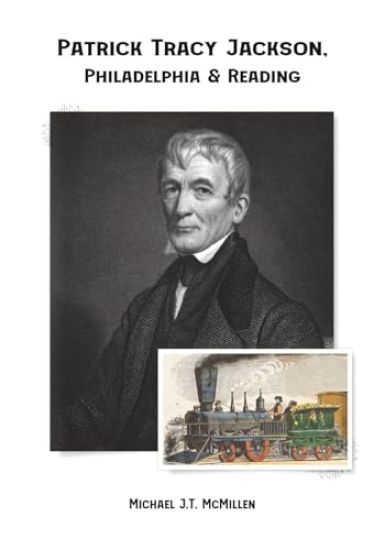
Patrick Tracy Jackson, Philadelphia & Reading
Michael J T McMillen
River Stone Publishing Group
2025
pokkari
After the Panic of 1837, the Locks & Canals machine shop had little work; it was to be sold or converted to a twist mill. The L&C treasurer, Patrick Tracy Jackson, strove to keep the shop busy pending sale or conversion. An 1841 plea to Jackson from Elihu Chauncey, president of the Philadelphia & Reading railroad, seemed salvation. Despite incomplete infrastructure, the P&R would begin operating in 1842. It urgently needed coal cars and locomotives to carry anthracite from Pennsylvania fields to Philadelphia. But its financial situation was dire, its debt in default, its assets being seized by sheriffs. It struggled to borrow. Its bridges suffered arson; its trains were derailed. Statutory completion deadlines loomed. Despite the risks, L&C built P&R cars and engines.There were conditions to award of the teased building contracts. Chauncey wanted L&C to make loans to the P&R. L&C had no interest in lending. Jackson sought P&R equity enabling participation in two infant industries: railroads and coal. Chauncey concocted a surreptitious scheme to acquire P&R stock from the Bank of the United States for sale to L&C, thereby diminishing the bank's power over the P&R.Nine months later, the P&R and L&C entered into the 1842 Running Gear Contract for running gear for wood jimmies. Developing a financial structure for the locomotives transaction consumed a year: the Engines Contract for locomotives and coal cars was signed in 1843. For the contracts, Jackson developed unique financial structures to protect L&C, as builder and financier, while allowing P&R use of the equipment for revenue generation. How could L&C sell equipment to, and ensure receipt and retention of payments from, an insolvent railroad (the P&R) that had not yet, or had only recently, commenced operations, during a severe economic depression or other adverse financial circumstances?The transaction went badly. Neither Jackson nor the P&R anticipated new iron coal cars or Baldwin's flexible beam truck: they rendered small L&C engines inadequate. Builders of large engines were paid; L&C received little. Payment defaults were continuous (for years), diminishing L&C's ability to sell the machine shop.This is a story of desperation, debt, and default: of balancing on the brink of bankruptcy. Jackson began with payment admonitions, eventually including favonian, then whetted, threats of resort to legal remedies. L&C acquired P&R stock and bonds and aligned with P&R stockholders and bond holders. His focus expanded beyond the equipment debt to the P&R's financial health, especially elimination of floating debt. In 1845, L&C and P&R bond holders initiated one of the first audits of managerial custodianship in U.S. corporate history. A Pennsylvania law was enacted allowing bond holders voting rights on a parity with stockholders.When further efforts at suasion and blandishment failed, Jackson sought legal advice from the eminent Philadelphia lawyer Horace Binney. Binney and Jackson developed an elegant four-step plan to take control of the trusts and debt under the Rolling Stock Contracts and neutralize the P&R. The plan derived from contract terms, threats of legal remedies (including personal liability for trustees), and extra-legal mechanisms. Within two months, L&C took control of the remedies relating to the P&R debt from the trustees, neutralized the P&R, and forced a P&R financial restructuring. Its value enhanced, L&C rid itself of the P&R debt. But more was needed.
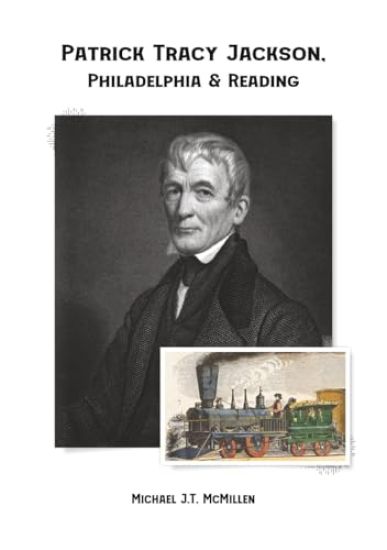
Patrick Tracy Jackson, Philadelphia & Reading
Michael J T McMillen
River Stone Publishing Group
2025
sidottu
After the Panic of 1837, the Locks & Canals machine shop had little work; it was to be sold or converted to a twist mill. The L&C treasurer, Patrick Tracy Jackson, strove to keep the shop busy pending sale or conversion. An 1841 plea to Jackson from Elihu Chauncey, president of the Philadelphia & Reading railroad, seemed salvation. Despite incomplete infrastructure, the P&R would begin operating in 1842. It urgently needed coal cars and locomotives to carry anthracite from Pennsylvania fields to Philadelphia. But its financial situation was dire, its debt in default, its assets being seized by sheriffs. It struggled to borrow. Its bridges suffered arson; its trains were derailed. Statutory completion deadlines loomed. Despite the risks, L&C built P&R cars and engines.There were conditions to award of the teased building contracts. Chauncey wanted L&C to make loans to the P&R. L&C had no interest in lending. Jackson sought P&R equity enabling participation in two infant industries: railroads and coal. Chauncey concocted a surreptitious scheme to acquire P&R stock from the Bank of the United States for sale to L&C, thereby diminishing the bank's power over the P&R.Nine months later, the P&R and L&C entered into the 1842 Running Gear Contract for running gear for wood jimmies. Developing a financial structure for the locomotives transaction consumed a year: the Engines Contract for locomotives and coal cars was signed in 1843. For the contracts, Jackson developed unique financial structures to protect L&C, as builder and financier, while allowing P&R use of the equipment for revenue generation. How could L&C sell equipment to, and ensure receipt and retention of payments from, an insolvent railroad (the P&R) that had not yet, or had only recently, commenced operations, during a severe economic depression or other adverse financial circumstances?The transaction went badly. Neither Jackson nor the P&R anticipated new iron coal cars or Baldwin's flexible beam truck: they rendered small L&C engines inadequate. Builders of large engines were paid; L&C received little. Payment defaults were continuous (for years), diminishing L&C's ability to sell the machine shop.This is a story of desperation, debt, and default: of balancing on the brink of bankruptcy. Jackson began with payment admonitions, eventually including favonian, then whetted, threats of resort to legal remedies. L&C acquired P&R stock and bonds and aligned with P&R stockholders and bond holders. His focus expanded beyond the equipment debt to the P&R's financial health, especially elimination of floating debt. In 1845, L&C and P&R bond holders initiated one of the first audits of managerial custodianship in U.S. corporate history. A Pennsylvania law was enacted allowing bond holders voting rights on a parity with stockholders.When further efforts at suasion and blandishment failed, Jackson sought legal advice from the eminent Philadelphia lawyer Horace Binney. Binney and Jackson developed an elegant four-step plan to take control of the trusts and debt under the Rolling Stock Contracts and neutralize the P&R. The plan derived from contract terms, threats of legal remedies (including personal liability for trustees), and extra-legal mechanisms. Within two months, L&C took control of the remedies relating to the P&R debt from the trustees, neutralized the P&R, and forced a P&R financial restructuring. Its value enhanced, L&C rid itself of the P&R debt. But more was needed.