Kirjojen hintavertailu. Mukana 11 699 587 kirjaa ja 12 kauppaa.

Kirjahaku

Etsi kirjoja tekijän nimen, kirjan nimen tai ISBN:n perusteella.

1000 tulosta hakusanalla Paul Tengesdal

Paul Tillich and Pentecostal Theology
Paul Tillich (1886–1965) is widely regarded as one of the most influential theologians of the 20th century. By bringing his thought together with the theology and practices of an important contemporary Christian movement, Pentecostalism, this volume provokes active, productive, critical, and creative dialogue with a broad range of theological topics. These essays stimulate robust conversation, engage on common ground regarding the work of the Holy Spirit, and offer significant insights into the universal concerns of Christian theology and Paul Tillich and his legacy.
Paul Tillich and Pentecostal Theology
Paul Tillich (1886–1965) is widely regarded as one of the most influential theologians of the 20th century. By bringing his thought together with the theology and practices of an important contemporary Christian movement, Pentecostalism, this volume provokes active, productive, critical, and creative dialogue with a broad range of theological topics. These essays stimulate robust conversation, engage on common ground regarding the work of the Holy Spirit, and offer significant insights into the universal concerns of Christian theology and Paul Tillich and his legacy.
Paul Ricoeur Between Theology and Philosophy

Paul Ricoeur Between Theology and Philosophy

Boyd Blundell

Indiana University Press
2010
pokkari
Paul Ricoeur (1913–2005) remains one of philosophy of religion's most distinctive voices. Ricoeur was a philosopher first, and while his religious reflections are very relevant to theology, Boyd Blundell argues that his philosophy is even more relevant. Using Ricoeur's own philosophical hermeneutics, Blundell shows that there is a way for explicitly Christian theology to maintain both its integrity and overall relevance. He demonstrates how the dominant pattern of detour and return found throughout Ricoeur's work provides a path to understanding the relationship between philosophy and theology. By putting Ricoeur in dialogue with current, fundamental, and longstanding debates about the role of philosophy in theology, Blundell offers a hermeneutically sensitive engagement with Ricoeur's thought from a theological perspective.
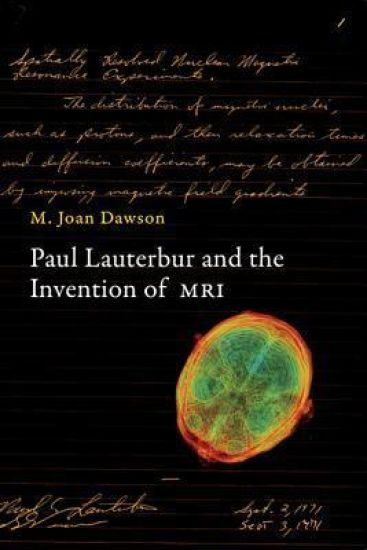
Paul Lauterbur and the Invention of MRI
The story behind the invention of the most important medical diagnostic tool since the X-ray.On September 2, 1971, the chemist Paul Lauterbur had an idea that would change the practice of medical research. Considering recent research findings about the use of nuclear magnetic resonance (NMR) signals to detect tumors in tissue samples, Lauterbur realized that the information from NMR signals could be recovered in the form of images-and thus obtained noninvasively from a living subject. It was an unexpected epiphany: he was eating a hamburger at the time. Lauterbur rushed out to buy a notebook in which to work out his idea; he completed his notes a few days later. He had discovered the basic method used in all MRI scanners around the world, and for this discovery he would share the Nobel Prize for Physiology or Medicine in 2003. This book, by Lauterbur's wife and scientific partner, M. Joan Dawson, is the story of Paul Lauterbur's discovery and the subsequent development of the most important medical diagnostic tool since the X-ray.With MRI, Lauterbur had discovered an entirely new principle of imaging. Dawson explains the science behind the discovery and describes Lauterbur's development of the idea, his steadfastness in the face of widespread skepticism and criticism, and related work by other scientists including Peter Mansfield (Lauterbur's Nobel co-recipient), and Raymond Damadian (who famously feuded with Lauterbur over credit for the ideas behind MRI). She offers not only the story of one man's passion for his work but also a case study of how science is actually done: a flash of insight followed by years of painstaking work.
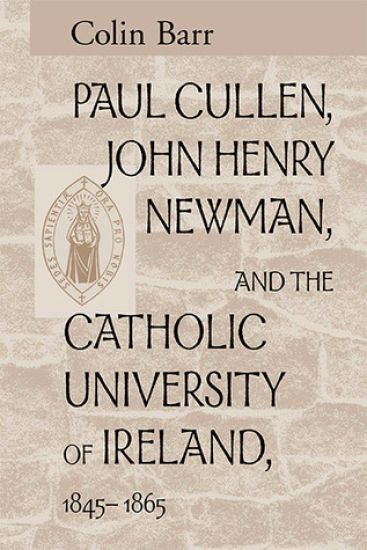
Paul Cullen, John Henry Newman, and the Catholic University of Ireland, 1845–1865
The history of the Catholic University of Ireland has long been overshadowed by the personality and writings of its first rector, John Henry Newman. Newman—an official candidate for sainthood and author of the renowned The Idea of a University—played a vital role in the foundation of the university. But Colin Barr's new study paints a richer portrait of CUI's history by focusing on the university itself and on the influence of Paul Cullen, archbishop of Armagh and then Dublin. Most historians have based their treatments of the Catholic University of Ireland on Newman's own voluminous correspondence and later writings, and have tended to uncritically accept Newman's own understanding of his role in Dublin and his relationship with Cullen. Newman has been cast in the role of a liberal, creative visionary who was frustrated at every turn by the obscurantist, ultramontane Cullen. Barr seeks to reassess Cullen's role in the founding and history of the University by utilizing previously unavailable sources and by relocating the history of the Catholic University in its Irish context. Paul Cullen, John Henry Newman, and the Catholic University of Ireland, 1845-1865 presents a more balanced treatment of both the University and of Newman and Cullen's role in its history. The resulting text is a fascinating story of determination, conflict, and failure.
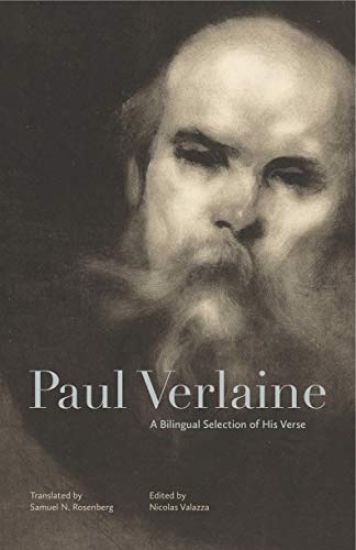
Paul Verlaine

Paul Verlaine

Paul Verlaine

Pennsylvania State University Press
2019
sidottu
Crowned “Prince of Poets” in his later years, Paul Verlaine stands out among the iconoclastic founders of French modernist verse. This diglot anthology offers the most comprehensive selection of Verlaine’s poetry available in English translation.Verlaine’s famous works are presented here alongside poems never previously translated into English, including neglected political works and prison pieces only recently brought to light, which reveal social, homoerotic, and even pornographic inspirations. The poems are organized not by collections and date of publication but by themes and time of composition. This innovation, along with Valazza’s extensive supporting materials, will help the curious student or scholar explore the master poet’s work in the context of his troubled life: from the beginning of his literary career among the Parnassians to his affair with Rimbaud and the end of his marriage, his time in prison, and his bohemian lifestyle up to his death in 1896. Verlaine, the poet of ambiguity, has always been a challenge to translate. Rosenberg expertly crafts language that privileges the musicality of Verlaine’s verse while respecting each poem’s meaning and pace.Featuring 192 poems in French with English translations, this collection will appeal to scholars and poetry enthusiasts alike.
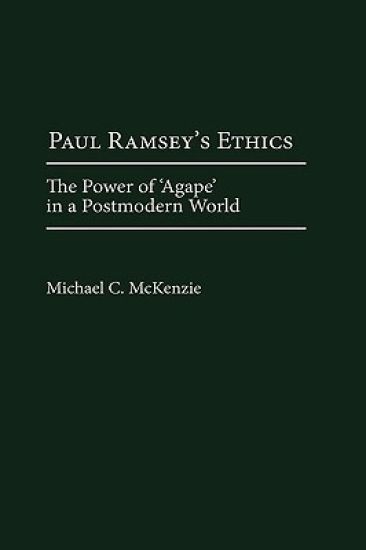
Paul Ramsey's Ethics

Paul Ramsey's Ethics

Michael McKenzie

Praeger Publishers Inc
2000
sidottu
This book examines the moral philosophy of Paul Ramsey—one of the 20th century's most influential ethicists—from a theological perspective illustrating that religion can still play a substantial role in our ongoing moral inquiries. Ramsey wrote prodigiously on ethical issues including politics, medical research, the Vietnam war, and nuclear proliferation. His ethical theory, which concentrates on divine love, or `agape,' as well as justice and order, provides a middle ground between fundamentalism and secularism. Therefore, Ramsey's ethics will appeal to the 21st-century social conscience.McKenzie grounds his theological exploration in a comprehensive history of the theological and philosophical influences on Ramsey's thought, including Jonathan Edwards' theory of natural morality. He also explores a multidisciplinary selection of Ramsey's writings. In conclusion, McKenzie argues that Ramsey's natural law theory will continue to have significant and increasing relevance for morality in the postmodern world. This is the most thorough study of Paul Ramsey's work as well as a significant contribution to philosophy and theology.
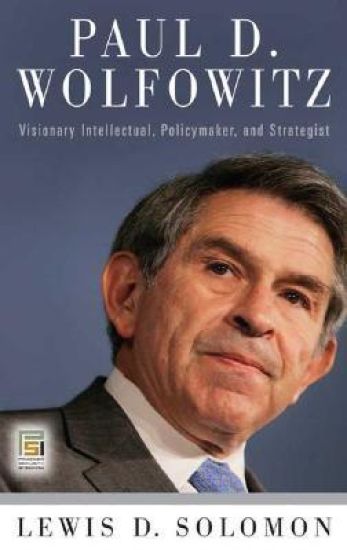
Paul D. Wolfowitz

Paul D. Wolfowitz

Lewis D. Solomon

Praeger Publishers Inc
2007
sidottu
With the announcement of his resignation from the World Bank, the ongoing saga of Paul Wolfowitz, played out in the front pages of the world's newspapers, came to a dramatic conclusion. Paul D. Wolfowitz, as columnist George F. Will wrote in the Washington Post (May 12, 2005), has never been elected to office or served in a president's cabinet, but he has mattered much more than most who have. A longtime State Department hand (Assistant Secretary of State for East Asian and Pacific Affairs, Ambassador to Indonesia), a leading scholar/intellectual (Dean of the Johns Hopkins School of Advanced International Studies), Deputy Secretary of Defense for four years, and one of the architects of the Bush Doctrine, Wolfowitz is a crucial figure in post-Cold War foreign and security policy. He most recently served as President of the World Bank. In each of these roles, he has stood out for his neoconservative and often uncompromising positions. It is no wonder that he is often vilified by the Left and lionized by the Right. In this first full-length biography of Wolfowitz, Solomon attempts to capture him not by delineating the quotidian details of his career, but by tracing his intellectual development and bureaucratic influence at key points along the road to Baghdad and beyond.
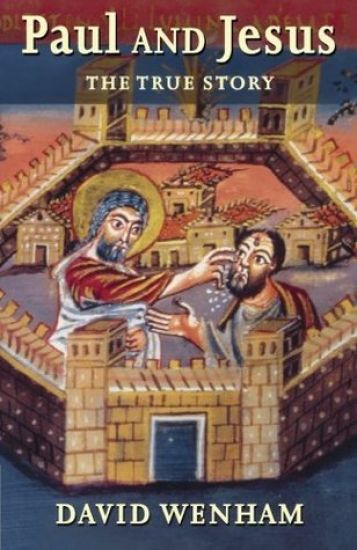
Paul And Jesus

Paul And Jesus

Spck

SPCK Publishing
2002
nidottu
An account of the life and teaching of Paul, comparing the accounts in Acts with the accounts given by Paul himself in his earlier epistles. The author explores how much of the teaching of Jesus was known to Paul. He makes a strong case for the historical reliability of the gospel accounts and concludes that Paul was a faithful follower of Jesus (a view commonly disputed).
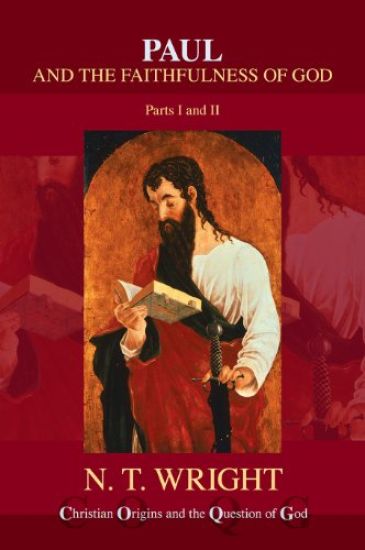
Paul and the Faithfulness of God

Paul and the Faithfulness of God

NT Wright; Tom Wright

SPCK Publishing
2013
nidottu
A masterly exposition of Paul's thought by one of his leading contemporary interpreters. The summation of a lifetime's study, this landmark book offers an unparalleled wealth of detailed insights into Paul's life, times and enduring impact. Destined to become the point of reference in Pauline studies for the next decade, and beyond. Wright carefully explores the whole context of Pauls thought and activityJewish, Greek and Roman, cultural, philosophical, religious, and imperialand shows how the apostles worldview and theology enabled him to engage with the many-sided complexities of first-century life that his churches were facing. Wright also provides close and illuminating readings of the letters and other primary sources, along with critical insights into the major twists and turns of exegetical and theological debate in the vast secondary literature. The result is a rounded and profoundly compelling account of the man who became the worlds first, and greatest, Christian theologian 'Tom Wright's long-awaited full-length study of St Paul will not in any way disappoint the high expectations that surround it. From the very first sentence, it holds the attention, arguing a strong, persuasive, coherent and fresh case, supported by immense scholarship and comprehensive theological intelligence. It is a worthy successor to his earlier magisterial studies of the themes of the Kingdom and the Resurrection: lively, passionate and deeply constructive, laying out very plainly the ways in which the faith of the New Testament is focused on God's purpose to re-create, through the fact of Jesus crucified and risen, our entire understanding of authority and social identity.' Rowan Williams, Master of Magdalene College, Cambridge.
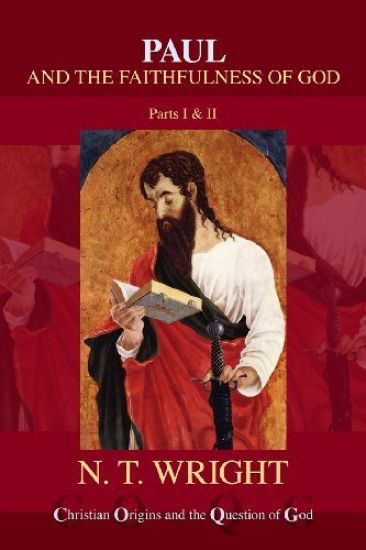
Paul And The Faithfulness Of God Hb

Paul And The Faithfulness Of God Hb

NT Wright; Tom Wright

SPCK Publishing
2013
nidottu
A masterly exposition of Paul's thought by one of his leading contemporary interpreters. The summation of a lifetime's study, this landmark book offers an unparalleled wealth of detailed insights into Paul's life, times and enduring impact. Destined to become the point of reference in Pauline studies for the next decade, and beyond. 'Tom Wright's long-awaited full-length study of St Paul will not in any way disappoint the high expectations that surround it. From the very first sentence, it holds the attention, arguing a strong, persuasive, coherent and fresh case, supported by immense scholarship and comprehensive theological intelligence. It is a worthy successor to his earlier magisterial studies of the themes of the Kingdom and the Resurrection: lively, passionate and deeply constructive, laying out very plainly the ways in which the faith of the New Testament is focused on God's purpose to re-create, through the fact of Jesus crucified and risen, our entire understanding of authority and social identity.' Rowan Williams, Master of Magdalene College, Cambridge