During World War II 51,000 Italian prisoners of war were detained in the United States. When Italy signed an armistice with the Allies in September 1943, most of these soldiers agreed to swear allegiance to the United States and to collaborate in the fight against Germany. At the Letterkenny Army Depot, located near Chambersburg, Pennsylvania, more than 1,200 Italian soldiers were detained as co-operators. They arrived in May 1944 to form the 321st Italian Quartermaster Battalion and remained until October 1945. As detainees, the soldiers helped to order, stock, repair, and ship military goods, munitions and equipment to the Pacific and European Theaters of war. Through such labor, they lent their collective energy to the massive home front endeavor to defeat the Axis Powers. The prisoners also helped to construct the depot itself, building roads, sidewalks, and fences, along with individual buildings such as an assembly hall, amphitheater, swimming pool, and a chapel and bell tower. The latter of these two constructions still exist, and together with the assembly hall, bear eloquent testimony to the Italian POW experience. For their work the Italian co-operators received a very modest, regular salary, and they experienced more freedom than regular POWs. In their spare time, they often had liberty to leave the post in groups that American soldiers chaperoned. Additionally, they frequently received or visited large entourages of Italian Americans from the Mid-Atlantic region who were eager to comfort their erstwhile countrymen. The story of these Italian soldiers detained at Letterkenny has never before been told. Now, however, oral histories from surviving POWs, memoirs generously donated by family members of ex-prisoners, and the rich information newly available from archival material in Italy, aided by material found in the U.S., have made it possible to reconstruct this experience in full. All of this historical documentation has also allowed the authors to tell fascinating individual stories from the moment when many POWs were captured to their return to Italy and beyond. More than seventy years since the end of World War II, family members of ex-POWs in both the United States and Italy still enjoy the positive legacy of this encounter.
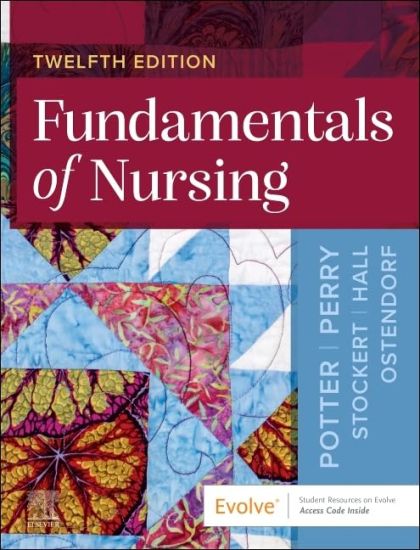
**Selected for 2025 Doody’s Core Titles® with "Essential Purchase" designation in Fundamentals** Learn the concepts and skills and develop the clinical judgment you need to provide excellent nursing care! Fundamentals of Nursing, 12th Edition prepares you to succeed as a nurse by providing a solid foundation in critical thinking, clinical judgment, nursing theory, evidence-based practice, and person-centered care in all settings. With illustrated, step-by-step guidelines, this book makes it easy to learn important skills and procedures. Care plans are presented within a nursing process framework that is coordinated with clinical judgement, and case studies show how to apply concepts to nursing practice. From an expert author team led by Patricia Potter and Anne Perry, this bestselling nursing textbook helps you develop the understanding and clinical judgment you need to succeed in the classroom and in your career. UPDATED! Content reflects the latest evidence-based practice, including the most current information on infection control standards, oxygenation, technology in health care, and more UPDATED! More than 80 new photos and images present updated skills and represent the diversity of nurses and patients throughout UNIQUE! Critical Thinking section incorporates clinical judgment and critical thinking to help you develop these valuable skills. The unique critical thinking/clinical judgment model is visually depicted by a series of progressive images that demonstrate the application of the nursing process, critical thinking, and clinical judgment - and how they all tie together UNIQUE! Reflective Learning questions in every clinical chapter are associated with each of the six clinical judgment skills and coordinate directly with the case study presented in the care plan UNIQUE! Building Competency boxes in every chapter incorporate nursing competencies, e.g., person-centered care, safety, and evidence-based practice. Each box presents a clinical situation followed by several open-ended questions designed to help you understand and apply these core competencies UNIQUE! Caring for Patients with Chronic Illness chapter helps prepare you to address the unique health care needs of patients who have complex, long-term, chronic disease, who face the physical and emotional impacts of the illness, and the therapies used to treat it Evidence-Based Practice boxes reflect current research and include a PICOT question, a summary of the results of a research study, and the impact the study has made in nursing practice. Where applicable, these EBP boxes will focus on “Never Events” (those events that are completely preventable, dangerous to patients, and non-reimbursable) and new related research Case studies in all clinical chapters tie together the care plan, concept map, and reflective learning exercises Clear delegation coverage notes which skills can and cannot be delegated and indicate exactly which tasks to delegate. Many chapters incorporate delegation considerations into the chapter case study and there is also a delegation section in every skill and procedural guideline Planning and Outcomes Identification sections include sections on Outcomes, Setting Priorities, and Teamwork and Collaboration to help you plan and prioritize comprehensive patient care Teamwork and Collaboration headings highlight information to help you work effectively both within the nursing team and within the larger healthcare team, allowing you to make the best use of available healthcare resources to improve patient care Implementation sections include health promotion, acute care, and restorative and continuing care to prepare you for all levels of care in all settings Patient Teaching boxes help you plan effective teaching by first identifying an outcome, then developing strategies on how to teach, and finally implementing measures to evaluate learning Focus on Older Adult boxes highlight key aspects of nursing assessment and care for this population Cultural Care boxes summarize cultural considerations related to the chapter topic and provide practical guidelines for how to meet patients’ cultural needs and preferences Nursing Assessment Questions boxes help you learn to effectively phrase questions for patients More than 50 skills are generously illustrated in a two-column format that includes rationales for each step alongside clear, step-by-step instructions for providing safe nursing care. Rationales cite current evidence-based research Key terms at the beginning of each chapter help you learn the most important terminology for that area of content Five review questions for each chapter include answers both in the book and on the Evolve companion website (with rationales) Unexpected Outcomes and Related Interventions for skills alert you to possible problems and appropriate nursing action. More than 30 procedural guidelines provide streamlined, step-by-step instructions for performing very basic skills A consistent five-step nursing process framework for clinical chapters coordinates completely with the accompanying clinical judgment skills used for each step More than 20 concept maps visually demonstrate planning care for patients with multiple nursing diagnoses NOC outcomes, NIC interventions, and nursing diagnoses in care plans reflect the standard used by institutions nationwide More than 20 care plans demonstrate the application of the five-step nursing process to individual patient problems to help you understand how a plan is developed and how to evaluate care. Patients in the care plan extend to the Reflective Learning activities at the end of each clinical chapter Evidence-Based Practice chapter helps you understand how nursing research serves as the basis for determining best practice, and the critical importance of this continually evolving dynamic Safe Patient Handling Guidelines are included in the Patient Safety and Quality chapter Practical study tools on the Evolve companion website include skills video clips, skills checklists, printable key points, answers to the review questions in the book, a fluid & electrolytes tutorial, a concept map creator, an audio glossary, and more Key points are tied to the chapter objectives and neatly summarize the most important content for each chapter to help you review and evaluate your learning
Make this portable pocket reference your constant companion in the clinical setting! The Clinical Companion for Fundamentals of Nursing, 12th Edition, includes the hard-to-remember facts, lab values, and abbreviations that are essential to providing optimal nursing care. Organized by the major concepts and principles of a nursing fundamentals course, this text features a quick-access format with summary tables and bulleted lists. The Clinical Companion makes retrieving, reviewing, and retaining clinical facts and figures easier than ever! NEW! Completely updated content reflects the latest care standards throughout ENHANCED! Content on seizures, bleeding or hemorrhage, choking, confused patients, alcohol withdrawal, syncope, and medication is now easier to find in the Emergent Clinical Situations chapter Clinical Judgment chapter guides you through how to develop and apply clinical judgment skills in the clinical setting Body system assessment chapters help you learn to take a systematic and thorough approach to health assessment Detailed information on drug calculations, safety, compatibilities, conversions, administration, and more help you prevent medication errors and ensure safe practice Current guidelines for pressure ulcer prevention and care can now be referenced quickly while on the job Health care terminology section provides you with a better understanding of clinical terms as they are encountered Tabular, list, and outline content formats make information easy to find and review Small, portable size makes this resource easy to carry around during clinical practice Completely updated with the latest care standards throughout.
This book is a volume in the Penn Press Anniversary Collection. To mark its 125th anniversary in 2015, the University of Pennsylvania Press rereleased more than 1,100 titles from Penn Press's distinguished backlist from 1899-1999 that had fallen out of print. Spanning an entire century, the Anniversary Collection offers peer-reviewed scholarship in a wide range of subject areas.
This work has been selected by scholars as being culturally important and is part of the knowledge base of civilization as we know it.This work is in the public domain in the United States of America, and possibly other nations. Within the United States, you may freely copy and distribute this work, as no entity (individual or corporate) has a copyright on the body of the work.Scholars believe, and we concur, that this work is important enough to be preserved, reproduced, and made generally available to the public. To ensure a quality reading experience, this work has been proofread and republished using a format that seamlessly blends the original graphical elements with text in an easy-to-read typeface.We appreciate your support of the preservation process, and thank you for being an important part of keeping this knowledge alive and relevant.
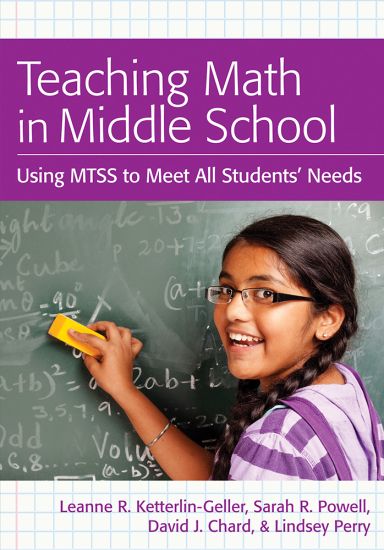
Make all your middle schoolers confident and competent mathematicians with this book, your accessible guide to teaching math to every learner in Grades 6-8. Focused on knocking down roadblocks to learning, this reader-friendly resource shows you how to use multi-tiered systems of support (MTSS)—a powerful, widely adopted framework for meeting each student's individual needs. You'll learn how to deliver high-quality, evidence-based math instruction; combine your instruction with meaningful assessment; and provide just-right supports that help students conquer their specific math struggles.An essential guide for in-service educators—and an important resource for teachers in training—this book gives you the in-depth knowledge and practical tools you need to support every student's success in middle school math.DISCOVER HOW TO:Implement MTSS to benefit all students: Develop and use tiered supports across your whole school, promote collaboration between general and special educators, and troubleshoot your MTSS.Build foundational numeracy skills: Help your students strengthen the three pillars of numeracy that build algebraic proficiency.Design and deliver effective math instruction: Use today's recommended practices to teach all students, and develop Tier 2 and Tier 3 interventions that really help struggling learners.Choose and use effective supports: Distinguish between differentiation, accommodation, and modification, and learn when and how to use them.Use data to make decisions: Learn how to select and use screeners, diagnostic assessments, progress monitoring tools, and summative assessments—and use results to shape instruction.PRACTICAL MATERIALS: More than a dozen downloadable forms help you plan for MTSS and implement what you learned from the book, vignettes and sample problems model best practices, and interviews with real-life educators brim with valuable advice on implementing MTSS in math education.
Christopher G. Pernin; Elliot Axelband; Jeffrey A. Drezner; Brian B. Dille; John Gordon; Bruce J. Held; K. Scott McMahon; Walter L. Perry; Christopher Rizzi; Akhil R. Shah; Peter A. Wilson; Jerry M. Sollinger
Bible VR is a book covering the use of the latest Virtual Reality technology for faith based education and entertainment. Utilizing Bible VR (an app), this book explores the psychological and social effects of Virtual Reality in Christianity. As modern technology grows to be a part of our everyday lives. They are increasingly influential in both how we learn and communicate. Bible VR covers the growing trend of VR and how we can utilize one of the powerful and immersive tool in today's technology to help us learn more about God, The Bible, and The Promised Land. This book has been freely distributed but hard copy edition also includes devotionals for use with your VR content.
This book was first published in 2007. Variable stars are those that change brightness. Their variability may be due to geometric processes such as rotation, or eclipse by a companion star, or physical processes such as vibration, flares, or cataclysmic explosions. In each case, variable stars provide unique information about the properties of stars, and the processes that go on within them. This book provides a concise overview of variable stars, including a historical perspective, an introduction to stars in general, the techniques for discovering and studying variable stars, and a description of the main types of variable stars. It ends with short reflections about the connection between the study of variable stars, and research, education, amateur astronomy, and public interest in astronomy. This book is intended for anyone with some background knowledge of astronomy, but is especially suitable for undergraduate students and experienced amateur astronomers who can contribute to our understanding of these important stars.
Verstandlich und klar strukturiert werden dem Leser die in der modernen theoretischen Physik dominierenden geometrischen Konzepte an Hand der Mechanik vermittelt."
This book has been considered by academicians and scholars of great significance and value to literature. This forms a part of the knowledge base for future generations. So that the book is never forgotten we have represented this book in a print format as the same form as it was originally first published. Hence any marks or annotations seen are left intentionally to preserve its true nature.
This book has been considered by academicians and scholars of great significance and value to literature. This forms a part of the knowledge base for future generations. So that the book is never forgotten we have represented this book in a print format as the same form as it was originally first published. Hence any marks or annotations seen are left intentionally to preserve its true nature.