Kirjojen hintavertailu. Mukana 11 342 296 kirjaa ja 12 kauppaa.

Kirjahaku

Etsi kirjoja tekijän nimen, kirjan nimen tai ISBN:n perusteella.

1000 tulosta hakusanalla Philip Perry

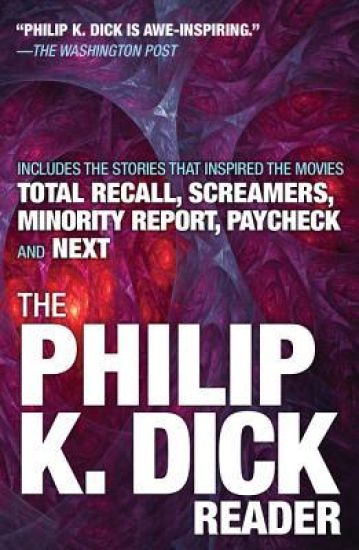
The Philip K. Dick Reader

The Philip K. Dick Reader

Philip K. Dick

Citadel Press
2016
nidottu
Includes the stories that inspired the movies Total Recall, Screamers, Minority Report, Paycheck, and Next-More than anyone else in the field, Mr. Dick really puts you inside people's minds.- --The Wall Street JournalThe Philip K. Dick Reader Many thousands of readers consider Philip K. Dick the greatest science fiction mind on any planet. Since his untimely death in 1982, interest in Dick's works has continued to mount, and his reputation has been further enhanced by a growing body of critical attention. The Philip K. Dick Award is now given annually to a distinguished work of science fiction, and the Philip K. Dick Society is devoted to the study and promulgation of his works.Dick won the prestigious Hugo Award for the best novel of 1963 for The Man in the High Castle. In the last year of his life, the film Blade Runner was made from his novel Do Androids Dream of Electric Sheep?This collection includes some of Dick's earliest short and medium-length fiction, including We Can Remember It for You Wholesale (the story that inspired the motion picture Total Recall), Second Variety (which inspired the motion picture Screamers), Paycheck, The Minority Report, and twenty more.
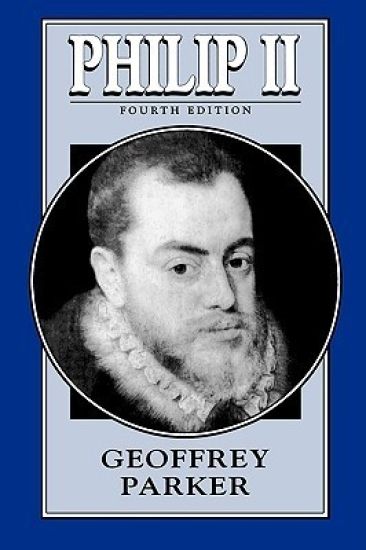
Philip II

Philip II

Geoffrey Parker

Open Court Publishing Co ,U.S.
2002
pokkari
In order to understand Spanish America, one must begin with Philip II, who at one time controlled a quarter of the world's population. This new edition is brought up to date with new material including photos, map and charts, and an essay in which the author evaluates new works about this "obsessed personality." "A well-managed and impressively clear story." - The New York Times
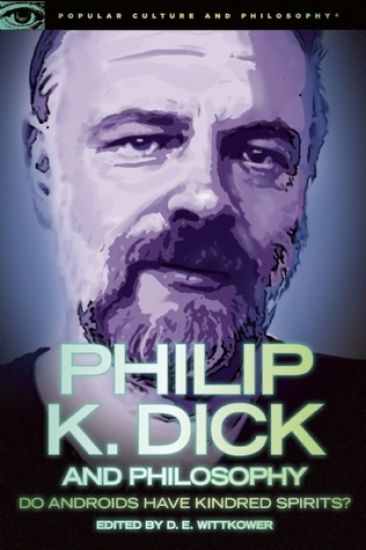
Philip K. Dick and Philosophy

Philip K. Dick and Philosophy

Open Court Publishing Co ,U.S.
2011
pokkari
Science fiction writer Philip K. Dick (1928--1982) is the giant imagination behind so much recent popular culture--both movies directly based on his writings, such as Blade Runner (based on the novel Do Androids Dream of Electric Sheep?), Total Recall, Minority Report, and The Adjustment Bureau plus cult favorites such as A Scanner Darkly, Imposter, Next, Screamers, and Paycheck and works revealing his powerful influence, such as The Matrix and Inception. With the much anticipated forthcoming publication in 2011 of volume 1 of Exegesis, his journal of spiritual visions and paranoic investigations, Dick is fast becoming a major influence in the world of popular spirituality and occult thinking. In Philip K. Dick and Philosophy: Who Adjusts the Adjustment Bureau?, twenty Dick fans and professional thinkers confront the fascinating and frightening ideas raised by Dick's mind-blowing fantasies. Is there an alien world behind the everyday reality we experience? If androids can pass as human, should they be given the same consideration as humans? Do psychotics have insights into a mystical reality? Would knowledge of the future free us or enslave us? This volume will also include Dick's short story "Adjustment Team," on which The Adjustment Bureau is based. Philip K. Dick and Philosophy explores the ideas of Philip K. Dick in the same way that he did: with an earnest desire to understand the truth of the world, but without falsely equating earnestness with a dry seriousness. Dick's work was replete with whimsical and absurdist presentations of the greatest challenges to reason and to humanity--paradox, futility, paranoia, and failure--and even at his darkest times he was able to keep some perspective and humor, as for example in choosing to name himself 'Horselover Fat' in VALIS at the same time as he relates his personal religious epiphanies, crises, and delusions. With the same earnest whimsy, we approach Philip K. Dick as a philosopher like ourselves--one who wrote almost entirely in thought-experiments and semi-fictional world-building, but who engaged with many of the greatest questions of philosophy throughout the Euro-American tradition. Philip K. Dick and Philosophy has much to offer for both serious fans who have read many of his novels and stories, and for those who may have just recently learned his name, and realized that his work has been the inspiration for several well-known and thought-provoking films. Most chapters start with one or more of the movies based on Dick's writing. From here, the authors delve deeper into the issues by bringing in philosophers' perspectives and by bringing in Dick's written work. The book invites the reader with a casual familiarity with Dick to get to know his work, and invites the reader with little familiarity with philosophy to learn more. At the same time, we have new perspectives and challenging connections and interpretations for even the most hard-core Dick fans, even though we never speak to "insiders" only. To maximize public interest, the book prominently addresses the most widely-known films, as well as those with the most significant fan followings: Blade Runner, Total Recall, Minority Report, A Scanner Darkly, and The Adjustment Bureau. Along with these "big five" films, a few chapters address his last novels, especially VALIS, which have a significant cult following of their own. There are also chapters which address short stories and novels which are currently planned for adaptation: Radio Free Albemuth (film completed, awaiting distribution), The Man in the High Castle (in development by Ridley Scott for BBC mini-series), and "King of the Elves" (Disney, planned for release in 2012).
Philip Roth Considered

Philip Roth Considered

Steven Milowitz

CRC Press Inc
2000
sidottu
This book comprehensively surveys Philip Roth's published and unpublished works, focusing on the thematic unity which binds them together: the memory of the Holocaust and the altered universe born of that memory. The Holocaust is understood as the orienting event for Roth's fiction and non-fiction, the force that surrounds the characters and the narratives at all times. Roth's obsession with questions of the Holocaust, questions of responsibility, meaning, and powerlessness, explains his recurring discussion of entrapment, dehumanization, nihilism, guilt, and coercion.The concentrationary universe of the title is defined, in this work, as not only the universe of camps, but also the universe that exists after the devastation. Moral and philosophical norms are revoked in this new world. Roth's early works are presented on a desolate landscape. The introduction explicates this landscape, specifically by invoking an early play of Roth's, a play which is set in a Jewish ghetto during the Holocaust. This unpublished work introduces the historical period that shapes the visions of Roth's future protagonists.The next three chapters study Roth's relentless excavation of the dilemmas of fathers, mothers, authority figures, and the inner discord of need and purpose. These seemingly quotidian problems are exacerbated and intensified by the Holocaust's shadowy presence. No relationship, no effort at fulfillment, no action is untempered by history in Roth's varied fictions.Chapters four and five look directly at Roth's allusions to the Holocaust. They explore, through each of Roth's works, how the Holocaust-thematic -the play of ideology and nihilism-and the Holocaust-pattern -the idea of the past encroaching upon the present -work through Roth's career, informing his readers not only of his fascination with the Holocaust, but of his particularly human way of dealing with it.The last chapter briefly summarizes the findings of the previous chapter and connects Roth's specific concentrationary universe to the larger world. The linguistic clues of Roth's novels are revealed and investigated, pointing to Roth's celebration of ambiguity and individuality as parts of an imperfect formula for writing and living in the debased aftermath of the Holocaust.
Philip Henry Gosse

Philip Henry Gosse

Gary Mullen; Taylor Littleton

The University of Alabama Press
2010
sidottu
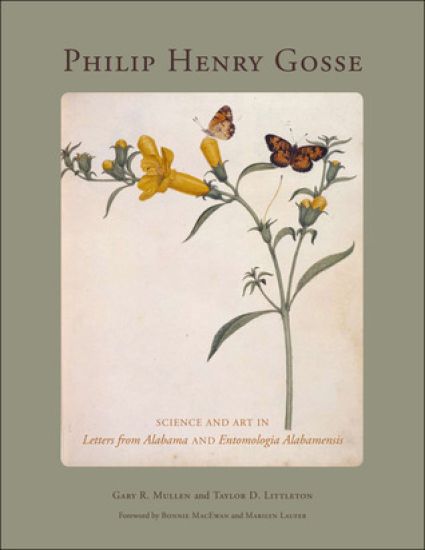
Philip Henry Gosse’s detailed watercolors of Alabama’s native insects and plants represent a landmark in the annals of American natural history. Offered for the first time are the complete full-color illustrations from Gosse’s Entomologia Alabamensis, along with a biographical essay placing Gosse’s work in the context of his long and fruitful life. Born in 1810 in Worcester, England, the young Philip Henry Gosse developed a passion for the natural world. Having learned the basics of miniature portraiture from his father, Gosse quickly took for his artistic subjects the flourishing marine life he discovered along the English coast. In May, 1838, Gosse took a teaching job in Dallas County, Alabama. For the next eight months he collected the insect specimens that he would preserve in the beautifully detailed watercolors of Entomologia Alabamensis. In addition, he composed a highly personalized chronology of his life in a frontier culture, published eventually as Letters from Alabama. Following his return to England, Gosse went on to publish more than 40 books, producing some of the 19th century’s finest illustrations of insects and marine organisms. Today, he is remembered as a popular writer of science for the general public and as a passionate artist whose work in Alabama and elsewhere captured and revealed the beauty and vitality of the natural world. Copublication with the Jule Collins Smith Museum of Fine Art and Auburn University Libraries.
Philip Pendleton Barbour in Jacksonian America

Philip Pendleton Barbour in Jacksonian America

William S. Belko

The University of Alabama Press
2016
sidottu
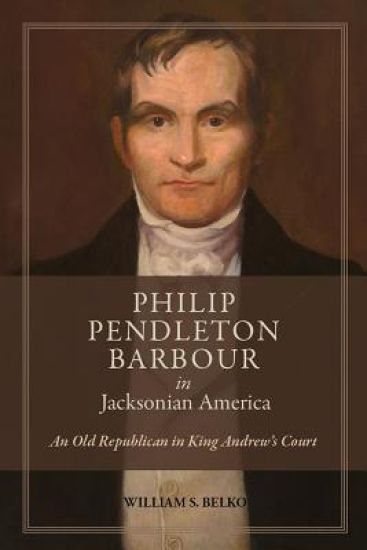
William S. Belko’s Phillip Pendleton Barbour in Jacksonian America provides the first comprehensive biography of a pivotal yet nearly forgotten statesman who made numerous key contributions to a transformative period of early American history.Barbour, a Virginia lawyer, participated in America’s transition from a mostly republican government to a truer majority democracy, notably while serving as the twelfth Speaker of the United States House of Representatives and later as an associate justice of the United States Supreme Court. After being elected to the US Congress during the War of 1812, Barbour also emerged as one of the foremost champions of states’ rights, consistently and energetically fighting against expansions of federal powers. He, along with other Jeffersonian Old Republicans, opposed federal plans for a national tariff and internal improvements. Later, Barbour became one of the first Jeffersonian politicians to join the Jacksonian Democrats in Jackson’s war against a national bank.Barbour continued to make crucial strides in support of states’ rights after taking his seat on the United States Supreme Court in 1836 under Chief Justice Roger Taney. He contributed to the Charles River Bridge v. Warren Bridge and Briscoe v. Bank of Kentucky decisions, which bolstered states’ rights. He also delivered the opinion of the court in New York v. Miln, which provided the basis for the State Police Powers Doctrine.Expertly interweaving biography, history, political science, and jurisprudence, Phillip Pendleton Barbour in Jacksonian America remembers the man whose personal life and career were emblematic of the decades in which the United States moved from the Age of Jefferson to the Age of Jackson, contributing to developments that continue to animate American politics today.
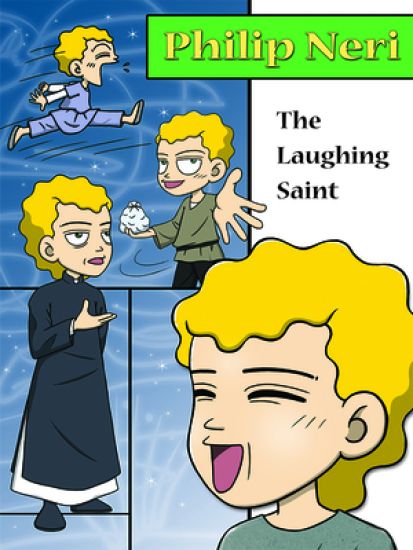
Philip Neri, the Laughing Saint

Philip Neri, the Laughing Saint

Hyeon-Ju Lee

Pauline Books Media
2015
nidottu
Saint Philip Neri's story is told in a full-color, graphic novel biography for children ages 9-12. When he goes to live with his uncle to learn business skills, he experiences a religious conversion. Enthusiastic Philip then moves to Rome to study under the Augustinian rule, dedicating his time and energy to helping the poor. This loveable saint, patron of joy and laughter, comes alive for young readers as he inspires them to live out Christ's call in their own lives.
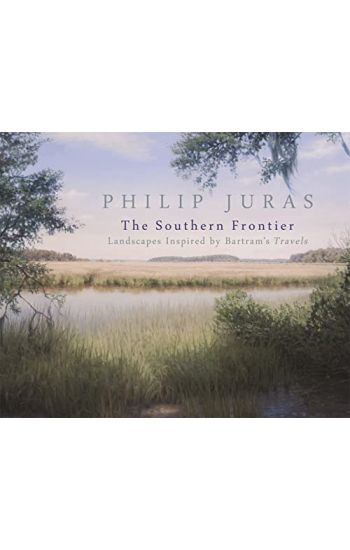
Philip Juras: The Southern Frontier

Philip Juras: The Southern Frontier

Philip Juras

University of Georgia Press
2015
pokkari
Presenting stunning reproductions of oil paintings by landscape artist Philip Juras, this exhibition catalogue offers a glimpse of the presettlement southern wilderness as late eighteenth-century naturalist William Bartram would have experienced it during his famed travels through the region. Juras’s work combines direct observation with historical, scientific, and natural history research to depict, and in some cases reimagine, landscapes as they appeared in the 1770s. Juras spent years researching Bartram and revisiting important sites the naturalist wrote about in his celebrated Travels. Juras’s paintings recreate the lost southern frontier for contemporary viewers in much the same way that nineteenth century American landscape painters like Albert Bierstadt and Thomas Moran brought the western frontier to the consciousness of the rapidly industrializing East.Juras’s work explores many of the important and imperiled ecosystems that remain in the South today. These little-known, remnant natural communities, depicted in well-researched and meticulous paintings, are further illuminated by essays placing them in the context of Bartram’s legacy and the American landscape movement. The catalogue features more than sixty reproductions of Juras’s paintings. Presented with essays by the artist as well as Dorinda Dallmeyer, director of the Environmental Ethics Certificate Program at the University of Georgia; Holly Koons McCullough, director of Collections and Exhibitions at the Telfair Museum of Art; and Janisse Ray, lauded poet and environmental advocate, the catalogue provides readers with a rare glimpse of the Southern frontier before its essence was irrevocably altered by European settlement.
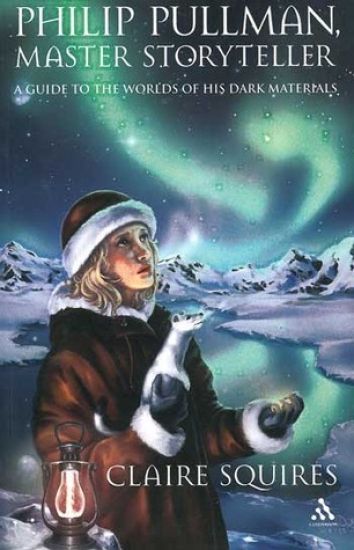
Philip Pullman, Master Storyteller

Philip Pullman, Master Storyteller

Claire Squires

Continuum International Publishing Group Ltd.
2006
nidottu
Philip Pullman is one of the most commercially and critically successful British authors of the past decade. With a writing career extending back to the early 1970s, Pullman's great achievement has been in the publication of the "His Dark Materials" trilogy: "Northern Lights" (1995; US title "The Golden Compass"), "The Subtle Knife" (1997) and "The Amber Spyglass" (2000). With these novels, which have appealed equally to children and to adults, Pullman has carved a space for himself as a writer of moral seriousness, imaginative depth and storytelling virtuosity. Claire Squires' book is the first comprehensive and authoritative study of this great writer. The focus is on Pullman's central achievement with "His Dark Materials", but it also considers his entire oeuvre. Importantly, the book informs readers about the contexts, sources and influences behind the trilogy, and examines the controversies and debates that have surrounded the trilogy and its creator, since its publication. 'Claire Squires investigates and clarifies many perplexing ambiguities in Pullman's trilogies. The wealth of information makes this an important source book for Pullman's readers. Especially valuable is her incisive selection of comments from Pullman himself, drawn from interviews and other informal writings, which open exciting dimensions for interpretation of the trilogy. Encyclopedic in its range, the book stretches from factual detail to an overview of theoretical analysis, includes significant biographical and bibliographical materials, and even explores adaptations of the trilogy into other media. Highly readable, and impressive in its extensive scope and detail, this book is a "must have" for all Pullman enthusiasts.' - Dr. Carole Scott, editor of "His Dark Materials Illuminated: Critical Essays on Philip Pullman's Trilogy". 'It has been 10 years since "The Golden Compass" (Knopf, 1996) first appeared in the United States. Embraced by critics and readers alike, the book grew into a trilogy known as "His Dark Materials," which placed Pullman in the forefront of a rising tide of hefty fantasy cycles, just ahead of the "Harry Potter" series. Squires covers every aspect of the Pullman phenomenon, examining the success of the series from many angles -characterization, theme, setting, and storytelling skill - as well as adaptations to stage and screen. Of particular interest is her chapter on "Intertextuality," which discusses literary influences on Pullman's writing, both his acknowledged references to Milton and Blake and the connections critics have noted to writers of folktale, fantasy, and science fiction. Squires does not shy away from the controversy that Pullman's themes have stirred up-his apparent diatribe against religion in the form of "the Authority" and the Magisterium, and the ending of the trilogy in which Lyra and Will must part ways forever - and she refers to many direct quotes from Pullman himself as well as commentators on the series. A chapter on the author's other writing (which includes historical fiction, fantasy, adventure, and contemporary fiction as well as adult novels) and an extensive bibliography of books and articles about his work round out this accessible study.' - "School Library Journal" Connie C. Rockman, Stratford Library Association, CT Copyright [copyright] Reed Business Information, a division of Reed Elsevier Inc. All rights reserved.
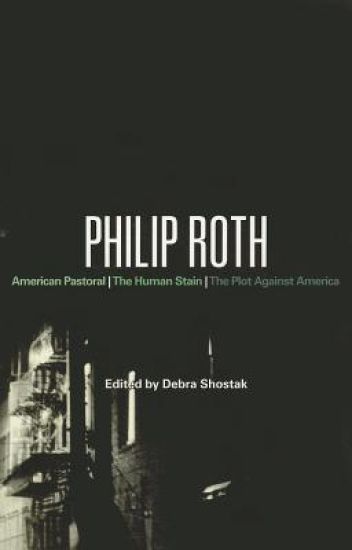
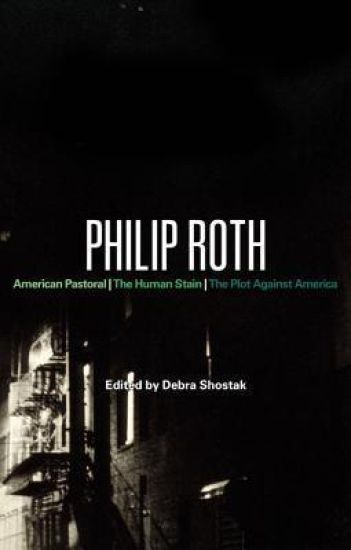
Philip Roth

Philip Roth

Continuum Publishing Corporation
2011
nidottu
This title is a collection of original essays on Philip Roth offering contemporary critical readings and assessments of recent texts. Philip Roth has without doubt been one of the most important writers of fiction in the United States during the latter part of the twentieth century. Philip Roth collects new essays by noted Roth scholars on three essential novels appearing in recent years, "American Pastoral" (1997), "The Human Stain" (2000), and "The Plot Against America' (2004). The volume illuminates Roth's multilayered perceptions of twentieth-century America as a place, a culture, and an idea that shapes its inhabitants in profound ways. Focusing on such topics as ethnicity, gender, race, the family, trauma, history, and narrative form, the essays collected here offer fresh readings of Roth's penetrating explorations of American selfhood. The contributors probe this American Jewish writer's insights into the paradoxes of freedom and self-determination, the politics of identity, especially as defined by racial or ethnic affiliation, and the possibilities available for self-definition and transformation within the context of American history and culture. This series offers up-to-date guides to the recent work of major contemporary North American authors. Written by leading scholars in the field, each book presents a range of original interpretations of three key texts published since 1990, showing how the same novel may be interpreted in a number of different ways. These informative, accessible volumes will appeal to advanced undergraduate and postgraduate students, facilitating discussion and supporting close analysis of the most important contemporary American and Canadian fiction.
Philip Roth

Philip Roth

Continuum Publishing Corporation
2011
sidottu
This is a collection of original essays on Philip Roth offering contemporary critical readings and assessments of recent texts. Philip Roth has without doubt been one of the most important writers of fiction in the United States during the latter part of the twentieth century. "Philip Roth" collects new essays by noted Roth scholars on three essential novels appearing in recent years, "American Pastoral" (1997), "The Human Stain" (2000), and "The Plot Against America" (2004). The volume illuminates Roth's multilayered perceptions of twentieth-century America as a place, a culture, and an idea that shapes its inhabitants in profound ways. Focusing on such topics as ethnicity, gender, race, the family, trauma, history, and narrative form, the essays collected here offer fresh readings of Roth's penetrating explorations of American selfhood. The contributors probe this American Jewish writer's insights into the paradoxes of freedom and self-determination, the politics of identity, especially as defined by racial or ethnic affiliation, and the possibilities available for self-definition and transformation within the context of American history and culture. This series offers up-to-date guides to the recent work of major contemporary North American authors. Written by leading scholars in the field, each book presents a range of original interpretations of three key texts published since 1990, showing how the same novel may be interpreted in a number of different ways. These informative, accessible volumes will appeal to advanced undergraduate and postgraduate students, facilitating discussion and supporting close analysis of the most important contemporary American and Canadian fiction.
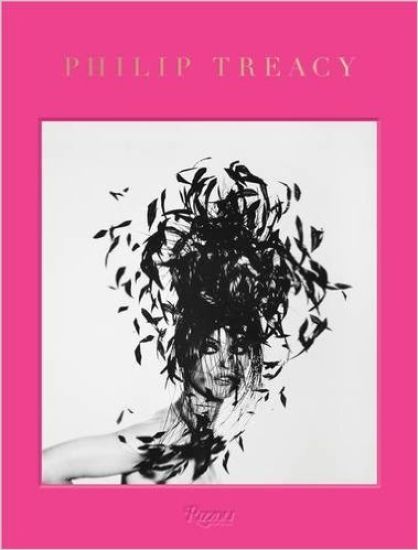
Philip Treacy

Philip Treacy

Treacy Philip; Hume Marion

Rizzoli International Publications
2015
sidottu
The work of one of the most influential and innovative hat designers of this century. ?Philip Treacy’s career over the last two decades has been prolific and high-profile. A visual delight, this book shares Treacy’s favorite designs in 250 striking photographs, curated by Treacy himself, and showcases his collaborations and personal relationships. Treacy has said, “Every hat I have ever made has begun in my mind as a photograph. I can see it on the model, at the right angle, before I even begin.” Indeed, his hats have been photographed by the most iconic image makers of our time, including Patrick Demarchelier, Richard Avedon, Steven Meisel, Mario Testino, Bruce Weber, and Irving Penn. And his hats have been modeled on equally famous heads, ranging from Grace Jones and Lady Gaga to the Duchesses of Cornwall and Devonshire. Since his early friendships with Isabella Blow and Alexander McQueen, Treacy’s imaginative designs have been a synthesis of art and fashion, with materials ranging from silk and lace to Plexiglas and leather, trimmed with feathers or Swarovski crystals. Combining luxury and sophistication, his work has helped shape modern fashion. This first, highly personal book is a glamorous tour through Treacy’s world, and documents how a hat can evoke the magic of life and speak to the transformative power of fashion.
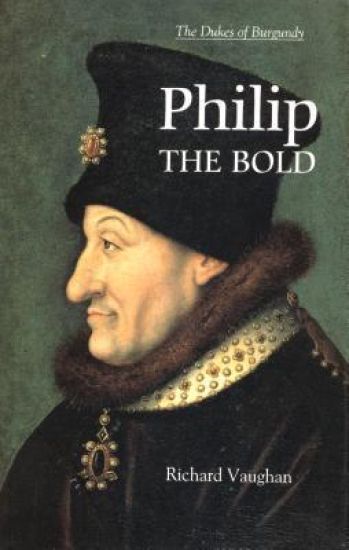
Philip the Bold

Philip the Bold

Richard Vaughan; Malcolm Vale

The Boydell Press
2002
pokkari
A biography of Philip and a study of the emergence of the Burgundian state under his aegis in the years 1384-1404, paying particular attention to his crucial aquisition of Flanders. There is comprehensive analysis of how Philip'sgovernment worked. Boydell & Brewer does a major service by the simultaneous reissue of Richard Vaughan's studies of the Valois Dukes of Burgundy. Four distinguished scholars add extra value by contributing an introductory chapter for each ducal reign, surveying its historiography since the original publication... The story, which Vaughan tells with verve, has its full share of dramatic turns[:] this is much more, though, than simply a narrative history; Vaughan's meticulousexplorations of the administrative and financial structures that underpinned ducal authority, and of the court and its culture, are integral to his exposition [...] His achievement remains monumental. There are no comparable, modern, in-depth studies of these four larger-than-life players on the late medieval European stage, in English or in any other language. They are, besides, eminently readable. Maurice Keen, TIMES LITERARY SUPPLEMENT Whenin 1363 the duke of Burgundy died without an heir, the duchy returned to the French crown. John II's decision to give it to his fourth son, Philip, had some logic behind it, given the independence of the inhabitants; but in so doing he created the basis for a power which was to threaten France's own existence in the following century, and which was to become one of the most influential and glittering courts of Europe. Much of this was due to the characterof Philip the Bold; by marrying the daughter of the count of Flanders, he inherited the wealth of the great Flemish towns in 1384, and the union of the two great fiefdoms to the north and east of France under one ruler meant thatthe resources of the duke of Burgundy were as great as those of the kingdom itself. From 1392 onwards, he was at loggerheads with the regent of France, his brother Louis, duke of Orleans, and this schism was to prove fatal to thekingdom, weakening the administration and leading to the French defeat by Henry V in 1415. Richard Vaughan describes the process by which Philip fashioned this new power, in particular his administrative techniques; but he also gives due weight to the splendours of the new court, in the sphere of the arts, and records the history of its one disastrous failure, the crusade of Nicopolis in 1396. He also offers a portrait of Philip himself, energetic, ambitious and shrewd, the driving force behind the new duchy and its rapid rise to an influential place among the courts of Europe.
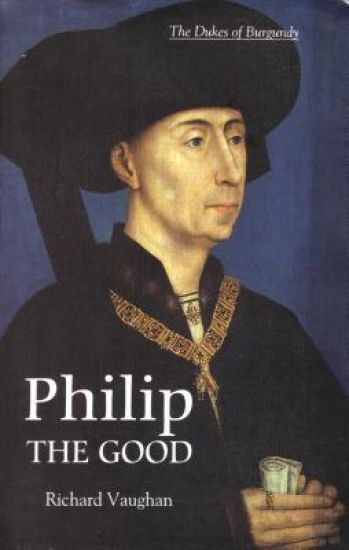
Philip the Good

Philip the Good

Richard Vaughan; Graeme Small

The Boydell Press
2004
pokkari
Philip, who ruled from 1419 to 1467, was one of the most powerful and influential rulers of the fifteenth century. Forced into an alliance with the English, he soon found that he held the balance of power between England and France - reflected in the final crucial phase of the Hundred Years War. Under Philip the Good, grandson of the founder of the duchy's power, Burgundy reached its apogee. Professor Vaughan portrays not only Philip the Good himself, perhaps the most attractive personality among the four great dukes, butthe workings of the court and of one of the most efficent - if not necessarily the most popular - administrations in fifteenth-century Europe. The complex diplomatic history of Philip the Good's long ducal reign (1419-1467) occupies much of the book, in particular Burgundy's relations with England and France. The central theme is Philip the Good's policy of territorial and personal aggrandisement, which culminated in his negotiations with the Holy Roman Emperor for a crown. And due attention is given to the great flowering of artistic life in Burgundy which made Philip's court at Dijon an important cultural centre in the period immediately preceding the Renaissance. All this is based on the close study of the considerable surviving archives of Philip's civil service, and on the chronicles and letters of the period. Philip the Good provides a definitive study of the life and times of the rulerwhose position and achievements made him the greatest magnate in Europe during what has been called "the Burgundian century".
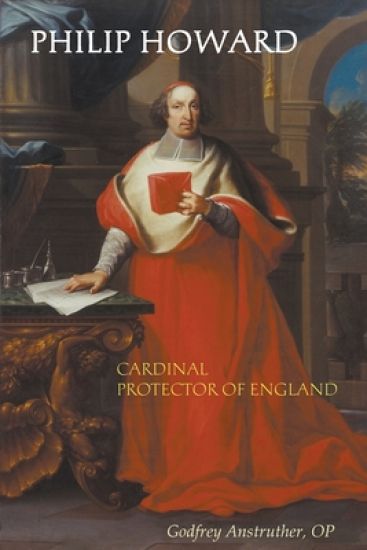
Philip Howard

Philip Howard

Geoffrey Anstruther

Gracewing
2020
nidottu
On 3 January 1666, Father Philip Howard, a Catholic priest trained on the Continent, was appointed Grand Almoner to Catherine of Braganza, Charles II's Catholic queen. Later that same year the Great Fire of London, maliciously attributed to Catholics, reduced much of the City to a smouldering ruin and papists were barred from the capital. The years that followed were not without difficulties for English Catholics, but by the time of the great crisis which ended in the deposition and exile of the Catholic James II the genial former Grand Almoner to James's sister-in-law had long left England, having been called to Rome and created a cardinal. Subsequently, in 1680, the pope appointed him Cardinal Protector of England, the first Englishman to hold this influential post. Born in 1629 into one of the pre-eminent families of England, the future Cardinal Howard was the great-grandson of the Catholic martyr, St Philip Howard, Earl of Arundel. Brought up as an Anglican, he left England in 1642 for the Continent where he came under Catholic influences, and at the age of 15, and despite the fierce opposition of his family, the young Philip determined to join the Dominican Order, which he did, going on to set in motion the revival of its English province. The restoration of the Stuart monarchy in 1660 had rekindled the hopes of English Catholics, and Howard returned to England to take up a career at court that was to flourish until 1675 when he was he raised to the Sacred College, the first Englishman to be appointed a cardinal since the death of William Allen in 1594. Although based in Rome, as Cardinal Protector of England, Howard was seen by the Holy See as the leading authority on all aspects of the life of the Catholic Church in England, a church ravaged by renewed persecution resulting from the explosive fabrications of the virtuoso liar Titus Oates and his deadly fictitious conspiracy, the 'Popish Plot'.
Philip K Dick

Philip K Dick

Christopher Palmer

Liverpool University Press
2003
nidottu
Once the sole possession of fans and buffs, the SF author Philip K Dick is now finding a much wider audience, as the success of the films Blade Runner and Minority Report shows. The kind of world he predicted in his funny and frightening novels and stories is coming closer to most of us: shifting realities, unstable relations, uncertain moralities. Philip K Dick: Exhilaration and Terror of the Postmodern examines a wide range of Dick’s work, including his short stories and posthumously published realist novels. Christopher Palmer analyses the puzzling and dazzling effects of Dick’s fiction, and argues that at its heart is a clash between exhilarating possibilities of transformation, and a frightening lack of ethical certainties. Dick’s work is seen as the inscription of his own historical predicament, the clash between humanism and postmodernism being played out in the complex forms of the fiction. The problem is never resolved, but Dick’s ways of imagining it become steadily more ingenious and challenging.