
Kirjahaku
Etsi kirjoja tekijän nimen, kirjan nimen tai ISBN:n perusteella.
1000 tulosta hakusanalla Plutarchus
Essays On The Study And Use Of Poetry By Plutarch And Basil The Great
Plutarch; Saint Bishop of Caesarea Basil; Frederick Morgan (TRN) Padelford
Kessinger Pub
2008
pokkari
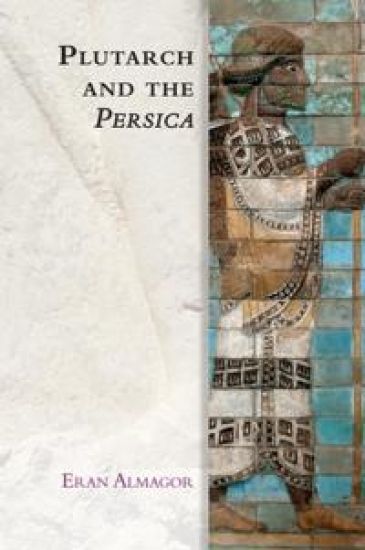
Bridges the gap between Plutarch Studies and Achaemenid Studies through analysis of key textsThis book addresses two historical mysteries. The first is the content and character of the fourth century BCE Greek works on the Persian Achaemenid Empire treatises called the Persica. The second is the method of work of the second century CE biographer Plutarch of Chaeronea (CE 45-120) who used these works to compose his biographies, in particular the Life of the Persian king Artaxerxes.By dealing with both issues simultaneously, Almagor proposes a new way of approaching the two entangled problems, and offers a better understanding of both the portrayal of ancient Persia in the lost Persica works and the manner of their reception and adaptation nearly five hundred years later. Intended for both scholars and students of the Achaemenid Empire and Greek imperial literature, this book bridges the two worlds and two important branches of scholarship.

Plutarch's "Lives", 2 Volume Set
Southern Illinois Univ Pr
1963
sidottu
Plutarch: The Life of Cicero
Aris Phillips Ltd
1989
nidottu
Plutarch has always been one of the most popular Classical authors. Diversity and importance of theme, flexibility and richness of style, descriptive and narrative flair, intellectual breadth and penetration, moral seriousness allied to warmth and humanity – these are some of the many sources of his appeal. His Life of Cicero is one of his greatest works. It is a valuable historical document, largely based on contemporary sources, and it preserves important information about events in 63 and 43 BC; it also gives a perceptive analysis of Cicero’s character and psychology and achieves tragic depth and grandeur. This edition is addressed to a wide audience, from first-time readers to specialists. A full introduction explores the many different facets of Plutarch’s art. The translation maintains the word patterns of the original, thus bringing the reader without Greek closer than ever before to the essential qualities of Classical literature. The commentary combines historical documentation with literary and philosophical discussion. Greek text with facing-page English translation, introduction and commentary.
Plutarch's Lives have always attracted a large number of admirers, particularly because of his pragmatic concern with ethics and politics. But Plutarch intended his Lives to be read in pairs, an intention that is often ignored by those who treat these works as merely historical sources. This new text and translation provides the first commentary in English on the pair Aristeides and Cato. In addition to supplying commentary on historical, stylistic and textual matters, Professor Sansone also explores Plutarch's purpose in comparing the fifth-century Greek statesman, Aristeides, with the second-century Roman, Cato the Elder. Greek text with facing translation, notes and introduction.
Plutarch's Lives have always attracted a large number of admirers, particularly because of his pragmatic concern with ethics and politics. But Plutarch intended his Lives to be read in pairs, an intention that is often ignored by those who treat these works as merely historical sources. This new text and translation provides the first commentary in English on the pair Aristeides and Cato. In addition to supplying commentary on historical, stylistic and textual matters, Professor Sansone also explores Plutarch's purpose in comparing the fifth-century Greek statesman, Aristeides, with the second-century Roman, Cato the Elder. Greek text with facing translation, notes and introduction.
The Malice of Herodotus can perhaps best be described as the world's earliest known book review. But it is much more than that, for in the course of 'correcting' with considerable vituperation what he saw as Herodotus' anti-Greek bias, Plutarch tells us much about his own attitude to writing history. So that together with Lucian's How to Write History (see Lucian A Selection in this series) it forms a basic text for the study of Greek historiography. It is also perhaps the most revealing example of Plutarch's prose style with its rhetorical variety and energy and odd mixture of good and bad argument. But in citing lost works, Plutarch has preserved valuable fragments which don't exist elsewhere and need to be assessed by all students of the Persian Wars. Greek text with translion, introduction and commentary.
The commentary in this edition of one of Plutarchs Lives concentrates on the historical aspects of the work and includes much detailed comparison of Plutarch's narrative with those of other sources such as Herodotos, Thucydides, Diodorus and Cornelius Nepos. Greek text with facing translation.
The commentary in this edition of one of Plutarchs Lives concentrates on the historical aspects of the work and includes much detailed comparison of Plutarch's narrative with those of other sources such as Herodotos, Thucydides, Diodorus and Cornelius Nepos. Greek text with facing translation.

This companion to the Penguin translation of Plutarch's Life of Pericles is divided into three parts. The introduction covers Pericles' life, writings and method of work; the biographical genre; and the portrayal of Pericles by earlier writers. There follows a commentary on the translation, and finally there is a series of useful endnotes on such topics as the treatment of Pericles by Attic comic poets; the historicity of the Peace of Callias and the Congress Decree; and the fortunes of members of Pericles' family.
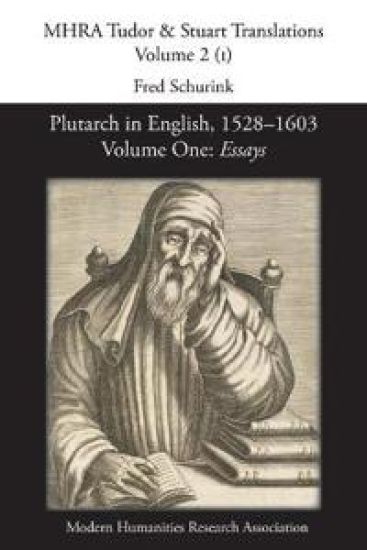
Plutarch in English, 1528-1603. Volume One
Modern Humanities Research Association
2020
pokkari
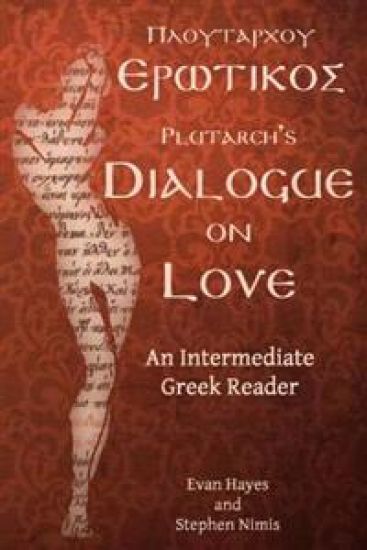
Plutarch's Dialogue on Love: An Intermediate Greek Reader: Greek Text with Running Vocabulary and Commentary
Edgar Evan Hayes; Stephen a. Nimis
Faenum Publishing, Ltd.
2011
nidottu
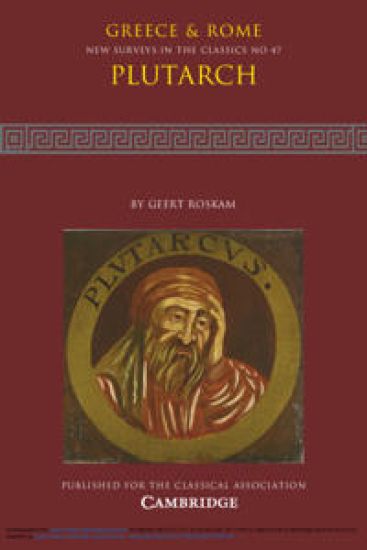
Plutarch of Chaeronea is one of the most influential and fascinating authors of antiquity. His Parallel Lives and Moralia are storehouses of challenging questions, valuable insights and interesting observations. Moreover, they contain a wealth of quotations from and references to earlier writers and traditions, and thus provide one of the richest gateways to the ancient world. This book introduces the reader to Plutarch's life and to the different facets of his variegated thinking and writing, such as his tremendous erudition, his Platonism and (moral) philosophy, his interpretation of history and his view of God. Above all, Plutarch stands out as a particularly clever and subtle thinker, driven by a spirit of painstaking enquiry (zetesis) that shows authentic and impressive intellectual honesty and sincere love of the truth. In this respect, as in many others, he remains an inspiring model even for us today.
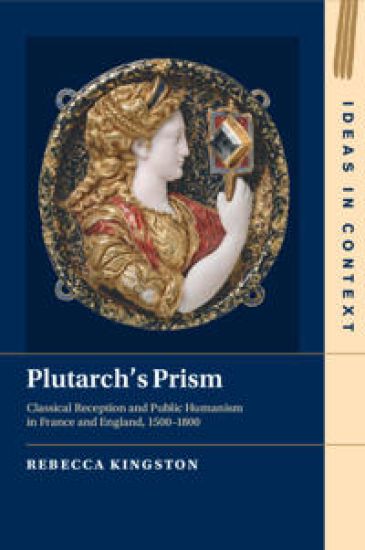
Throughout the early modern period, political theorists in France and England drew on the works of Plutarch to offer advice to kings and princes. Elizabeth I herself translated Plutarch in her later years, while Jacques Amyot's famous translations of Plutarch's The Parallel Lives led to the wide distribution of his work and served as a key resource for Shakespeare in the writing of his Roman plays, through Sir Thomas North's English translations. Rebecca Kingston's new study explores how Plutarch was translated into French and English during the Renaissance and how his works were invoked in political argument from the early modern period into the 18th century, contributing to a tradition she calls 'public humanism'. This book then traces the shifting uses of Plutarch in the Enlightenment, leading to the decline of this tradition of 'public humanism'. Throughout, the importance of Plutarch's work is highlighted as a key cultural reference and for its insight into important aspects of public service.

Throughout the early modern period, political theorists in France and England drew on the works of Plutarch to offer advice to kings and princes. Elizabeth I herself translated Plutarch in her later years, while Jacques Amyot's famous translations of Plutarch's The Parallel Lives led to the wide distribution of his work and served as a key resource for Shakespeare in the writing of his Roman plays, through Sir Thomas North's English translations. Rebecca Kingston's new study explores how Plutarch was translated into French and English during the Renaissance and how his works were invoked in political argument from the early modern period into the 18th century, contributing to a tradition she calls 'public humanism'. This book then traces the shifting uses of Plutarch in the Enlightenment, leading to the decline of this tradition of 'public humanism'. Throughout, the importance of Plutarch's work is highlighted as a key cultural reference and for its insight into important aspects of public service.

Delve into the heart of antiquity with "Plutarch's Lives," Volume 1 of 4. This meticulously prepared edition presents Plutarch's timeless biographical sketches of towering figures from ancient Greece and Rome. Translated from the original Greek, this volume offers a window into the lives and characters of influential leaders, statesmen, and warriors who shaped classical civilization. Explore the parallels between Greek and Roman history through Plutarch's insightful narratives. More than mere biographies, these "Lives" offer moral lessons and profound reflections on human nature, leadership, and the rise and fall of empires. A cornerstone of classical literature, this volume provides a rich tapestry of ancient history, perfect for anyone interested in ancient Rome, ancient Greece, and the individuals who defined these eras. Enhanced with notes and a biography of Plutarch himself, this volume offers valuable context and insight into one of history's most celebrated biographers.This work has been selected by scholars as being culturally important, and is part of the knowledge base of civilization as we know it.This work is in the public domain in the United States of America, and possibly other nations. Within the United States, you may freely copy and distribute this work, as no entity (individual or corporate) has a copyright on the body of the work.Scholars believe, and we concur, that this work is important enough to be preserved, reproduced, and made generally available to the public. We appreciate your support of the preservation process, and thank you for being an important part of keeping this knowledge alive and relevant.