
Kirjahaku
Etsi kirjoja tekijän nimen, kirjan nimen tai ISBN:n perusteella.
1000 tulosta hakusanalla Raymond Wacks
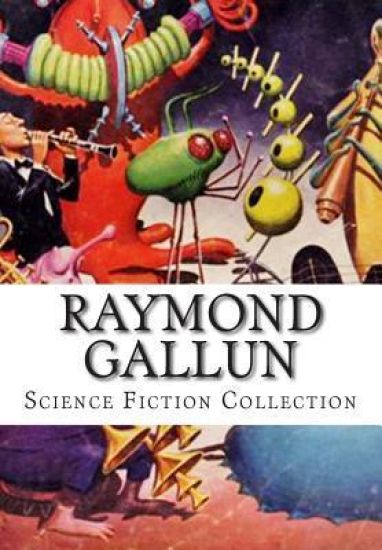
Raymond Gallun, Science Fiction Collection
Raymond Gallun
Createspace Independent Publishing Platform
2014
nidottu

Raymond Devos: The Spirit and the Letter, Chirographic and semiotic studies
Z. W. Wolkowski
Createspace Independent Publishing Platform
2015
nidottu


Raymond's Uncut Diamond: Children's Picture Book On Self Esteem and Self Confidence
A. M. Marcus
Createspace Independent Publishing Platform
2014
nidottu

Raymond or Life and Death
Sir Oliver J. Lodge
Createspace Independent Publishing Platform
2016
nidottu
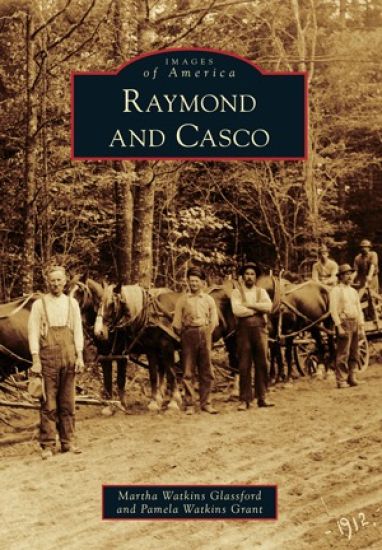
Raymond and Casco
Martha Watkins Glassford; Pamela Watkins Grant
Arcadia Publishing Library Editions
2011
sidottu

Raymond Red Bird Visits Historic Places
Jane Howard Turner; Thelma L. Taylor
Createspace Independent Publishing Platform
2016
nidottu
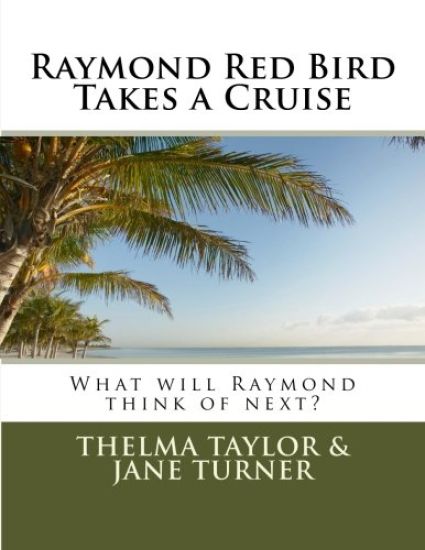
Raymond Red Bird Takes a Cruise
Jane Howard Turner; Thelma L. Taylor
Createspace Independent Publishing Platform
2016
nidottu
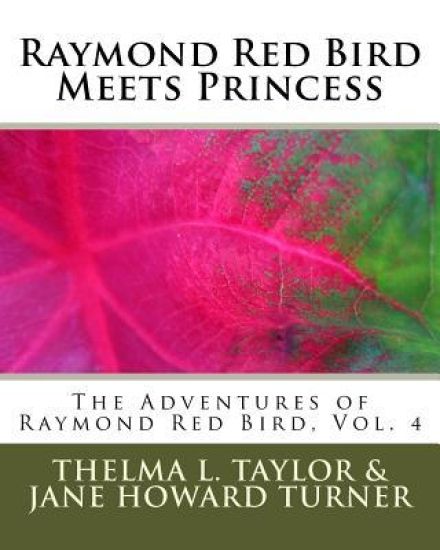
Raymond Red Bird Meets Princess
Jane M. Howardturner; Thelma L. Taylor
Createspace Independent Publishing Platform
2016
nidottu

Raymond and Princess Adopt A Son: The Adventures of Raymond Red Bird
Jane M. Howard Turner; Thelma L. Taylor
Createspace Independent Publishing Platform
2016
nidottu
The Adventures of Raymond Red Bird series continues with book number five. The title is, "Raymond and Princess Adopt A Son." Raymond and Princess have children of their own but a young red bird gets caught out in a terrific storm and his parents are nowhere to be found. Read book five and see how this story is their story.
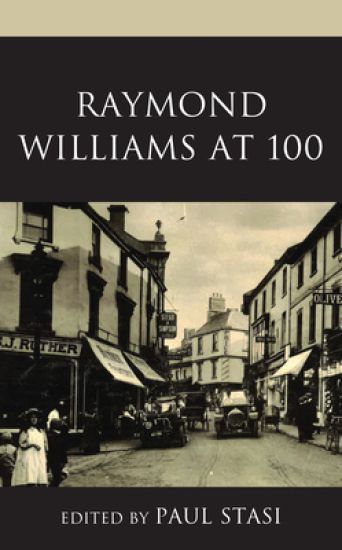
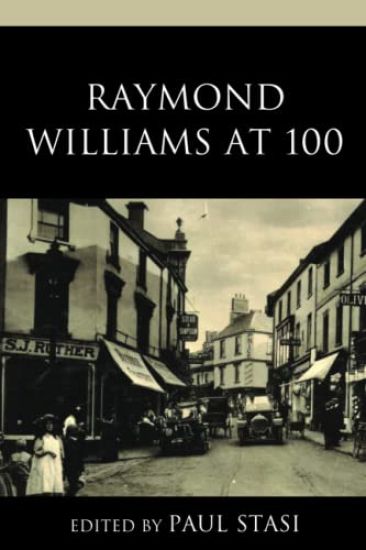
Raymond Williams at 100
Rowman Littlefield
2021
sidottu
Raymond Williams as “by common consent” one of the “two most commanding intellectual figures in the New Left that emerged in Britain at the turn of the sixties,” the other being Edward Thompson. Williams published in 1961 a text entitled “The Future of Marxism.” In that essay, Williams has some remarkable things to say about imperialism, the successes of actually existing socialism, balanced against its failures, and the continued relevance of socialism as the horizon of human liberation. He also makes a characteristic methodological point: “the relation between systems of thought and actual history is both complex and surprising.” The future of Marxism, that is to say, will not depend on dogma, but will instead rest on historical developments, on how well are able to actualize Marx’s ideals in our own unique conjuncture. This volume takes up the challenge of reading and extending Williams’s thought in light of the actual history that has occurred since his passing but with the same ideal of socialism as its guiding horizon. If there is one thread visible throughout all of Williams’s work, it is the felt presence of a living, thinking individual, of a person continually testing ideas in experience in order to see whether they fit the world they are meant to describe. The aim of this volume, timed to coincide with what would have been Williams’s 100th birthday, is to test his ideas in our own experience and to engage Williams’s work in ways that move past the familiar terrain that has grown around it. We now know that “experience” is a dangerous category, that “community” can be hijacked by the right as much as the left, and that “tradition” contains as much conflict as commonality. Those committed to Williams’s work can easily find textual arguments or developments across his career to answer these charges, and they have. What our volume offers is a set of arguments by younger scholars influenced by Williams’s writings that moves past some of these debates, extending Williams’s work into the 21st century, testing and weighing his ideas in light of recent developments and contemporary intellectual culture. In doing so, we treat Williams’s thought as one of those “resources of hope,” which he famously suggested would sustain us.At a time of deepening inequality and austerity and growing rightward reaction, and yet simultaneously, and with seeming dialectical necessity, a renewed investment in socialism, Williams might be exactly the kind of figure we need.
Raymond Williams at 100
BLOOMSBURY PUBLISHING PLC
2022
nidottu
Raymond Williams was “by common consent” one of the “two most commanding intellectual figures in the New Left that emerged in Britain at the turn of the sixties,” the other being Edward Thompson. Williams published in 1961 a text entitled “The Future of Marxism.” In that essay, Williams has some remarkable things to say about imperialism, the successes of actually existing socialism, balanced against its failures, and the continued relevance of socialism as the horizon of human liberation. He also makes a characteristic methodological point: “the relation between systems of thought and actual history is both complex and surprising.” The future of Marxism, that is to say, will not depend on dogma, but will instead rest on historical developments, on how well are able to actualize Marx’s ideals in our own unique conjuncture. This volume takes up the challenge of reading and extending Williams’s thought in light of the actual history that has occurred since his passing but with the same ideal of socialism as its guiding horizon. If there is one thread visible throughout all of Williams’s work, it is the felt presence of a living, thinking individual, of a person continually testing ideas in experience in order to see whether they fit the world they are meant to describe. The aim of this volume, timed to coincide with what would have been Williams’s 100th birthday, is to test his ideas in our own experience and to engage Williams’s work in ways that move past the familiar terrain that has grown around it. We now know that “experience” is a dangerous category, that “community” can be hijacked by the right as much as the left, and that “tradition” contains as much conflict as commonality. Those committed to Williams’s work can easily find textual arguments or developments across his career to answer these charges, and they have. What our volume offers is a set of arguments by younger scholars influenced by Williams’s writings that moves past some of these debates, extending Williams’s work into the 21st century, testing and weighing his ideas in light of recent developments and contemporary intellectual culture. In doing so, we treat Williams’s thought as one of those “resources of hope,” which he famously suggested would sustain us.At a time of deepening inequality and austerity and growing rightward reaction, and yet simultaneously, and with seeming dialectical necessity, a renewed investment in socialism, Williams might be exactly the kind of figure we need.

Raymond Red Bird A Christmas Surprise: The Adventures of Raymond Red Bird, Vol. 7
Jane M. Howard Turner; Thelma L. Taylor
Createspace Independent Publishing Platform
2016
nidottu
The Adventures of Raymond Red Bird continues with this Christmas story. Raymond and Princess have three children of their own and three adopted children. All of them are older now. One of the adopted children, Jack, has become a famous singer. He is well known in the Bird City Community, the state of Kansas, and even in foreign countries. He takes time to spend this Christmas holiday with his family. Join the family as they celebrate the holidays, share memories of growing older, and Raymond has some unexpected surprises of his own.
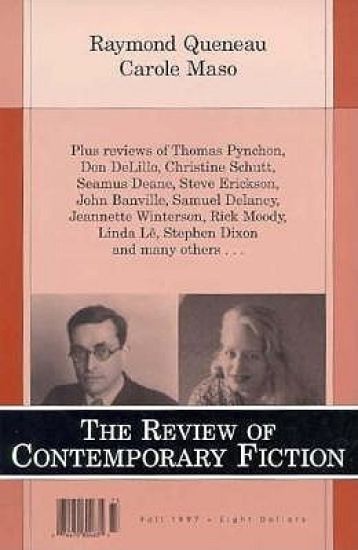
Raymond Queneau/Carole Maso, Vol. 17, No. 3
Dalkey Archive Press
1997
nidottu
Mary Campbell-Sposito, CANIS MAJOR: Introducing Raymond Queneau/Gilbert Sorrentino, Variations for Raymond Queneau/* Raymond Queneau, Interviews with Georges Charbonnier -- No. 5?/Raymond Queneau, Technique of the Novel/Raymond Queneau, From Children of Clay/Harry Mathews, Charity Begins at Home/Gilbert Pestureau, The Art of the Novel in Saint Glinglin/Jacques Jouet, 'Interludes' from Raymond Queneau/Claude Debon, Queneau and Poetic Illusion/Barbara Wright, Translating Queneau/Andre Blavier, Droles de Drames/Jacques Roubaud The Birth of a Form: Elementary Morality/Selected Bibliography/Selected Translations of Queneau's Works into English/Victoria Frenkel Harris, Carole Maso: An Introduction and an Interpellated Interview/Carole Maso, Except Joy: on Aureole/Carole Maso, Traveling Light from The Bay of Angels/Louise DeSalvo, 'We Will Speak and Bear Witness': Storytelling as Testimony and Healing in Ghost Dance/Charles B.Harris, The Dead Fathers: The Rejection of Modernist Distance in The Art Lover/Victoria Frenkel Harris, Emancipating the Proclamation: Gender and Genre in AVA/Nicole Cooley, 'There's Not One Story That Will Change This': The American Woman in the Chinese Hat/Jeffrey DeShell, Between the Winding Sheets: The American Woman in the Chinese Hat/Steven Moore, A New Language for Desire: Aureole/A Carole Maso Checklist
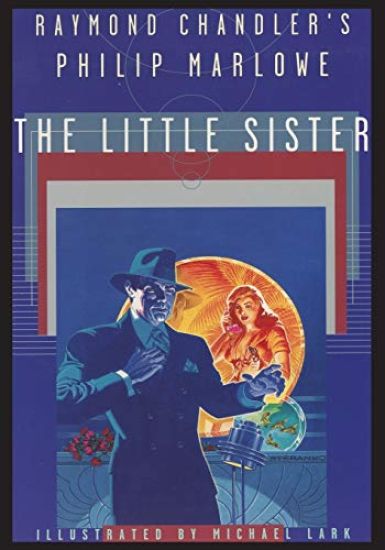

Three adaptations of Raymond Chandler's tales of the classic noir PI Philip Marlowe.