Kirjojen hintavertailu. Mukana 11 451 773 kirjaa ja 12 kauppaa.

Kirjahaku

Etsi kirjoja tekijän nimen, kirjan nimen tai ISBN:n perusteella.

1000 tulosta hakusanalla Reid B. Locklin

Thomas Reid on Mind, Knowledge, and Value
This volume offers a fresh view of the work of Thomas Reid, a leading figure in the history of eighteenth-century philosophy. A team of leading experts in the field explore the significance of Reid's thought in his time and ours, focusing in particular on three broad themes: mind, knowledge, and value. Together, they argue that Reid's philosophy is about developing agents in a rich world of objects and values, agents with intellectual and active powers whose regularity is productive. Though such agents are equipped at first with rudimentary abilities, those abilities are responsive. Our powers consist in a fundamental and on-going engagement with the world, a world that calls on us to be flexible, sensitive, astute, and ultimately, practical. Thomas Reid on Mind, Knowledge, and Value represents both the vitality of Reid's work, and the ways in which current philosophers are engaging with his ideas.
Thomas Reid's Theory of Perception

Thomas Reid's Theory of Perception

Ryan Nichols

Clarendon Press
2007
sidottu
The thesis that the mind cannot directly apprehend features of the physical world - what Reid calls the Way of Ideas - is a staple of Early Modern philosophical tradition. This commitment to the direct awareness of, and only of, mental representations unifies the otherwise divergent philosophical systems of Rationalists and Empiricists. Thomas Reid battles against this thesis on many fronts, in particular over the nature of perception. Ryan Nichols lays the groundwork for Reid's theory of perception by developing Reid's unheralded argument against a representational theory of thought, which Nichols applies to his discussion of the intentionality of perceptual states and Reid's appeal to 'signs'. Reid's efforts to preserve common sense epistemic commitments also lead him to adopt unique theories about our concepts of primary and secondary qualities, and about original and acquired perceptions. About the latter pair, Nichols argues that most perceptual beliefs depend for their justification upon inferences. The Way of Ideas holds that sensations are objects of awareness and that our senses are not robustly unified. Nichols develops Reid's counter-proposals by examining his discussion of the evolutionary purpose of sensations, and the nature of our awareness of sensations, as well as his intriguing affirmative answer to Molyneux's questions. Nichols brings to the writing of this book a consummate knowledge of Reid's texts, published and unpublished, and a keen appreciation for Reid's responses to his predecessors. He frequently reconstructs arguments in premise/conclusion form, thereby clarifying disputes that have frustrated previous Reid scholarship. This clarification, his lively examples, and his plainspoken style make this book especially readable. Reid's theory of perception is by far the most important feature of Reid's philosophical system, and Nichols offers what will be, for a long time to come, the definitive analysis of this theory.
The Reid-Airsed Shuttlers

The Reid-Airsed Shuttlers

David Tallach

Lulu.com
2018
pokkari
This is a collection of haiku in praise of a bumblebee species native to Scotland, bombus lapidaries, so it seemed apt to render it in Scots. The poems alternate between Scots and English, the latter roughly translations of the former, following the four seasons.
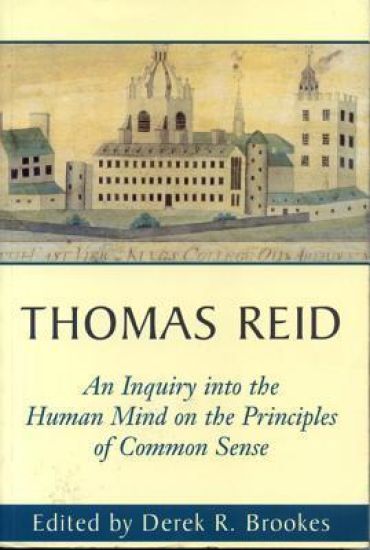
Thomas Reid's An Inquiry into the Human Mind on the Principles of Common Sense
Thomas Reid's Inquiry has long been recognized as a classic philosophical text. Since its first publication in 1764, there have followed no less than forty editions. The proliferation of secondary literature further indicates that Reid's work is flourishing as never before. Yet Reid scholars have been acutely aware of proceeding without the full textual evidence. There exist thousands of unpublished manuscript pages in Reid's hand, many of which relate directly to the composition of Inquiry. Furthermore, no account has been taken of the successive alterations made to the four editions published in Reid's lifetime. The present edition, therefore, aims to present a complete, critically edited text of the Inquiry, accompanied by a judicious selection of manuscript evidence relating to its composition.The volume contains an editor preface presenting the raison d'etre for the edition followed by an introduction giving the central argument of the Inquiry by means of an historical and philosophical account of its formation; an account which also indicates the significance of the MSS contained in the section containing related documents. The critical text is based on the fourth life-time edition (1785), while the textual notes include bibliographical details and allusions, translations, references to secondary literature, and selected passages from Reid's MSS.
Thomas Reid's An Inquiry into the Human Mind on the Principles of Common Sense
Thomas Reid's Inquiry has long been recognized as a classic philosophical text. Since its first publication in 1764, there have followed no less than forty editions. The proliferation of secondary literature further indicates that Reid's work is flourishing as never before. Yet Reid scholars have been acutely aware of proceeding without the full textual evidence. There exist thousands of unpublished manuscript pages in Reid's hand, many of which relate directly to the composition of Inquiry. Furthermore, no account has been taken of the successive alterations made to the four editions published in Reid's lifetime. The present edition, therefore, aims to present a complete, critically edited text of the Inquiry, accompanied by a judicious selection of manuscript evidence relating to its composition.The volume contains an editor preface presenting the raison d'etre for the edition followed by an introduction giving the central argument of the Inquiry by means of an historical and philosophical account of its formation; an account which also indicates the significance of the MSS contained in the section containing related documents. The critical text is based on the fourth life-time edition (1785), while the textual notes include bibliographical details and allusions, translations, references to secondary literature, and selected passages from Reid's MSS.
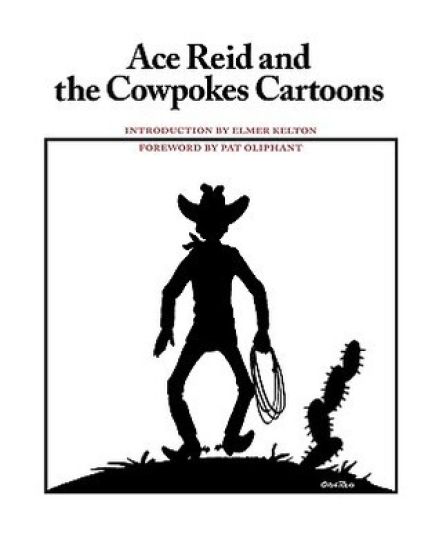
Ace Reid and the Cowpokes Cartoons

Ace Reid and the Cowpokes Cartoons

Ace Reid

University of Texas Press
1999
pokkari
Winner, Mitchell A. Wilder Award for Publication Design, Texas Association of MuseumsFolks across the West know a cowpoke named Jake. A good-hearted guy, he's always up to his eyebrows in debt or drought or prickly pears looking for them dad-blamed ole wild cows. In fact, he's so real a fella that it's hard to believe that Ace Reid made him up.This book brings together 139 of Ace Reid's popular "Cowpokes" cartoons, reproduced in large format to show the artistry and attention to detail that characterized Reid's work. Grouped around themes such as work, weather, bankers, and friends, they reveal the distinctive "you might as well laugh as cry" sense of humor that ranch folks draw on to get through hard work and hard times.In the foreword, Washington Post cartoonist Pat Oliphant offers an appreciation of Reid's "Cowpokes" cartoons, noting that "Ace's work has a magic of its own, and it owes nothing to anyone else." Reid's longtime friend Elmer Kelton recounts Ace's life and career in the introduction, describing how a shy boy who grew up on ranch work transformed himself into an artist-entrepreneur who never met a stranger and who made ranch work the subject of his real love, cartooning. This collector's volume belongs on the shelf of everyone who loves the "Cowpokes" cartoons, knows a fella like Jake, or enjoys the dry wit of the American cowboy.
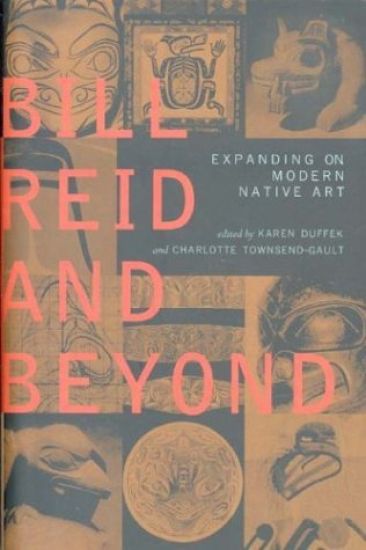
Bill Reid and Beyond

Bill Reid and Beyond

Nika Collison

University of Washington Press
2004
sidottu
Bill Reid's work has long been acknowledged for its astute and eloquent analysis of Haida tradition, and for the paradox of making modern art from the old Haida stories. It helped to make the so-called renaissance of Northwest Coast Native art visible to all. Bill Reid and Beyond pays Reid the compliment of expanding on his own clear-eyed self-scrutiny as he came to stand for Native art and artists, more perhaps than he would have wished.The book's nineteen contributors write from many perspectives, breaking down boundaries between art history and anthropology, between academic and artist, between colleague and politician.Alert to the political, economic, and social events of Bill Reid's lifetime, which have radically changed the way in which Native art is produced and received, this book participates in the important ongoing debates about Native art, demonstrating vividly that the exchange of ideas can, like works of art, change people's minds.
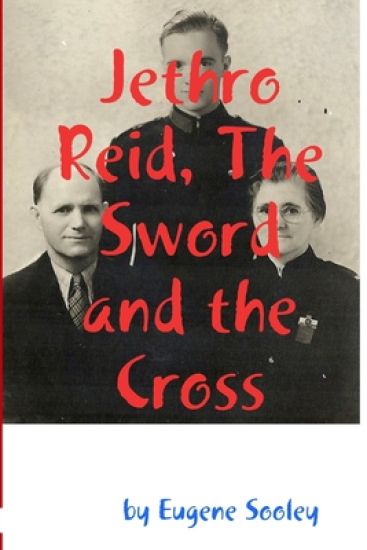
Jethro Reid, The Sword and the Cross
Jethro laid there in the mud on the side of the trench just high enough to get his head over the top. His 303 British-made rifle was cocked and ready to fire. He had his finger on the trigger. Jethro would constantly worry about where his bullets would fall. The mortar and machine gun fire was deafening but not loud enough to drown out the repetitious sound in his head, "Thou shalt not kill, ... Thou Shall Not Kill, .. THOU SHALT NOT KILL." His fear of the battle going on in his mind was worse than the real battlefield that he was fighting on. He didn't know how much longer he could fight this battle, in his mind, with his God.. For now, there was no way that he could know that he would never point a firearm at any human being again after this day. ...
Thomas Reid and Scepticism

Thomas Reid and Scepticism

Philip De Bary; Philip de Bary

Routledge
2001
sidottu
This book bears witness to the current reawakening of interest in Reid's philosophy. It first examines Reid's negative attack on the Way of Ideas, and finds him to be a devastating critic of his predecessors. Turning to the positive part of Reid's programme, the author then develops a fresh interpretation of Reid as an anticipator of present-day 'reliabilism'. Throughout the book, Reid is presented as a powerful thinker with much to say to philosophers in the twenty-first century. The book will be of interest not only to Reid scholars and historians of philosophy, but also to specialists and students in contemporary epistemology.
Thomas Reid and Scepticism

Thomas Reid and Scepticism

Philip De Bary; Philip de Bary

Routledge
2006
nidottu
This book bears witness to the current reawakening of interest in Reid's philosophy. It first examines Reid's negative attack on the Way of Ideas, and finds him to be a devastating critic of his predecessors. Turning to the positive part of Reid's programme, the author then develops a fresh interpretation of Reid as an anticipator of present-day 'reliabilism'. Throughout the book, Reid is presented as a powerful thinker with much to say to philosophers in the twenty-first century. The book will be of interest not only to Reid scholars and historians of philosophy, but also to specialists and students in contemporary epistemology.
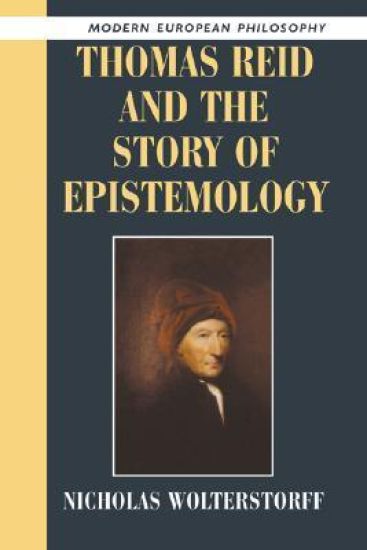
Thomas Reid and the Story of Epistemology

Thomas Reid and the Story of Epistemology

Nicholas Wolterstorff

Cambridge University Press
2004
pokkari
The two great philosophical figures at the culminating point of the Enlightenment are Thomas Reid in Scotland and Immanuel Kant in Germany. Reid was by far the most influential across Europe and the United States well into the nineteenth century. Since that time his fame and influence have been eclipsed by his German contemporary. This important book by one of today’s leading philosophers of knowledge and religion will do much to reestablish the significance of Reid for philosophy today. Nicholas Wolterstorff has produced the first systematic account of Reid’s epistemology. Relating Reid’s philosophy to present-day epistemological discussions the author demonstrates how they are at once remarkably timely, relevant, and provocative. No other book both uncovers the deep pattern of Reid’s thought and relates it to contemporary philosophical debate. This book should be read by historians of philosophy as well as all philosophers concerned with epistemology and the philosophy of mind.
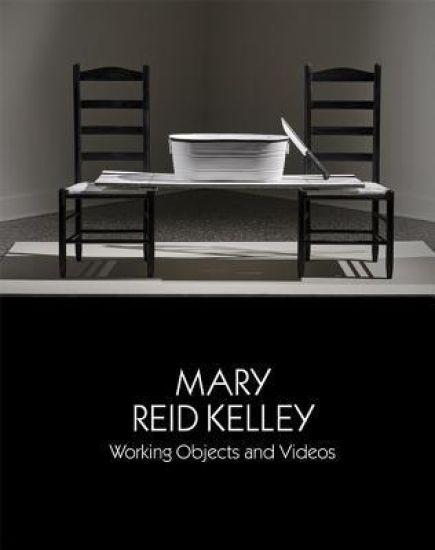
Mary Reid Kelley

Mary Reid Kelley

Daniel Belasco; Corinna Ripps Schaming; Sara J. Pasti; Janet Riker

Samuel Dorsky Museum of Art
2014
pokkari
Celebrates the first exhibition devoted to the finely crafted and researched costumes, objects, and drawings that Mary Reid Kelley creates for her visually and intellectually stimulating videos made in collaboration with Patrick Kelley.Mary Reid Kelley celebrates the first museum exhibition devoted to the finely crafted and researched costumes, objects, and drawings that Mary Reid Kelley creates for her visually and intellectually stimulating videos. An essay by curator Daniel Belasco analyzes the sources and significance of the working objects in how they promote the "unreality effect" of Mary Reid Kelley's videos, which combine both the analog and digital and the personal and historical. A conversation between Corinna Ripps Schaming and Mary Reid Kelley and her long-time collaborator Patrick Kelley reveals insights into their working process. For the first time, the full range of the artist's costumes, props, drawings, furniture, and accessories are photographed and presented as unique works of art.
Thomas Reid on the Animate Creation

Thomas Reid on the Animate Creation

Thomas Reid

Edinburgh University Press
1995
sidottu
This volume brings together for the first time a significant number of Reid's manuscript papers on natural history, physiology and materialist metaphysics. An important contribution not only to Reid studies but also to our understanding of eighteenth-century science and its context.
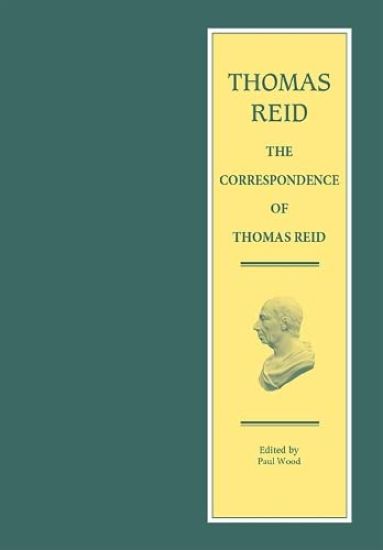
The Correspondence of Thomas Reid

The Correspondence of Thomas Reid

Thomas Reid

Edinburgh University Press
2002
sidottu
Thomas Reid (1710-96) is now recognized as one of the towering figures of the Enlightenment. Best known for his published writings on epistemology and moral theory, he was also an accomplished mathematician and natural philosopher, as an earlier volume of his manuscripts edited by Paul Wood for the Edinburgh Reid Edition, Thomas Reid on the Animate Creation, has shown. The Correspondence of Thomas Reid collects together all of the known letters to and from Reid in a fully annotated form. Letters already published by Sir William Hamilton and others have been reedited, and roughly half of the letters included appear in print for the first time. The letters illuminate virtually every aspect of Reid's life and career, and, in some instances, provide us with invaluable evidence about activities otherwise undocumented in his manuscripts or published works. Through his correspondence we can trace his relations with contemporaries like David Hume and his colleagues at both King's College, Aberdeen, and the University of Glasgow, as well as his engagement with the most controversial philosophical, scientific and political issues of his day.The letters assembled here serve as the starting point for understanding Reid and his place in the Enlightenment.
Thomas Reid - Essays on the Intellectual Powers of Man

Thomas Reid - Essays on the Intellectual Powers of Man

Thomas Reid

Edinburgh University Press
2002
sidottu
This is Thomas Reid's greatest work. It covers far more philosophical ground than the earlier, more popular Inquiry. The Intellectual Powers and its companion volume, Essays on the Active Powers of Man, constitute the fullest, most original presentation of the philosophy of Common Sense. In the process, Reid provides acutely critical discussions of an impressive array of thinkers but especially of David Hume. In Reid's eyes, Hume had driven a deep tendency in modern philosophy to its ultimate conclusions by creating a phantom-world of so-called 'ideas' that sprang from objects of observation; the self was a conglomeration of perceived ideas; and the will as the source of action was nothing but the balance of passionate impulses. Reid's Common Sense philosophy answers these problems by suggesting that sceptics, such as Hume, unavoidably affirm what they purport to deny, namely the existence of a stable external world, of other minds, of the continuity of their own minds, and of their own and other people's ability to ascribe and accept responsibility for actions. We can understand all of this by proper empirical observation and philosophical analysis of the activity of the mind. Reid's major positive contribution to philosophy is a detailed account of the various innate powers of the mind. While particularly influential in the first half of the nineteenth century, Reid's work has retained a significant role in philosophy, not least in recent years. At the same time, his role in the Scottish Enlightenment is becoming much better understood. This is the only properly established text. It is accompanied by manuscript lectures on the nature and immortality of the soul, as well as helpful editorial annotation and introduction, making it useful to a wide variety of readers. Features * Accurate, reliable and critically established text * The Introduction explains the work's genesis and its place in Reid's system * Annotations provide an understanding of Reid's context * An Appendix contains manuscript material covering an important topic not represented in the hitherto published work
Thomas Reid on Logic, Rhetoric and the Fine Arts

Thomas Reid on Logic, Rhetoric and the Fine Arts

Thomas Reid

Edinburgh University Press
2004
sidottu
Thomas Reid saw the three subjects of logic, rhetoric and the fine arts as closely cohering aspects of one endeavour which he called the culture of the mind. This was a topic on which Reid lectured for many years in Glasgow and the volume is as near a reconstruction of these lectures as is now possible. The material is virtually unknown now but in fact it relates closely to Reid's published works and in particular to the two late ones, Essays on the Intellectual Powers of Man and Essays on the Active Powers of Man. When composing these volumes, Reid drew primarily on his lectures on 'pneumatology' which presented a theory of the mental powers, broadly conceived. These lectures were basic to the course on the culture of the mind which explained the cultivation of the mental powers. Although the Essays also included some elements from the material on the culture of the mind, the bulk of the latter was left in manuscript form and Professor Broadie's edition restores this important extension of Reid's overall work. In addition, this volume continues the Edinburgh Edition's attractive combination of manuscript material and published work, in this case Reid's important and well known essay on Aristotle's logic. This text was corrupted in older editions of Reid's works and is now restored to the state in which Reid left it. This volume underscores Reid's great and growing significance, viewed both as an historical figure and as a philosopher. At the same time, it is of great interdisciplinary importance. While the material emerges directly from the core of Reid's philosophy, as now understood, it will appeal widely to people in literary, cultural, historical and communications studies. In this regard, the present volume is a true fruit of the Scottish Enlightenment.
Thomas Reid - Essays on the Active Powers of Man

Thomas Reid - Essays on the Active Powers of Man

Thomas Reid

Edinburgh University Press
2010
sidottu
The Essays on the Active Powers of Man (1788) was Thomas Reid's last major work. It was conceived as part of one large work, intended as a final synoptic statement of his philosophy. The first and larger part was published three years earlier as Essays on the Intellectual Powers of Man (edited as vol. 3 of the Edinburgh Edition of Thomas Reid). These two works are united by Reid's basic philosophy of common sense, which sets out native principles by which the mind operates in both its intellectual and active aspects. The Active Powers shows how these principles are involved in volition, action, and the ability to judge morally. Reid gives an original twist to a libertarian and realist tradition that was prominently represented in eighteenth-century British thought by such thinkers as Samuel Clarke and Richard Price.