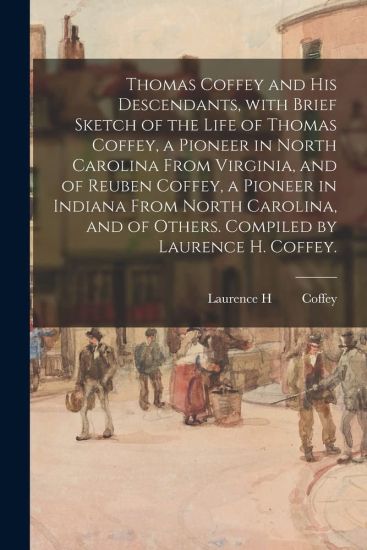
The Coffey family plays an important role in the history of North Carolina and Indiana, and this book provides a comprehensive genealogy of the family, along with a detailed account of their lives and legacies. It is an essential resource for anyone interested in tracing their family history or the history of the American South and Midwest.This work has been selected by scholars as being culturally important, and is part of the knowledge base of civilization as we know it.This work is in the "public domain in the United States of America, and possibly other nations. Within the United States, you may freely copy and distribute this work, as no entity (individual or corporate) has a copyright on the body of the work.Scholars believe, and we concur, that this work is important enough to be preserved, reproduced, and made generally available to the public. We appreciate your support of the preservation process, and thank you for being an important part of keeping this knowledge alive and relevant.
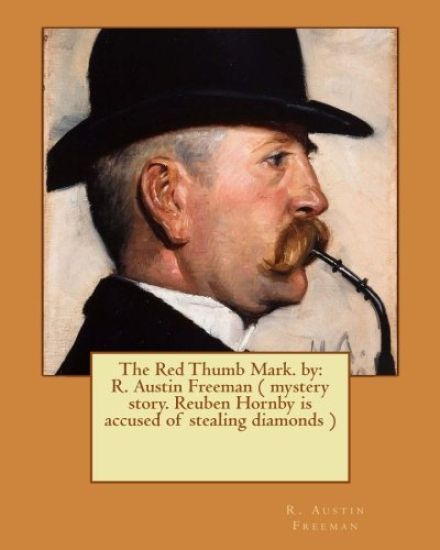
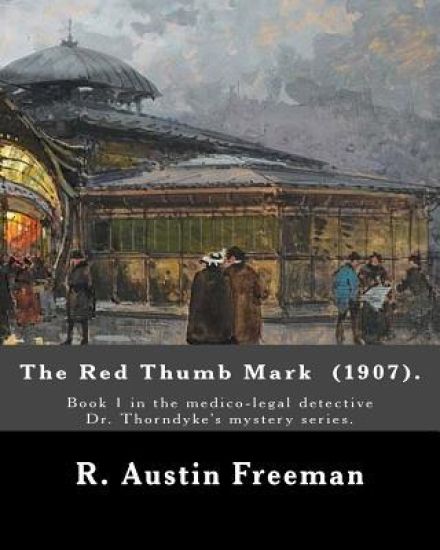
Book 1 in the medico-legal detective Dr. Thorndyke's mystery series. Reuben Hornby is accused of stealing diamonds from the safe of his uncle-his employer and benefactor. The sole evidence, but a damning one, is a paper, dropped in the safe in hurry, by the robber, bearing a fresh and bloody thumbprint. The thumbprint of Reuben ............ Richard Austin Freeman (11 April 1862 - 28 September 1943) was a British writer of detective stories, mostly featuring the medico-legal forensic investigator Dr. Thorndyke. He claimed to have invented the inverted detective story (a crime fiction in which the commission of the crime is described at the beginning, usually including the identity of the perpetrator, with the story then describing the detective's attempt to solve the mystery). Freeman used some of his early experiences as a colonial surgeon in his novels. Many of the Dr. Thorndyke stories involve genuine, but often quite arcane, points of scientific knowledge, from areas such as tropical medicine, metallurgy and toxicology. Early life: Austin Freeman was the youngest of the five children of tailor Richard Freeman and Ann Maria Dunn. He first trained as an apothecary and then studied medicine at Middlesex Hospital, qualifying in 1887. The same year he married Annie Elizabeth, with whom he had two sons. He entered the Colonial Service and was sent to Accra on the Gold Coast. Career: In 1891 he returned to London after suffering from blackwater fever but was unable to find a permanent medical position, and so decided to settle down in Gravesend and earn money from writing fiction, while continuing to practise medicine. His first stories were written in collaboration with John James Pitcairn (1860-1936), medical officer at Holloway Prison, and published under the nom de plume "Clifford Ashdown". His first Thorndyke story, The Red Thumb Mark, was published in 1907, and shortly afterwards he pioneered the inverted detective story, in which the identity of the criminal is shown from the beginning. Some short stories with this feature were collected in The Singing Bone in 1912. During the First World War he served as a captain in the Royal Army Medical Corps and afterwards produced a Thorndyke novel almost every year until his death in 1943. Freeman claimed to have invented the inverted detective story in his 1912 collection of short stories The Singing Bone. "Some years ago I devised, as an experiment, an inverted detective story in two parts. The first part was a minute and detailed description of a crime, setting forth the antecedents, motives, and all attendant circumstances. The reader had seen the crime committed, knew all about the criminal, and was in possession of all the facts. It would have seemed that there was nothing left to tell, but I calculated that the reader would be so occupied with the crime that he would overlook the evidence. And so it turned out. The second part, which described the investigation of the crime, had to most readers the effect of new matter."
This collection of literature attempts to compile many of the classic works that have stood the test of time and offer them at a reduced, affordable price, in an attractive volume so that everyone can enjoy them.
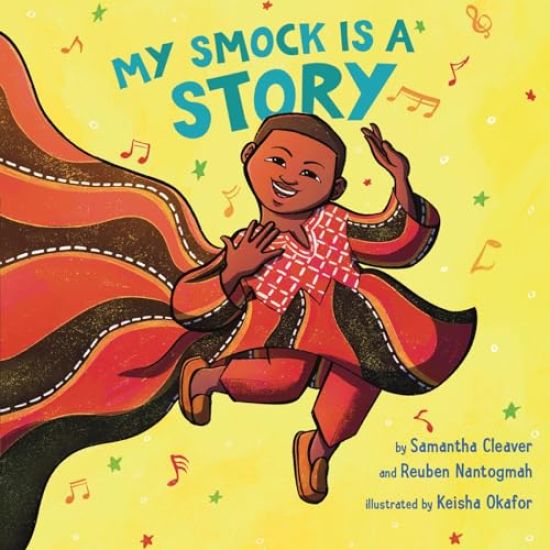
When a young boy receives his first smock as a gift, his Dada tells him that every smock has a special story. Will his smock make him as joyful as a harvest dancer?Or as powerful as his royal elders, the Dagomba?In his smock, what will his story be?From Reuben Nantogmah, Samantha Cleaver, and Keisha Okafor comes a joyful and lyrical picture book that celebrates what weaves us and our stories together--past, present, and future.
`All Is Well' is a collection of songs written over the past 25 years by the Blues - Folk musician, Reuben Augustine. Two songs in this book feature in his first album, `Let It Heal'. Some of the remaining songs enclosed will appear in his following albums The narrative running through his songs have been greatly influenced by `The Great War', its aftermath and the struggle for social justice.


![The Autobiography of Mark Rutherford and Mark Rutherford's Deliverance. Edited by His Friend, Reuben Shapcott. [By William Hale White.] Second Edition](/covers/9781241070373.jpg)
![The Revolution in Tanner's Lane. by Mark Rutherford. Edited by His Friend, Reuben Shapcott. [By W. H. White.]](/covers/9781241094928.jpg)
![The Autobiography of Mark Rutherford and Mark Rutherford's Deliverance. Edited by His Friend, Reuben Shapcott. [By William Hale White.] Second Edition](/covers/9781241197926.jpg)
![The Autobiography of Mark Rutherford and Mark Rutherford's Deliverance. Edited by His Friend, Reuben Shapcott. [By William Hale White.] Second Edition](/covers/9781241461805.jpg)