Kirjojen hintavertailu. Mukana 11 342 296 kirjaa ja 12 kauppaa.

Kirjahaku

Etsi kirjoja tekijän nimen, kirjan nimen tai ISBN:n perusteella.

1000 tulosta hakusanalla Robert D. Lesslie

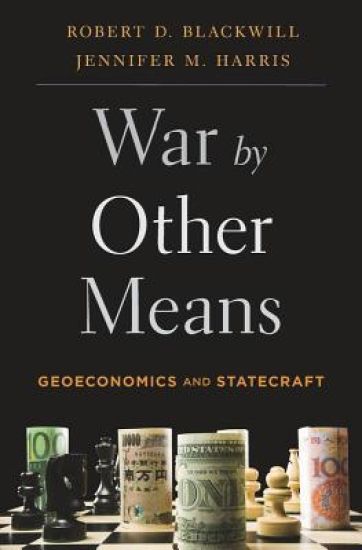
War by Other Means

War by Other Means

Robert D. Blackwill; Jennifer M. Harris

The Belknap Press
2017
nidottu
A Foreign Affairs Best Book of 2016Today, nations increasingly carry out geopolitical combat through economic means. Policies governing everything from trade and investment to energy and exchange rates are wielded as tools to win diplomatic allies, punish adversaries, and coerce those in between. Not so in the United States, however. America still too often reaches for the gun over the purse to advance its interests abroad. The result is a playing field sharply tilting against the United States.“Geoeconomics, the use of economic instruments to advance foreign policy goals, has long been a staple of great-power politics. In this impressive policy manifesto, Blackwill and Harris argue that in recent decades, the United States has tended to neglect this form of statecraft, while China, Russia, and other illiberal states have increasingly employed it to Washington’s disadvantage.”—G. John Ikenberry, Foreign Affairs“A readable and lucid primer…The book defines the extensive topic and opens readers’ eyes to its prevalence throughout history…[Presidential] candidates who care more about protecting American interests would be wise to heed the advice of War by Other Means and take our geoeconomic toolkit more seriously.—Jordan Schneider, Weekly Standard
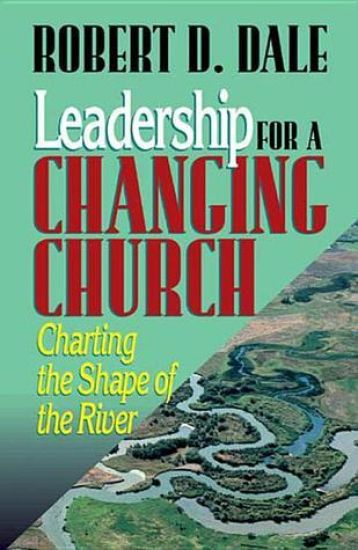
Leadership for a Changing Church

Leadership for a Changing Church

Robert D. Dale

Abingdon Press
1998
pokkari
Change is the one constant on which the leaders of tomorrow's church can rely. Changes in technology, changes in social structures, and changes in the church are happening at such a rapid pace that pastors and other church leaders share Mark Twain's despair of ever keeping up with it all. The key is to train yourself for change itself. Change has become the "shape of the river" that we must always keep in mind. The skills that will prepare one for meaningful ministry in the twenty-first century are skills of adaptation and life-long learning. Those whom God calls to lead the church in this new day will prepare themselves now for the habits of acquiring new skills and adapting their methods in ministry to new technologies and social structures. Leadership for a Changing Church can serve as a guide for all those who want to know how to effectively and faithfully proclaim the gospel and serve God's people in this time of accelerated transition and change.
Pastoral Leadership

Pastoral Leadership

Robert D. Dale

Abingdon Press
1986
pokkari
This comprehensive problem-solving reference for pastors provides theological foundations and experience-tested techniques for effective clergy leadership. Robert D. Dale offers insight into the dynamics of clergy management by placing leadership into a congregational context and stressing servanthood as the primary biblical leadership image. Following a discussion of the three critical dimensions of organizational effectiveness, Dale explores and critiques the four basic leadership styles: catalyst, commander, encourager, and hermit. Out of this background exploration, Dale discloses decision-making guidelines that have proved effective in helping clergy: resolve conflicts; lead churches through change; define the congregation's dream; budget resources effectively; manage meetings; build teams; and, motivate oneself and others. Pastoral Leadership concludes with a unique look at the effects of clergy leadership on the pastor as a person, offering valuable insight into clergy spirituality, burnout, family demands, and career development. Notes, a bibliography, and review questions accompany each chapter.
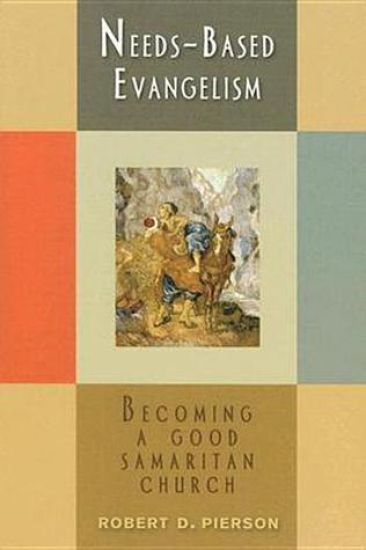
Needs-based Evangelism

Needs-based Evangelism

Robert D. Pierson

Abingdon Press
2006
pokkari
Being a Good Samaritan church begins with the leadership. It requires an absolute commitment to address the needs of people in order to invite them to become disciples of Jesus Christ. But in order to compete with and appeal to unchurched people in today's secular and consumer-driven society, the church needs to be entrepreneurial in its method of evangelist outreach. In this book, Rev. Robert Pierson, shows how churches can better organize ministry in order to be effective witnesses. By meeting felt needs of people through intentional ministries, the church will grow to be sure; but more importantly it will fulfill its biblical mandate to care for those who are hurting and suffering.
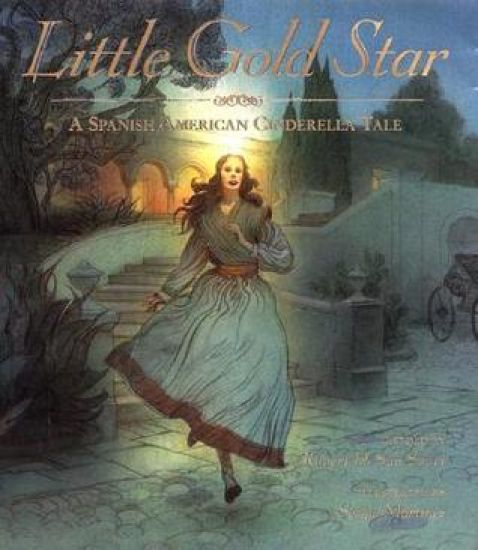
Little Gold Star: A Spanish American Cinderella Tale
Blessed Mary rewards Teresa's good deeds with a shining gold star. Later she punishes Teresa's unkind stepsisters, Isabel and Inez, with hideous horns and donkey's ears that they try to hide under heavy veils But will Teresa outshine her stepsisters at the festival? Robert D. San Souci retells this popular folktale in a lilting narrative that includes all the magic of the beloved Cinderella story and traditional elements from Spanish tales. Luminous watercolors by Sergio Martinez accentuate the beauty and goodness that radiate from Little Gold Star. A Selection of the Junior Library GuildA Selection of Nest Literary Classics
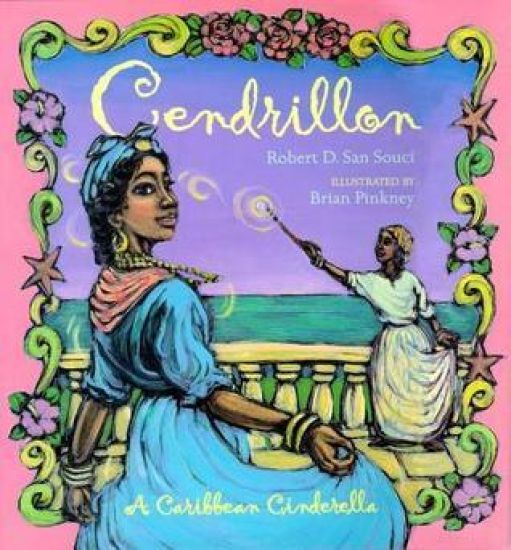
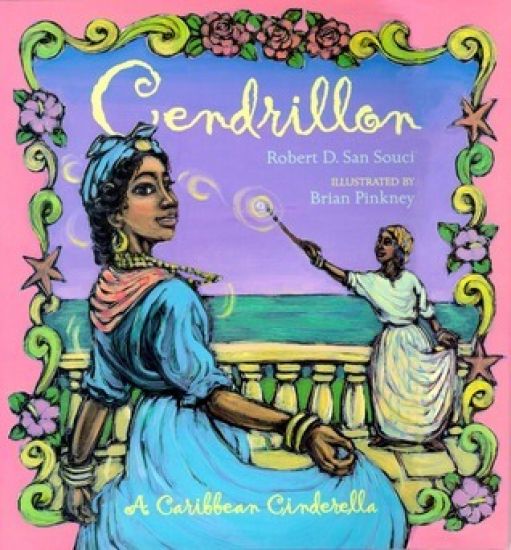
Cendrillon: A Caribbean Cinderella

Cendrillon: A Caribbean Cinderella

Robert D. San Souci

Simon Schuster Books for Young Readers
1998
sidottu
A Caldecott Honor-winning author-illustrator team brings us a Caribbean Cinderella story, told from the perspective of the magical godmother. You may think you already know this story about a beautiful servant girl, a cruel stepmother, a magnificent ball, and a lost slipper. But you've never heard it for true. Now you can hear the tale from someone who was there: a poor washerwoman from the island of Martinique. She has just one thing in the world to love, her goddaughter Cendrillon. When she finds Cendrillon heartsick over a rich man's son, at first she doesn't know what to do. But she has sharp wits, a strong will, and the magic wand her mother left her--and soon she has a plan to give her dear Cendrillon the gift of a love that will change her life. Adapted from a traditional Creole story, this fresh retelling captures all the age-old romance and magic of Cinderella, melding it with the vivid beauty of the Caribbean and the musical language of the islands.
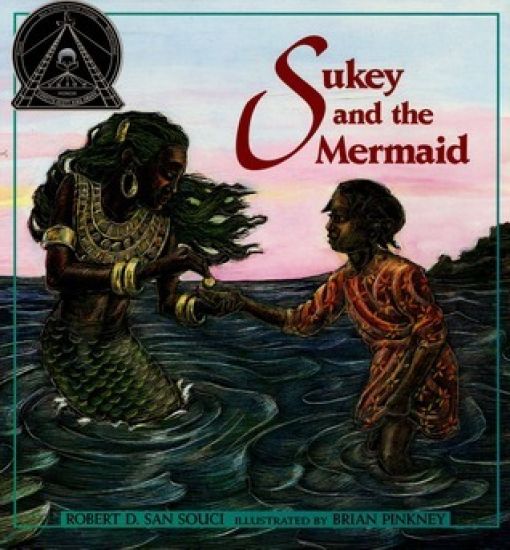
Sukey and the Mermaid

Sukey and the Mermaid

Robert D. San Souci

Aladdin Paperbacks
1996
nidottu
A mermaid offers a young girl a magical escape in this lushly told and luminously illustrated Coretta Scott King Honor-winning picture book. Sukey's new step-pa is a mean, bossy man she calls "Mister Hard-Times." He makes her work in his garden all day and Sukey's ma doesn't seem to care. One day, when her step-pa isn't looking, Sukey takes her chance to run away to her secret hiding place by the sea. There, she meets Mama Jo, a beautiful black mermaid. Mama Jo's got a surprise for Sukey: a magical kingdom beneath the sea without time or pain. But there are also no people. Is it really better than the world above?
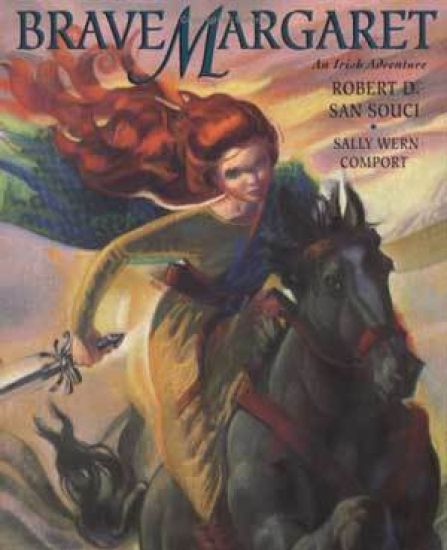
Brave Margaret: An Irish Adventure

Brave Margaret: An Irish Adventure

Robert D. San Souci

Simon Schuster Books for Young Readers
1999
sidottu
Margaret has a brave heart. She dreams of adventure and longs to travel to distant lands, so when a tall ship appears in the harbor, headed north to the Kingdoms of the Cold, Margaret won't be left behind. But adventures are perilous things. Soon Margaret must face a ferocious sea serpent and even worse dangers. And she must discover the truth about an old woman with strange powers and mysterious plans, or she'll never find a way to bring herself and her true love safely home. Acclaimed author Robert D. San Souci spins a tale of magic, battles, and romance in this traditional Irish story of a young woman whose courage astonishes her enemies -- and even herself.
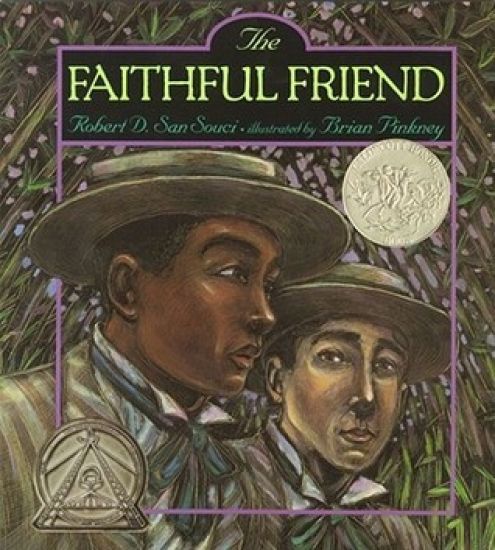
The Faithful Friend

The Faithful Friend

Robert D. San Souci

Aladdin Paperbacks
1999
nidottu
A friendship is tested by love and magic in this beautiful, Caldecott Honor-winning retelling of a traditional tale from the French West Indies. Clement and Hippolyte are best friends who live together on the lush tropical island of Martinique. They set off together toward the woman Clement loves so he can propose, but her uncle--a quimboiseur, a wizard--doesn't approve of the match. When his niece flees with the two inseparable friends, the vengeful man sends evil magic after them. Hippolyte may be able to protect the young couple--but will he lose his own life in the process?
Cendrillon: A Caribbean Cinderella

Cendrillon: A Caribbean Cinderella

Robert D. San Souci

Aladdin Paperbacks
2002
nidottu
A Caldecott Honor-winning author-illustrator team brings us a Caribbean Cinderella story, told from the perspective of the magical godmother. You may think you already know this story about a beautiful servant girl, a cruel stepmother, a magnificent ball, and a lost slipper. But you've never heard it for true. Now you can hear the tale from someone who was there: a poor washerwoman from the island of Martinique. She has just one thing in the world to love, her goddaughter Cendrillon. When she finds Cendrillon heartsick over a rich man's son, at first she doesn't know what to do. But she has sharp wits, a strong will, and the magic wand her mother left her--and soon she has a plan to give her dear Cendrillon the gift of a love that will change her life. Adapted from a traditional Creole story, this fresh retelling captures all the age-old romance and magic of Cinderella, melding it with the vivid beauty of the Caribbean and the musical language of the islands.
Making Democracy Work

Making Democracy Work

Robert D. Putnam; Robert Leonardi; Raffaella Y. Nanetti

Princeton University Press
1994
pokkari
Why do some democratic governments succeed and others fail? In a book that has received attention from policymakers and civic activists in America and around the world, Robert Putnam and his collaborators offer empirical evidence for the importance of "civic community" in developing successful institutions. Their focus is on a unique experiment begun in 1970 when Italy created new governments for each of its regions. After spending two decades analyzing the efficacy of these governments in such fields as agriculture, housing, and health services, they reveal patterns of associationism, trust, and cooperation that facilitate good governance and economic prosperity.
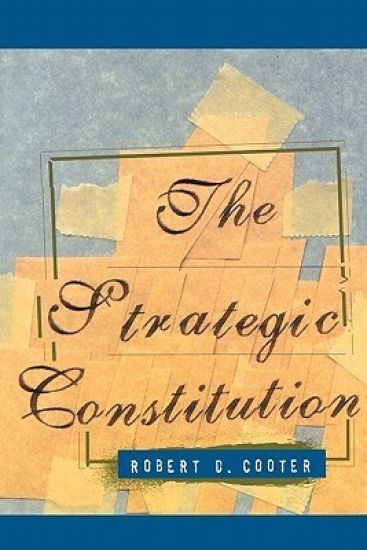
The Strategic Constitution

The Strategic Constitution

Robert D. Cooter

Princeton University Press
2002
pokkari
Making, amending, and interpreting constitutions is a political game that can yield widespread suffering or secure a nation's liberty and prosperity. Given these high stakes, Robert Cooter argues that constitutional theory should trouble itself less with literary analysis and arguments over founders' intentions and focus much more on the real-world consequences of various constitutional provisions and choices. Pooling the best available theories from economics and political science, particularly those developed from game theory, Cooter's economic analysis of constitutions fundamentally recasts a field of growing interest and dramatic international importance. By uncovering the constitutional incentives that influence citizens, politicians, administrators, and judges, Cooter exposes fault lines in alternative forms of democracy: unitary versus federal states, deep administration versus many elections, parliamentary versus presidential systems, unicameral versus bicameral legislatures, common versus civil law, and liberty versus equality rights. Cooter applies an efficiency test to these alternatives, asking how far they satisfy the preferences of citizens for laws and public goods. To answer Cooter contrasts two types of democracy, which he defines as competitive government. The center of the political spectrum defeats the extremes in "median democracy," whereas representatives of all the citizens bargain over laws and public goods in "bargain democracy." Bargaining can realize all the gains from political trades, or bargaining can collapse into an unstable contest of redistribution. States plagued by instability and contests over redistribution should move towards median democracy by increasing transaction costs and reducing the power of the extremes. Specifically, promoting median versus bargain democracy involves promoting winner-take-all elections versus proportional representation, two parties versus multiple parties, referenda versus representative democracy, and special governments versus comprehensive governments. This innovative theory will have ramifications felt across national and disciplinary borders, and will be debated by a large audience, including the growing pool of economists interested in how law and politics shape economic policy, political scientists using game theory or specializing in constitutional law, and academic lawyers. The approach will also garner attention from students of political science, law, and economics, as well as policy makers working in and with new democracies where constitutions are being written and refined.
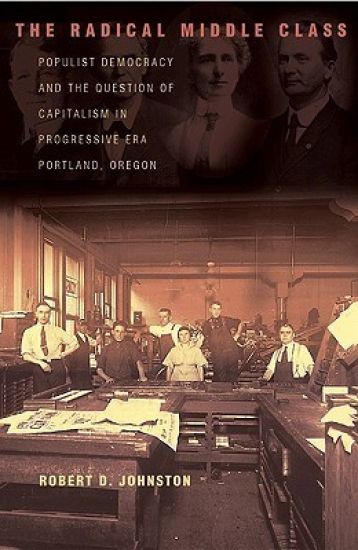
The Radical Middle Class

The Radical Middle Class

Robert D. Johnston

Princeton University Press
2006
pokkari
America has a long tradition of middle-class radicalism, albeit one that intellectual orthodoxy has tended to obscure. The Radical Middle Class seeks to uncover the democratic, populist, and even anticapitalist legacy of the middle class. By examining in particular the independent small business sector or petite bourgeoisie, using Progressive Era Portland, Oregon, as a case study, Robert Johnston shows that class still matters in America. But it matters only if the politics and culture of the leading player in affairs of class, the middle class, is dramatically reconceived. This book is a powerful combination of intellectual, business, labor, medical, and, above all, political history. Its author also humanizes the middle class by describing the lives of four small business owners: Harry Lane, Will Daly, William U'Ren, and Lora Little. Lane was Portland's reform mayor before becoming one of only six senators to vote against U.S. entry into World War I. Daly was Oregon's most prominent labor leader and a onetime Socialist. U'Ren was the national architect of the direct democracy movement. Little was a leading antivaccinationist. The Radical Middle Class further explores the Portland Ku Klux Klan and concludes with a national overview of the American middle class from the Progressive Era to the present. With its engaging narrative, conceptual richness, and daring argumentation, it will be welcomed by all who understand that reexamining the middle class can yield not only better scholarship but firmer grounds for democratic hope.
Solomon's Knot

Solomon's Knot

Robert D. Cooter; Hans-Bernd Schäfer

Princeton University Press
2012
sidottu
Sustained growth depends on innovation, whether it's cutting-edge software from Silicon Valley, an improved assembly line in Sichuan, or a new export market for Swaziland's leather. Developing a new idea requires money, which poses a problem of trust. The innovator must trust the investor with his idea and the investor must trust the innovator with her money. Robert Cooter and Hans-Bernd Schafer call this the "double trust dilemma of development." Nowhere is this problem more acute than in poorer nations, where the failure to solve it results in stagnant economies. In Solomon's Knot, Cooter and Schafer propose a legal theory of economic growth that details how effective property, contract, and business laws help to unite capital and ideas. They also demonstrate why ineffective private and business laws are the root cause of the poverty of nations in today's world. Without the legal institutions that allow innovation and entrepreneurship to thrive, other attempts to spur economic growth are destined to fail.
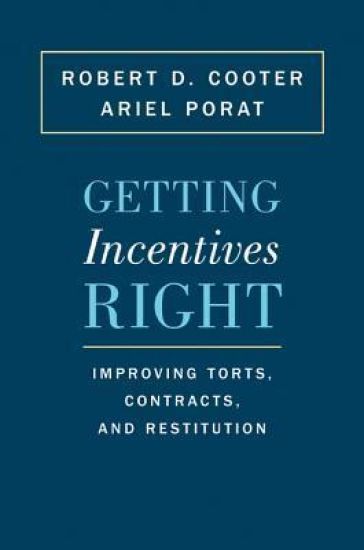
Getting Incentives Right

Getting Incentives Right

Robert D. Cooter; Ariel Porat

Princeton University Press
2014
sidottu
Lawyers, judges, and scholars have long debated whether incentives in tort, contract, and restitution law effectively promote the welfare of society. If these incentives were ideal, tort law would reduce the cost and frequency of accidents, contract law would lubricate transactions, and restitution law would encourage people to benefit others. Unfortunately, the incentives in these laws lead to too many injuries, too little contractual cooperation, and too few unrequested benefits. Getting Incentives Right explains how law might better serve the social good. In tort law, Robert Cooter and Ariel Porat propose that all foreseeable risks should be included when setting standards of care and awarding damages. Failure to do so causes accidents that better legal incentives would avoid. In contract law, they show that making a promise often causes the person who receives it to change behavior and undermine the cooperation between the parties. They recommend several solutions, including a novel contract called "anti-insurance." In restitution law, people who convey unrequested benefits to others are seldom entitled to compensation. Restitution law should compensate them more than it currently does, so that they will provide more unrequested benefits. In these three areas of law, Getting Incentives Right demonstrates that better law can promote the well-being of people by providing better incentives for the private regulation of conduct.
Solomon's Knot

Solomon's Knot

Robert D. Cooter; Hans-Bernd Schäfer

Princeton University Press
2013
pokkari
Sustained growth depends on innovation, whether it's cutting-edge software from Silicon Valley, an improved assembly line in Sichuan, or a new export market for Swaziland's leather. Developing a new idea requires money, which poses a problem of trust. The innovator must trust the investor with his idea and the investor must trust the innovator with her money. Robert Cooter and Hans-Bernd Schfer call this the "double trust dilemma of development." Nowhere is this problem more acute than in poorer nations, where the failure to solve it results in stagnant economies. In Solomon's Knot, Cooter and Schfer propose a legal theory of economic growth that details how effective property, contract, and business laws help to unite capital and ideas. They also demonstrate why ineffective private and business laws are the root cause of the poverty of nations in today's world. Without the legal institutions that allow innovation and entrepreneurship to thrive, other attempts to spur economic growth are destined to fail.
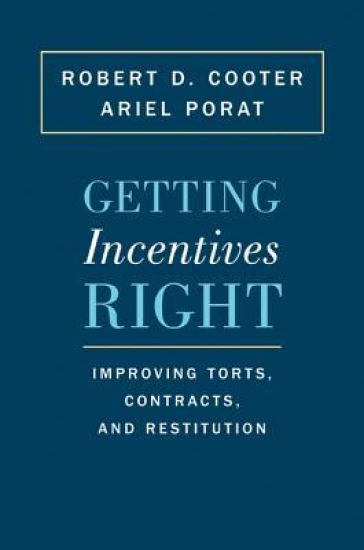
Getting Incentives Right

Getting Incentives Right

Robert D. Cooter; Ariel Porat

Princeton University Press
2016
pokkari
Lawyers, judges, and scholars have long debated whether incentives in tort, contract, and restitution law effectively promote the welfare of society. If these incentives were ideal, tort law would reduce the cost and frequency of accidents, contract law would lubricate transactions, and restitution law would encourage people to benefit others. Unfortunately, the incentives in these laws lead to too many injuries, too little contractual cooperation, and too few unrequested benefits. Getting Incentives Right explains how law might better serve the social good. In tort law, Robert Cooter and Ariel Porat propose that all foreseeable risks should be included when setting standards of care and awarding damages. Failure to do so causes accidents that better legal incentives would avoid. In contract law, they show that making a promise often causes the person who receives it to change behavior and undermine the cooperation between the parties. They recommend several solutions, including a novel contract called "anti-insurance." In restitution law, people who convey unrequested benefits to others are seldom entitled to compensation. Restitution law should compensate them more than it currently does, so that they will provide more unrequested benefits. In these three areas of law, Getting Incentives Right demonstrates that better law can promote the well-being of people by providing better incentives for the private regulation of conduct.
The Eternal Darkness

The Eternal Darkness

Robert D. Ballard; Will Hively

Princeton University Press
2017
pokkari
Until a few decades ago, the ocean depths were almost as mysterious and inaccessible as outer space. Oceans cover two-thirds of the earth's surface with an average depth of more than two miles--yet humans had never ventured more than a few hundred feet below the waves. One of the great scientific and archaeological feats of our time has been finally to cast light on the "eternal darkness" of the deep sea. This is the story of that achievement, told by the man who has done more than any other to make it possible: Robert Ballard. Ballard discovered the wreck of the Titanic. He led the teams that discovered hydrothermal vents and "black smokers"--cracks in the ocean floor where springs of superheated water support some of the strangest life-forms on the planet. He was a diver on the team that explored the mid-Atlantic ridge for the first time, confirming the theory of plate tectonics. Today, using a nuclear submarine from the U.S. Navy, he's exploring the ancient trade routes of the Mediterranean and the Black Sea for the remains of historic vessels and their cargo. In this book, he combines science, history, spectacular illustrations, and first-hand stories from his own expeditions in a uniquely personal account of how twentieth-century explorers have pushed back the frontiers of technology to take us into the midst of a world we could once only guess at. Ballard begins in 1930 with William Beebe and Otis Barton, pioneers of the ocean depths who made the world's first deep-sea dives in a cramped steel sphere. He introduces us to Auguste and Jacques Piccard, whose "Bathyscaph"descended in 1960 to the lowest point on the ocean floor. He reviews the celebrated advances made by Jacques Cousteau. He describes his own major discoveries--from sea-floor spreading to black smokers--as well as his technical breakthroughs, including the development of remote-operated underwater vehicles and the revolutionary search techniques that led to the discovery and exploration of the Titanic, the Nazi battleship Bismarck, ancient trading vessels, and other great ships. Readers will come away with a richer understanding of history, earth science, biology, and marine technology--and a new appreciation for the remarkable men and women who have explored some of the most remote and fascinating places on the planet.
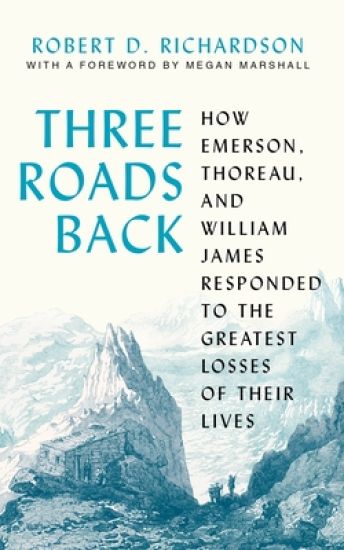
Three Roads Back

Three Roads Back

Robert D. Richardson; Megan Marshall

PRINCETON UNIVERSITY PRESS
2023
sidottu
From their acclaimed biographer, a final, powerful book about how Emerson, Thoreau, and William James forged resilience from devastating loss, changing the course of American thoughtIn Three Roads Back, Robert Richardson, the author of magisterial biographies of Ralph Waldo Emerson, Henry David Thoreau, and William James, tells the connected stories of how these foundational American writers and thinkers dealt with personal tragedies early in their careers. For Emerson, it was the death of his young wife and, eleven years later, his five-year-old son; for Thoreau, it was the death of his brother; and for James, it was the death of his beloved cousin Minnie Temple. Filled with rich biographical detail and unforgettable passages from the journals and letters of Emerson, Thoreau, and James, these vivid and moving stories of loss and hard-fought resilience show how the writers’ responses to these deaths helped spur them on to their greatest work, influencing the birth and course of American literature and philosophy.In reaction to his traumatic loss, Emerson lost his Unitarian faith and found solace in nature. Thoreau, too, leaned on nature and its regenerative power, discovering that “death is the law of new life,” an insight that would find expression in Walden. And James, following a period of panic and despair, experienced a redemptive conversion and new ideas that would drive his work as a psychologist and philosopher. As Richardson shows, all three emerged from their grief with a new way of seeing, one shaped by a belief in what Emerson called “the deep remedial force that underlies all facts.”An inspiring book about resilience and the new growth and creativity that can stem from devastating loss, Three Roads Back is also an extraordinary account of the hidden wellsprings of American thought.
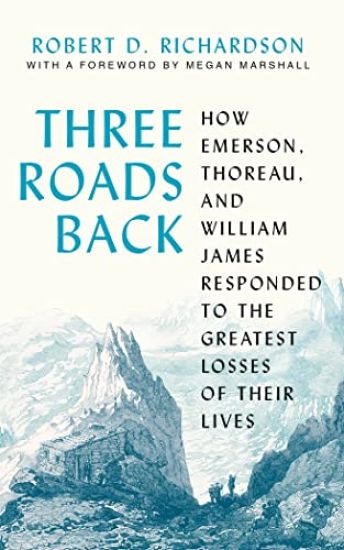
Three Roads Back

Three Roads Back

Robert D. Richardson; Megan Marshall

PRINCETON UNIVERSITY PRESS
2026
pokkari
From their acclaimed biographer, a final, powerful book about how Emerson, Thoreau, and William James forged resilience from devastating loss, changing the course of American thought In Three Roads Back, Robert Richardson, the author of magisterial biographies of Ralph Waldo Emerson, Henry David Thoreau, and William James, tells the connected stories of how these foundational American writers and thinkers dealt with personal tragedies early in their careers. For Emerson, it was the death of his young wife and, eleven years later, his five-year-old son; for Thoreau, it was the death of his brother; and for James, it was the death of his beloved cousin Minnie Temple. Filled with rich biographical detail and unforgettable passages from the journals and letters of Emerson, Thoreau, and James, these vivid and moving stories of loss and hard-fought resilience show how the writers’ responses to these deaths helped spur them on to their greatest work, influencing the birth and course of American literature and philosophy. In reaction to his traumatic loss, Emerson lost his Unitarian faith and found solace in nature. Thoreau, too, leaned on nature and its regenerative power, discovering that “death is the law of new life,” an insight that would find expression in Walden. And James, following a period of panic and despair, experienced a redemptive conversion and new ideas that would drive his work as a psychologist and philosopher. As Richardson shows, all three emerged from their grief with a new way of seeing, one shaped by a belief in what Emerson called “the deep remedial force that underlies all facts.” An inspiring book about resilience and the new growth and creativity that can stem from devastating loss, Three Roads Back is also an extraordinary account of the hidden wellsprings of American thought.