Observera att förlaget som ger ut denna produkt baserar innehållet i sina produkter på fria källor som Wikipedia. Boken är med stor sannolikhet endast ett utdrag ur dessa informationskällor, alltså inte en vanlig bok i den bemärkelsen.
Observera att förlaget som ger ut denna produkt baserar innehållet i sina produkter på fria källor som Wikipedia. Boken är med stor sannolikhet endast ett utdrag ur dessa informationskällor, alltså inte en vanlig bok i den bemärkelsen.
Observera att förlaget som ger ut denna produkt baserar innehållet i sina produkter på fria källor som Wikipedia. Boken är med stor sannolikhet endast ett utdrag ur dessa informationskällor, alltså inte en vanlig bok i den bemärkelsen.
Observera att förlaget som ger ut denna produkt baserar innehållet i sina produkter på fria källor som Wikipedia. Boken är med stor sannolikhet endast ett utdrag ur dessa informationskällor, alltså inte en vanlig bok i den bemärkelsen.
Observera att förlaget som ger ut denna produkt baserar innehållet i sina produkter på fria källor som Wikipedia. Boken är med stor sannolikhet endast ett utdrag ur dessa informationskällor, alltså inte en vanlig bok i den bemärkelsen.
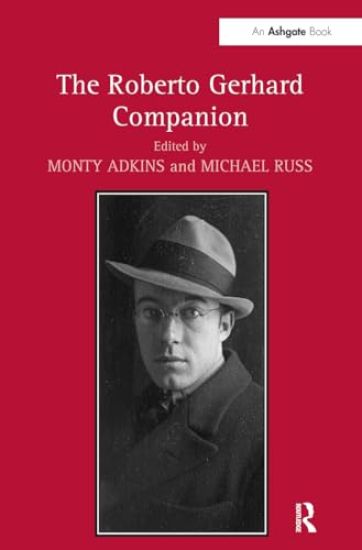
More than forty years after the composer's death, the music of Roberto Gerhard (1896-1970) continues to be recorded and performed and to attract international scholarly interest. The Roberto Gerhard Companion is the first full length scholarly work on this composer noted for his sharp intellect and original, exploring mind. This book builds on the outcomes of two recent international conferences and includes contributions by scholars from Spain, the USA and UK. The essays collected here explore themes and trends within Gerhard’s work, using individual or groups of works as case studies. Among the themes presented are the way Gerhard’s work was shaped by his Catalan heritage, his education under Pedrell and Schoenberg, and his very individual reaction to the latter’s teaching and methods, notably Gerhard’s very distinctive approach to serialism. The influence of these and other cultural and literary figures is an important underlying theme that ties essays together. Exiled from Catalonia from 1939, Gerhard spent the remainder of his life in Cambridge, England, composing a string of often ground-breaking compositions, notably the symphonies and concertos composed in the 1950s and 1960s. A particular focus in this book is Gerhard's electronic music. He was a pioneer in this genre and the book will contain the first rigorous studies of this music as well as the first accurate catalogue of this electronic output. His ground-breaking output of incidental music for radio and the stage is also given detailed consideration.
Poetry, fiction, literary history, and politics. These four cornerstone concerns of Roberto Bolaño's work have established him as a representative, generational figure in not only Chile, Mexico, and Spain, the three principal locations of his life and work, but throughout Europe and the Americas, increasingly on a global scale. At the heart of Bolaño's 'poemas-novela', his poet- and poetry-centered novels, is the history and legacy of the prose poem. Challenging the policing of boundaries between verse and prose, poetry and fiction, the literary and the non-literary, the aesthetic and the political, his prose poem novels offer a sustained literary history by other means, a pivotal intervention that restores poetry and literature to full capacity. Framing Roberto Bolaño is one of the first books to trace the full arc and development of Bolaño's work from the beginning to the end of his career.
Poetry, fiction, literary history, and politics. These four cornerstone concerns of Roberto Bolaño's work have established him as a representative, generational figure in not only Chile, Mexico, and Spain, the three principal locations of his life and work, but throughout Europe and the Americas, increasingly on a global scale. At the heart of Bolaño's 'poemas-novela', his poet- and poetry-centered novels, is the history and legacy of the prose poem. Challenging the policing of boundaries between verse and prose, poetry and fiction, the literary and the non-literary, the aesthetic and the political, his prose poem novels offer a sustained literary history by other means, a pivotal intervention that restores poetry and literature to full capacity. Framing Roberto Bolaño is one of the first books to trace the full arc and development of Bolaño's work from the beginning to the end of his career.
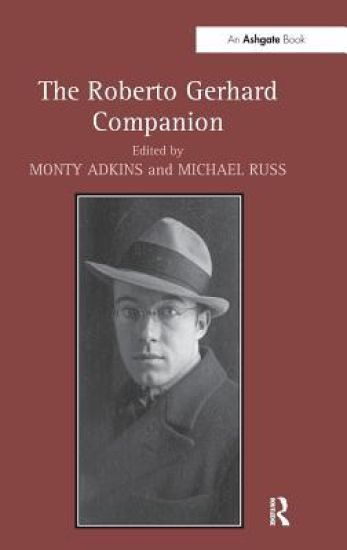
More than forty years after the composer's death, the music of Roberto Gerhard (1896-1970) continues to be recorded and performed and to attract international scholarly interest. The Roberto Gerhard Companion is the first full length scholarly work on this composer noted for his sharp intellect and original, exploring mind. This book builds on the outcomes of two recent international conferences and includes contributions by scholars from Spain, the USA and UK. The essays collected here explore themes and trends within Gerhard’s work, using individual or groups of works as case studies. Among the themes presented are the way Gerhard’s work was shaped by his Catalan heritage, his education under Pedrell and Schoenberg, and his very individual reaction to the latter’s teaching and methods, notably Gerhard’s very distinctive approach to serialism. The influence of these and other cultural and literary figures is an important underlying theme that ties essays together. Exiled from Catalonia from 1939, Gerhard spent the remainder of his life in Cambridge, England, composing a string of often ground-breaking compositions, notably the symphonies and concertos composed in the 1950s and 1960s. A particular focus in this book is Gerhard's electronic music. He was a pioneer in this genre and the book will contain the first rigorous studies of this music as well as the first accurate catalogue of this electronic output. His ground-breaking output of incidental music for radio and the stage is also given detailed consideration.
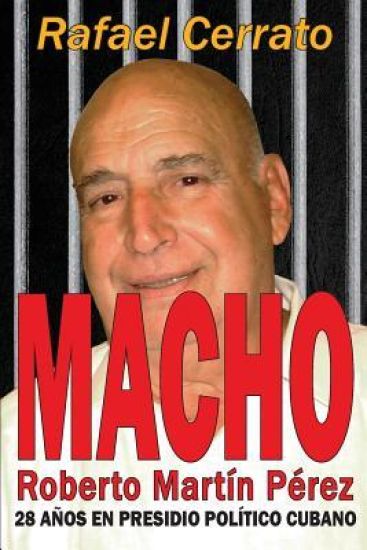
Roberto Mart n P rez sobresale como uno de los verdaderamente heroicos prisioneros pol ticos cubanos de esta tr gica etapa de la historia... Es uno de los hombres m s admirables que yo he conocido en mi vida. Lincoln D az-Balart En este libro est todo: grandezas y peque eces. De un bando y de otro. Lo mejor y lo peor del ser humano. M s que un libro de memorias, es un aleccionador libro que rescata, para las futuras generaciones, una parte importante de nuestra historia. Es tambi n un libro valioso en su car cter de denuncia: si una sola persona descubriese en sus p ginas el horror de estos 50 a os de dictadura castrista, habr a cumplido su cometido. Manuel C. D az
In Understanding Roberto Bolano, Ricardo Gutiérrez-Mouat offers a comprehensive analysis of this critically acclaimed Chilean poet and novelist whose work brought global attention to Latin American literature in the 1960s unseen since the rise of Garcia Marquez and magic realism. Best known for The Savage Detectives, winner of the Romulo Gallegos Prize; the novella By Night in Chile; and the posthumously published novel 2666, winner of the National Book Critics Circle Award, Bolano died in 2003 just as his reputation was becoming established. After a brief biographical sketch, Gutiérrez-Mouat chronologically contextualizes literary interpretations of Bolano's work in terms of his life, cultural background, and political ideals. Gutiérrez-Mouat explains Bolano's work to an English-speaking audience--including his relatively neglected poetry--and conveys a sense of where Bolano fits in the Latin American tradition. Since his death, eleven of novels, four short story collections, and three poetry collections have been translated into English.The afterword addresses Bolano's status as a Latin American writer, as the former literary editor of El Pais claimed, ""neither magical realist, nor baroque nor localist, but [creator of] an imaginary, extraterritorial mirror of Latin America, more as a kind of state of mind than a specific place.