Kirjojen hintavertailu. Mukana 11 522 053 kirjaa ja 12 kauppaa.

Kirjahaku

Etsi kirjoja tekijän nimen, kirjan nimen tai ISBN:n perusteella.

1000 tulosta hakusanalla Roger Farrell

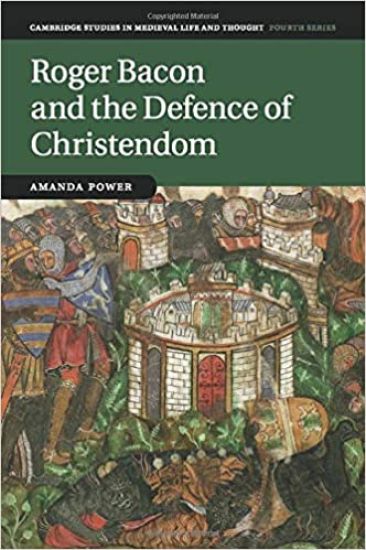
Roger Bacon and the Defence of Christendom

Roger Bacon and the Defence of Christendom

Amanda Power

Cambridge University Press
2015
pokkari
The English Franciscan Roger Bacon (c.1214–92) holds a controversial but important position in the development of modern science. He has been portrayed as an isolated figure, at odds with his influential order and ultimately condemned by it. This major study, the first in English for nearly sixty years, offers a provocative new interpretation of both Bacon and his environment. Amanda Power argues that his famous writings for the papal curia were the product of his critical engagement with the objectives of the Franciscan order and the reform agenda of the thirteenth-century church. Fearing that the apocalypse was at hand and Christians unprepared, Bacon explored radical methods for defending, renewing and promulgating the faith within Christendom and beyond. Read in this light, his work indicates the breadth of imagination possible in a time of expanding geographical and intellectual horizons.
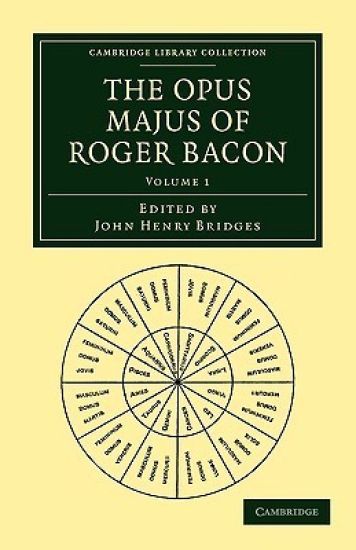
The Opus Majus of Roger Bacon

The Opus Majus of Roger Bacon

Roger Bacon

Cambridge University Press
2010
pokkari
Roger Bacon, the medieval natural philosopher who broke new ground in promoting scientific method, produced the encyclopedic Opus Majus or 'Greater Work' in the mid-thirteenth century. This 1897 publication in two volumes was the first complete edition of the work to appear in print. Written at the request of Pope Clement IV, the Opus Majus is the most significant and most influential of Bacon's works, containing his observations of the natural world and theories on knowledge acquisition. Bacon's text appears in the original Latin, and Bridges includes a substantial introduction and brief analysis of each chapter in English, as well as extensive footnotes and an analytical table to aid the reader. Volume 1 contains the first four parts of Bacon's treatise with sections on 'Wisdom and Truth', 'The connection of Philosophy with Theology', 'The Study of Language', and 'Mathematical Science'.
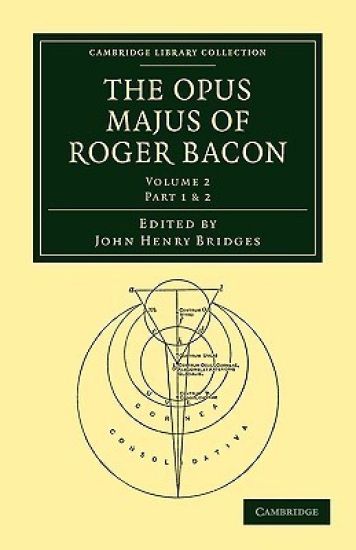
The Opus Majus of Roger Bacon

The Opus Majus of Roger Bacon

Roger Bacon

Cambridge University Press
2010
pokkari
Roger Bacon, the medieval natural philosopher who broke new ground in promoting scientific method, produced the encyclopedic Opus Majus or 'Greater Work' in the mid-thirteenth century. This 1897 publication in two volumes was the first complete edition of the work to appear in print. Written at the request of Pope Clement IV, the Opus Majus is the most significant and most influential of Bacon's works, containing his observations of the natural world and theories on knowledge acquisition. Bacon's text appears in the original Latin, and Bridges includes a substantial introduction and brief analysis of each chapter in English, as well as extensive footnotes and an analytical table to aid the reader. Volume 2 contains the last three parts of Bacon's treatise, on Optics, Experimental Science, and Moral Philosophy. This volume also incorporates a later supplement containing additional material and corrections.
The Life of Roger Langdon

The Life of Roger Langdon

Roger Langdon; Ellen Langdon

Cambridge University Press
2010
pokkari
First published in 1909, this autobiography details the astonishing life of Roger Langdon (1825–94), a country station-master and amateur astronomer. Langdon's life is a remarkable story of self-education and determination: he started work as a farmer's boy at the age of eight, ran away from the home to work for a shipowner in Jersey at fourteen, and was then employed by a blacksmith, canvas manufacturers, and a solicitor before finding work with the Great Western Railway. Langdon was from an early age interested in astronomy, and eventually constructed four telescopes and his own observatory. He developed his own method for photographing the moon and the transit of Venus, and presented a paper to the Royal Astronomical Society, which is included in the appendices. Langdon died before completing his autobiography, and the latter chapters on his scientific achievements and final years were completed by his daughter Ellen.
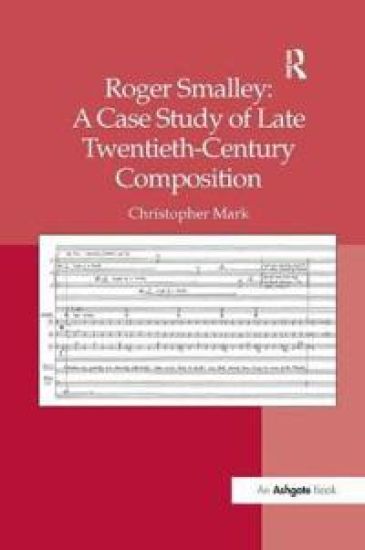
Roger Smalley: A Case Study of Late Twentieth-Century Composition
How does one go about writing the history of musical composition in the late twentieth century when, on the one hand, so much of it seems impossibly fractured and disassociated, and, on the other, there has been so little certainty about what the notion of 'music history' might entail under the critiques of post-modernism? One of the most productive ways forward is to pursue case studies involving single composers whose music reflects several aspects of recent activity. This enables the discussion of broad issues in a relatively focussed way whilst avoiding the pitfalls of traditional narrative histories and the centrifugal tendencies of the relativistic approach that some have called for. The music of the English-born (1943) and Australia-domiciled composer Roger Smalley is ideal material for such a study, because of his involvement with and response to an unusually large number of the myriad concerns and practices of post-1950s composition, including post-serial constructivism; parody; electro-acoustic composition and the electronic modification of conventionally-produced sound; Moment Form; aleatorism; minimalism; the use of non-Western resources (Aboriginal and South-East Asian sonorities); neo-Romanticism; and, arguably, the 'new classicism', as well as a brief flirtation with rock music in the late '60s. Employing an interview with the composer as a kind of cantus firmus, the book - the first extended single-author study of Smalley's music to be published - incorporates critical commentary on the composer's major works in a chronological narrative that engages with broad issues of central relevance to Smalley's generation, such as the process of learning the craft of composition in the early '60s; the motivation behind the adoption of certain technical and aesthetic positions; the effects on technical and aesthetic orientation of both the changing relationships between composer, performer, and audience and technological change; and the distinction betwe
Roger Hilton

Roger Hilton

Adrian Lewis

Routledge
2019
nidottu
This title was first published in 2003. Twenty-seven years after his death, Roger Hilton's reputation as a leading figure in British 'abstract expressionism' continues to rise. Following the major retrospective exhibition at the Hayward Gallery in 1993 and the drawings survey at the Tate St Ives in 1997, this lavishly illustrated account is the first to provide a comprehensive overview of the life and work of this important artist. Hilton's extraordinary career is discussed in all its phases, from the intriguing earliest explorations in paint to the inception of his first abstract pieces around 1950 and the complex and intriguing interchanges of imagery and form that mark his final works. Adrian Lewis explains the artist's mature works as both attracting the viewer and resisting easy reading, and discusses in detail the artist's debt to the Ecole de Paris and his relation to the notion of the 'act of painting' that pervaded post-war culture.