In a writing career which covered the first 50 years of the 20th century, Rose Macaulay produced 23 novels, 6 books of criticism, 4 books of travel and history and 2 collections of poetry as well as a large correspondence. This biography is a lively portrait of the idiosyncratic figure who became so well known in London social and literary circles.
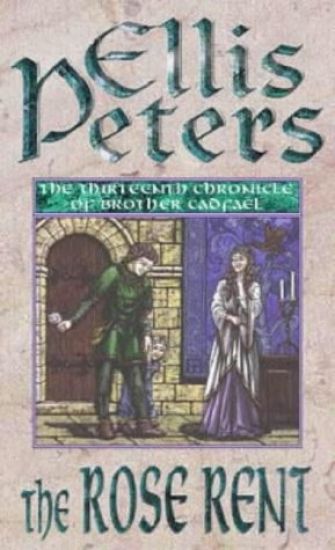
In his thirteenth chronicle Brother Cadfael believes the motive for a callous murder is all too obvious, but he soon learns that when love and money are involved, nothing is straightforward.
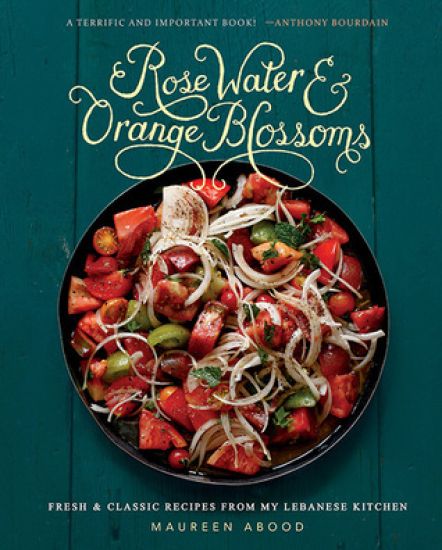
Publishers Weekly's Top 10 Cookbooks for Spring 2015 Pomegranates and pistachios. Floral waters and cinnamon. Bulgur wheat, lentils, and succulent lamb. These lush flavors of Maureen Abood's childhood, growing up as a Lebanese-American in Michigan, inspired Maureen to launch her award-winning blog, Rose Water & Orange Blossoms. Here she revisits the recipes she was reared on, exploring her heritage through its most-beloved foods and chronicling her riffs on traditional cuisine. Her colourful culinary guides, from grandparents to parents, cousins, and aunts, come alive in her stories like the heady aromas of the dishes passed from their hands to hers. Taking an ingredient-focused approach that makes the most of every season's bounty, Maureen presents more than 100 irresistible recipes that will delight readers with their evocative flavors: Spiced Lamb Kofta Burgers, Avocado Tabbouleh in Little Gems, and Pomegranate Rose Sorbet. Weaved throughout are the stories of Maureen's Lebanese-American upbringing, the path that led her to culinary school and to launch her blog, and life in Harbor Springs, her lakeside Michigan town.
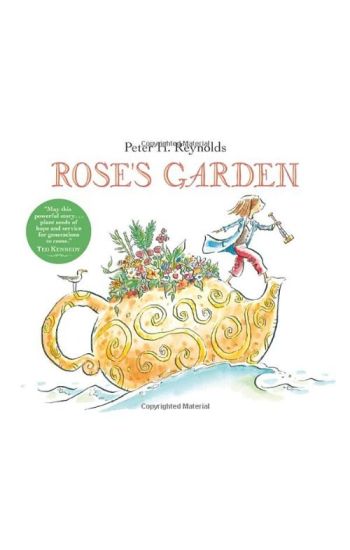
A sweet fable dedicated to Rose Fitzgerald Kennedy that celebrates the spirit of community, the beauty of nature, and the power of faith and imagination. A sweet fable dedicated to Rose Fitzgerald Kennedy that celebrates the spirit of community, the beauty of nature, and the power of faith and imagination -- After traveling the world in her fantastic teapot, Rose is ready to put down roots. She sets about planting flower seeds in a neglected corner of a bustling city. And then she waits -- through rain and cold and snow. Rose waits, never doubting that the garden she envisions will one day come to be. With a simple narration and lovely, fanciful illustrations, this luminous picture book resonates with readers of all ages. Author-illustrator Peter H. Reynolds dedicates it to the matriarch of the Kennedy family -- herself the namesake of the Rose Kennedy Greenway, a series of gardens, plazas, and tree-lined promenades.
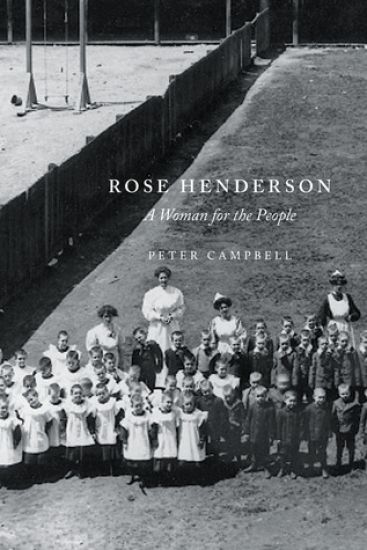
The political movements and social causes of the turbulent 1920s and 30s are brought to life in this study of the work and times of feminist, socialist, and peace activist Rose Henderson (1871-1937). Her commitment to social justice led to frequent monitoring and repression by the authorities but her contributions to activist thought continue to pose challenges for interpretations of the history of Canada, leftism, labour, and women.
This edition of Hamlin Garland's best novel—best both for historical reasons and intrinsically—-reprints Rose of Dutcher's Coolly in its original form. Partly in response to the attack on it when it appeared in 1895, Garland revised the novel in 1899, and this revision was used as the text of all later republications of Rose. As well as comparing the 1895 and 1899 editions, Donald Pizer's introduction places the novel in the context of Garland's career and in particular defines his attitude toward woman's sexuality as revealed in Rose—an attitude that was then considered radical and that lead to the attempted suppression of the book.
Widely regarded as the best of Hamlin Garland's novels, Rose of Dutcher's Coolly tells the story of a country girl of precocious ability who is raised by her widower father on a small Wisconsin farm. She wants to be a poet and eventually attends the university, where her talent is encouraged. A carefully crafted defense of the New Woman, the first generation of women to achieve economic and social independence, Rose of Dutcher's Coolly deals with issues that are still with us—the nature of femininity, the problem of reconciling career and family, the meaning of "love," and the need for equal opportunity. Above all, it records a nineteenth-century man's vision of a world that still eludes us, one in which men and women are equal partners. This edition reprints the text of the 1895 printing and includes an introduction that places the novel in the historical context of the early feminist movement.
This is the story of Mellie, who as a baby is found in a grotto, then raised in a souvenir shop by Rose. At age twelve Mellie goes to the dying town of OÂt, where she enters premature adulthood and assembles a photographic and written record of her life. Enchanting, realistic, comic, tragic-all these words describe this spellbinding novel that, like all genuine fables, takes us to a world that is utterly strange and very much our own. Rose Mellie Rose is one of three novels that are the first works to appear in English by Marie Redonnet, one of France's most original new authors (the other novels are HÔtel Splendid and Forever Valley, both also available from the University of Nebraska Press). Translator Jordan Stump notes that these books "unmistakably fit together, although they have neither characters nor setting in common." In all three novels, Redonnet has said, "it is the women who fight, who seek, who create."
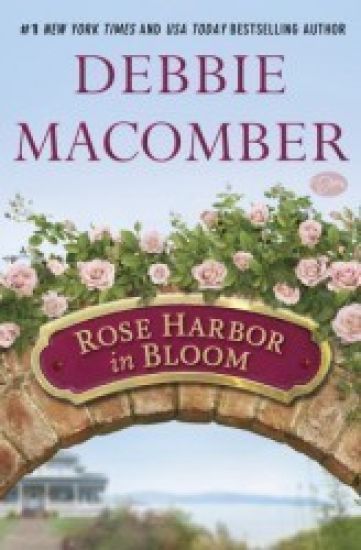
#1 NEW YORK TIMES BESTSELLER - Debbie Macomber returns to the charming Rose Harbor Inn, where each guest finds a second chance and every room comes with an inspiring new view. "Macomber uses warmth, humor and superb storytelling skills to deliver a tale that charms and entertains."--BookPage Since moving to Cedar Cove, Jo Marie Rose has truly started to feel at home, and her neighbors have become her closest friends. Now it's springtime, and Jo Marie is eager to finish the most recent addition to her inn. In memory of her late husband, Paul, she has designed a beautiful rose garden for the property and enlisted handyman Mark Taylor to help realize it. She and Mark don't always see eye-to-eye--and at times he seems far removed--yet deep down, Jo Marie finds great comfort in his company. And while she still seeks a sense of closure, she welcomes her latest guests, who are on their own healing journeys. Annie Newton arrives in town to orchestrate her grandparents' fiftieth wedding anniversary celebration. While Annie is excited for the festivities, she's struggling to move on from her broken engagement, and her grandparents themselves seem to be having trouble getting along. Worse, Annie is forced to see Oliver Sutton, with whom she grew up and who has always mercilessly teased her. But the best parties end with a surprise, and Annie is in for the biggest one of all. High-powered businesswoman Mary Smith, another Rose Harbor Inn guest, has achieved incredible success in her field, yet serious illness has led her to face her sole, lingering regret. Almost nineteen years ago, she ended her relationship with her true love, George Hudson, and now she's returned to Cedar Cove to make amends. Compassion and joy await Jo Marie, Annie, and Mary as they make peace with their pasts and look boldly toward their futures. Rose Harbor in Bloom is Debbie Macomber at her heartwarming best.
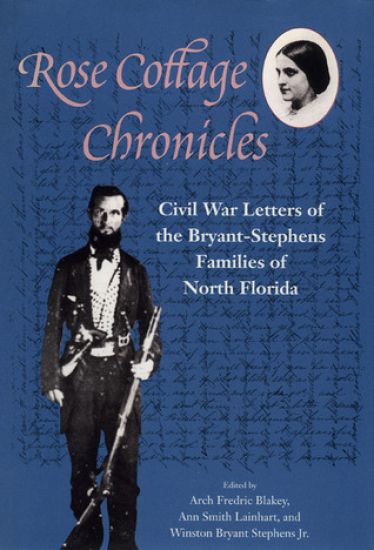
July 31, 1859 My Angel of purity love and Goodness! Forgive this offence and I’ll be guilty of the like again the first time I feel like writing. You had as well bid the Sun cease to wander the earth with its heat as to bid the heart of Winston not to commune with the object of its adoration . . . March 12, 1862 My own dear husband, I hardly know what to write and how to write to you my poor heart is so full of anxiety . . . I think you may as well give up and come home as to try and keep the enemy back . . . I suppose you heard that the Government has abandoned this state and the Governor has ordered all the regiments that are mustered into the Confederate service away from East Fla. What is to become of us? Feb 2, 1864 My Dear Wife, Oh! That I could have you by me to talk to . . . We get no news here, still it does seem that something must be doing to make ready for a grand move. . . I often think and wonder if our Government sees the awful truth and is preparing to meet and defeat the attempt to crush us. . . . As fresh and poignant today as when they were written, these touching letters and diaries capture the heart of everyday life during the Civil War. Set both at home in north Florida and on the front, the letters were written from 1856 to mid-1865 by two generations of the Bryant and Stephens families, ordinary Confederate folk whose members included radical secessionists, moderates, and even a few Unionists. The domestic letters, written mostly by mothers and daughters from their homes near Welaka, Florida, describe their hatred of Yankee invaders, their emotions in dealing with slaves, and their flaming patriotism as well as their fear of being abandoned by the government. They offer a rare picture of the expanded roles of women as farm managers; their naive hopes for a quick victory; and their yearning for peace. From the military camps, soldiers and officers write about Abe Lincoln; ""coloured troops""; endless marches; Florida's two best-known battles, Olustee and Natural Bridge; and all the skirmishes around Jacksonville and the St. Johns River as well as distant military events like the Battle of Gettysburg. For all of the letter writers, death has become as familiar as Spanish moss. Especially, though, the letters tell a love story. The courtship of Winston Stephens and Tivie Bryant was prolonged, erratic, and stormy; their married life at Rose Cottage was nearly perfect--and brief. Four years and three months after their wedding--during the final ticks of the Confederate clock--Winston was killed in battle. Days later their only son was born. Virtually all of the letters--more than one thousand exchanged between eight major and four minor correspondents--survive in this family saga, a riveting human and historical chronicle set in the foreground of the Civil War.
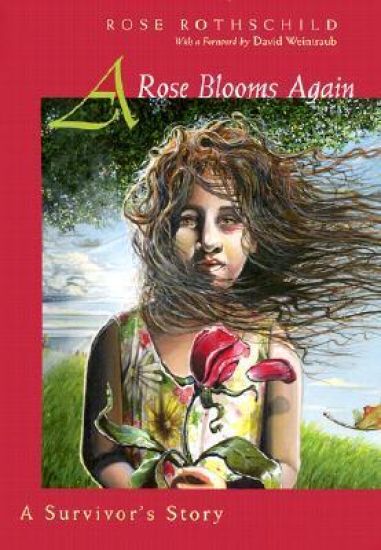
This emotionally charged memoir begins with recollections of joyous times in prewar Poland. Born into wealth rare for Polish Jewry, the author recalls a girlhood of privilege, and teen years spent in anticipation of war. Like the rest of the nation, her family was consumed by spirited political debates, only to be abruptly silenced by sirens screaming in the night. Poland had fallen to Hitler's Germany in a swift and savage invasion that would forever alter young Rose Strzegowski's fate. . . and that of the world. With powerful immediacy she shows how inner strength enabled her to triumph amid the horrors of the camps, to risk all to nurse her sick sister, to surmount postwar hardships as a displaced person and, finally, to embrace newfound happiness. It is an unforgettable story of historic adversity filtered through the prism of personal courage, faith, and growth.