Kirjojen hintavertailu. Mukana 12 491 209 kirjaa ja 12 kauppaa.

Kirjahaku

Etsi kirjoja tekijän nimen, kirjan nimen tai ISBN:n perusteella.

1000 tulosta hakusanalla Rudolf Dietsch

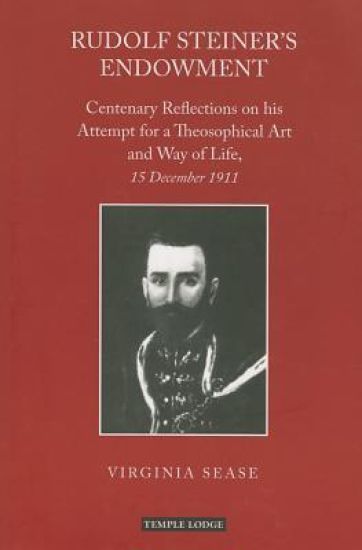
Rudolf Steiner's Endowment

Rudolf Steiner's Endowment

Virginia Sease

Temple Lodge Publishing
2012
nidottu
Among Rudolf Steiner's many initiatives that evoked visible, sustained impulses, there was one that did not develop as planned - his so-called 'endowment' of 1911. This was his attempt to create a 'Society for a Theosophical Art and Way of Life', that would work 'under the protectorate of Christian Rosenkreutz'. Rudolf Steiner envisaged a grouping of individuals who were '...deeply moved by a spiritual power like the one that lived earlier in Christianity'. Through the forming of such a Society, he sought to enable a true spiritual culture to arise on earth - a culture that would 'engender artists in every domain of life'. Virginia Sease's reflections - a century after Rudolf Steiner's attempt - place a special emphasis on three considerations. Firstly, that the Endowment impulse allows us to experience the art of 'interpreting' in the Rosicrucian way. Secondly, that the best initiative, even one undertaken by a great individuality, is doomed to failure if the participants are unable to overcome their personal ambitions. And finally, that we may live with the fact that, despite the passing of time, the seeds dormant in Rudolf Steiner's attempt still have the possibility to come to fruition in the future.
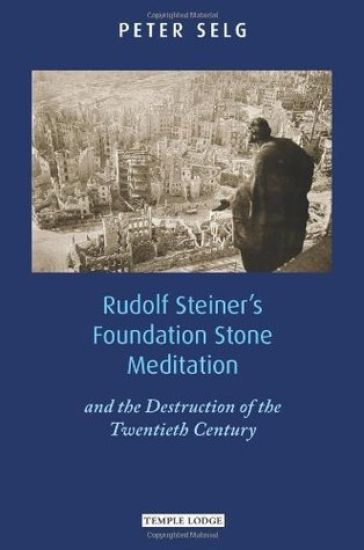
Rudolf Steiner's Foundation Stone Meditation

Rudolf Steiner's Foundation Stone Meditation

Peter Selg

Temple Lodge Publishing
2012
nidottu
Rudolf Steiner spoke the Foundation Stone meditation at the Christmas Conference of the General Anthroposophical Society in 1923, giving it to the Society's members for the strengthening of their forces. The meditation's words contain, to quote Sergei O. Prokofieff, 'the quintessence of the whole of anthroposophy'. Thus, Steiner was bestowing on the members the potential to deal resolutely with the specific tasks awaiting them. In this short but potent volume, Peter Selg suggests further that the Foundation Stone meditation represents the concerns of every individual of the modern age, allowing each of us to maintain our humanity in the face of the challenges and catastrophes of the present and future. Rudolf Steiner said that one could hear the words of the meditation 'sounding' in one's heart. This process of 'hearing' will acquire even more significance and reality in future, and can be of enormous help to anyone who opens themselves to it. It is against this background that Selg has written this introductory book: to promote awareness of the meditation, understanding of its historic place in the catastrophic twentieth century, and its critical but latent contribution to the future.
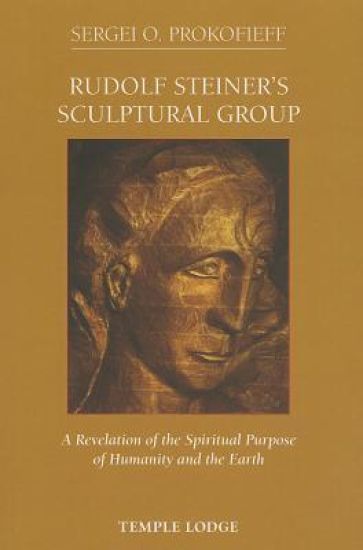
Rudolf Steiner's Sculptural Group

Rudolf Steiner's Sculptural Group

Sergei O. Prokofieff

Temple Lodge Publishing
2013
nidottu
Saved by good fortune from the flames that engulfed the first Goetheanum, Rudolf Steiner's wooden sculpture of the Christ - 'the Representative of Humanity' - standing between the adversary forces of Lucifer and Ahriman, remains intact and on display, although unfinished, to this day. Unique in the history of art, the Sculptural Group was deeply connected to Rudolf Steiner's inner being. The great Christian initiate even died by its side, having made efforts to work on the sculpture just days before he crossed the threshold. The essential source from which this work was created, says Sergei Prokofieff, '...lay in Rudolf Steiner's ego, in his spirit...It was only out of this intuitive connection of his own ego with the Christ Being that he was able to create this work of art.' Beginning with the Sculptural Group's early history, and Steiner's collaboration on its creation with Edith Maryon, Prokofieff enters into deeply esoteric perspectives, studying the artwork's relationship with the mysteries of the Holy Grail, the etherization of the blood, the Seventh Apocalyptic Seal, the Legend of the New Isis, as well as the being Anthroposophia.
Rudolf Steiner's Path of Initiation and the Mystery of the EGO

Rudolf Steiner's Path of Initiation and the Mystery of the EGO

Rudolf Steiner; Sergei O. Prokofieff

Temple Lodge Publishing
2013
nidottu
Two lectures in Bologna: on 31 March 2011 at the International Conference to Mark the Centenary of Rudolf Steiner's Lecture in Bologna, and on 8 April 1911 at the Fourth International Philosophy Congress A special conference took place in Bologna in Spring 2011, marking the hundredth anniversary of a unique lecture Rudolf Steiner delivered to a philosophically-trained audience in the same city. In his key exposition, Steiner had given a concise description of the spiritual-scientific theory of knowledge as well as a brief outline of the anthroposophical path of schooling. In his contribution to the 2011 congress, Sergei O. Prokofieff tackles two principal aspects. On the one hand, he describes how Steiner's Bologna lecture contained the essential foundations for a new 'science of the human ego'. On the other hand, Prokofieff states that Rudolf Steiner was the first person to transform this same theory into a practical path of knowledge, following it to its very conclusion. Thus, the words of Rudolf Steiner's lecture were based entirely on personal experience. Together with a transcript of Rudolf Steiner's full Bologna lecture, Sergei O. Prokofieff's own lecture is reproduced here in an expanded version. In addition, this volume features Rudolf Steiner's important 'summaries of essential points', in which he develops and connects some of his key thoughts with further aspects of anthroposophy, especially in relation to their Christological foundations.
Rudolf Steiner and the Founding of the New Mysteries

Rudolf Steiner and the Founding of the New Mysteries

Sergei O. Prokofieff

Temple Lodge Publishing
2017
nidottu
In this revised and expanded edition of his classic debut, Sergei O. Prokofieff investigates the deepest mysteries of Rudolf Steiner's life and individuality, from 'the years of apprenticeship' and 'the great Sun period' to 'the path of the Teacher of Humanity' and 'the birth of the New Mysteries'. He discusses the earthly and supersensible aspects of the first Goetheanum, the implications of the Christmas Conference of 1923-24, and the Foundation Stone meditation that Steiner left as a legacy to members of the Anthroposophical Society.In his very personal Introduction, Prokofieff describes, in moving detail, the events in his life which led to his discovery of anthroposophy whilst living in Communist Russia, and how eventually he came to write this extraordinary study of Rudolf Steiner. The resulting volume - a work of secondary anthroposophical literature unprecedented in its depth and significance - was first published in Germany in 1982, meeting with equal amounts of acclaim, astonishment and controversy. It is published in this paperback edition to mark the 35th anniversary of the original publication.
Rudolf Steiner, Fragment of a Spiritual Biography

Rudolf Steiner, Fragment of a Spiritual Biography

Sergei O. Prokofieff

Temple Lodge Publishing
2020
nidottu
Underlying Sergei O. Prokofieff's life's work was a fundamental research-theme to which he returned to repeatedly: the individuality of Rudolf Steiner as manifested through his past incarnations on Earth. Beginning in 1982, inspired by a visit to an exhibition on The Epic of Gilgamesh, Prokofieff planned a full-scale spiritual biography with the intention of finding an answer to the question: Who is Rudolf Steiner? In a sequence of five past incarnations - as indicated by Steiner himself - and culminating in the life of Rudolf Steiner, Prokofieff searched for the inner thread between the six stages of this great, all-encompassing life. His intention was to find not only the outer connections in this sequence but also the deeper, more esoteric stream that offers the key to the unique significance of this individuality. In 1984, Prokofieff began to write the first chapter about Rudolf Steiner's incarnation as Enkidu in Sumer. Sadly, many obstacles in his path were to prevent him finalising the project. However, the author returned to the book in his final months, preparing a Preface that outlines its conception together with a summary chapter on Rudolf Steiner's evolutionary journey. This precious 'fragment' of a biography features valuable additional material, including: a full introduction to the relationship of the anthroposophical movement to other occult streams of esoteric Christianity and their Masters; a detailed spiritual-scientific interpretation of the Epic of Gilgamesh that establishes Rudolf Steiner's connection with the being of Jesus of Nazareth, and an exploration of Steiner's relationship to the Nathan soul, the Luke Jesus child. Serious students of anthroposophy will welcome these final writings from the pen of one of Rudolf Steiner's most faithful and insightful disciples.
Rudolf Steiner

Rudolf Steiner

Rudi Lissau

HAWTHORN PRESS
2025
pokkari
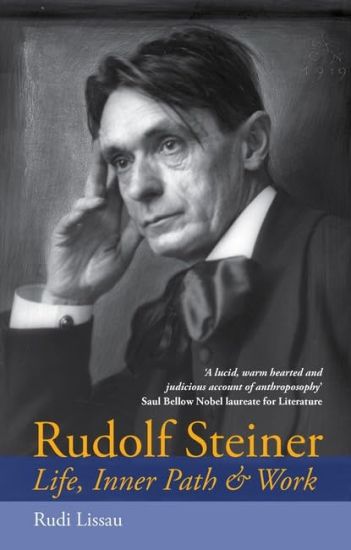
"A very lucid, warm hearted and judicious account of anthroposophy, which I read with pleasure and gratitude." -- Saul Bellow, winner of the Nobel Prize for Literature Rudi Lissau offers a fascinating overview of Rudolf Steiner's life, philosophy, meditative path, and work. He summarizes Steiner's revolutionary thinking on Waldorf education, biodynamic farming, medicine, the arts, and the sciences, offering an inspiring alternative to bleak materialism. Unique among spiritual teachers, Steiner was also an activist who campaigned against totalitarianism, nationalism, imperialism, and free-market capitalism, and advocated for a threefold commonwealth based on freedom, equality, and fraternity. Central to his teaching are profound insights into Christ and the destiny of humanity. Andrew Welburn's Introduction contextualizes Steiner and spiritual modernity.Contents include chapters on Rudolf Steiner and spiritual modernity; an overview of Steiner's life; Christ and the destiny of humanity; the inner path; building alternative social and cultural initiatives; social renewal and activism; paths and obstacles; Steiner's philosophy of freedom; and more, plus an afterword.
Rudolf Steiner and Anthroposophy

Rudolf Steiner and Anthroposophy

Lia Tummer

Clairview Books
2024
nidottu
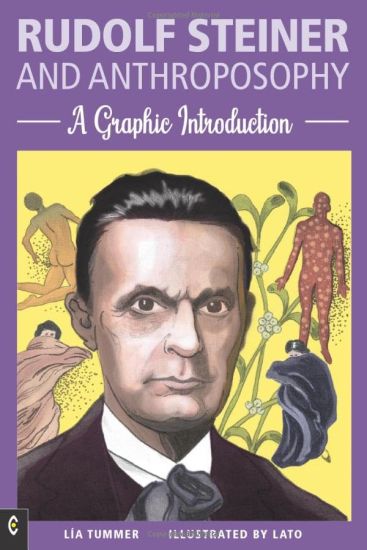
Combining Lia Tummer's lucid text and Lato's creative and playful illustrations, Rudolf Steiner and Anthroposophy is a highly-engaging and unique 'graphic' introduction that is suitable for both the curious beginner and the dedicated student. At the dawn of the twentieth century, Rudolf Steiner presented anthroposophy as a 'spiritual science' that expanded upon the restricted, scientific-materialist ideology of his time. Based on a profound knowledge of human beings and our relationship with nature and the universe, anthroposophy not only provides rejuvenating impulses for the most diverse spheres of human activity - such as medicine, education, agriculture, art and science - but also provides answers to the eternal questions posed by humankind, and on which contemporary science remains indifferent: What is life? Where do we come from when we are born? Where do we go when we die? What is the meaning of pain and illness? Why do people experience such differing challenges in their lives? This charming book depicts the development of a universal genius, from his childhood in the untamed beauty of the Austrian Alps to the sublimities of human wisdom; from his work as a Goethe scholar to the building of the extraordinary Goetheanum in Dornach, Switzerland.
Rudolf Nureyev

Rudolf Nureyev

Patricia Boccadoro

THE BOOK GUILD LTD
2023
nidottu
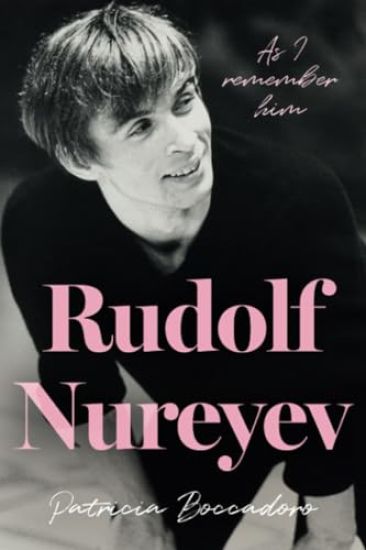
Following an unorthodox first meeting in London in 1964, Patricia Boccadoro got to know Rudolf Nureyev on a personal basis after she moved to live in Paris in the 1970s. In this amusing, informative book, she recounts how exciting it was to see him dance in those heady London years, during his legendary partnership with Margot Fonteyn, before giving a lucid account of his directorship of the Paris Opera Ballet, making it into one of the finest companies in the world. The book culminates with his legacy, demonstrating how, with his extreme intelligence, glamour and passion, he changed the image of the male dancer, making them the equal of the ballerina. Above all, the lively reminiscences of those closest to him, along with a selection of photographs, many rarely seen or unpublished, bring Rudolf to life, casting off the image of a temperamental superstar, and painting a true picture of the immensely kind, fun-loving man behind one of the greatest artists of the twentieth century.
Rudolf de Crignis

Rudolf de Crignis

Larry Rinder

Radius Books
2013
sidottu
Swiss artist Rudolf de Crignis (1948-2006) began his career in video, photography and performance art. In 1985, a studio fellowship in New York introduced the artist to the work of American minimalist painters such as Robert Ryman, Ad Reinhardt, Agnes Martin and Barnett Newman, precipitating his shift to painting. De Crignis began by making paintings that at first appear to be a single hue, but which were actually begun as a finely worked, layered, white gesso surface. This substantial volume is the first to present a thorough overview of Crignis' austere and meditative work.
The Impulse of Renewal for Culture and Science: A Lecture Series by Rudolf Steiner
This is a First Edition English translation of a series of seven lectures, entitled The Impulse for Renewal in Culture and Science, and published in German as, Erneuerungs-Impuls fuer Kultur und Wissenschaft. This course was organized by the Federation of Anthroposophical University Work and the Berlin Branch of the Anthroposophical Society. It was the aim of the organizers, through lectures by various speakers, to "give an impression of what suggestions in various fields can be given by anthroposophy." For each course day, Rudolf Steiner gave the introductory lecture. In these lectures, Steiner explains the relationships between Anthroposophy and the natural sciences, philosophy, pedagogy, theology, the social sciences, and linguistics. He also brings to light the biological differences between humans and animals from an anthroposophical perspective.
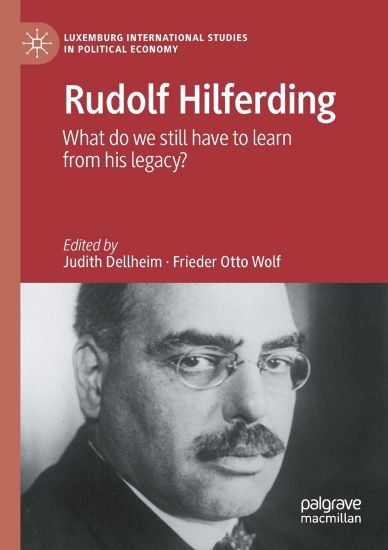
Rudolf Hilferding

Rudolf Hilferding

Springer Nature Switzerland AG
2022
nidottu
This edited volume is focused on Hilferding's major work, Finance Capital. In revisiting this influential book from a methodological point of view, both historical and intellectual, this book affirms Hilferding's place in the Marxist tradition. Hilferding's ideas are used to criticise incumbent approaches in economics and enrich existing discussions and debates about the nature of modern capitalism. In doing so, this book highlights the importance of Hilferding's work in analysing and understanding modern capitalism and corporate developments.The volume has contributions from a range of expert scholars addressing various aspects of Hilferding’s arguments. It elaborates on Hilferding’s central idea on the political economy, as well as its historical context, and its relation to Marx. Contributors move on to criticize Hilferding’s views on the political economy and politics in general. This book is relevant to those interested in the political economy, the history of economic thought, and European politics.
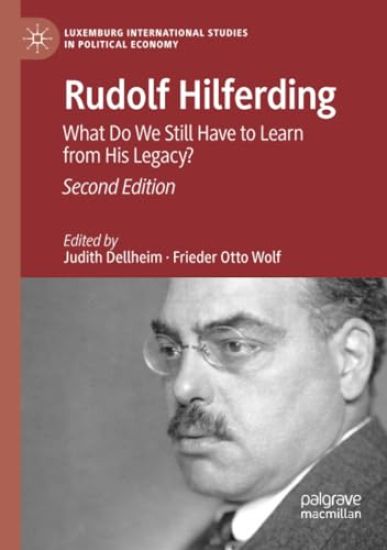
Rudolf Hilferding

Rudolf Hilferding

Springer International Publishing AG
2022
sidottu
This revised and expanded book focuses on Hilferding's major work, Finance Capital. In revisiting this influential book from a methodological point of view, both historical and intellectual, the authors affirm Hilferding's place in the Marxist tradition. Hilferding's ideas are used to criticise incumbent approaches in economics and enrich existing discussions and debates about the nature of modern capitalism. In doing so, this book highlights the importance of Hilferding's work in analysing and understanding modern capitalism and corporate developments. New material looking at Hilferding’s economic journalism, debates around his work in Poland, and Eugene Varga’s perspective on his work is also included.The book aims to explore Hilferding’s central ideas on the political economy, as well as its historical context and relation to Marx. It will be relevant to students and researchers interested in the political economy, the history of economic thought, and European politics.
Rudolf Hilferding

Rudolf Hilferding

Springer International Publishing AG
2023
nidottu
This revised and expanded book focuses on Hilferding's major work, Finance Capital. In revisiting this influential book from a methodological point of view, both historical and intellectual, the authors affirm Hilferding's place in the Marxist tradition. Hilferding's ideas are used to criticise incumbent approaches in economics and enrich existing discussions and debates about the nature of modern capitalism. In doing so, this book highlights the importance of Hilferding's work in analysing and understanding modern capitalism and corporate developments. New material looking at Hilferding’s economic journalism, debates around his work in Poland, and Eugene Varga’s perspective on his work is also included.The book aims to explore Hilferding’s central ideas on the political economy, as well as its historical context and relation to Marx. It will be relevant to students and researchers interested in the political economy, the history of economic thought, and European politics.
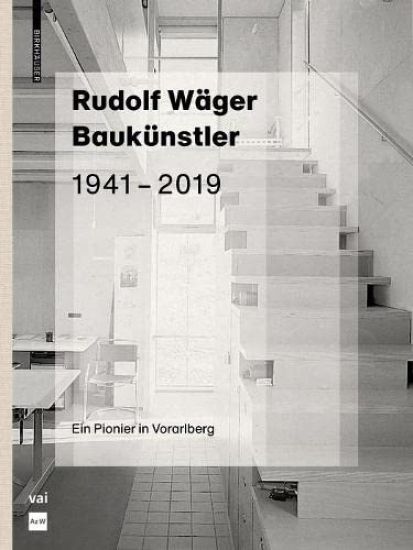
Rudolf Wäger Baukünstler 1941–2019

Rudolf Wäger Baukünstler 1941–2019

Martina Pfeifer Steiner; Marina Hämmerle

Birkhauser
2021
sidottu
Als gelernter Zimmermann war Rudolf Wäger ( 94 –2 9) in der Architektur Autodidakt. Das 9 5 eigenhändig errichtete „Würfelhaus" , ein emblematisches, auf das Wesentliche in Material und Gestalt reduziertes Kleinhaus, wurde zum viel beachteten Pionierwerk der „Vorarlberger Baukünstler" – jener Gruppe, die den internationalen Ruf der Vorarlberger Baukultur prägte: klug, maßvoll und perfekt in Planung und Ausführung. Neben der Vielzahl an kostengünstigen Einfamilienhäusern sind seine Entwürfe für Wohnanlagen und Reihenhäuser von Baugemeinschaften noch heute wegweisend in Raumgestalt und Konstruktion. Das Konzept dieser ersten Monografie ist noch in Zusammenarbeit mit Rudolf Wäger entstanden. Anlässlich seines 8 . Geburtstags im Jahr 2 2 eröffnen Buch und Ausstellung einen umfassenden Zugang zu seinem Oeuvre.