Kirjojen hintavertailu. Mukana 11 244 527 kirjaa ja 12 kauppaa.

Kirjahaku

Etsi kirjoja tekijän nimen, kirjan nimen tai ISBN:n perusteella.

1000 tulosta hakusanalla Rudolf Schaefer

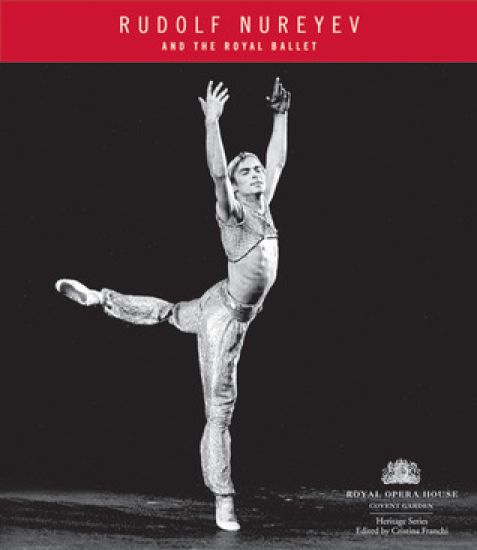
Rudolf Nureyev And The Royal Ballet

Rudolf Nureyev And The Royal Ballet

Cristina (EDT) Franchi

Oberon Books Ltd
2007
pokkari
The first international ballet superstar, Nureyev defected from Russia in 1961 and first appeared with The Royal Ballet in 1962. His phenomenal technique, his appetite for new dance experiences and his flamboyant lifestyle brought ballet to the attention of a wider audience and raised the status of male dancing.
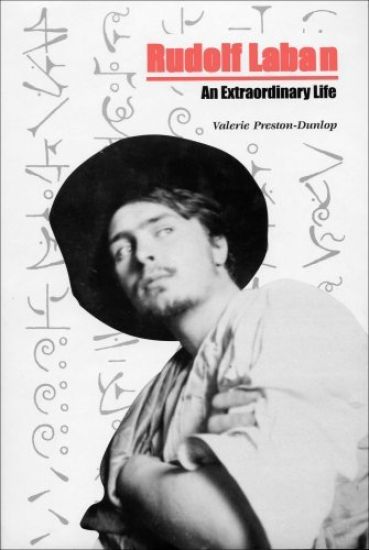
Rudolf Laban

Rudolf Laban

Valerie Preston-Dunlop

Dance Books Ltd
2008
pokkari
A visionary, a mystic, a lover, a leader, a dancer, an artist, a teacher, a theorist.Rudolf Laban (1879 - 1958) was all these things. Born in fin-de-siecle Austro-Hungary, Laban lived in Austria, France, and Germany. Though he began as a painter, architect and illustrator, it is in movement and dance that Laban made a lasting impact. He was a performer, a choreographer, and a mentor, but his ideas were always part of a broader vision of of movement - as theatre art, as community celebration, and as self-discovery. Through his research into movement he uncovered the interconnections of the body and the psyche, the individual and the group, and he devised a revolutionary system of movement notation that is till in use today.
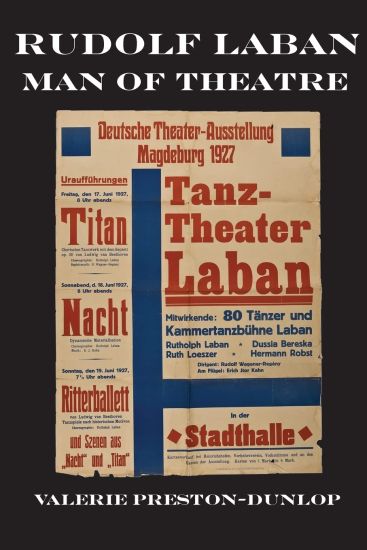
Rudolf Laban

Rudolf Laban

Valerie Preston-Dunlop

DANCE BOOKS LTD
2013
nidottu
Rudolf Laban's provocative, experimental, explosive dance theatre works have lain hidden since the Third Reich deliberately annihilated his name. This book exposes Laban's audacity and his significance for dance theatre today, giving access to his creative practices as he provided dance audiences with shock, amusement, awe, curiosity, beauty and meaning. Dr. Valerie Preston-Dunlop, with collaborating artists and dancers, has researched and recreated for today's audiences four groundbreaking works: The visionary Swinging Temple of 1922, his diverse Suite of 1924, his critique of Weimar Republic's decadence Nacht 1927, and his tragic-comic satire Green Clowns. The book follows the making of these works starting with his dynamic revitalisation of dance, freeing dance from music and from ballet, introducing improvisation to find movements never danced before. His struggles in Paris, Munich, Zurich, Hamburg and Berlin, cities vibrant with political controversy and dramatic cultural change, are presented as central to the content and rehearsal methods of his dance theatre works. The re-creations discussed are no resuscitation of dead dances but the result of a radical new look at how to engage today with dances made in the 1920s. Preston-Dunlop, her collaborators rehearsal directors Alison Curtis-Jones and Melanie Clarke, and composers Oli Newman and Robert Coleridge, write with a frank freshness of what actually goes on in the re-making of an expressionist work where dancers may speak, shout, gasp and spit as well as dance in unfamiliar and demanding ways. The impact of these works on the collaborating dancers, in 1920 and today was profound.
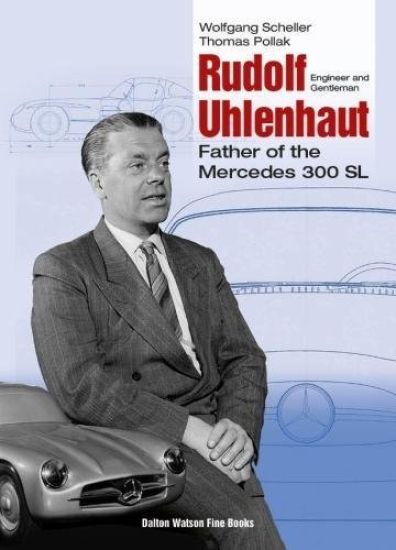
Rudolf Uhlenhaut

Rudolf Uhlenhaut

Wolfgang Scheller; Thomas Pollak

Dalton Watson Fine Books
2017
sidottu
This first comprehensive biography of Rudolf Uhlenhaut, illustrated with many previously unpublished photographs, depicts his life and technical accomplishments, including a complete compilation of his patents which puts them into a technical and historical context. An engineer and designer for Daimler-Benz, he became famous for his achievements regarding the Silver Arrows, the 300 SL with the famous gull wing doors, the legendary Mercedes-Benz 300 SLR, and the various record-breaking experimental C 111 versions.Based on numerous interviews with Uhlenhaut himself, contemporary witnesses, colleagues and family members, the book paints a vivid picture of the person behind the technical innovations and explores his character and motivation. Born in 1906 in London, the son of an English mother and a German father, Rudolf Uhlenhaut joined Daimler-Benz in 1931 after finishing his mechanical engineering studies in Munich. In 1936 he took over as head of the racing department and conducted the Silver Arrows and Rudolf Caracciola to their 1937 European championship.After World War II, he created the road versions W 198 and the smaller open-topped W 121 of the 300 SL "Gullwing," both launched at the International Motor Sports Show in New York 1954. Uhlenhaut's official company car, a 300 SLR with a top speed of 290 km/h was the Uhlenhaut Coupe - the fastest car of its day authorized for road use.
Rudolf Steiner Speaks to the British

Rudolf Steiner Speaks to the British

Rudolf Steiner

Rudolf Steiner Press
1998
pokkari
As demonstrated in this book, Rudolf Steiner had the ability to speak to the British in a very lively an d direct way. This volume provides readers with a fuller pic ture of Steiner''s work in Britain and his approach to esoter ic ideas whilst here. '
Rudolf Steiner's Vision of Love

Rudolf Steiner's Vision of Love

Bernard Nesfield-Cookson

Rudolf Steiner Press
2011
nidottu
Rudolf Steiner, the founder of Anthroposophy, is a pivotal figure in contemporary esoteric thought. Through his books and lectures he provided an impetus for the spiritual renewal of many human activities, including education (Steiner Waldorf schools), agriculture, medicine, economics, the arts and religion. Steiner showed how mankind has been evolving and explained the role of the great spiritual world leaders in the process. Above all he showed how the impulse to evolution given by Christ's death and resurrection - what he referred to as the Mystery of Golgotha - is of unique importance in the human being's struggle to reach the summit of evolution: union with the higher self. Bernard Nesfield-Cookson here shows how Rudolf Steiner's vision of love, the transformative power brought by Christ, unites the forces of the head and heart towards a spiritual awakening among mankind. Gathering together references to the 'logic of the heart' from throughout Steiner's work, the author encapsulates the great teacher's revelations on the meaning of love, and indicates the supreme importance of the greatest of all deeds of love: the Mystery of Golgotha.
Rudolf Steiner's Mission and Ita Wegman

Rudolf Steiner's Mission and Ita Wegman

Margarete Kirchner-Bockholt

Rudolf Steiner Press
2016
nidottu
'Because I felt that he knew how things were, I said simply:"I will stay with you." Then he said significant things to me that I was not to repeat. A very ancient karma existing between him and myself was renewed. It was not until many years later that I first realised the significance of that meeting.' - Ita Wegman Ita Wegman was one of Rudolf Steiner's most important co-workers, collaborating with him principally in the field of Medicine - co-authoring the key book Extending Practical Medicine and heading the Medical Section of the School of Spiritual Science. In the background to that external work, however, was an esoteric connection. In this seminal work of karma research, the authors attempt, sensitively and with responsibility, to shed light on that spiritual and karmic history. Written for members of the Anthroposophical Society, this book is a profound study of a series of different incarnations linked to the figures of Ita Wegman and Rudolf Steiner. Spread over six disparate lifetimes, they range from Gilgamesh and Eabani (Enkidu) in Uruk, ancient Chaldea, to the Goetheanum in Dornach, Switzerland, the twentieth-century setting of the world centre of anthroposophy. Based on copious historical research, verbal statements and not a little spiritual insight, this rare and valuable work, reprinted here for the first time, features many illustrations and facsimiles of documents and personal letters.
Rudolf Steiner and Social Reform

Rudolf Steiner and Social Reform

Richard Masters

RUDOLF STEINER PRESS
2022
nidottu
How might we improve the way we organize society, so that human beings can live in greater peace, dignity and justice? Against a background of chronic discontent and social conflict around the globe, Richard Masters presents a comprehensive survey of Rudolf Steiner's work on societal reform, sifting through and summarizing the content of dozens of books, lectures and discussions. Rudolf Steiner (1861-1925) is not known today for his social thinking, but he wrote and spoke at length on such issues during and after WWI, engaging with audiences ranging from royalty, politicians and business owners to illiterate, dispossessed factory workers. Central to his ideas was his 'threefold' approach to politics, economics and culture, arguing that their roles should be clarified and the three spheres allowed to thrive independently. Drawing on the full range of source material - including much not yet available in English - the author reveals the continuing relevance of Steiner's work to our contemporary situation. With an emphasis on accessibility, he builds up the subject methodically, studying the main ideas from differing perspectives. He also provides candid reflections on the degree to which Steiner's proposals are still applicable to current policy and practice. Authoritative and yet jargon-free, Rudolf Steiner and Social Reform offers innovative and stimulating ideas for anyone concerned with the state of our world.
Rudolf Steiner

Rudolf Steiner

Roy Wilkinson

Temple Lodge Publishing
2005
nidottu
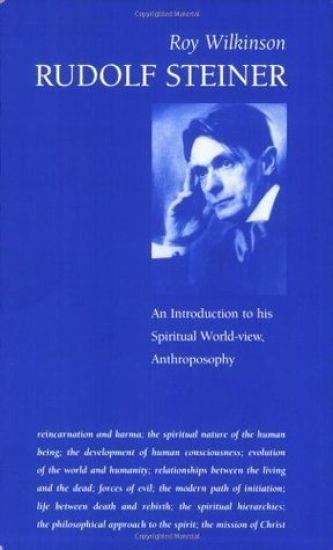
In many ways, Rudolf Steiner is the forgotten genius of recent times. A powerful thinker, who developed an intricate spiritual philosophy based on his ability to research and perceive spiritual dimensions, Steiner is perhaps best known today for his legacy to education, medicine and agriculture. But behind these practical manifestations of his ideas lies a profound teaching, which he called a 'science of the spirit' or 'anthroposophy'. In these wonderfully succinct summaries of Steiner's thought, Roy Wilkinson introduces us to aspects of this spiritual philosophy. The twelve chapters are on the following themes: Rudolf Steiner, herald of a new age; reincarnation and karma; the spiritual nature of the human being; the development of human consciousness; evolution of the world and humanity; relationships between the living and the dead; forces of evil; the modern path of initiation; life between death and rebirth; the spiritual hierarchies; the philosophical approach to the spirit; the mission of Christ.
Rudolf Steiner

Rudolf Steiner

Colin Wilson

Aeon Books Ltd
2005
nidottu
Describes Rudolf Steiner's development from shy scholar to the international figurehead of Anthroposophy, his break with Madam Blavatsky's Theosophy, his struggles to find a voice, and the essence of his insights into the supersensible world. Of all the important thinkers of the twentieth century, Rudolph Steiner (1861-1925) is perhaps the most difficult to come to grips with. For the unprepared reader, his work presents a series of formidable obstacles, from the dauntingly abstract style to the often bizarre pronouncements on the nature of man and his cosmic destiny. And yet, Steiner was perhaps the most influential and charismatic occult philosopher of his generation and the movement he launched, Anthroposophy, with its educational, agricultural, and artistic applications, still has many thousands of followers worldwide. No one interested in esoteric thought can ignore Steiner, but until now there has been no genuinely accessible introduction to his ideas. This lucid and sympathetic account describes Steiner's development from shy scholar to the international figurehead of Anthroposophy, his break with Madam Blavatsky's Theosophy, his struggles to find a voice, and the essence of his insights into the supersensible world.
Rudolf Steiner in Britain

Rudolf Steiner in Britain

Crispian Villeneuve

Temple Lodge Publishing
2009
pokkari
Rudolf Steiner, the founder of Anthroposophy, spent some five months of his life in Britain, visiting it ten times between the years 1902 and 1924. With the exception of German-speaking countries, the longest time Steiner spent abroad was in Britain, a place he clearly considered as central to his work. In this extraordinarily thorough study of over 1,200 pages and dozens of illustrations, Crispian Villeneuve documents these important visits, reproducing letters, articles, records and other archival material - much of it published for the first time. He also studies the interconnected theme of the life and work of D.N. Dunlop, Rudolf Steiner's closest British colleague. Rudolf Steiner in Britain has special significance for English-speaking peoples around the world, as well as for those seeking to understand how and why Steiner disseminated his spiritual world-view. Villeneuve's two-volume opus, the fruit of a decade of research, is finally available in a paperback edition.
Rudolf Steiner's Core Mission

Rudolf Steiner's Core Mission

T. H. Meyer

Temple Lodge
2010
pokkari
Rudolf Steiner's core mission, repeatedly delayed due to the incapacity of colleagues, was to pursue contemporary spiritual-scientific research into the phenomena of reincarnation and karma. This stimulating book describes the winding biographical path this mission took, and in particular focuses on the mystery of Rudolf Steiner's connection with the influential medieval philosopher and theologian, Thomas Aquinas. Utilizing numerous archival sources and publications, Thomas Meyer reveals many facts relating to Steiner's core mission, and shows the critical roles played by Wilhelm Anton Neumann and Karl Julius Schroer in its genesis and development. Meyer examines how Steiner's pupils responded to his insights into karma, and places this 'most intrinsic mission' into the context of current divisions within the anthroposophic movement. In particular, he highlights the place of spiritual science within culture and history, showing how Steiner developed the great scientific ideas of evolution propounded by Darwin by raising them to the plane of each individual's soul and spiritual development.As Steiner stated in 1903: 'Scientific researchers explain the skull forms of higher animals as a transformation of a lower type of skull. In the same way one should explain a soul's biography through the soul biography which the former evolved from.'
Rudolf Steiner's Research into Karma

Rudolf Steiner's Research into Karma

Sergei O. Prokofieff

Temple Lodge Publishing
2010
pokkari
In this inspiring lecture, addressed primarily to the anthroposophic movement, Prokofieff gives an overview of how the spiritual hierarchies and Christ, the Lord of Karma, work in the ordering of human karma. We are led to the karma and mission of the Anthroposophical Society, with indications as to what needs to happen before that karmic mission can be fulfilled. Prokofieff explains why true modern Christian research into karma does not arise out of intellectual speculation, curiosity or nebulous mystical experiences. The process of karmic research based on spiritual science should lead to a fundamental transformation of human nature, leading to a full experience of the cosmos.
Rudolf Steiner: The British Connection

Rudolf Steiner: The British Connection

Crispian Villeneuve

Temple Lodge Publishing
2011
nidottu
Following his major work on Rudolf Steiner's ten visits to Britain, Crispian Villeneuve studies Steiner's relationship to the British Isles in the 40 or so years before those visits took place. The theme of Steiner's early connection to British culture leads inevitably to the broader topic of his relationship to modern science. This in turn highlights the polarity and tension between the Goethean philosophic view that arises from Middle Europe, and the 'Baconian' perspective emanating from Western Europe. Interweaving these contrasting Baconian and Goethean world-views, Villeneuve presents numerous primary texts - often culled from obscure sources, and many previously unavailable in English translation - with commentary relating to Rudolf Steiner and the nineteenth century. We learn about Steiner's teachers, Karl Julius Schroer and Edmund Reitlinger, as well as English polymath William Whewell. The latter figure was perhaps the greatest admirer of Francis Bacon in recorded history, but maintained manifold connections to Middle Europe. Rudolf Steiner: The British Connection offers genuinely new and valuable research into the early life and thought of one of the greatest cultural innovators of our time.
Rudolf Steiner's Endowment

Rudolf Steiner's Endowment

Virginia Sease

Temple Lodge Publishing
2012
nidottu
Among Rudolf Steiner's many initiatives that evoked visible, sustained impulses, there was one that did not develop as planned - his so-called 'endowment' of 1911. This was his attempt to create a 'Society for a Theosophical Art and Way of Life', that would work 'under the protectorate of Christian Rosenkreutz'. Rudolf Steiner envisaged a grouping of individuals who were '...deeply moved by a spiritual power like the one that lived earlier in Christianity'. Through the forming of such a Society, he sought to enable a true spiritual culture to arise on earth - a culture that would 'engender artists in every domain of life'. Virginia Sease's reflections - a century after Rudolf Steiner's attempt - place a special emphasis on three considerations. Firstly, that the Endowment impulse allows us to experience the art of 'interpreting' in the Rosicrucian way. Secondly, that the best initiative, even one undertaken by a great individuality, is doomed to failure if the participants are unable to overcome their personal ambitions. And finally, that we may live with the fact that, despite the passing of time, the seeds dormant in Rudolf Steiner's attempt still have the possibility to come to fruition in the future.
Rudolf Steiner's Foundation Stone Meditation

Rudolf Steiner's Foundation Stone Meditation

Peter Selg

Temple Lodge Publishing
2012
nidottu
Rudolf Steiner spoke the Foundation Stone meditation at the Christmas Conference of the General Anthroposophical Society in 1923, giving it to the Society's members for the strengthening of their forces. The meditation's words contain, to quote Sergei O. Prokofieff, 'the quintessence of the whole of anthroposophy'. Thus, Steiner was bestowing on the members the potential to deal resolutely with the specific tasks awaiting them. In this short but potent volume, Peter Selg suggests further that the Foundation Stone meditation represents the concerns of every individual of the modern age, allowing each of us to maintain our humanity in the face of the challenges and catastrophes of the present and future. Rudolf Steiner said that one could hear the words of the meditation 'sounding' in one's heart. This process of 'hearing' will acquire even more significance and reality in future, and can be of enormous help to anyone who opens themselves to it. It is against this background that Selg has written this introductory book: to promote awareness of the meditation, understanding of its historic place in the catastrophic twentieth century, and its critical but latent contribution to the future.
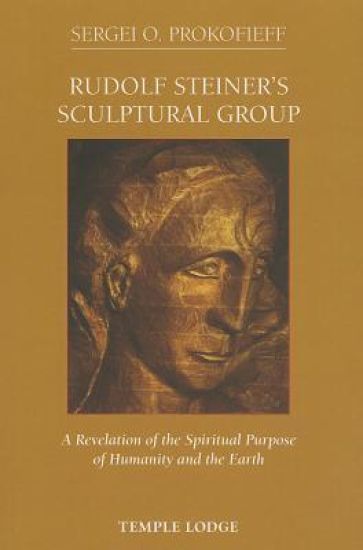
Rudolf Steiner's Sculptural Group

Rudolf Steiner's Sculptural Group

Sergei O. Prokofieff

Temple Lodge Publishing
2013
nidottu
Saved by good fortune from the flames that engulfed the first Goetheanum, Rudolf Steiner's wooden sculpture of the Christ - 'the Representative of Humanity' - standing between the adversary forces of Lucifer and Ahriman, remains intact and on display, although unfinished, to this day. Unique in the history of art, the Sculptural Group was deeply connected to Rudolf Steiner's inner being. The great Christian initiate even died by its side, having made efforts to work on the sculpture just days before he crossed the threshold. The essential source from which this work was created, says Sergei Prokofieff, '...lay in Rudolf Steiner's ego, in his spirit...It was only out of this intuitive connection of his own ego with the Christ Being that he was able to create this work of art.' Beginning with the Sculptural Group's early history, and Steiner's collaboration on its creation with Edith Maryon, Prokofieff enters into deeply esoteric perspectives, studying the artwork's relationship with the mysteries of the Holy Grail, the etherization of the blood, the Seventh Apocalyptic Seal, the Legend of the New Isis, as well as the being Anthroposophia.
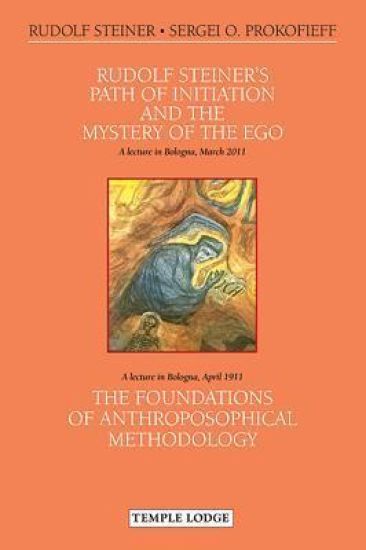
Rudolf Steiner's Path of Initiation and the Mystery of the EGO

Rudolf Steiner's Path of Initiation and the Mystery of the EGO

Rudolf Steiner; Sergei O. Prokofieff

Temple Lodge Publishing
2013
nidottu
Two lectures in Bologna: on 31 March 2011 at the International Conference to Mark the Centenary of Rudolf Steiner's Lecture in Bologna, and on 8 April 1911 at the Fourth International Philosophy Congress A special conference took place in Bologna in Spring 2011, marking the hundredth anniversary of a unique lecture Rudolf Steiner delivered to a philosophically-trained audience in the same city. In his key exposition, Steiner had given a concise description of the spiritual-scientific theory of knowledge as well as a brief outline of the anthroposophical path of schooling. In his contribution to the 2011 congress, Sergei O. Prokofieff tackles two principal aspects. On the one hand, he describes how Steiner's Bologna lecture contained the essential foundations for a new 'science of the human ego'. On the other hand, Prokofieff states that Rudolf Steiner was the first person to transform this same theory into a practical path of knowledge, following it to its very conclusion. Thus, the words of Rudolf Steiner's lecture were based entirely on personal experience. Together with a transcript of Rudolf Steiner's full Bologna lecture, Sergei O. Prokofieff's own lecture is reproduced here in an expanded version. In addition, this volume features Rudolf Steiner's important 'summaries of essential points', in which he develops and connects some of his key thoughts with further aspects of anthroposophy, especially in relation to their Christological foundations.
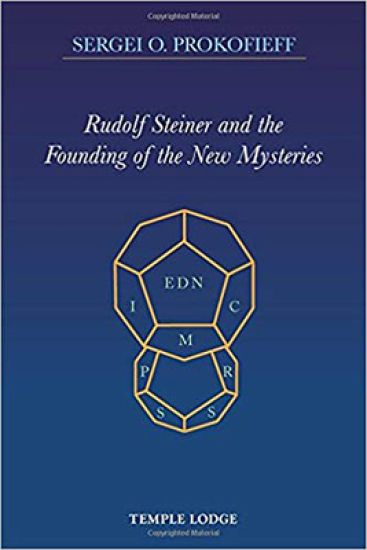
Rudolf Steiner and the Founding of the New Mysteries

Rudolf Steiner and the Founding of the New Mysteries

Sergei O. Prokofieff

Temple Lodge Publishing
2017
nidottu
In this revised and expanded edition of his classic debut, Sergei O. Prokofieff investigates the deepest mysteries of Rudolf Steiner's life and individuality, from 'the years of apprenticeship' and 'the great Sun period' to 'the path of the Teacher of Humanity' and 'the birth of the New Mysteries'. He discusses the earthly and supersensible aspects of the first Goetheanum, the implications of the Christmas Conference of 1923-24, and the Foundation Stone meditation that Steiner left as a legacy to members of the Anthroposophical Society.In his very personal Introduction, Prokofieff describes, in moving detail, the events in his life which led to his discovery of anthroposophy whilst living in Communist Russia, and how eventually he came to write this extraordinary study of Rudolf Steiner. The resulting volume - a work of secondary anthroposophical literature unprecedented in its depth and significance - was first published in Germany in 1982, meeting with equal amounts of acclaim, astonishment and controversy. It is published in this paperback edition to mark the 35th anniversary of the original publication.