

Kirjahaku
Etsi kirjoja tekijän nimen, kirjan nimen tai ISBN:n perusteella.
1000 tulosta hakusanalla Spender
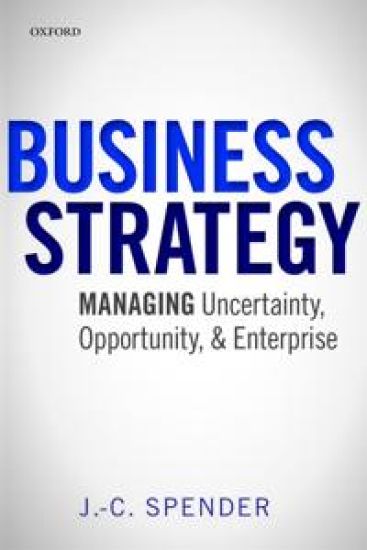
What is strategy? For many it is the application of a theory, model or framework. In this book Spender develops a different creative approach. Emphasizing that firms face uncertainties and unknowns (knowledge gaps) he argues that the core of strategic thinking and processes rests on the organization's leaders developing newly imagined solutions to the opportunities that these uncertainties open up. Drawing on a wide range of ideas from strategy, economics, entrepreneurship and philosophy he stresses the importance of judgment in strategy, and argues that a key element of the entrepreneur and executive's task is to engage chosen uncertainties, develop a language to express and explain the firm's particular business model for dealing with these, and thus create innovation and value. At the same time he shows how the language the strategist creates to do this gives the firm identity and purpose, and communicates this to its members, stakeholders, and customers. In an accessible and engaging style Spender introduces these ideas, and reviews the strategy tools currently available from consultants and academics. Throughout he stresses the uncertainties or knowledge absences that pervade business and make effective strategizing both necessary and valuable. He outlines a structured practice that managers and consultants might chose to follow, not a theory. With appendices on casework, teaching strategy, current strategy texts, and further reading this book makes an important contribution to our understanding of the field and practice of strategy, opening up new approaches for managers, consultants, strategy teachers and students.
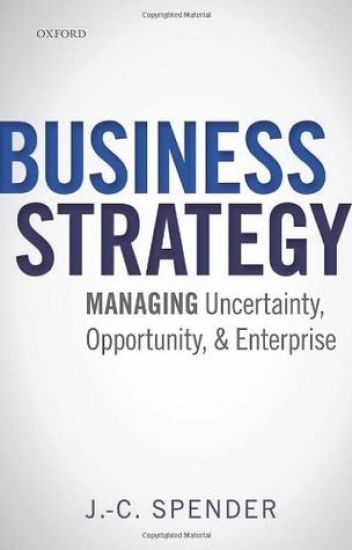
What is strategy? For many it is the application of a theory, model or framework. In this book Spender develops a different creative approach. Emphasizing that firms face uncertainties and unknowns (knowledge gaps) he argues that the core of strategic thinking and processes rests on the organization's leaders developing newly imagined solutions to the opportunities that these uncertainties open up. Drawing on a wide range of ideas from strategy, economics, entrepreneurship and philosophy he stresses the importance of judgment in strategy, and argues that a key element of the entrepreneur and executive's task is to engage chosen uncertainties, develop a language to express and explain the firm's particular business model for dealing with these, and thus create innovation and value. At the same time he shows how the language the strategist creates to do this gives the firm identity and purpose, and communicates this to its members, stakeholders, and customers. In an accessible and engaging style Spender introduces these ideas, and reviews the strategy tools currently available from consultants and academics. Throughout he stresses the uncertainties or knowledge absences that pervade business and make effective strategizing both necessary and valuable. He outlines a structured practice that managers and consultants might chose to follow, not a theory. With appendices on casework, teaching strategy, current strategy texts, and further reading this book makes an important contribution to our understanding of the field and practice of strategy, opening up new approaches for managers, consultants, strategy teachers and students.
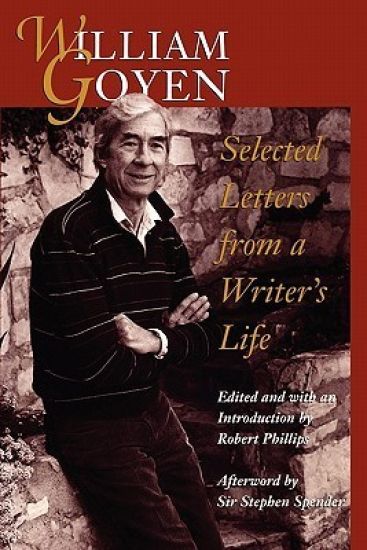
Proclaimed "one of the great American writers of short fiction" by the New York Times Book Review, William Goyen (1915-1983) had a quintessentially American literary career, in which national recognition came only after years of struggle to find his authentic voice, his audience, and an artistic milieu in which to create. These letters, which span the years 1937 to 1983, offer a compelling testament to what it means to be a writer in America.A prolific correspondent, Goyen wrote regularly to friends, family, editors, and other writers. Among the letters selected here are those to such major literary figures as W. H. Auden, Archibald MacLeish, Joyce Carol Oates, William Inge, Elia Kazan, Elizabeth Spencer, and Katherine Anne Porter.These letters constitute a virtual autobiography, as well as a fascinating introduction to Goyen's work. They add an important chapter to the study of American and Texas literature of the twentieth century.
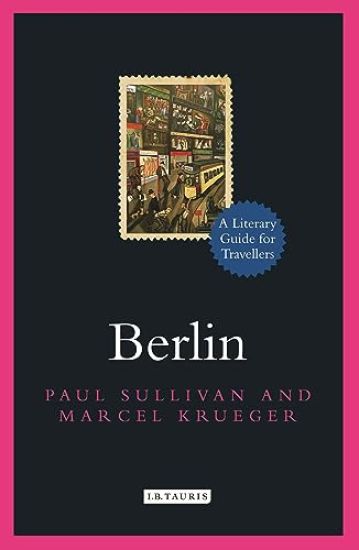
"Berlin is a city forever in the process of becoming, never being, and so it lives more powerfully in the imagination." Rory Maclean, 'Berlin - Imagine a City'.Located at the epicentre of some of modern Europe's most significant and turbulent events, Berlin has long held a magnetic attraction for writers. From 19th century authors recording the city's dramatic transition from Prussian Hauptstadt to German capital after 1871 and the modernist intellectuals of the Weimar period, to the resistance writers brave enough to write during the dark years of the Nazi era and those who captured life on both sides of the divided city, a body of literature has emerged that reveals Berlin's ever-shifting identity. Since 1989, Berlin has yet again become a crucible of creativity, serving as both muse and sanctuary for a new generation of writers who regularly claim it as one of the most exciting cities in the world. This unique and engaging book functions as an introduction to some of the finest writing in and about the city, as well as a guide to some of its best sights and vibrant neighbourhoods. Spanning more than 200 years of local life and literature, it features German authors as diverse as E.T. A. Hoffmann, Joseph Roth, Jorg Fauser, and Christa Wolf, as well as a slew of famous international names such as Mark Twain, Philip Hensher and Chloe Aridjis.
Most organizations fail to take full advantage of their employees' knowledge, initiative, and imagination. In this accessible and practical book, J.-C. Spender and Bruce Strong provide a guide for building entrepreneurial workforces through carefully designed conversations between management and employees. These 'strategic conversations' make employees partners in the strategy development process, engaging them to help shape the organization's future. The result is transformational: instead of strategy being a dry, periodic planning exercise for the few, it becomes a dynamic and continuous act of co-creation enriched by the many. Case studies illustrate how leading organizations have used strategic conversations to build sustained competitive advantage, create innovative business models, make better decisions under uncertainty, reduce the need for change management, and enhance employee engagement. The book will appeal to managers, entrepreneurs of all stripes, and teachers and students in schools of business and public administration.
Most organizations fail to take full advantage of their employees' knowledge, initiative, and imagination. In this accessible and practical book, J.-C. Spender and Bruce Strong provide a guide for building entrepreneurial workforces through carefully designed conversations between management and employees. These 'strategic conversations' make employees partners in the strategy development process, engaging them to help shape the organization's future. The result is transformational: instead of strategy being a dry, periodic planning exercise for the few, it becomes a dynamic and continuous act of co-creation enriched by the many. Case studies illustrate how leading organizations have used strategic conversations to build sustained competitive advantage, create innovative business models, make better decisions under uncertainty, reduce the need for change management, and enhance employee engagement. The book will appeal to managers, entrepreneurs of all stripes, and teachers and students in schools of business and public administration.

This collection of essays attempts to analyse common assumptions about art, literature and criticism at the time of publication in 1895. Taking the position of ‘a Philistine’ , Spender argues against the ‘new’ art and fiction and encourages the average member of the public to state their opinion and give validation that the average view is just as worthy as the ‘new’ criticism which tended toward superiority. This title will be of interest to students of Literature, Art and Art History.

This collection of essays attempts to analyse common assumptions about art, literature and criticism at the time of publication in 1895. Taking the position of ‘a Philistine’ , Spender argues against the ‘new’ art and fiction and encourages the average member of the public to state their opinion and give validation that the average view is just as worthy as the ‘new’ criticism which tended toward superiority. This title will be of interest to students of Literature, Art and Art History.







This work has been selected by scholars as being culturally important and is part of the knowledge base of civilization as we know it.This work is in the public domain in the United States of America, and possibly other nations. Within the United States, you may freely copy and distribute this work, as no entity (individual or corporate) has a copyright on the body of the work.Scholars believe, and we concur, that this work is important enough to be preserved, reproduced, and made generally available to the public. To ensure a quality reading experience, this work has been proofread and republished using a format that seamlessly blends the original graphical elements with text in an easy-to-read typeface.We appreciate your support of the preservation process, and thank you for being an important part of keeping this knowledge alive and relevant.