Kirjahaku
Etsi kirjoja tekijän nimen, kirjan nimen tai ISBN:n perusteella.
1000 tulosta hakusanalla Stephen G Perry
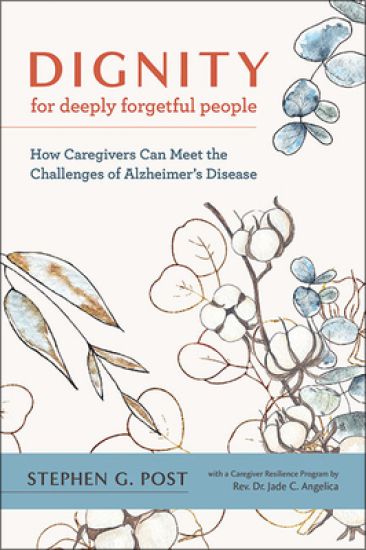
For caregivers of deeply forgetful people: a book that combines new ethics guidelines with an innovative program on how to communicate and connect with people with Alzheimer's.How do we approach a "deeply forgetful" loved one so as to notice and affirm their continuing self-identity? For three decades, Stephen G. Post has worked around the world encouraging caregivers to become more aware of—and find renewed hope in—surprising expressions of selfhood despite the challenges of cognitive decline. In this book, Post offers new perspectives on the worth and dignity of people with Alzheimer's and related disorders despite the negative influence of "hypercognitive" values that place an ethically unacceptable emphasis on human dignity as based on linear rationality and strength of memory. This bias, Post argues, is responsible for the abusive exclusion of this population from our shared humanity. With vignettes and narratives, he argues for a deeper dignity grounded in consciousness, emotional presence, creativity, interdependence, music, and a self that is not "gone" but "differently abled." Post covers key practical topics such as: • understanding the experience of dementia• noticing subtle expressions of continuing selfhood, including "paradoxical lucidity" • perspectives on ethical quandaries from diagnosis to terminal care and everything in between, as gleaned from the voices of caregivers• how to communicate optimally and use language effectively • the value of art, poetry, symbols, personalized music, and nature in revealing self-identity• the value of trained "dementia companion" dogsAt a time when medical advances to cure these conditions are still out of reach and the most recent drugs have shown limited effectiveness, Post argues that focusing discussion and resources on the relational dignity of these individuals and the respite needs of their caregivers is vital. Grounding ethics on the equal worth of all conscious human beings, he provides a cautionary perspective on preemptive assisted suicide based on cases that he has witnessed. He affirms vulnerability and interdependence as the core of the human condition and celebrates caregivers as advocates seeking social and economic justice in an American system where they and their loved ones receive only leftover scraps. Racially inclusive and grounded in diversity, Dignity for Deeply Forgetful People also includes a workshop appendix focused on communication and connection, "A Caregiver Resilience Program," by Rev. Dr. Jade C. Angelica.
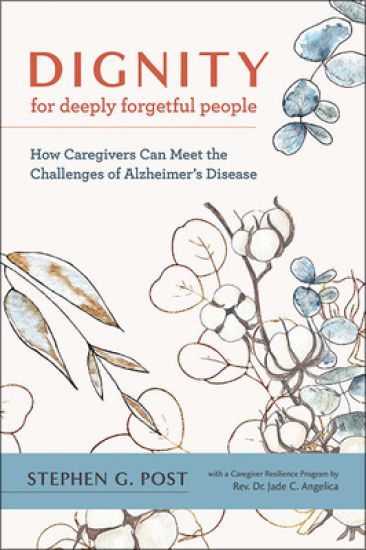
For caregivers of deeply forgetful people: a book that combines new ethics guidelines with an innovative program on how to communicate and connect with people with Alzheimer's.How do we approach a "deeply forgetful" loved one so as to notice and affirm their continuing self-identity? For three decades, Stephen G. Post has worked around the world encouraging caregivers to become more aware of—and find renewed hope in—surprising expressions of selfhood despite the challenges of cognitive decline. In this book, Post offers new perspectives on the worth and dignity of people with Alzheimer's and related disorders despite the negative influence of "hypercognitive" values that place an ethically unacceptable emphasis on human dignity as based on linear rationality and strength of memory. This bias, Post argues, is responsible for the abusive exclusion of this population from our shared humanity. With vignettes and narratives, he argues for a deeper dignity grounded in consciousness, emotional presence, creativity, interdependence, music, and a self that is not "gone" but "differently abled." Post covers key practical topics such as: • understanding the experience of dementia• noticing subtle expressions of continuing selfhood, including "paradoxical lucidity" • perspectives on ethical quandaries from diagnosis to terminal care and everything in between, as gleaned from the voices of caregivers• how to communicate optimally and use language effectively • the value of art, poetry, symbols, personalized music, and nature in revealing self-identity• the value of trained "dementia companion" dogsAt a time when medical advances to cure these conditions are still out of reach and the most recent drugs have shown limited effectiveness, Post argues that focusing discussion and resources on the relational dignity of these individuals and the respite needs of their caregivers is vital. Grounding ethics on the equal worth of all conscious human beings, he provides a cautionary perspective on preemptive assisted suicide based on cases that he has witnessed. He affirms vulnerability and interdependence as the core of the human condition and celebrates caregivers as advocates seeking social and economic justice in an American system where they and their loved ones receive only leftover scraps. Racially inclusive and grounded in diversity, Dignity for Deeply Forgetful People also includes a workshop appendix focused on communication and connection, "A Caregiver Resilience Program," by Rev. Dr. Jade C. Angelica.

This elegant narrative edition of Neil Kagan's best-selling Eyewitness to World War II offers incredible first-person stories and amazing moments of heroism, providing new context and perspective on history's greatest conflict. The unforgettable story of World War II is told through the words of those who lived it--both on the battlefield and the home front--creating a dramatic tapestry of the wartime experience. Personal writings and recollections of Roosevelt, Hitler, and Patton, as well as letters composed by soldiers at battle and diaries of women serving in the military at home, present an absorbing narrative that tells the entire history of the war from several perspectives. In this absorbing reader's edition, a carefully curated selection of memorable, significant photographs and illuminating maps from the 2012 book accompanies the revised text. Comprehensive and compelling, this finely wrought book is as gift-worthy as its predecessor.

From Parchment to Cyberspace argues the case for studying high-resolution digital images of original manuscripts to analyze medieval literature. By presenting a rigorous philosophical argument for the authenticity of such images (a point disputed by digital skeptics) the book illustrates how digitization offers scholars innovative methods for comparing manuscripts of vernacular literature – such as The Romance of the Rose or texts by Christine de Pizan – that reveal aspects of medieval culture crucial to understanding the period.



Designed to provide practical information to library workers of all types, this book offers specific strategies for supporting trans people in their libraries.As trans people (including those on the nonbinary spectrum) start to feel safer expressing their identities in public, libraries are making an effort to show that they welcome people of all gender identities. Yet there are many potential barriers to actively supporting trans people, including lack of knowledge about the needs of the trans community and lack of funding or institutional support. This book, written entirely by trans library workers, is designed to dismantle some of these barriers. Supporting Trans People in Libraries is relevant for library workers of any background and position. People with little knowledge about trans identities can start with the opening introductory chapters, while those looking for guidance on a specific situation—such as adding all-gender restrooms, interacting respectfully with trans coworkers, deciding what information to require on library card applications, writing inclusive job postings, making collection development decisions, and more—can jump to a particular chapter. For each topic, there are sections on easy fixes, best practices, and example language. Readers can easily adapt the information to benefit their libraries and communities in concrete ways.

Ted Bundy: Conversations with a Killer: The Death Row Interviews
Stephen G. Michaud; Hugh Aynesworth
Union Square Co.
2019
nidottu
In a series of death row interviews done shortly before his execution, infamous serial killer Ted Bundy gave a third-person "confession" of his many murders. This definitive book on Bundy was recently made into a Netflix documentary. What goes on in the mind of a serial killer? Drawn from more than 150 hours of exclusive tape-recorded interviews with the handsome, charismastic Bundy, whose grisly killing spree left at least 30 young women dead across seven states between 1974 and 1978, this chilling expos provides a shocking self-portrait of one of the most savage sex murderers in history. Speaking eerily in the third person, Bundy reveals appalling details about his crimes, discloses how he attracted his victims, explains how he methodically disguised his acts, and recounts his two daring jailbreaks. Bundy also offers his thoughts on other infamous serial killers, including John Wayne Gacy and Son of Sam.

Clinical Respiratory Medicine
Stephen G. Spiro; Gerard A Silvestri; Alvar Agustí
W B Saunders Co Ltd
2012
sidottu
2013 BMA Medical Book Awards Highly Commended in Internal Medicine! Clinical Respiratory Medicine provides practical guidance to help you more effectively diagnose and manage the full range of pulmonary disorders, including those seen in today's most challenging patient populations. Now with over 400 brand-new review questions and 25 videos available online, this medical reference book delivers all of the answers you need to ensure the best outcomes. Better manage and treat patients with pulmonary disease with complete clinical coverage of the critical information relevant to your everyday practice, presented in a templated, user-friendly format. Find critical information quickly with the help of diagnostic algorithms. Test your knowledge of respiratory medicine with the help of 400 brand-new review questions. Watch and learn. Over 25 videos of practical procedures are available online at www.expertconsult.com. Thoroughly understand the needs and recognize co-morbidities of particular patient populations through entirely new chapters on lung structure, echocardiography, and obesity and its effects. Access the latest research and advancements in lung cancer, benign tumors, and the importance of pulmonary physiology in understanding lung function and the disease processes that occur.

Jumpin' Round: Fully arranged pieces for Orff percussion
Stephen G. Hutton
Createspace Independent Publishing Platform
2011
nidottu

War Stories: An Enlisted Marine In Vietnam
Stephen G. MacDonald
Createspace Independent Publishing Platform
2011
nidottu

Who really did 9/11? The Government? The Mossad? In this hilarious first novel, an Arab prince publicly offers $12 million dollars to anyone with proof that 4,000 Jews stayed home from their jobs at the World Trade Center on September 11. Two American Jews, hopelessly trying to save an old, dying New Jersey synagogue, come up with a desperate plan. They will present "proof" that the Jews did 9/11, and collect the Arab prince's money. The way they get this "proof," and the comic chaos that ensues, provide a funny, poignant, and touching look at Jews, Arabs, the hatred that constantly divides them, and the common humanity that ultimately binds them

With close attention to the spheres of sport and religion as important sites of moral currency, this book draws on media coverage of major cases of hypocrisy, attending to differing meanings and consequences of hypocrisy within the US, France and Iceland. Instances come from scandals within the established churches, as well as cases from the National Collegiate Athletic Association, the Tour de France, and the inquest into the Hillsborough Disaster in the UK. It considers the importance of the context within which moral conduct takes place and the relevance of this for the occurrence of hypocritical action, while exploring also the implications of advances in computer and information technology for controlling messages and monitoring deceit. Identifying the negative effects of the detection of hypocrisy at individual and institutional levels, the author engages with the work of Goffman to argue for the importance of trust in institutions, underlining the necessity of minimizing and correcting hypocritical acts by which this is undermined. A detailed study of hypocrisy and the need for trust, this volume will appeal to scholars and students of sociology with interests in social and moral conduct, sport, religion, Goffman and the notion of social life as artifice.