Kirjojen hintavertailu. Mukana 12 459 402 kirjaa ja 12 kauppaa.

Kirjahaku

Etsi kirjoja tekijän nimen, kirjan nimen tai ISBN:n perusteella.

1000 tulosta hakusanalla Stephen J. Shoemaker

Russia and the USSR, 1855–1991

Russia and the USSR, 1855–1991

Stephen J. Lee

Routledge
2005
sidottu
From a renowned name in A Level history publishing, this is a Questions and Analysis title on a major period in Russian History. With all three exam boards offering modules on this popular subject at A Level, this book is an absolute must-have.Looking at the many different aspects of the period 1855–1991 that are covered in A Level history, Stephen J. Lee examines and compares:the ideologies of Tsarist autocracy and Soviet communismparties and opposition to these regimesthe use of repression and terroragricultureindustrythe class structurethe 1917 revolutionthe impact of the First and Second World Wars on Russia.Key elements of this book include:each topic/issue forms a well-structured chapter: background; analysis; sources with questions; worked answersa prominent historiography section – an important element of the new A2 history assessmentan incorporated A2 synoptic approach that teaches students to draw together their entire range of knowledge and skills to study one topicguidance on how to answer the recently-introduced synoptic questions.Involving the importance of understanding the connections between the essential characteristics of historical study, this key title is the one-stop shop for all history teachers and students.
Russia and the USSR, 1855–1991

Russia and the USSR, 1855–1991

Stephen J. Lee

Routledge
2005
nidottu
From a renowned name in A Level history publishing, this is a Questions and Analysis title on a major period in Russian History. With all three exam boards offering modules on this popular subject at A Level, this book is an absolute must-have.Looking at the many different aspects of the period 1855–1991 that are covered in A Level history, Stephen J. Lee examines and compares:the ideologies of Tsarist autocracy and Soviet communismparties and opposition to these regimesthe use of repression and terroragricultureindustrythe class structurethe 1917 revolutionthe impact of the First and Second World Wars on Russia.Key elements of this book include:each topic/issue forms a well-structured chapter: background; analysis; sources with questions; worked answersa prominent historiography section – an important element of the new A2 history assessmentan incorporated A2 synoptic approach that teaches students to draw together their entire range of knowledge and skills to study one topicguidance on how to answer the recently-introduced synoptic questions.Involving the importance of understanding the connections between the essential characteristics of historical study, this key title is the one-stop shop for all history teachers and students.
The US, NATO and Military Burden-Sharing

The US, NATO and Military Burden-Sharing

Stephen J. Cimbala; Peter Forster

Routledge
2004
sidottu
This study establishes that the political, economic and military-technological changes that transform the international system also alter the way in which a state views its and others' responsibilities and burdens for responding to international crises. It assesses the distribution of the costs of raising and supporting arms of service, the risks of deploying them overseas and using them in combat or peace operations, and the extent to which members have a responsibility for maintaining international order in the context of three instances of multinational military intervention: the Multinational Force deployment in Lebanon in 1982-83; the first Persian Gulf War in 1990-91; and the UN and NATO intervention in Bosnia-Herzegovina.
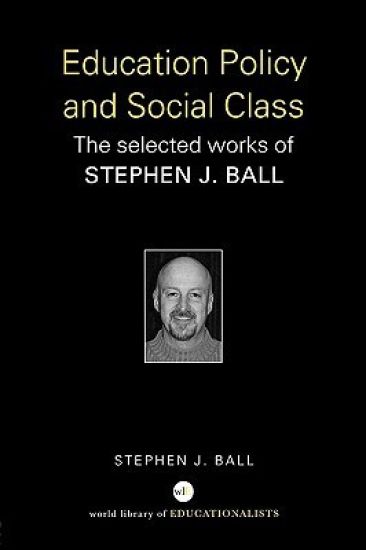
Education Policy and Social Class

Education Policy and Social Class

Stephen J. Ball

Routledge
2005
sidottu
Bringing together twenty years of research and writing, this book provides an overview of Stephen Ball’s career and shows not only the development of his most important ideas but also the long-lasting contributions he has made to the field of educational policy analysis. This volume contains sixteen key essays divided into three sections:perspectives on policy researchpolicy technologies and policy analysissocial class and education policy.Each chapter presents innovative ways of thinking about public policy, asking probing questions about what policy is, how policy is influenced and what effects intentional and unintentional policies have. As a body of work, this collection raises issues of ethics and social justice which are often neglected in the mass of policies that now affect every aspect of our education systems.
Education Policy and Social Class

Education Policy and Social Class

Stephen J. Ball

Routledge
2005
nidottu
Bringing together twenty years of research and writing, this book provides an overview of Stephen Ball’s career and shows not only the development of his most important ideas but also the long-lasting contributions he has made to the field of educational policy analysis. This volume contains sixteen key essays divided into three sections:perspectives on policy researchpolicy technologies and policy analysissocial class and education policy.Each chapter presents innovative ways of thinking about public policy, asking probing questions about what policy is, how policy is influenced and what effects intentional and unintentional policies have. As a body of work, this collection raises issues of ethics and social justice which are often neglected in the mass of policies that now affect every aspect of our education systems.
Education plc

Education plc

Stephen J. Ball

Routledge
2007
sidottu
Is the privatisation of state education defendable? Did the public sector ever provide a fair education for all learners? In Education plc, Stephen Ball provides a comprehensive, analytic and empirical account of the privatisation of education. He questions the kind of future we want for education and what role privatisation and the private sector may have in that future. Using policy sociology to describe and critically analyse changes in policy, policy technologies and policy regimes, he looks at the ethical and democratic impacts of these changes and raises the following questions:Is there a legitimacy for privatisation based on the convergence of interests between business and the ‘third way’ state? Is the extent and value of private participation in public education misunderstood? How is the selling of private company services linked to the remodelling of schools? Why have the technical and political issues of privatisation been considered but ethical issues almost totally neglected? What is happening here, beyond mere technical changes in the form of public service delivery? Is education policy being spoken by new voices? Drawing upon extensive documentary research and interviews with senior executives from the leading ‘education services industry’ companies, the author challenges preconceptions about privatisation. He concludes that blanket defence of the public sector as it was, over and against the inroads of privatisation, is untenable, and that there is no going back to a past in which the public sector as a whole worked well and worked fairly in the interests of all learners, because there was no such past. This book breaks new ground and builds on Stephen Ball’s previous work on education policy. It should appeal to those researching and studying in the fields of social policy, policy analysis, sociology of education, education research and social economics.
Education plc

Education plc

Stephen J. Ball

Routledge
2007
nidottu
Is the privatisation of state education defendable? Did the public sector ever provide a fair education for all learners? In Education plc, Stephen Ball provides a comprehensive, analytic and empirical account of the privatisation of education. He questions the kind of future we want for education and what role privatisation and the private sector may have in that future. Using policy sociology to describe and critically analyse changes in policy, policy technologies and policy regimes, he looks at the ethical and democratic impacts of these changes and raises the following questions:Is there a legitimacy for privatisation based on the convergence of interests between business and the ‘third way’ state? Is the extent and value of private participation in public education misunderstood? How is the selling of private company services linked to the remodelling of schools? Why have the technical and political issues of privatisation been considered but ethical issues almost totally neglected? What is happening here, beyond mere technical changes in the form of public service delivery? Is education policy being spoken by new voices? Drawing upon extensive documentary research and interviews with senior executives from the leading ‘education services industry’ companies, the author challenges preconceptions about privatisation. He concludes that blanket defence of the public sector as it was, over and against the inroads of privatisation, is untenable, and that there is no going back to a past in which the public sector as a whole worked well and worked fairly in the interests of all learners, because there was no such past. This book breaks new ground and builds on Stephen Ball’s previous work on education policy. It should appeal to those researching and studying in the fields of social policy, policy analysis, sociology of education, education research and social economics.
The Weimar Republic

The Weimar Republic

Stephen J. Lee

Routledge
2009
nidottu
The Weimar Republic provides a comprehensive introduction to Germany in the aftermath of the First World War. Exploring themes including the formation of the Republic, the impact of the Treaty of Versailles and the Republic’s problems and achievements, it is an invaluable study guide.This second edition includes two new chapters: the first looks at the Chancellors and Presidents of the Republic, the second assesses the career of Gustav Stresemann. It also contains a timeline and updated analysis to enhance readers’ understanding of events and controversies. Integrating historical interpretation, exam-style questions, and evaluation of sources, this book provides students with a clear understanding and a foundation for examination success.
The Weimar Republic

The Weimar Republic

Stephen J. Lee

Routledge
2009
sidottu
The Weimar Republic provides a comprehensive introduction to Germany in the aftermath of the First World War. Exploring themes including the formation of the Republic, the impact of the Treaty of Versailles and the Republic’s problems and achievements, it is an invaluable study guide.This second edition includes two new chapters: the first looks at the Chancellors and Presidents of the Republic, the second assesses the career of Gustav Stresemann. It also contains a timeline and updated analysis to enhance readers’ understanding of events and controversies. Integrating historical interpretation, exam-style questions, and evaluation of sources, this book provides students with a clear understanding and a foundation for examination success.
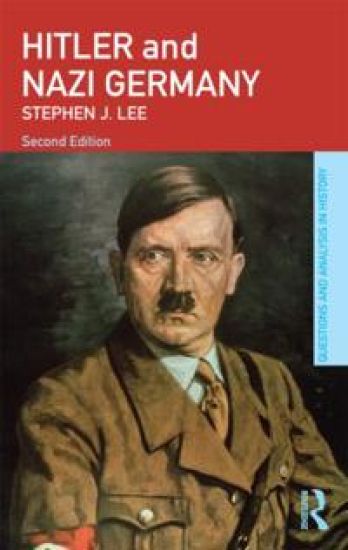
Hitler and Nazi Germany

Hitler and Nazi Germany

Stephen J. Lee

Routledge
2009
sidottu
Hitler and Nazi Germany provides a concise introduction to Hitler’s rise to power and Nazi domestic and foreign policies through to the end of the Second World War. Combining narrative, the views of different historians, interpretation and a selection of sources, this book provides a concise introduction and study aid for students. This second edition has been extensively revised and expanded and includes new chapters on the Nazi regime, the SS and Gestapo, and the Second World War. Expanded background narratives provide a solid understanding of the period and the analyses and sources have been updated throughout to help students engage with recent historiography and form their own interpretation of events.
Hitler and Nazi Germany

Hitler and Nazi Germany

Stephen J. Lee

Routledge
2009
nidottu
Hitler and Nazi Germany provides a concise introduction to Hitler’s rise to power and Nazi domestic and foreign policies through to the end of the Second World War. Combining narrative, the views of different historians, interpretation and a selection of sources, this book provides a concise introduction and study aid for students. This second edition has been extensively revised and expanded and includes new chapters on the Nazi regime, the SS and Gestapo, and the Second World War. Expanded background narratives provide a solid understanding of the period and the analyses and sources have been updated throughout to help students engage with recent historiography and form their own interpretation of events.
Economic Growth, the Environment and International Relations
The ubiquity of the commitment to economic growth, which Purdey refers to as the growth paradigm, is extraordinary. National governments around the world are seized of the same objective. Major international institutions such as the UN, the WTO, the World Bank, IMF and OECD, powerful international organizations such as regional trading blocs and multinational corporations – even civil societies of all kinds enthusiastically pursue a larger economic pie.This book examines the deep origins and rise to prominence of the commitment to economic growth. It explains why, despite the diversity of regime types, levels of development, cultures and other divisions typical of international relations, all major actors in the modern global polity pursue an identical political priority. Purdey critically examines the growth paradigm highlighting its normative foundations and its environmental impact, especially climate change. Using a neo-Gramscian approach, Purdey re-engages the ‘limits to growth’ controversy, identifying the commitment to growth as a form of utopianism that is as dangerous as it is seductive.By illuminating and interrogating the history, politics and morality of the growth paradigm, this book shifts the terrain of the limits debate from instrumental to ethical considerations. It will be of interest to students and scholars of political economy, international relations, environmental studies and ethics.
Economic Growth, the Environment and International Relations
The ubiquity of the commitment to economic growth, which Purdey refers to as the growth paradigm, is extraordinary. National governments around the world are seized of the same objective. Major international institutions such as the UN, the WTO, the World Bank, IMF and OECD, powerful international organizations such as regional trading blocs and multinational corporations – even civil societies of all kinds enthusiastically pursue a larger economic pie.This book examines the deep origins and rise to prominence of the commitment to economic growth. It explains why, despite the diversity of regime types, levels of development, cultures and other divisions typical of international relations, all major actors in the modern global polity pursue an identical political priority. Purdey critically examines the growth paradigm highlighting its normative foundations and its environmental impact, especially climate change. Using a neo-Gramscian approach, Purdey re-engages the ‘limits to growth’ controversy, identifying the commitment to growth as a form of utopianism that is as dangerous as it is seductive.By illuminating and interrogating the history, politics and morality of the growth paradigm, this book shifts the terrain of the limits debate from instrumental to ethical considerations. It will be of interest to students and scholars of political economy, international relations, environmental studies and ethics.
Nuclear Weapons and Cooperative Security in the 21st Century
This book looks at the prospects for international cooperation over nuclear weapons proliferation in the 21st century.Nuclear weapons served as stabilizing forces during the Cold War, or the First Nuclear Age, on account of their capability for destruction, the fear that this created among politicians and publics, and the domination of the nuclear world order by two superpowers: the United States and the Soviet Union. The end of the Cold War, the dissolution of the Soviet Union, and the potential for nuclear weapons acquisition among revisionist states, or even non-state actors including terrorists, creates the possibility of a 'wolves eat dogs' phenomenon in the present century. In the 21st century, three forces threaten to undo or weaken the long nuclear peace and fast-forward states into a new and more dangerous situation: the existence of large US and Russian nuclear weapons arsenals; the potential for new technologies, including missile defenses and long-range, precision conventional weapons, and a collapse or atrophy of the nuclear nonproliferation regime, and the opening of the door for nuclear weapons to spread among more than the currently acknowledged nuclear states.This book explains how these three 'weakening' forces interact with one another and with US and Russian policy-making in order to create an environment of large possibilities for cooperative security - but also of considerable danger. Instead, the choices made by military planners and policy-makers will create an early twenty-first century story privileging nuclear stability or chaos. The US and Russia can, and should, make incremental progress in arms control and nonproliferation. This book will be of much interest to students of nuclear proliferation and arms control, strategic studies, international security and IR in general.Stephen J. Cimbala is Distinguished Professor of Political Science at Pennsylvania State University. He is the author of numerous works in the fields of international security, defense studies, nuclear arms control and other topics. He has consulted for various US government agencies and defense contractors.
Nuclear Weapons and Cooperative Security in the 21st Century
This book looks at the prospects for international cooperation over nuclear weapons proliferation in the 21st century.Nuclear weapons served as stabilizing forces during the Cold War, or the First Nuclear Age, on account of their capability for destruction, the fear that this created among politicians and publics, and the domination of the nuclear world order by two superpowers: the United States and the Soviet Union. The end of the Cold War, the dissolution of the Soviet Union, and the potential for nuclear weapons acquisition among revisionist states, or even non-state actors including terrorists, creates the possibility of a 'wolves eat dogs' phenomenon in the present century. In the 21st century, three forces threaten to undo or weaken the long nuclear peace and fast-forward states into a new and more dangerous situation: the existence of large US and Russian nuclear weapons arsenals; the potential for new technologies, including missile defenses and long-range, precision conventional weapons, and a collapse or atrophy of the nuclear nonproliferation regime, and the opening of the door for nuclear weapons to spread among more than the currently acknowledged nuclear states.This book explains how these three 'weakening' forces interact with one another and with US and Russian policy-making in order to create an environment of large possibilities for cooperative security - but also of considerable danger. Instead, the choices made by military planners and policy-makers will create an early twenty-first century story privileging nuclear stability or chaos. The US and Russia can, and should, make incremental progress in arms control and nonproliferation. This book will be of much interest to students of nuclear proliferation and arms control, strategic studies, international security and IR in general.Stephen J. Cimbala is Distinguished Professor of Political Science at Pennsylvania State University. He is the author of numerous works in the fields of international security, defense studies, nuclear arms control and other topics. He has consulted for various US government agencies and defense contractors.
Managing Emergent Phenomena

Managing Emergent Phenomena

Stephen J. Guastello

Psychology Press Ltd
2013
nidottu
Chaos, catastrophe, self-organization, and complexity theories (nonlinear dynamics) now have practical and measurable roles in the functioning of work organizations. Managing Emergent Phenomena begins by describing how the concept of an organization has changed from a bureaucracy, to a humanistic and organic system, to a complex adaptive system. The dynamics concepts are then explained along with the most recent research methods for analyzing real data. Applications include: work motivation, personnel selection and turnover, creative thinking by individuals and groups, the development of social networks, coordination in work groups, the emergence of leaders, work performance in organizational hierarchies, economic problems that are relevant to organizations, techniques for predicting the future, and emergency management. Each application begins with a tight summary of standard thinking on a subject, followed by the new insights that are afforded by nonlinear dynamics and the empirical data supporting those ideas. Unusual concepts are also encountered, such as the organizational unconscious, collective intelligence, and the revolt of the slaved variables. The net results are a new perspective on what is really important in organizational life, original insights on familiar experiences, and some clear signposts for the next generation of nonlinear social scientists.
The US, NATO and Military Burden-Sharing

The US, NATO and Military Burden-Sharing

Stephen J. Cimbala; Peter Forster

Routledge
2015
nidottu
This study establishes that the political, economic and military-technological changes that transform the international system also alter the way in which a state views its and others' responsibilities and burdens for responding to international crises. It assesses the distribution of the costs of raising and supporting arms of service, the risks of deploying them overseas and using them in combat or peace operations, and the extent to which members have a responsibility for maintaining international order in the context of three instances of multinational military intervention: the Multinational Force deployment in Lebanon in 1982-83; the first Persian Gulf War in 1990-91; and the UN and NATO intervention in Bosnia-Herzegovina.
The Micro-Politics of the School

The Micro-Politics of the School

Stephen J. Ball

Routledge
2011
sidottu
Stephen Ball’s micro-political theory of school organization is a radical departure from traditional theories. He rejects a prescriptive ‘top down’ approach and directly addresses the interest and concerns of teachers and current problems facing schools. In doing so he raises question about the adequacy and appropriateness of the existing forms of organizational control in schools. Through case studies and interviews with teachers, the book captures the flavour of real conflicts in schools – particularly in times of falling rolls, change of leadership or amalgamations – when teachers’ autonomy seems to be at stake.
Politics and Policy Making in Education
Based on interviews with key actors in the policy-making process, this book maps the changes in education policy and policy making in the Thatcherite decade. The focus of the book is the 1988 Education Reform Act, its origins, purposes and effects, and it looks behind the scenes at the priorities of the politicians, civil servants and government advisers who were influential in making changes. Using direct quotations from senior civil servants and former secretaries of state it provides a fascinating insight into the way in which policy is made. The book focuses on real-life political conflicts, examining the way in which education policy was related to the ideal of society projected by Thatcherism. It looks in detail at the New Right government advisers and think tanks; the industrial lobby, addressing issues such as the National Curriculum, national testing and City Technical Colleges. The author sets these important issues within a clear theoretical framework which illuminates the whole process of policy making.
How Schools Do Policy

How Schools Do Policy

Stephen J Ball; Meg Maguire; Annette Braun

Routledge
2011
sidottu
Over the last 20 years, international attempts to raise educational standards and improve opportunities for all children have accelerated and proliferated. This has generated a state of constant change and an unrelenting flood of initiatives, changes and reforms that need to be ‘implemented’ by schools. In response to this, a great deal of attention has been given to evaluating ‘how well’ policies are realised in practice – implemented! Less attention has been paid to understanding how schools actually deal with these multiple, and sometimes contradictory, policy demands; creatively working to interpret policy texts and translate these into practices, in real material conditions and varying resources – how they are enacted! Based on a long-term qualitative study of four ‘ordinary’ secondary schools, and working on the interface of theory with data, this book explores how schools enact, rather than implement, policy. It focuses on: contexts of ‘policy work’ in schools; teachers as policy subjects; teachers as policy actors; policy texts, artefacts and events; standards, behaviour and learning policies. This book offers an original and very grounded analysis of how schools and teachers do policy. It will be of interest to undergraduate and postgraduate students of education, education policy and social policy, as well as school leaders, in the UK and beyond.