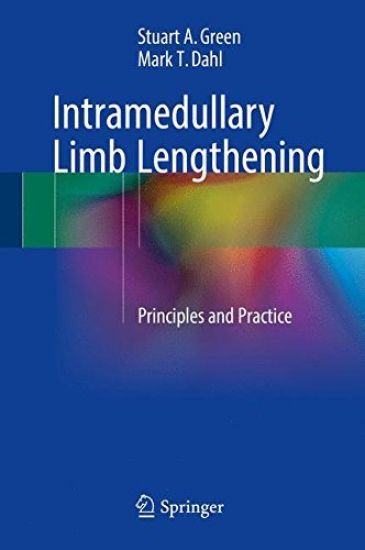
Providing a comprehensive overview of the current orthopedic uses of intramedullary devices, this practical, well-illustrated guide opens with a review of the history of limb lengthening from the early external fixator up to Ilizarov’s monumental discoveries, with a summary of the biology of new bone formation in a widening distraction gap. This is followed by post-Ilizarov developments with external fixators designed to ease application and increase patient tolerance of such devices, as well as a discussion of the intramedullary lengthening devices from the earliest mechanical distractors to the most modern implants, detailing the surgical principles, pre-operative planning and specific operative techniques for each. Concluding chapters focus on preventing and dealing with complications from the surgery and day-to-day post-operative management. A unique feature of the book is a cross-section atlas of the upper and lower limbs that will assist surgeons to avoid impaling neurovascular structures during the minimally invasive portions of operative insertion of the implants.Intramedullary Limb Lengthening: Principles and Practice is an ideal, on-the-spot resource for orthopedic surgeons, residents and trainees treating pediatric and adult limb deformities and length deficiencies, as well as physical therapists and other health care providers who manage such patients post-operatively.
Providing a comprehensive overview of the current orthopedic uses of intramedullary devices, this practical, well-illustrated guide opens with a review of the history of limb lengthening from the early external fixator up to Ilizarov’s monumental discoveries, with a summary of the biology of new bone formation in a widening distraction gap. This is followed by post-Ilizarov developments with external fixators designed to ease application and increase patient tolerance of such devices, as well as a discussion of the intramedullary lengthening devices from the earliest mechanical distractors to the most modern implants, detailing the surgical principles, pre-operative planning and specific operative techniques for each. Concluding chapters focus on preventing and dealing with complications from the surgery and day-to-day post-operative management. A unique feature of the book is a cross-section atlas of the upper and lower limbs that will assist surgeons to avoid impaling neurovascular structures during the minimally invasive portions of operative insertion of the implants.Intramedullary Limb Lengthening: Principles and Practice is an ideal, on-the-spot resource for orthopedic surgeons, residents and trainees treating pediatric and adult limb deformities and length deficiencies, as well as physical therapists and other health care providers who manage such patients post-operatively.
It is often said that we live in a violent world. Traumatic injuries are commonplace; every hospital, large or small, sees scores of such patients daily. Appropriate diagnosis and management of the trauma patient are necessary not only to save lives but also to minimize the morbidity which follows injury. It is not surprising, therefore, that several books covering various aspects of trauma diagnosis and treatment are published annually. They are, however, seldom redundant because of the continuing rapid evolution of knowledge relating to the diagnosis and management of the traumatized patient. This volume, restricted to the consideration of thoracic trauma, represents a comprehensive and authoritative study of chest injury. Dr. Groskin is exceptionally well qualified to discuss his subject, being Board Certified in Internal Medicine, in Pulmonary Diseases, and in Diagnostic Radiology. He has practiced and taught in these disciplines in several prestigious institutions. The author has used his multidisciplinary background to develop a book which is unique among others of its kind. The reader will quickly appreciate that it is unusual in its correlation of clinical information with radiological diagnosis. Unlike any other book on traumatology with which I am familiar, this volume discusses extensively the mechanisms of injury which make both clinical and radiological findings easier to understand and to remember. It also presents a meticulous approach to the diagnosis of the many forms of thoracic trauma in which all clinical and radiological diagnostic modalities are thoughtfully integrated.
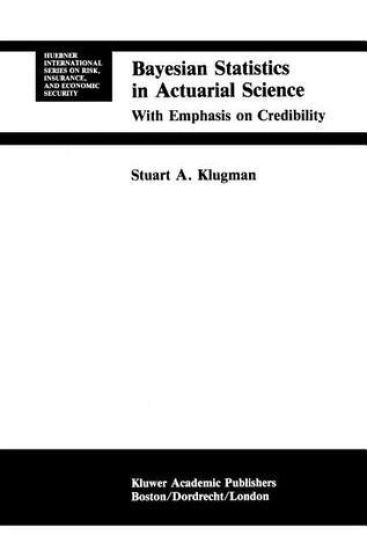
The debate between the proponents of "classical" and "Bayesian" statistica} methods continues unabated. It is not the purpose of the text to resolve those issues but rather to demonstrate that within the realm of actuarial science there are a number of problems that are particularly suited for Bayesian analysis. This has been apparent to actuaries for a long time, but the lack of adequate computing power and appropriate algorithms had led to the use of various approximations. The two greatest advantages to the actuary of the Bayesian approach are that the method is independent of the model and that interval estimates are as easy to obtain as point estimates. The former attribute means that once one learns how to analyze one problem, the solution to similar, but more complex, problems will be no more difficult. The second one takes on added significance as the actuary of today is expected to provide evidence concerning the quality of any estimates. While the examples are all actuarial in nature, the methods discussed are applicable to any structured estimation problem. In particular, statisticians will recognize that the basic credibility problem has the same setting as the random effects model from analysis of variance.
Author Stuart Murray uses a variety of math techniques to make it approachable and interesting. Readers will learn fun basketball facts and the sports history while brushing up on their math skills.
British imperial interests in Iraq during and after the First World War are well known and have often been studied. But what of British policy towards the Mesopotamian provinces before 1914? In this well-documented study, Stuart Cohen provides the first coherent account of growing British interest in these provinces, in which the defence of India, commercial considerations, the protection of Shia Muslim pilgrims and fear of a German-dominated Berlin to Baghdad railway all had a vital role to play. First published in 1976 and now available in paperback for the first time, this book is essential reading not only for an understanding of the making of British policy towards the Arab provinces of the Ottoman empire but also of the last days of Turkish rule in Iraq itself.
This popular Lucent Books series has been updated to make music of all genres even more accessible, popular and culturally relevant in the 21st century; the set focuses on the history, music, musicians, and instruments behind specific musical styles.; This volume in The Music Library offers an updated version of the book originally published in 2003. The book will include important updates to the original text, a new back matter section (i.e., a glossary, bibliography of resources, and a list of recomm; This new edition of the popular Lucent Books series has been updated to make music of all genres even more accessible, popular and culturally relevant in the 21st century. The set focuses on the history, music, musicians, and instruments behind specific m
This popular Lucent Books series has been updated to make music of all genres even more accessible, popular and culturally relevant in the 21st century; the set focuses on the history, music, musicians, and instruments behind specific musical styles.; This book covers the history of the music of Latin America. Individual chapters focus on the sounds of the Caribbean, Brazil, South America, and Mexico.; This new edition of the popular Lucent Books series has been updated to make music of all genres even more accessible, popular and culturally relevant in the 21st century. The set focuses on the history, music, musicians, and instruments behind specific m
How do you figure out a player's batting average? Which stadium has the biggest outfield? This book uses a variety of techniques to solve a variety of baseball-related math questions. Readers also learn some baseball history and fun facts.
As early as the 1500s, fur traders from Europe began to arrive in the Subarctic region of North America. These traders were greeted by the many groups of native peoples already living in the region. These native peoples had their own languages, cultures, and methods for hunting and surviving in this land where it snowed 200 days a year. Many native peoples still live throughout the Subarctic. They are working to revive their traditions and languages and preserve the land. Read more about the history and culture of the native peoples of the Subarctic.