Kirjojen hintavertailu. Mukana 11 717 486 kirjaa ja 12 kauppaa.

Kirjahaku

Etsi kirjoja tekijän nimen, kirjan nimen tai ISBN:n perusteella.

1000 tulosta hakusanalla Stuart Byng

Stuart Price

Stuart Price

VDM Publishing House
2010
nidottu
Observera att förlaget som ger ut denna produkt baserar innehållet i sina produkter på fria källor som Wikipedia. Boken är med stor sannolikhet endast ett utdrag ur dessa informationskällor, alltså inte en vanlig bok i den bemärkelsen.
Stuart S. Murray

Stuart S. Murray

VDM Publishing House
2010
nidottu
Observera att förlaget som ger ut denna produkt baserar innehållet i sina produkter på fria källor som Wikipedia. Boken är med stor sannolikhet endast ett utdrag ur dessa informationskällor, alltså inte en vanlig bok i den bemärkelsen.
Stuart Lewis- Evans

Stuart Lewis- Evans

VDM Publishing House
2010
nidottu
Observera att förlaget som ger ut denna produkt baserar innehållet i sina produkter på fria källor som Wikipedia. Boken är med stor sannolikhet endast ett utdrag ur dessa informationskällor, alltså inte en vanlig bok i den bemärkelsen.
Stuart Chatwood

Stuart Chatwood

VDM Publishing House
2010
nidottu
Observera att förlaget som ger ut denna produkt baserar innehållet i sina produkter på fria källor som Wikipedia. Boken är med stor sannolikhet endast ett utdrag ur dessa informationskällor, alltså inte en vanlig bok i den bemärkelsen.
Stuart Sutcliffe

Stuart Sutcliffe

VDM Publishing House
2010
nidottu
Observera att förlaget som ger ut denna produkt baserar innehållet i sina produkter på fria källor som Wikipedia. Boken är med stor sannolikhet endast ett utdrag ur dessa informationskällor, alltså inte en vanlig bok i den bemärkelsen.
Stuart Dempster

Stuart Dempster

VDM Publishing House
2010
nidottu
Observera att förlaget som ger ut denna produkt baserar innehållet i sina produkter på fria källor som Wikipedia. Boken är med stor sannolikhet endast ett utdrag ur dessa informationskällor, alltså inte en vanlig bok i den bemärkelsen.
Stuart Townsend

Stuart Townsend

VDM Publishing House
2010
nidottu
Observera att förlaget som ger ut denna produkt baserar innehållet i sina produkter på fria källor som Wikipedia. Boken är med stor sannolikhet endast ett utdrag ur dessa informationskällor, alltså inte en vanlig bok i den bemärkelsen.
Stuart Roosa

Stuart Roosa

VDM Publishing House
2010
nidottu
Observera att förlaget som ger ut denna produkt baserar innehållet i sina produkter på fria källor som Wikipedia. Boken är med stor sannolikhet endast ett utdrag ur dessa informationskällor, alltså inte en vanlig bok i den bemärkelsen.
Stuart Macintyre

Stuart Macintyre

VDM Publishing House
2010
nidottu
Observera att förlaget som ger ut denna produkt baserar innehållet i sina produkter på fria källor som Wikipedia. Boken är med stor sannolikhet endast ett utdrag ur dessa informationskällor, alltså inte en vanlig bok i den bemärkelsen.
Stuart Davis (Musician)

Stuart Davis (Musician)

VDM Publishing House
2010
nidottu
Observera att förlaget som ger ut denna produkt baserar innehållet i sina produkter på fria källor som Wikipedia. Boken är med stor sannolikhet endast ett utdrag ur dessa informationskällor, alltså inte en vanlig bok i den bemärkelsen.
John Stuart Mill and the Meaning of Life

John Stuart Mill and the Meaning of Life

Elijah Millgram

Oxford University Press Inc
2019
sidottu
John Stuart Mill was one of the most important and influential philosophers of the nineteenth century. He was also someone who exemplified a view about the meaning of life that is widespread among both philosophers and nonacademics: that projects are what make your life meaningful, and if a single project is large enough to occupy center stage in it, that is the meaning of your life. His brilliant career notwithstanding, Mill's life was a train wreck; the intellectual energy and philosophical ingenuity which he devoted to figuring out what had gone wrong make him a fascinating object lesson in the view that projects give life meaning. Elijah Millgram argues that what went wrong was the very fact that Mill's life was a project-the tragedy of his life was an almost inevitable consequence of living out this account of the meaning of life. At once a scholarly contribution to the history of an important philosophical figure and an intervention in an ongoing debate within moral philosophy, this book takes on a topic that people outside the academy expect philosophy to address, but which it too rarely does: namely, the meaning of life. It is simultaneously an exercise in biography and a novel reconstruction and reframing of some of the central theories and texts of the philosophical canon. Millgram's work attempts to look at the theory of rationality from an unusual angle by asking: what difference does it make to the shape and progress of someone's life whether he has one or another understanding of practical reasoning-that is, of how one ought to reason about what to do?
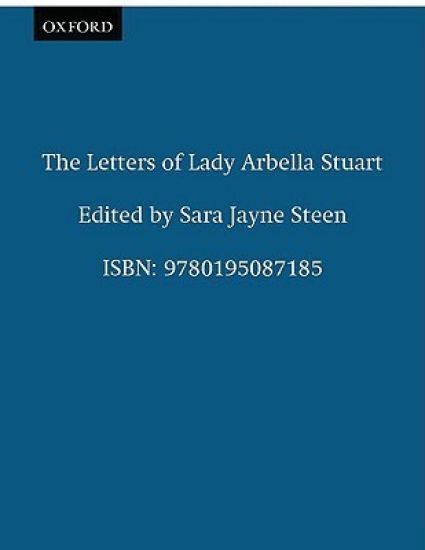
The Letters of Lady Arbella Stuart

The Letters of Lady Arbella Stuart

Arbella Stuart

Oxford University Press Inc
1995
nidottu
Lady Arbella Stuart, claimant to the English throne, has traditionally been portrayed as either a hero or fool for marrying against King James's edict and attempting to flee from France. This is Stuart's story as she tells it in more than one hundred letters written to relatives, her husband, the royal family, public officials, and friends. Based largely on original manuscripts, this volume reveals a powerful personal and public drama, as Stuart's royal birth and demand for independence place her in conflict with Queen Elizabeth and King James. Verbally gifted, Stuart creates a fictional lover, maneuvers within the patronage network, and, after her marriage, applies her considerable rhetorical skills to solicit favour and freedom. Her own revisions, which are included, offer the reader unusual access to the thinking of a talented Renaissance writer as she shapes her prose. Sara Jayne Steen has transcribed, ordered, dated, annotated, and critically analysed the letters and drafts.
John Stuart Mill and the Art of Life

John Stuart Mill and the Art of Life

Oxford University Press Inc
2010
sidottu
The 'Art of Life' is John Stuart Mill's name for his account of practical reason. In this volume, eleven leading scholars elucidate this fundamental, but widely neglected, element of Mill's thought. Mill divides the Art of Life into three 'departments': 'Morality, Prudence or Policy, and AEsthetics'. In the volume's first section, Rex Martin, David Weinstein, Ben Eggleston, and Dale E. Miller investigate the relation between the departments of morality and prudence. Their papers ask whether Mill is a rule utilitarian and, if so, whether his practical philosophy must be incoherent. The second section contains papers by Jonathan Riley and Wendy Donner, who explore the relation between the departments of morality and aesthetics. They discuss issues ranging from supererogation to aesthetic pleasure and humanity's relationship with nature. The papers in the third section consider the Art of Life's axiological first principle, the principle of utility. Elijah Millgram contends that Mill's own life refutes his claim that the Art of Life has a single axiological first principle. Philip Kitcher maintains that Mill has a dynamic axiology requiring us to continually refine our conception of the good. In the final section, three papers address what it means to put the Art of Life into practice. Robert Haraldsson locates an 'Art of Ethics' in On Liberty that is in tension with the Art of Life. Nadia Urbinati plumbs the classical roots of Mill's view of the good life. Finally, Colin Heydt develops Mill's suggestion that we regard our own lives as works of art.
John Stuart Mill and the Meaning of Life

John Stuart Mill and the Meaning of Life

Elijah Millgram

Oxford University Press Inc
2022
nidottu
John Stuart Mill was one of the most important and influential philosophers of the nineteenth century. He was also someone who exemplified a view about the meaning of life that is widespread among both philosophers and non-academics: that projects are what make your life meaningful, and if a single project is large enough to occupy center stage in it, that is the meaning of your life. His brilliant career notwithstanding, Mill's life was a train wreck; the intellectual energy and philosophical ingenuity which he devoted to figuring out what had gone wrong make him a fascinating object lesson in the view that projects give life meaning. Elijah Millgram argues that what went wrong was the very fact that Mill's life was a project--the tragedy of his life was an almost inevitable consequence of living out this account of the meaning of life. At once a scholarly contribution to the history of an important philosophical figure and an intervention in an ongoing debate within moral philosophy, this book takes on a topic that people outside the academy expect philosophy to address, but which it too rarely does: namely, the meaning of life. It is simultaneously an exercise in biography and a novel reconstruction and reframing of some of the central theories and texts of the philosophical canon. Millgram's work attempts to look at the theory of rationality from an unusual angle by asking: what difference does it make to the shape and progress of someone's life whether he has one or another understanding of practical reasoning--that is, of how one ought to reason about what to do?
John Stuart Mill

John Stuart Mill

Gregory Claeys

Oxford University Press
2022
nidottu
Very Short Introductions: Brilliant, Sharp, Inspiring John Stuart Mill (1806-73) is widely regarded as the leading liberal philosopher, economist, and political theorist of nineteenth century Britain. In his lifetime he was best known for his System of Logic (1843) and the Principles of Political Economy (1848). Today Mill is chiefly identified with On Liberty (1859), perhaps the definitive text of modern liberal statement of its subject, and probably the single most important work of modern political thought. Mill was also the first major male feminist thinker of the period (author of The Subjection of Women, 1869), and the first, as an MP, to introduce a bill for female enfranchisement before Parliament. This Very Short Introduction offers a brief survey of the life and key ideas of this most influential Victorian British writer. Moving chronologically, Gregory Claeys outlines the philosophical background out of which Mill developed, chiefly through the ideas of Jeremy Bentham and James Mill. He demonstrates how Mill's personal life, especially his 'mental crisis' of 1827, and his relationship with Harriet Taylor, were integral to his intellectual development. Throughout Claeys considers Mill's key works set within the context of his lesser writings and correspondence, and discusses the more controversial aspects of his thought concerning religion, secularism, and birth control. ABOUT THE SERIES: The Very Short Introductions series from Oxford University Press contains hundreds of titles in almost every subject area. These pocket-sized books are the perfect way to get ahead in a new subject quickly. Our expert authors combine facts, analysis, perspective, new ideas, and enthusiasm to make interesting and challenging topics highly readable.
John Stuart Mill

John Stuart Mill

Timothy Larsen

Oxford University Press
2018
sidottu
John Stuart Mill observed in his Autobiography that he was a rare case in nineteenth-century Britain because he had not lost his religion but never had any. He was a freethinker from beginning to end. What is not often realized, however, is that Mill's life was nevertheless impinged upon by religion at every turn. This is true both of the close relationships that shaped him and of his own, internal thoughts. Mill was a religious sceptic, but not the kind of person which that term usually conjures up. The unexpected presence and prominence of spirituality is not only there in Mill's late, startling essay, 'Theism', in which he makes the case for hope in God and in Christ. It is everywhere--in his immediate family, his best friends, and his vision for the future. It is even there in such a seemingly unlikely place as his Logic, which repeatedly addresses religious themes. John Stuart Mill: A Secular Life is a biography which follows one of Britain's most well-respected intellectuals through all of the key moments in his life from falling in love to sitting in Parliament and beyond. It also explores his classic works including, On Liberty, Principles of Political Economy, Utilitarianism, and The Subjection of Women. In this well-researched study which offers original findings and insights, Timothy Larsen presents the Mill you never knew. The Mill that even some of his closest disciples never knew. This is John Stuart Mill, the Saint of Rationalism--a secular life and a spiritual life.