Kirjojen hintavertailu. Mukana 11 213 693 kirjaa ja 12 kauppaa.

Kirjahaku

Etsi kirjoja tekijän nimen, kirjan nimen tai ISBN:n perusteella.

1000 tulosta hakusanalla Stuart Howarth

John Stuart Mill and the Meaning of Life

John Stuart Mill and the Meaning of Life

Elijah Millgram

Oxford University Press Inc
2019
sidottu
John Stuart Mill was one of the most important and influential philosophers of the nineteenth century. He was also someone who exemplified a view about the meaning of life that is widespread among both philosophers and nonacademics: that projects are what make your life meaningful, and if a single project is large enough to occupy center stage in it, that is the meaning of your life. His brilliant career notwithstanding, Mill's life was a train wreck; the intellectual energy and philosophical ingenuity which he devoted to figuring out what had gone wrong make him a fascinating object lesson in the view that projects give life meaning. Elijah Millgram argues that what went wrong was the very fact that Mill's life was a project-the tragedy of his life was an almost inevitable consequence of living out this account of the meaning of life. At once a scholarly contribution to the history of an important philosophical figure and an intervention in an ongoing debate within moral philosophy, this book takes on a topic that people outside the academy expect philosophy to address, but which it too rarely does: namely, the meaning of life. It is simultaneously an exercise in biography and a novel reconstruction and reframing of some of the central theories and texts of the philosophical canon. Millgram's work attempts to look at the theory of rationality from an unusual angle by asking: what difference does it make to the shape and progress of someone's life whether he has one or another understanding of practical reasoning-that is, of how one ought to reason about what to do?
The Letters of Lady Arbella Stuart

The Letters of Lady Arbella Stuart

Arbella Stuart

Oxford University Press Inc
1995
nidottu
Lady Arbella Stuart, claimant to the English throne, has traditionally been portrayed as either a hero or fool for marrying against King James's edict and attempting to flee from France. This is Stuart's story as she tells it in more than one hundred letters written to relatives, her husband, the royal family, public officials, and friends. Based largely on original manuscripts, this volume reveals a powerful personal and public drama, as Stuart's royal birth and demand for independence place her in conflict with Queen Elizabeth and King James. Verbally gifted, Stuart creates a fictional lover, maneuvers within the patronage network, and, after her marriage, applies her considerable rhetorical skills to solicit favour and freedom. Her own revisions, which are included, offer the reader unusual access to the thinking of a talented Renaissance writer as she shapes her prose. Sara Jayne Steen has transcribed, ordered, dated, annotated, and critically analysed the letters and drafts.
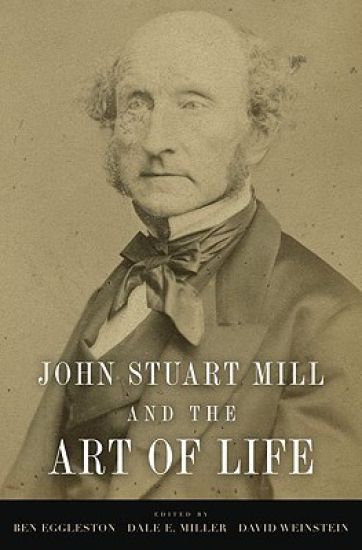
John Stuart Mill and the Art of Life

John Stuart Mill and the Art of Life

Oxford University Press Inc
2010
sidottu
The 'Art of Life' is John Stuart Mill's name for his account of practical reason. In this volume, eleven leading scholars elucidate this fundamental, but widely neglected, element of Mill's thought. Mill divides the Art of Life into three 'departments': 'Morality, Prudence or Policy, and AEsthetics'. In the volume's first section, Rex Martin, David Weinstein, Ben Eggleston, and Dale E. Miller investigate the relation between the departments of morality and prudence. Their papers ask whether Mill is a rule utilitarian and, if so, whether his practical philosophy must be incoherent. The second section contains papers by Jonathan Riley and Wendy Donner, who explore the relation between the departments of morality and aesthetics. They discuss issues ranging from supererogation to aesthetic pleasure and humanity's relationship with nature. The papers in the third section consider the Art of Life's axiological first principle, the principle of utility. Elijah Millgram contends that Mill's own life refutes his claim that the Art of Life has a single axiological first principle. Philip Kitcher maintains that Mill has a dynamic axiology requiring us to continually refine our conception of the good. In the final section, three papers address what it means to put the Art of Life into practice. Robert Haraldsson locates an 'Art of Ethics' in On Liberty that is in tension with the Art of Life. Nadia Urbinati plumbs the classical roots of Mill's view of the good life. Finally, Colin Heydt develops Mill's suggestion that we regard our own lives as works of art.
John Stuart Mill and the Meaning of Life

John Stuart Mill and the Meaning of Life

Elijah Millgram

Oxford University Press Inc
2022
nidottu
John Stuart Mill was one of the most important and influential philosophers of the nineteenth century. He was also someone who exemplified a view about the meaning of life that is widespread among both philosophers and non-academics: that projects are what make your life meaningful, and if a single project is large enough to occupy center stage in it, that is the meaning of your life. His brilliant career notwithstanding, Mill's life was a train wreck; the intellectual energy and philosophical ingenuity which he devoted to figuring out what had gone wrong make him a fascinating object lesson in the view that projects give life meaning. Elijah Millgram argues that what went wrong was the very fact that Mill's life was a project--the tragedy of his life was an almost inevitable consequence of living out this account of the meaning of life. At once a scholarly contribution to the history of an important philosophical figure and an intervention in an ongoing debate within moral philosophy, this book takes on a topic that people outside the academy expect philosophy to address, but which it too rarely does: namely, the meaning of life. It is simultaneously an exercise in biography and a novel reconstruction and reframing of some of the central theories and texts of the philosophical canon. Millgram's work attempts to look at the theory of rationality from an unusual angle by asking: what difference does it make to the shape and progress of someone's life whether he has one or another understanding of practical reasoning--that is, of how one ought to reason about what to do?
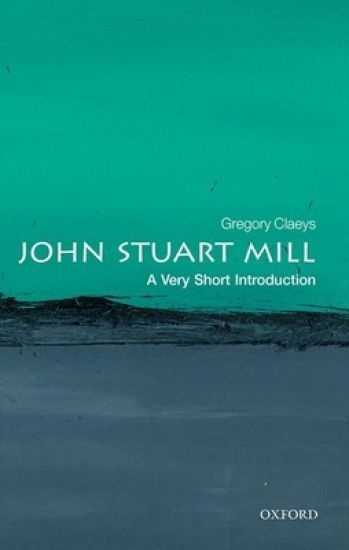
John Stuart Mill

John Stuart Mill

Gregory Claeys

Oxford University Press
2022
nidottu
Very Short Introductions: Brilliant, Sharp, Inspiring John Stuart Mill (1806-73) is widely regarded as the leading liberal philosopher, economist, and political theorist of nineteenth century Britain. In his lifetime he was best known for his System of Logic (1843) and the Principles of Political Economy (1848). Today Mill is chiefly identified with On Liberty (1859), perhaps the definitive text of modern liberal statement of its subject, and probably the single most important work of modern political thought. Mill was also the first major male feminist thinker of the period (author of The Subjection of Women, 1869), and the first, as an MP, to introduce a bill for female enfranchisement before Parliament. This Very Short Introduction offers a brief survey of the life and key ideas of this most influential Victorian British writer. Moving chronologically, Gregory Claeys outlines the philosophical background out of which Mill developed, chiefly through the ideas of Jeremy Bentham and James Mill. He demonstrates how Mill's personal life, especially his 'mental crisis' of 1827, and his relationship with Harriet Taylor, were integral to his intellectual development. Throughout Claeys considers Mill's key works set within the context of his lesser writings and correspondence, and discusses the more controversial aspects of his thought concerning religion, secularism, and birth control. ABOUT THE SERIES: The Very Short Introductions series from Oxford University Press contains hundreds of titles in almost every subject area. These pocket-sized books are the perfect way to get ahead in a new subject quickly. Our expert authors combine facts, analysis, perspective, new ideas, and enthusiasm to make interesting and challenging topics highly readable.
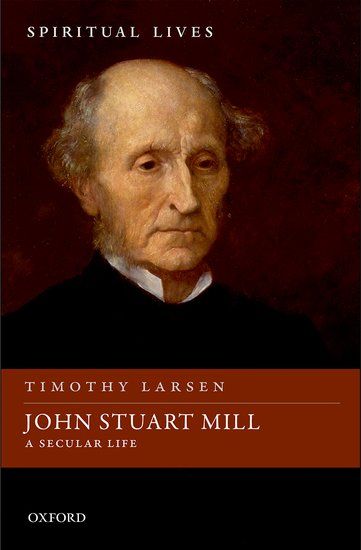
John Stuart Mill

John Stuart Mill

Timothy Larsen

Oxford University Press
2018
sidottu
John Stuart Mill observed in his Autobiography that he was a rare case in nineteenth-century Britain because he had not lost his religion but never had any. He was a freethinker from beginning to end. What is not often realized, however, is that Mill's life was nevertheless impinged upon by religion at every turn. This is true both of the close relationships that shaped him and of his own, internal thoughts. Mill was a religious sceptic, but not the kind of person which that term usually conjures up. The unexpected presence and prominence of spirituality is not only there in Mill's late, startling essay, 'Theism', in which he makes the case for hope in God and in Christ. It is everywhere--in his immediate family, his best friends, and his vision for the future. It is even there in such a seemingly unlikely place as his Logic, which repeatedly addresses religious themes. John Stuart Mill: A Secular Life is a biography which follows one of Britain's most well-respected intellectuals through all of the key moments in his life from falling in love to sitting in Parliament and beyond. It also explores his classic works including, On Liberty, Principles of Political Economy, Utilitarianism, and The Subjection of Women. In this well-researched study which offers original findings and insights, Timothy Larsen presents the Mill you never knew. The Mill that even some of his closest disciples never knew. This is John Stuart Mill, the Saint of Rationalism--a secular life and a spiritual life.
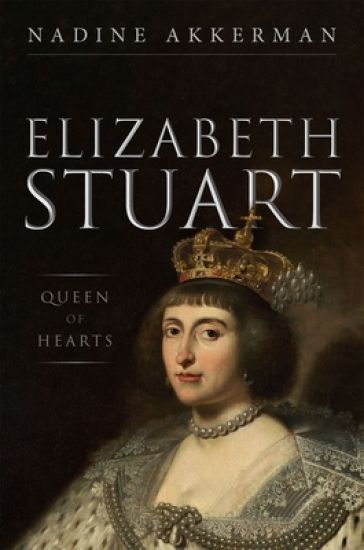
Elizabeth Stuart, Queen of Hearts

Elizabeth Stuart, Queen of Hearts

Nadine Akkerman

Oxford University Press
2021
sidottu
The dazzling new biography of one of history's most misunderstood queens Elizabeth Stuart is one the most misrepresented - and underestimated - figures of the seventeenth century. Labelled a spendthrift more interested in the theatre and her pet monkeys than politics or her children, and long pitied as 'The Winter Queen', the direct ancestor of Elizabeth II was widely misunderstood. Nadine Akkerman's biography reveals an altogether different woman, painting a vivid picture of a queen forged in the white heat of European conflict. Elizabeth Stuart, daughter of James VI and I, was married to Frederick V, Elector Palatine in 1613. The couple were crowned King and Queen of Bohemia in 1619, only to be deposed and exiled to the Dutch Republic in 1620. Elizabeth then found herself at the epicentre of the Thirty Years' War and the Civil Wars, political and military struggles that defined seventeenth-century Europe. Following her husband's death in 1632, Elizabeth fostered a cult of widowhood, dressing herself and her apartments in black, and conducted a long and fierce political campaign to regain her children's birthright - by force, if possible - wielding her pen with the same deft precision with which she once speared boars from horseback. Through deep immersion in the archives and masterful detective work, Akkerman overturns the received view of Elizabeth Stuart, showing her to be a patron of the arts and canny stateswoman with a sharp wit and a long memory. On returning to England in 1661, Elizabeth Stuart found a country whose people still considered her their 'Queen of Hearts'. Akkerman's biography reveals the impact Elizabeth Stuart had on both England and Europe, demonstrating that she was more than just the grandmother of George I.
John Stuart Mill and the Art of Life

John Stuart Mill and the Art of Life

Oxford University Press Inc
2012
nidottu
The "Art of Life" is John Stuart Mill's name for his account of practical reason. In this volume, eleven leading scholars elucidate this fundamental, but widely neglected, element of Mill's thought. Mill divides the Art of Life into three "departments": "Morality, Prudence or Policy, and Aesthetics." In the volume's first section, Rex Martin, David Weinstein, Ben Eggleston, and Dale E. Miller investigate the relation between the departments of morality and prudence. Their papers ask whether Mill is a rule utilitarian and, if so, whether his practical philosophy must be incoherent. The second section contains papers by Jonathan Riley and Wendy Donner, who explore the relation between the departments of morality and aesthetics. They discuss issues ranging from supererogation to aesthetic pleasure and humanity's relationship with nature. The papers in the third section consider the Art of Life's axiological first principle, the principle of utility. Elijah Millgram contends that Mill's own life refutes his claim that the Art of Life has a single axiological first principle. Philip Kitcher maintains that Mill has a dynamic axiology requiring us to continually refine our conception of the good. In the final section, three papers address what it means to put the Art of Life into practice. Robert Haraldsson locates an 'Art of Ethics' in On Liberty that is in tension with the Art of Life. Nadia Urbinati plumbs the classical roots of Mill's view of the good life. Finally, Colin Heydt develops Mill's suggestion that we regard our own lives as works of art.
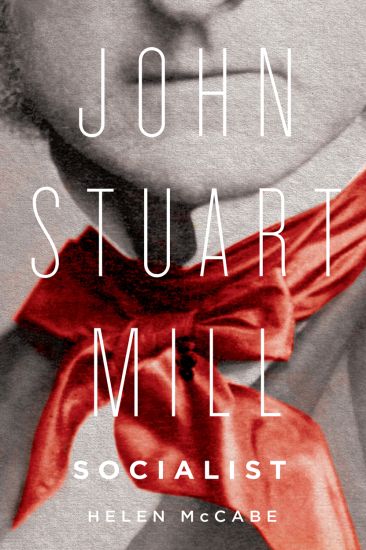
John Stuart Mill, Socialist

John Stuart Mill, Socialist

Helen McCabe

McGill-Queen's University Press
2021
sidottu
Best known as the author of On Liberty, John Stuart Mill remains a canonical figure in liberalism today. Yet according to his autobiography, by the mid-1840s he placed himself "under the general designation of Socialist." Taking this self-description seriously, John Stuart Mill, Socialist reinterprets Mill's work in its light.Helen McCabe explores the nineteenth-century political economist's core commitments to egalitarianism, social justice, social harmony, and a socialist utopia of cooperation, fairness, and human flourishing. Uncovering Mill's changing relationship with the radicalism of his youth and his excitement about the revolutionary events of 1848, McCabe argues that he saw liberal reforms as solutions to contemporary problems, while socialism was the path to a better future. In so doing, she casts new light on his political theory, including his theory of social progress; his support for democracy; his feminism; his concept of utility; his understanding of individuality; and his account of "the permanent interests of man as a progressive being," which is so central to his famous harm principle.As we look to rebuild the world in the wake of financial crises, climate change, and a global pandemic, John Stuart Mill, Socialist offers a radical rereading of the philosopher and a fresh perspective on contemporary meanings of socialism.
John Stuart Mill, Socialist

John Stuart Mill, Socialist

Helen McCabe

McGill-Queen's University Press
2021
nidottu
Best known as the author of On Liberty, John Stuart Mill remains a canonical figure in liberalism today. Yet according to his autobiography, by the mid-1840s he placed himself "under the general designation of Socialist." Taking this self-description seriously, John Stuart Mill, Socialist reinterprets Mill's work in its light.Helen McCabe explores the nineteenth-century political economist's core commitments to egalitarianism, social justice, social harmony, and a socialist utopia of cooperation, fairness, and human flourishing. Uncovering Mill's changing relationship with the radicalism of his youth and his excitement about the revolutionary events of 1848, McCabe argues that he saw liberal reforms as solutions to contemporary problems, while socialism was the path to a better future. In so doing, she casts new light on his political theory, including his theory of social progress; his support for democracy; his feminism; his concept of utility; his understanding of individuality; and his account of "the permanent interests of man as a progressive being," which is so central to his famous harm principle.As we look to rebuild the world in the wake of financial crises, climate change, and a global pandemic, John Stuart Mill, Socialist offers a radical rereading of the philosopher and a fresh perspective on contemporary meanings of socialism.
John Stuart Mill

John Stuart Mill

Palgrave Macmillan
2013
sidottu
This edited collection highlights the inquisitive and synthetic aspects of John Stuart Mill's mode of philosophising while exploring various aspects of Mill's thought, intellectual development and influence. The contributors to this volume discuss a number of Mill's ideas including those on political participation, democracy, liberty and justice.
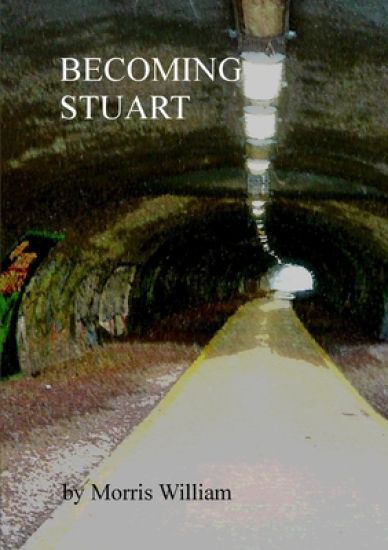
Becoming Stuart

Becoming Stuart

Morris William

Lulu.com
2019
nidottu
Growing up on an Edinburgh council estate in the 1970s, Stu didn't realise that he had limited options for his life ahead. BECOMING STUART takes a journey from the young life of Stu and the difficulties he faced with a broken home life, through domestic abuse and on to dealing with and understanding his friendship with punk rocker Johnny. Set around the turn of the 21st century, this is a story that explores the unexpected and shows how one young man deals with physical and mental abuse at the hand of his girlfriend. It also deals with male bonding and the difficulties he suffered trying to understand things that are still relatively taboo in society. Can Stu finally shake his past and move into a wonderful future? Will he ever be able to become Stuart? Contains adult themes and some Edinburgh dialect.
Imaging Stuart Family Politics

Imaging Stuart Family Politics

Catriona Murray

Routledge
2020
nidottu
From conception onwards, Stuart offspring were presented to their subjects through texts, images and public celebrations. Audiences were exhorted to share in their development, establishing affective bonds with the royal family and its latest additions. Yet inviting the public into Stuart domestic affairs exposed them to intense scrutiny and private interactions were endowed with public dimensions. Images of royal children had the potential both to support and to undermine dynastic messages. In Imaging Stuart Family Politics, Catriona Murray explores the promotion of Stuart familial propaganda through the figure of the royal child. Bringing together royal ritual, court portraiture and popular prints, she offers a distinctive perspective on this crucial dimension of seventeenth-century political culture, exploring the fashioning and dismantling of reproductive imagery, as well as the vital role of visual display within these dialogues. This wide-ranging study will appeal to scholars of Stuart cultural, political and social history.
The Basic Writings of John Stuart Mill

The Basic Writings of John Stuart Mill

John Stuart Mill

Modern Library Inc
2002
pokkari
The writings of John Stuart Mill have become the cornerstone of political liberalism. Collected for the first time in this volume are Mill’s three seminal and most widely read works: On Liberty, The Subjection of Women, and Utilitarianism. A brilliant defense of individual rights versus the power of the state, On Liberty is essential reading for anyone interested in political thought and theory. As Bertrand Russell reflected, “On Liberty remains a classic . . . the present world would be better than it is, if [Mill’s] principles were more respected.”This Modern Library Paperback Classics edition includes newly commissioned endnotes and commentary by Dale E. Miller, and an index.
John Stuart Mill's Social and Political Thought
This collection covers the breadth of Mill's work in social theory and political economy, including his ethics, liberalism, theory of government, methodology and feminism. It represents the most important scholarly and philosophical criticism of this century, illustrating the development of modern Mill scholarship and the influence of changing social conditions and philosophical trends upon it. In a general introduction the editor describes the social and intellectual context of Mill criticism, and provides a linking commentary to the material in each volume. The material in the collection displays the breadth and depth of high-quality scholarly and philosophical criticism of Mill's social thought. * Volume One covers Social Ethics * Volume Two covers Freedom * Volume Three covers Politics and Government * Volume Four covers Method, Life, Feminism and Culture
John Stuart Mill on Economic Theory and Method
This book, the third in the series of Samuel Hollander's essays, covers twelve key studies on the economic theory and method of John Stuart Mill. This volume provides an accessible sourcebook on Mill's relationship with David Ricardo, and the 'Classical School', as well as confirming his relevance for modern economics and for the place of economics within the social sciences.