Kirjojen hintavertailu. Mukana 11 605 943 kirjaa ja 12 kauppaa.

Kirjahaku

Etsi kirjoja tekijän nimen, kirjan nimen tai ISBN:n perusteella.

1000 tulosta hakusanalla Stuart J. Reid

Fluid-Structure Interactions

Fluid-Structure Interactions

Michael P. Païdoussis; Stuart J. Price; Emmanuel de Langre

Cambridge University Press
2014
pokkari
Structures in contact with fluid flow, whether natural or man-made, are inevitably subject to flow-induced forces and flow-induced vibration: from plant leaves to traffic signs and to more substantial structures, such as bridge decks and heat exchanger tubes. Under certain conditions the vibration may be self-excited, and it is usually referred to as an instability. These instabilities and, more specifically, the conditions under which they arise are of great importance to designers and operators of the systems concerned because of the significant potential to cause damage in the short term. Such flow-induced instabilities are the subject of this book. In particular, the flow-induced instabilities treated in this book are associated with cross-flow, that is, flow normal to the long axis of the structure. The book treats a specific set of problems that are fundamentally and technologically important: galloping, vortex-shedding oscillations under lock-in conditions and rain-and-wind-induced vibrations, among others.
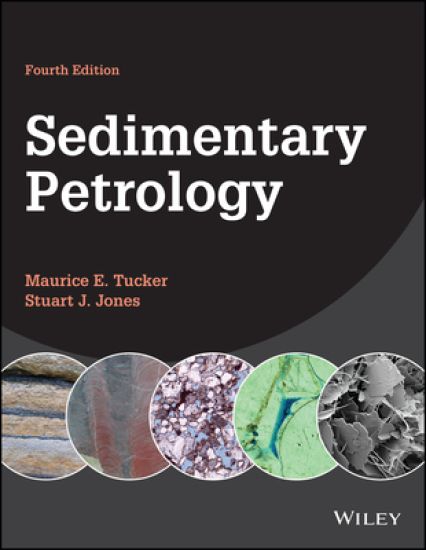
Sedimentary Petrology

Sedimentary Petrology

Maurice E. Tucker; Stuart J. Jones

John Wiley Sons Inc
2023
nidottu
Authoritative, accessible, and updated introduction to sedimentary rocks for undergraduate students Sedimentary Petrology provides readers with a concise account of sedimentary rock composition, mineralogy, texture, structure, diagenesis, and depositional environments. The new edition of this classic text incorporates the many technological and analytical advances of the last decade, revealing exciting details of processes such as microbial precipitation, how microporosity is created within mudrocks, and the chemical composition of foraminifera deposits, which can be a key indicator for changing seawater temperature. This fourth edition offers a comprehensive update and expansion of the previous editions with a new set of illustrations, new references, and further reading. The new co-author Stuart Jones has brought his considerable expertise in clastic sedimentology to the rewritten chapters on sandstones and mudrocks. The addition of color images throughout the text will aid students immensely in their studies and petrographic fieldwork. Sample topics covered in Sedimentary Petrology include: Advances in modeling and programming to simulate depositional-diagenetic conditions and controls which support field-lab descriptions and interpretationsOcean acidification and the demise of coral reefs, and the role of the oceans in carbon capture and storageSedimentary ironstones and iron-formations, sedimentary phosphate deposits, coal, oil shale and petroleum, and cherts and siliceous sedimentsLimestones, evaporites, volcaniclastic sediments, sandstones, conglomerates, breccias, and the effects of microplastics on marine organismsAimed at undergraduates in geology and earth science, Sedimentary Petrology is an excellent teaching and learning resource for introductory courses in sedimentary rocks.
The Dentist's Drug and Prescription Guide

The Dentist's Drug and Prescription Guide

Mea A. Weinberg; Stuart J. Froum; Stuart L. Segelnick

Wiley-Blackwell
2020
nidottu
The updated and authoritative reference to medications used in dental practice The revised and updated second edition of The Dentist's Drug and Prescription Guide offers a practical and quick reference to medications commonly prescribed in dental practice. With contributions from experts on the topic, this comprehensive book takes an accessible question-and-answer format, providing answers to common questions dentists ask about drugs. The most updated information on drugs is presented throughout, including the current antibiotic prophylaxis guidelines and newer osteoporosis drugs. A new section describes how to manage patients on medications, and includes new chapters on the important topics of opioid prescribing and abuse and pain management. Alternative effective medications for opioids are discussed in detail. Putting all the prescription and drug information needed in daily dental practice at your fingertips, The Dentist's Drug and Prescription Guide is an essential reference for practicing dental clinicians and dental hygienists. This important book: Offers a comprehensive and accessible guide to essential information about medications used in dental practicePresents detailed information about drugs in an easy-to-use question-and-answer formatProvides answers to commonly asked questions about drugsRefers to current, evidence-based pharmacology information, tailored for the dental clinicianFeatures information on opioid prescribing and abuse and pain management Written for both general and specialist dentists and dental hygienists, the revised second edition of The Dentist's Drug and Prescription Guide is a must-have reference for the most current information available on medications used in the dental profession.
War, Nation, Memory

War, Nation, Memory

Keith A. Crawford; Stuart J. Foster

Information Age Publishing
2007
nidottu
The Second World War stands as the most devastating and destructive global conflict in human history. More than 60 nations representing 1.7 billion people or three quarters of the world’s population were consumed by its horror. Not surprisingly, therefore, World War II stands as a landmark episode in history education throughout the world and its prominent place in school history textbooks is almost guaranteed. As this book demonstrates, however, the stories that nations choose to tell their young about World War II do not represent a universally accepted “truth” about events during the war. Rather, wartime narratives contained in school textbooks typically are selected to instil in the young a sense of national pride, common identify, and shared collective memory. To understand this process War, Nation, Memory describes and evaluates school history textbooks from many nations deeply affected by World War II including China, France, Germany, Japan, USA, and the United Kingdom. It critically examines the very different and complex perspectives offered in many nations and analyses the ways in which textbooks commonly serve as instruments of socialisation and, in some cases, propaganda. Above all, War, Nation, Memory demonstrates that far from containing “neutral” knowledge, history textbooks prove fascinating cultural artefacts consciously shaped and legitimated by powerful ideological, cultural, and sociopolitical forces dominant in the present.
War, Nation, Memory

War, Nation, Memory

Keith A. Crawford; Stuart J. Foster

Information Age Publishing
2007
sidottu
The Second World War stands as the most devastating and destructive global conflict in human history. More than 60 nations representing 1.7 billion people or three quarters of the world’s population were consumed by its horror. Not surprisingly, therefore, World War II stands as a landmark episode in history education throughout the world and its prominent place in school history textbooks is almost guaranteed. As this book demonstrates, however, the stories that nations choose to tell their young about World War II do not represent a universally accepted “truth” about events during the war. Rather, wartime narratives contained in school textbooks typically are selected to instil in the young a sense of national pride, common identify, and shared collective memory. To understand this process War, Nation, Memory describes and evaluates school history textbooks from many nations deeply affected by World War II including China, France, Germany, Japan, USA, and the United Kingdom. It critically examines the very different and complex perspectives offered in many nations and analyses the ways in which textbooks commonly serve as instruments of socialisation and, in some cases, propaganda. Above all, War, Nation, Memory demonstrates that far from containing “neutral” knowledge, history textbooks prove fascinating cultural artefacts consciously shaped and legitimated by powerful ideological, cultural, and sociopolitical forces dominant in the present.
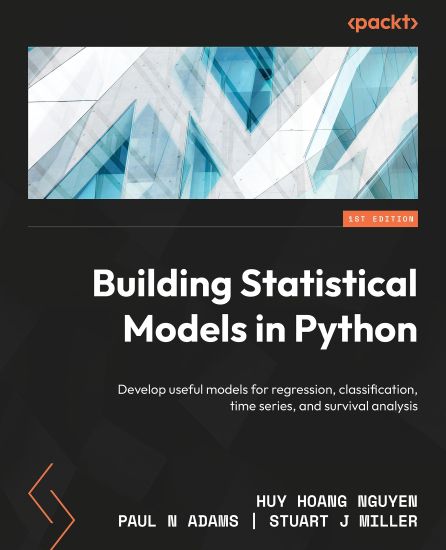
Building Statistical Models in Python

Building Statistical Models in Python

Huy Hoang Nguyen; Paul N Adams; Stuart J Miller

PACKT PUBLISHING LIMITED
2023
nidottu
Make data-driven, informed decisions and enhance your statistical expertise in Python by turning raw data into meaningful insights Purchase of the print or Kindle book includes a free PDF eBook Key Features Gain expertise in identifying and modeling patterns that generate success Explore the concepts with Python using important libraries such as stats models Learn how to build models on real-world data sets and find solutions to practical challenges Book DescriptionThe ability to proficiently perform statistical modeling is a fundamental skill for data scientists and essential for businesses reliant on data insights. Building Statistical Models with Python is a comprehensive guide that will empower you to leverage mathematical and statistical principles in data assessment, understanding, and inference generation. This book not only equips you with skills to navigate the complexities of statistical modeling, but also provides practical guidance for immediate implementation through illustrative examples. Through emphasis on application and code examples, you’ll understand the concepts while gaining hands-on experience. With the help of Python and its essential libraries, you’ll explore key statistical models, including hypothesis testing, regression, time series analysis, classification, and more. By the end of this book, you’ll gain fluency in statistical modeling while harnessing the full potential of Python's rich ecosystem for data analysis.What you will learn Explore the use of statistics to make decisions under uncertainty Answer questions about data using hypothesis tests Understand the difference between regression and classification models Build models with stats models in Python Analyze time series data and provide forecasts Discover Survival Analysis and the problems it can solve Who this book is forIf you are looking to get started with building statistical models for your data sets, this book is for you! Building Statistical Models in Python bridges the gap between statistical theory and practical application of Python. Since you’ll take a comprehensive journey through theory and application, no previous knowledge of statistics is required, but some experience with Python will be useful.
Global RFID

Global RFID

Edmund W. Schuster; Stuart J. Allen; David L. Brock

Springer-Verlag Berlin and Heidelberg GmbH Co. K
2006
sidottu
At the same time, I was a junior Brand Manager at Procter & Gamble w- ried about a much more mundane problem: how to keep my products on the shelf. Embedding RFID tags in the products, and RFID readers in the shelf, seemed like the perfect – indeed the only – way to do this. But I needed RFID to be cheaper, better, and standardized in an open system. In early 1999, by sheer chance, I met Brock and Sarma. The result was a potent meeting of minds. I was looking to fund research, and Brock, Sarma and Siu were looking for research funding. Working with Alan Haberman of the Uniform Code Council, one of the founding fathers of the UPC bar code, and Allan Boath of the Gillette C- pany, we developed a plan for a new industry funded research consortium at MIT. Haberman wanted to call it the Center For Automatic Identification And Data Capture. At the last minute I persuaded him to abbreviate it to the Auto-ID Center. But my luck with names is hit and miss: inspired by the bar code, I had the bad idea of calling Auto-ID Center’s technology UPC2. Brock and Sarma saved the day – one of them, I cannot remember which, proposed a far better alternative: EPC, for electronic product code. The Auto-ID Center opened on October 1, 1999. P&G loaned me to MIT to act as Executive Director, and Sunny Siu was the first Research Director.
Global RFID

Global RFID

Edmund W. Schuster; Stuart J. Allen; David L. Brock

Springer-Verlag Berlin and Heidelberg GmbH Co. K
2010
nidottu
At the same time, I was a junior Brand Manager at Procter & Gamble w- ried about a much more mundane problem: how to keep my products on the shelf. Embedding RFID tags in the products, and RFID readers in the shelf, seemed like the perfect – indeed the only – way to do this. But I needed RFID to be cheaper, better, and standardized in an open system. In early 1999, by sheer chance, I met Brock and Sarma. The result was a potent meeting of minds. I was looking to fund research, and Brock, Sarma and Siu were looking for research funding. Working with Alan Haberman of the Uniform Code Council, one of the founding fathers of the UPC bar code, and Allan Boath of the Gillette C- pany, we developed a plan for a new industry funded research consortium at MIT. Haberman wanted to call it the Center For Automatic Identification And Data Capture. At the last minute I persuaded him to abbreviate it to the Auto-ID Center. But my luck with names is hit and miss: inspired by the bar code, I had the bad idea of calling Auto-ID Center’s technology UPC2. Brock and Sarma saved the day – one of them, I cannot remember which, proposed a far better alternative: EPC, for electronic product code. The Auto-ID Center opened on October 1, 1999. P&G loaned me to MIT to act as Executive Director, and Sunny Siu was the first Research Director.
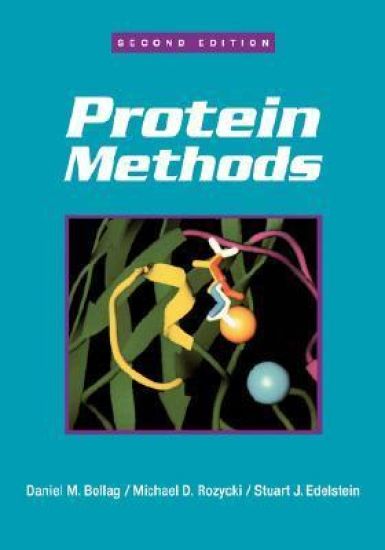
Protein Methods

Protein Methods

Daniel M. Bollag; Michael D. Rozycki; Stuart J. Edelstein

John Wiley Sons Inc
1996
nidottu
Protein Methods by Daniel M. Bollag, Michael D. Rozycki, Stuart J. EdelsteinReviews from the first edition"...it is very well written...would certainly be of use to undergraduate and postgraduate students entering the complex world of protein preparation and to more experienced scientists entering this field for the first time." —Biotechnology and Applied Biochemistry"The book presents these topics with loads of practical detail, so that the reader has little need to consult other reference sources to carry out the techniques described. All in all, a useful book..." —Theoretical & Applied Genetics"...clearly written with protocols that are easy to follow and the text is well spread-out and easy to read...all methods are fully referenced...a useful book for beginners at a reasonable price." —FEBS LettersThis revised and expanded Second Edition of Protein Methods remains the first source for a complete summary of tested and proven protein techniques. Now divided into two parts, the book begins with the essential chapters from the first edition, updated to reflect important changes in methodology. The chapter on protein isolation includes a new section focusing on the isolation of proteins from inclusion bodies. In the second section, four new chapters are devoted to protein purification and crystallization.Chapters include *Preparation for Protein Isolation *Protein Extraction and Solubilization *Protein Concentration Determination *Concentrating Protein Solutions *Gel Electrophoresis Under Denaturing Conditions *Gel Electrophoresis Under...and feature *reagent items and equipment required for each method *chapter "view-at-a-glance" tabs *illustrations for all gel applications and other methods *complete supplier list *appendices of basic chemical parameters and molecular data *key references *descriptive tables *Safety notes.
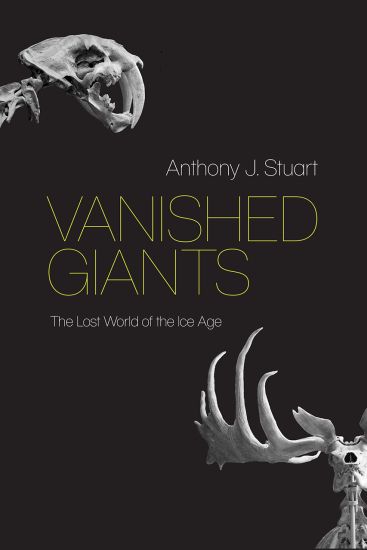
Vanished Giants

Vanished Giants

Anthony J Stuart

University of Chicago Press
2021
sidottu
Long after the extinction of dinosaurs, when humans were still in the stone age, woolly rhinos, mammoths, mastodons, sabertooth cats, giant ground sloths, and many other spectacular large animals that are no longer with us roamed the Earth. These animals are regarded as "Pleistocene megafauna," named for the geological era in which they lived--also known as the Ice Age. In Vanished Giants: The Lost World of the Ice Age, paleontologist Anthony J. Stuart explores the lives and environments of these animals, moving between six continents and several key islands. Stuart examines the animals themselves via what we've learned from fossil remains, and he describes the landscapes, climates, vegetation, ecological interactions, and other aspects of the animals' existence. Illustrated throughout, Vanished Giants also offers a picture of the world as it was tens of thousands of years ago when these giants still existed. Unlike the case of the dinosaurs, there was no asteroid strike to blame for the end of their world. Instead, it appears that the giants of the Ice Age were driven to extinction by climate change, human activities--especially hunting--or both. Drawing on the latest evidence provided by radiocarbon dating, Stuart discusses these possibilities. The extinction of Ice Age megafauna can be seen as the beginning of the so-called Sixth Extinction, which is happening right now. This has important implications for understanding the likely fate of present-day animals in the face of contemporary climate change and vastly increasing human populations.
Vanished Giants

Vanished Giants

Anthony J Stuart

THE UNIVERSITY OF CHICAGO PRESS
2022
nidottu
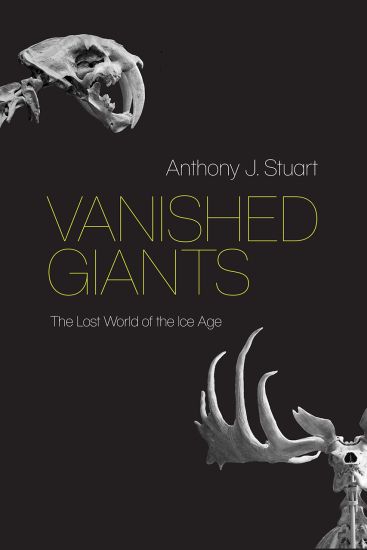
Featuring numerous illustrations, this book explores the many lessons to be learned from Pleistocene megafauna, including the role of humans in their extinction, their disappearance at the start of the Sixth Extinction, and what they might teach us about contemporary conservation crises. Long after the extinction of dinosaurs, when humans were still in the Stone Age, woolly rhinos, mammoths, mastodons, sabertooth cats, giant ground sloths, and many other spectacular large animals that are no longer with us roamed the Earth. These animals are regarded as “Pleistocene megafauna,” named for the geological era in which they lived—also known as the Ice Age. In Vanished Giants: The Lost World of the Ice Age, paleontologist Anthony J. Stuart explores the lives and environments of these animals, moving between six continents and several key islands. Stuart examines the animals themselves via what we’ve learned from fossil remains, and he describes the landscapes, climates, vegetation, ecological interactions, and other aspects of the animals’ existence. Illustrated throughout, Vanished Giants also offers a picture of the world as it was tens of thousands of years ago when these giants still existed. Unlike the case of the dinosaurs, there was no asteroid strike to blame for the end of their world. Instead, it appears that the giants of the Ice Age were driven to extinction by climate change, human activities—especially hunting—or both. Drawing on the latest evidence provided by radiocarbon dating, Stuart discusses these possibilities. The extinction of Ice Age megafauna can be seen as the beginning of the so-called Sixth Extinction, which is happening right now. This has important implications for understanding the likely fate of present-day animals in the face of contemporary climate change and vastly increasing human populations.
The Birth of an Angel

The Birth of an Angel

Paul J Stuart

iUniverse
2004
pokkari
Peter Blakely has lost his faith. After nine years on the streets, amidst a childhood-acquainted with grief, he recalls the absence of a father sent to prison years before. Now, a decade later, this man who has since been released, hopes f Enter Pascal...the newest angel. God has seen fit to create him for the sole purpose of serving as a guardian to this unlikely police officer. Tentative and uncertain, Pascal finds himself curiously unhappy with his "assignment." &ap As the lessons are learned by each mortal, so they are burned into the souls of each of their guardian angels. And what is visible to angelic eyes is not always visible to human ones. Why is there assisted suicide? Why does God allow suffering Will Pascal reach Peter? Will his discontentment be addressed by the Son? Or will he come to see that he is closest to the Trinity amidst the thankless drudgery he seeks to avoid? A vocation filled with rewards not unlike that of his mortal&ap