Kirjojen hintavertailu. Mukana 11 342 296 kirjaa ja 12 kauppaa.

Kirjahaku

Etsi kirjoja tekijän nimen, kirjan nimen tai ISBN:n perusteella.

1000 tulosta hakusanalla Thomas Satchell

Thomas Kuhn

Thomas Kuhn

Steve Fuller

University of Chicago Press
2000
sidottu
Thomas Kuhn's "The Structure of Scientific Revolutions" is one of the best known and most influential books of the 20th century. Whether they adore or revile him, critics and fans alike have tended to agree on one thing: Kuhn's ideas were revolutionary. But were they? Steve Fuller argues that Kuhn actually held a profoundly conservative view of science and how one ought to study its history. Early on, Kuhn came under the influence of Harvard President James Bryant Conant (to whom "Structure" is dedicated), who had developed an educational programme intended to help deflect Cold War unease over science's uncertain future by focusing on its illustrious past. Fuller argues that this rhetoric made its way into "Structure", which Fuller sees as preserving and reinforcing the old view that science really is just a steady accumulation of truths about the world (once "paradigm shifts" are resolved). Fuller suggests that Kuhn, consciously or not, shared the tendency in Western culture to conceal possible negative effects of new knowledge from the general public. Because it insists on a difference between a history of science for scientists and one suited to historians, Fuller charges that "Structure" created the awkward divide that has led directly to the "Science Wars" and has stifled much innovative research. In conclusion, Fuller offers a way forward that rejects Kuhn's fixation on paradigms in favour of a conception of science as a social movement designed to empower society's traditionally disenfranchised elements. Certain to be controversial, "Thomas Kuhn" should be read by anyone who has adopted, challenged or otherwise engaged with "The Structure of Scientific Revolutions".
Thomas Kuhn

Thomas Kuhn

Steve Fuller

University of Chicago Press
2001
nidottu
Thomas Kuhn's "The Structure of Scientific Revolutions" is one of the best known and most influential books of the 20th century. Whether they adore or revile him, critics and fans alike have tended to agree on one thing: Kuhn's ideas were revolutionary. But were they? Steve Fuller argues that Kuhn actually held a profoundly conservative view of science and how one ought to study its history. Early on, Kuhn came under the influence of Harvard President James Bryant Conant (to whom "Structure" is dedicated), who had developed an educational programme intended to help deflect Cold War unease over science's uncertain future by focusing on its illustrious past. Fuller argues that this rhetoric made its way into "Structure", which Fuller sees as preserving and reinforcing the old view that science really is just a steady accumulation of truths about the world (once "paradigm shifts" are resolved). Fuller suggests that Kuhn, consciously or not, shared the tendency in Western culture to conceal possible negative effects of new knowledge from the general public. Because it insists on a difference between a history of science for scientists and one suited to historians, Fuller charges that "Structure" created the awkward divide that has led directly to the "Science Wars" and has stifled much innovative research. In conclusion, Fuller offers a way forward that rejects Kuhn's fixation on paradigms in favour of a conception of science as a social movement designed to empower society's traditionally disenfranchised elements. Certain to be controversial, "Thomas Kuhn" should be read by anyone who has adopted, challenged or otherwise engaged with "The Structure of Scientific Revolutions".
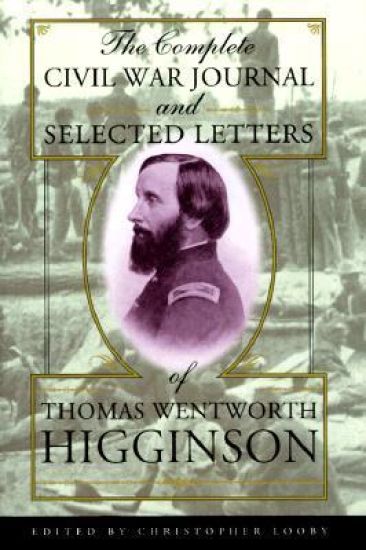
The Complete Civil War Journal and Selected Letters of Thomas Wentworth Higginson
Thomas Wentworth Higginson was a politically engaged intellectual at the forefront of antislavery, labour and feminist causes. Born in 1823 to a formerly wealthy but still prominent Brahmin family, he became one of America's foremost social activists and a leading writer, minister and reformer. With the publication in 1869 of his "Army Life in a Black Regiment", Higginson became an important chronicler of the American Civil War. This work is a comprehensive edition of his journal. Annotated by Christopher Looby and including a selection of Higginson's wartime letters, the volume offers a picture of the radical interracial solidarity brought about by the transformative experience of the army camp and of Civil War life.
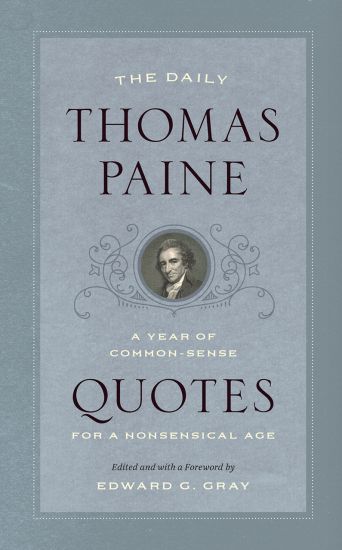
The Daily Thomas Paine

The Daily Thomas Paine

Thomas Paine; Edward G Gray

University of Chicago Press
2020
pokkari
Thomas Paine was the spark that ignited the American Revolution. More than just a Founding Father, he was a verbal bomb-thrower, a rationalist, and a rebel. In his influential pamphlets Common Sense and The American Crisis, Paine codified both colonial outrage and the intellectual justification for independence, arguing consistently and convincingly for Enlightenment values and the power of the people. Today, we are living in times that, as Paine famously said, "try men's souls." Whatever your politics, if you're seeking to understand the political world we live in, where better to look than Paine? The Daily Thomas Paine offers a year's worth of pithy and provocative quotes from this quintessentially American figure. Editor Edward G. Gray argues that we are living in a moment that Thomas Paine might recognize--or perhaps more precisely, a moment desperate for someone whose rhetoric can ignite a large-scale social and political transformation. Paine was a master of political rhetoric, from the sarcastic insult to the diplomatic apercu, and this book offers a sleek and approachable sampler of some of the sharpest bits from his oeuvre. As Paine himself says in the entry for January 20: "The present state of America is truly alarming to every man who is capable of reflexion." The Daily Thomas Paine--the newest addition to the University of Chicago Press's ongoing series of collected wisdom from notable writers--should prove equally incendiary and inspirational for contemporary readers with an eye for politics, even those who prefer the tweet to the pamphlet.
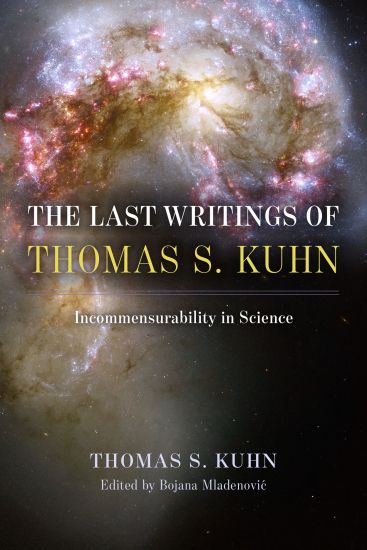
The Last Writings of Thomas S. Kuhn

The Last Writings of Thomas S. Kuhn

Thomas S. Kuhn

THE UNIVERSITY OF CHICAGO PRESS
2022
sidottu
A must-read follow-up to The Structure of Scientific Revolutions, one of the most important books of the twentieth century. This book contains the text of Thomas S. Kuhn’s unfinished book, The Plurality of Worlds: An Evolutionary Theory of Scientific Development, which Kuhn himself described as a return to the central claims of The Structure of Scientific Revolutions and the problems that it raised but did not resolve. The Plurality of Worlds is preceded by two related texts that Kuhn publicly delivered but never published in English: his paper “Scientific Knowledge as Historical Product” and his Shearman Memorial Lectures, “The Presence of Past Science.” An introduction by the editor describes the origins and structure of The Plurality of Worlds and sheds light on its central philosophical problems. Kuhn’s aims in his last writings are bold. He sets out to develop an empirically grounded theory of meaning that would allow him to make sense of both the possibility of historical understanding and the inevitability of incommensurability between past and present science. In his view, incommensurability is fully compatible with a robust notion of the real world that science investigates, the rationality of scientific change, and the idea that scientific development is progressive.
The Last Writings of Thomas S. Kuhn

The Last Writings of Thomas S. Kuhn

Thomas S. Kuhn

THE UNIVERSITY OF CHICAGO PRESS
2024
nidottu
A must-read follow-up to The Structure of Scientific Revolutions, one of the most important books of the twentieth century. This book contains the text of Thomas S. Kuhn’s unfinished book, The Plurality of Worlds: An Evolutionary Theory of Scientific Development, which Kuhn himself described as a return to the central claims of The Structure of Scientific Revolutions and the problems that it raised but did not resolve. The Plurality of Worlds is preceded by two related texts that Kuhn publicly delivered but never published in English: his paper “Scientific Knowledge as Historical Product” and his Shearman Memorial Lectures, “The Presence of Past Science.” An introduction by the editor describes the origins and structure of The Plurality of Worlds and sheds light on its central philosophical problems. Kuhn’s aims in his last writings are bold. He sets out to develop an empirically grounded theory of meaning that would allow him to make sense of both the possibility of historical understanding and the inevitability of incommensurability between past and present science. In his view, incommensurability is fully compatible with a robust notion of the real world that science investigates, the rationality of scientific change, and the idea that scientific development is progressive.
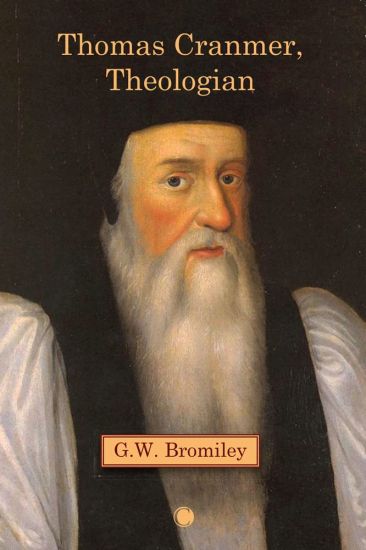
Thomas Cranmer, Theologian

Thomas Cranmer, Theologian

G.W. Bromiley

JAMES CLARKE CO LTD
2023
nidottu
In his important evaluation of the theological leader of the English Reformation, G.W. Bromiley charts Cranmer's doctrinal views, scriptural interpretation and liturgical composition. His nuanced position on various controversial issues of the day, not least baptism, is articulated with clarity and care, and his ecumenical sensitivity is foregrounded. While arguably more adept as a scholar than as a creative theologian in his own right, Cranmer's writing nevertheless formed the cornerstone of future Anglican theology. Through his Articles of Religion (42, later reduced to 39) and the Book of Common Prayer, he set the parameters within which the Church of England was to operate. Perhaps most significantly, as Bromiley shows, his extensive citation of patristic sources established a precedent for his successors that continues today. Written by one of the great ecclesiastical historians of the twentieth century, Thomas Cranmer, Theologian is the essential starting point for understanding Cranmer's influence and legacy in the Anglican church.
Thomas Cranmer, Theologian

Thomas Cranmer, Theologian

G.W. Bromiley

JAMES CLARKE CO LTD
2023
sidottu
In his important evaluation of the theological leader of the English Reformation, G.W. Bromiley charts Cranmer's doctrinal views, scriptural interpretation and liturgical composition. His nuanced position on various controversial issues of the day, not least baptism, is articulated with clarity and care, and his ecumenical sensitivity is foregrounded. While arguably more adept as a scholar than as a creative theologian in his own right, Cranmer's writing nevertheless formed the cornerstone of future Anglican theology. Through his Articles of Religion (42, later reduced to 39) and the Book of Common Prayer, he set the parameters within which the Church of England was to operate. Perhaps most significantly, as Bromiley shows, his extensive citation of patristic sources established a precedent for his successors that continues today. Written by one of the great ecclesiastical historians of the twentieth century, Thomas Cranmer, Theologian is the essential starting point for understanding Cranmer's influence and legacy in the Anglican church.
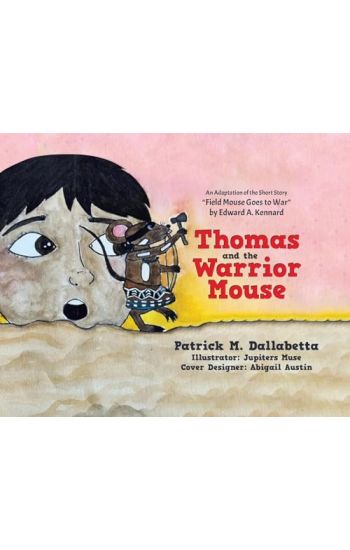
Thomas and the Warrior Mouse

Thomas and the Warrior Mouse

Patrick M Dallabetta

Tellwell Talent
2023
pokkari
Patrick Dallabetta's children's book is an adaptation of Edward Kennard's Hopi fable about the battle to save a Hopi Indian village from plunder. The original story, written in 1939, was adapted to include the adventures of Thomas Polywetewa, a young Hopi boy, and his field mouse best friend Tusan Homichi. How can Thomas and his pal Tusan work together to help his tribe survive the wrath of an enemy that could eliminate a major food source for his people of Second Mesa in Northern Arizona? The story explores aspects of the fascinating culture of the Hopi Indians. This wonderful children's book is available from most major book outlets and is the first of several stories that explore the adventures of the young Hopi boy Thomas as he grows up and learns about his own cultural heritage.
Thomas and the Warrior Mouse

Thomas and the Warrior Mouse

Patrick M Dallabetta

Tellwell Talent
2023
sidottu
Patrick Dallabetta's children's book is an adaptation of Edward Kennard's Hopi fable about the battle to save a Hopi Indian village from plunder. The original story, written in 1939, was adapted to include the adventures of Thomas Polywetewa, a young Hopi boy, and his field mouse best friend Tusan Homichi. How can Thomas and his pal Tusan work together to help his tribe survive the wrath of an enemy that could eliminate a major food source for his people of Second Mesa in Northern Arizona? The story explores aspects of the fascinating culture of the Hopi Indians. This wonderful children's book is available from most major book outlets and is the first of several stories that explore the adventures of the young Hopi boy Thomas as he grows up and learns about his own cultural heritage.
Thomas Paine: A Collection of Unknown Writings
A collection of writings by Thomas Paine previously unseen since their first appearance, including political pieces, private letters and verse. Covers his Common Sense years in the revolutionary American colonies; his time in Europe, when he published Rights of Man and The Age of Reason ; and his last years in the firmly united states of America.
Thomas Hardy and Desire

Thomas Hardy and Desire

Jane Thomas

Palgrave Macmillan
2013
sidottu
Drawing on a broad concept of desire, informed by poststructuralist theorists this book examines the range of Hardy's work. It demonstrates the sustained nature of his thinking about desire, its relationship to the social and symbolic network in which human subjectivity is constituted and art's potential to offer fulfilment to the desiring subject.
Thomas Paine: A Collection of Unknown Writings
A collection of writings by Thomas Paine previously unseen since their first appearance, including political pieces, private letters and verse. Covers his Common Sense years in the revolutionary American colonies; his time in Europe, when he published Rights of Man and The Age of Reason ; and his last years in the firmly united states of America.
Thomas Hardy: The Poems

Thomas Hardy: The Poems

Gillian Steinberg

Red Globe Press
2013
nidottu
Gillian Steinberg offers an approachable introduction to the poems of one of the most prolific and influential English writers, through an examination of wide-ranging selections from his work. Part I of this invaluable study: - Provides clear and stimulating close readings of Thomas Hardy's key poems - Considers major themes in Hardy's poetry, including ghosts, God's role in the world, war, and the painful passage of time - Summarizes the methods of analysis and provides suggestions for further work Part II supplies essential background material, featuring: - An account of Hardy's life and works - Samples of criticism from important Hardy scholars With a helpful Further Reading section, this insightful volume is ideal for anyone who wishes to appreciate and explore Hardy's poetry for themselves.
Thomas Berry

Thomas Berry

Mary Evelyn Tucker; John Grim; Andrew Angyal

Columbia University Press
2019
sidottu
Thomas Berry (1914–2009) was one of the twentieth century’s most prescient and profound thinkers. As a cultural historian, he sought a broader perspective on humanity’s relationship to the earth in order to respond to the ecological and social challenges of our times. This first biography of Berry illuminates his remarkable vision and its continuing relevance for achieving transformative social change and environmental renewal.Berry began his studies in Western history and religions and then expanded to include Asian and indigenous religions, which he taught at Fordham University, Barnard College, and Columbia University. Drawing on his explorations of history, he came to see the evolutionary process as a story that could help restore the continuity of humans with the natural world. Berry urged humans to recognize their place on a planet with complex ecosystems in a vast, evolving universe. He sought to replace the modern alienation from nature with a sense of intimacy and responsibility. Berry called for new forms of ecological education, law, and spirituality, as well as the creation of resilient agricultural systems, bioregions, and ecocities. At a time of growing environmental crisis, this biography shows the ongoing significance of Berry’s conception of human interdependence with the earth as part of the unfolding journey of the universe.
Thomas Berry

Thomas Berry

Mary Evelyn Tucker; John Grim; Andrew Angyal

Columbia University Press
2021
pokkari
Thomas Berry (1914–2009) was one of the twentieth century’s most prescient and profound thinkers. As a cultural historian, he sought a broader perspective on humanity’s relationship to the earth in order to respond to the ecological and social challenges of our times. This first biography of Berry illuminates his remarkable vision and its continuing relevance for achieving transformative social change and environmental renewal.Berry began his studies in Western history and religions and then expanded to include Asian and indigenous religions, which he taught at Fordham University, Barnard College, and Columbia University. Drawing on his explorations of history, he came to see the evolutionary process as a story that could help restore the continuity of humans with the natural world. Berry urged humans to recognize their place on a planet with complex ecosystems in a vast, evolving universe. He sought to replace the modern alienation from nature with a sense of intimacy and responsibility. Berry called for new forms of ecological education, law, and spirituality, as well as the creation of resilient agricultural systems, bioregions, and ecocities. At a time of growing environmental crisis, this biography shows the ongoing significance of Berry’s conception of human interdependence with the earth as part of the unfolding journey of the universe.