
Kirjahaku
Etsi kirjoja tekijän nimen, kirjan nimen tai ISBN:n perusteella.
1000 tulosta hakusanalla Torrence Davis
Aree di conservazione permanente nel bacino del torrente São Pedro
Bruno Bianchi Guimarães
Edizioni Sapienza
2025
nidottu
Raccolta differenziata nel microbacino del torrente Mineirinho - São Carlos/SP
Edizioni Sapienza
2025
pokkari
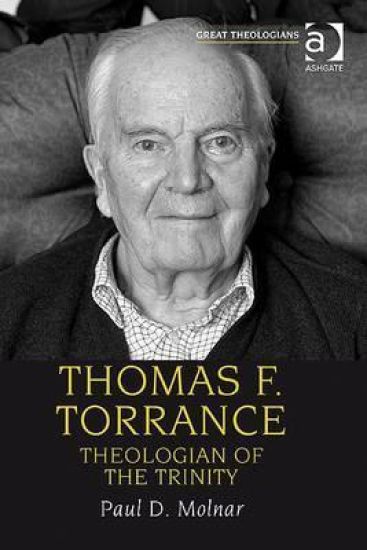
This book provides an important study of the theology of Thomas F. Torrance, who is generally considered to have been one of the most significant theologians writing in English during the twentieth century, with a view toward showing how his theological method and all his major doctrinal views were shaped by his understanding of the doctrine of the Trinity. Torrance pursued a theology that was realist because he attempted to think in accordance with the unique nature of the object that is known. In holding to such a methodology, he drew an analogy between theology and natural science. This book demonstrates how, for Torrance, God relates with humanity within time and space so that creation finds its meaning in relation to God and not in itself; this enabled him to avoid many theological pitfalls such as agnosticism, subjectivism and dualism while explaining the positive implications of various Christian doctrines in a penetrating and compelling manner. This book offers an important resource for students of theology and for scholars who are interested in seeing how serious dogmatic theology shapes and should shape our understanding of the Christian life.
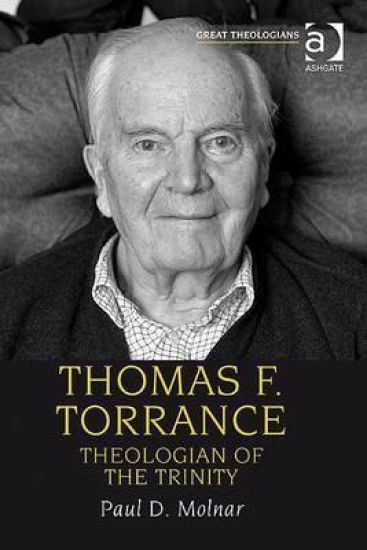
This book provides an important study of the theology of Thomas F. Torrance, who is generally considered to have been one of the most significant theologians writing in English during the twentieth century, with a view toward showing how his theological method and all his major doctrinal views were shaped by his understanding of the doctrine of the Trinity. Torrance pursued a theology that was realist because he attempted to think in accordance with the unique nature of the object that is known. In holding to such a methodology, he drew an analogy between theology and natural science. This book demonstrates how, for Torrance, God relates with humanity within time and space so that creation finds its meaning in relation to God and not in itself; this enabled him to avoid many theological pitfalls such as agnosticism, subjectivism and dualism while explaining the positive implications of various Christian doctrines in a penetrating and compelling manner. This book offers an important resource for students of theology and for scholars who are interested in seeing how serious dogmatic theology shapes and should shape our understanding of the Christian life.
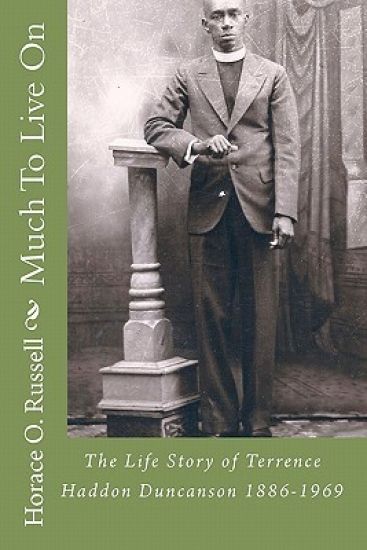
Much To Live On: The Life Story of Terrence Haddon Duncanson 1886-1969
Horace O. Russell
Createspace Independent Publishing Platform
2011
nidottu
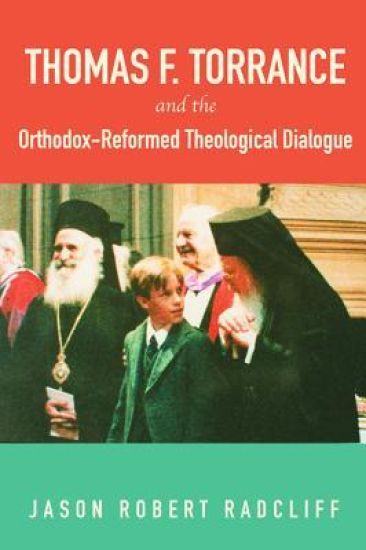
Thomas F. Torrance and the Orthodox-Reformed Theological Dialogue
Jason R Radcliff
Pickwick Publications
2018
pokkari
In this volume, Jason Radcliff offers an introduction, critical appreciation, and constructive extension of the Orthodox-Reformed Theological Dialogue spearheaded by Thomas F. Torrance in the late 1980s and early 1990s. Focusing upon the Greek Patristic foundations of the Dialogue, as seen particularly in the ""shared rapport"" between Torrance and Archbishop Methodios Fouyas as well as the monumental theological outcome of the Dialogue, ""The Agreed Statement on the Holy Trinity,"" a document that claims to cut behind the issue of the filioque, this book also highlights some of the notable conversations that went on ""behind the scenes"" of the Dialogue as seen in the photos, the unpublished Official Minutes, and correspondence between Torrance and other major figures, namely George Dragas, Methodios Fouyas, and The Patriarch of Constantinople himself, about such topics such as the Athanasian doctrine of the Trinity, Barthian Christocentrism, and John Zizioulas' existentialism. The book includes selections from unpublished minutes and photographs as well as out-of-print documents--such as Torrance's ""Memoranda on Orthodox/Reformed Relations"" and ""Common Reflection"" as well as ""The Agreed Statement on the Holy Trinity."" Radcliff argues that the Dialogue's ecumenical use and creative interpretation of the Trinitarian and Christocentric theology of the Greek Fathers is profoundly relevant for contemporary Trinitarian theology. ""This superb study by Jason Radcliff, which offers a veritable gold mine of information about the central doctrine of the Nicene faith, does a great service for the church and academy explaining how and why Thomas F. Torrance's ecumenical approach remains an underutilized but necessary benchmark for contemporary Trinitarian theology . . . This book is must reading for anyone studying Christology and Trinitarian doctrine today."" --Paul D. Molnar, St. John's University, Queens, New York ""The dialogue between the (then) World Alliance of Reformed Churches and the Orthodox Church was one of the ecumenical successes of the late twentieth century. This was not only because they agreed that they would hold to the agenda set by the Nicene-Constantinopolotan Creed (unthinkable in today's era of identity theologies) but because of the depth of friendship between Archbishop Methodios Fouyas and Thomas F. Torrance (my father). The distinguished Greek theologian George Dion Dragas shared that friendship and the volume is most appropriately dedicated to him. It is a perceptive volume, fully alive to the ways good human relationships, loyalty, and deep affection can thaw apparently intractable disagreement."" --Iain R. Torrance, President Emeritus of Princeton Theological Seminary Jason Radcliff (PhD, Edinburgh), author of Thomas F. Torrance and the Church Fathers (Pickwick, 2014), teaches at The Stony Brook School, a college-preparatory boarding school in New York. He is also on the faculty of The George Mercer, Jr. Memorial School of Theology, and serves as an Assistant Editor of Participatio: The Journal of the Thomas F. Torrance Theological Fellowship.
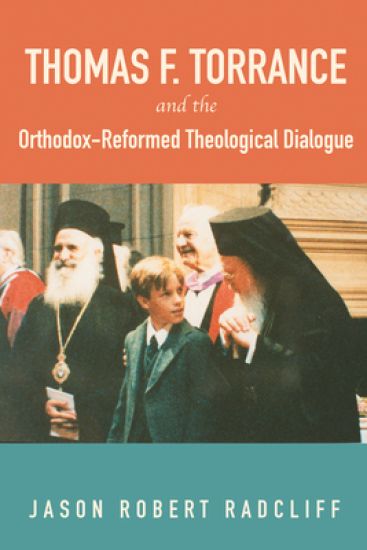
Thomas F. Torrance and the Orthodox-Reformed Theological Dialogue
Jason Robert Radcliff
Pickwick Publications
2018
sidottu
In this volume, Jason Radcliff offers an introduction, critical appreciation, and constructive extension of the Orthodox-Reformed Theological Dialogue spearheaded by Thomas F. Torrance in the late 1980s and early 1990s. Focusing upon the Greek Patristic foundations of the Dialogue, as seen particularly in the ""shared rapport"" between Torrance and Archbishop Methodios Fouyas as well as the monumental theological outcome of the Dialogue, ""The Agreed Statement on the Holy Trinity,"" a document that claims to cut behind the issue of the filioque, this book also highlights some of the notable conversations that went on ""behind the scenes"" of the Dialogue as seen in the photos, the unpublished Official Minutes, and correspondence between Torrance and other major figures, namely George Dragas, Methodios Fouyas, and The Patriarch of Constantinople himself, about such topics such as the Athanasian doctrine of the Trinity, Barthian Christocentrism, and John Zizioulas' existentialism. The book includes selections from unpublished minutes and photographs as well as out-of-print documents--such as Torrance's ""Memoranda on Orthodox/Reformed Relations"" and ""Common Reflection"" as well as ""The Agreed Statement on the Holy Trinity."" Radcliff argues that the Dialogue's ecumenical use and creative interpretation of the Trinitarian and Christocentric theology of the Greek Fathers is profoundly relevant for contemporary Trinitarian theology. ""This superb study by Jason Radcliff, which offers a veritable gold mine of information about the central doctrine of the Nicene faith, does a great service for the church and academy explaining how and why Thomas F. Torrance's ecumenical approach remains an underutilized but necessary benchmark for contemporary Trinitarian theology . . . This book is must reading for anyone studying Christology and Trinitarian doctrine today."" --Paul D. Molnar, St. John's University, Queens, New York ""The dialogue between the (then) World Alliance of Reformed Churches and the Orthodox Church was one of the ecumenical successes of the late twentieth century. This was not only because they agreed that they would hold to the agenda set by the Nicene-Constantinopolotan Creed (unthinkable in today's era of identity theologies) but because of the depth of friendship between Archbishop Methodios Fouyas and Thomas F. Torrance (my father). The distinguished Greek theologian George Dion Dragas shared that friendship and the volume is most appropriately dedicated to him. It is a perceptive volume, fully alive to the ways good human relationships, loyalty, and deep affection can thaw apparently intractable disagreement."" --Iain R. Torrance, President Emeritus of Princeton Theological Seminary Jason Radcliff (PhD, Edinburgh), author of Thomas F. Torrance and the Church Fathers (Pickwick, 2014), teaches at The Stony Brook School, a college-preparatory boarding school in New York. He is also on the faculty of The George Mercer, Jr. Memorial School of Theology, and serves as an Assistant Editor of Participatio: The Journal of the Thomas F. Torrance Theological Fellowship.

Thomas F. Torrance and the Church Fathers
Jason R Radcliff; Thomas a Noble
Pickwick Publications
2014
sidottu
Thomas F. Torrance and the Church Fathers
Jason R Radcliff; Thomas a Noble
Pickwick Publications
2014
pokkari

Terrence Corcoran carried a badge in Virginia City, Nevada until one day, in a drunken stupor, he shot the sheriff. Now he's returning to the Comstock looking to get his badge back and stumbles into a conspiracy that might put the sheriff, district attorney, and others in jail for a long time. A lovely working girl is brutally murdered, a Hungarian duke wants a Wells Fargo gold shipment, and the sheriff rehires him after first kicking him in a most tender spot.Corcoran was born on the ship bringing his family to this country, ran away to the frontier at an early age and brings his ideas of the old country and knowledge learned of the west to whatever mess he finds himself in. He's carried a badge, found himself in jail, and stands four-square for right, honor, and truth.You gotta love the guy.
Thomas F. Torrance and Evangelical Theology – A Critical Analysis
Myk Habets; R. Lucas Stamps; Fred Sanders
Faithlife Corporation
2023
nidottu
Thomas F. Torrance invites evangelicals to think more ChristianlyThomas F. Torrance and Evangelical Theology: A Critical Analysis brings Torrance into closer conversation with evangelical theology on a range of key theological topics.Thomas F. Torrance and the Evangelical Tradition (Thomas A. Noble)Torrance, The Tacit Dimension, and The Church Fathers (Jonathan Warren P. (Pag n))Torrance and the Doctrine of Scripture (Andrew T. B. McGowan)Revelation, Rationalism, and an Evangelical Impasse (Myk Habets)Theology and Science in Torrance (W. Ross Hastings)A Complexly Relational Account of the Imago Dei in Torrance's Vision of Humanity (Marc Cortez)Barth, Torrance, and Evangelicals: Critiquing and Reinvigorating the Idea of a "Personal Relationship with Jesus" (Marty Folsom)Torrance and Atonement (Christopher Woznicki)Torrance and Christ's Assumption of Fallen Human Nature: Toward Clarification and Closure (Jerome Van Kuiken)Torrance, Theosis, and Evangelical Reception (Myk Habets)Thinking and Acting in Christ: Torrance on Spiritual Formation (Geordie W. Ziegler)'Seeking Love, Justice and Freedom for All' Using the Work of T.F. and J.B. Torrance to Address Domestic and Family Violence (Jenny Richards)Toward a Trinitarian Theology of Work (Peter K. W. McGhee)Torrance and Global Evangelicalism: Some Potential Generative Exchanges with Contemporary Indian Evangelical Theology (Stavan Narendra John)Thomas Forsyth Torrance (1913-2007) was one of the most important theologians of the twentieth century, yet his work remains relatively neglected by evangelicals. A diverse collection of contributors engage Torrance's pioneering and provocative thought, deriving insights from theological loci such as Scripture, Christology, and atonement, as well as from broader topics like domestic violence and science. These stimulating essays reveal how Torrance can help evangelical theologians articulate richer and deeper theology.
Mappatura della prospettività mediante la geochimica dei sedimenti di torrente:
Hilda Nthabiseng Mashale
Edizioni Sapienza
2022
nidottu
La dinamica del cambiamento dell'uso del suolo sulla portata del torrente
Taye Habte Asefa
Edizioni Sapienza
2022
nidottu
T&T Clark Handbook of Thomas F. Torrance
T. T.Clark Ltd
2020
sidottu
This handbook explores Thomas F. Torrance's importance in modern theology, with each contribution bringing Torrance's deep and nuanced insights to a broad range of contemporary theological concerns. The contributors to this volume present cutting-edge Torrance scholarship for a new generation, which will enable readers to see the timely significance of Torrance for today.Comprising both contexts and dogmatics, these essays not only introduce key themes in Torrance's extensive published writings – including his work on the Trinity, ecumenism, incarnation, atonement, and eschatology - but also provide fresh interpretations fully conversant with theological problems facing the church in the world today. Designed as both a guide for students and a reference point for scholars, this handbook thoroughly explores the frameworks of key debates related to Torrance's theology, while also suggesting fresh interpretative strategies concerning his thought.
The Pedernal Positive Element and the Estancia Basin, Torrance and Northern Lincoln Counties, New Mexico
E. J. Foley
Literary Licensing, LLC
2012
sidottu
The Pedernal Positive Element And The Estancia Basin, Torrance And Northern Lincoln Counties, New Mexico is a geological book published by the Roswell Geological Society. The book is a comprehensive study of the geology of the Pedernal Positive Element and the Estancia Basin in Torrance and Northern Lincoln Counties, New Mexico. The book covers the geological history of the area, including the formation of the Pedernal Positive Element and the Estancia Basin. It also provides detailed information on the various rock formations, mineral deposits, and fossil records found in the area. The book is written in a clear and concise manner, making it accessible to both professionals and laypeople interested in the geology of the region. The authors have included numerous maps, diagrams, and photographs to aid in the understanding of the geology of the region. Overall, The Pedernal Positive Element And The Estancia Basin, Torrance And Northern Lincoln Counties, New Mexico is an essential resource for anyone interested in the geology of this fascinating region.November 21 And 22, 1952: Guidebook Field Trip No. 7.This scarce antiquarian book is a facsimile reprint of the old original and may contain some imperfections such as library marks and notations. Because we believe this work is culturally important, we have made it available as part of our commitment for protecting, preserving, and promoting the world's literature in affordable, high quality, modern editions, that are true to their original work.
The Pedernal Positive Element and the Estancia Basin, Torrance and Northern Lincoln Counties, New Mexico
Roswell Geological Society
Literary Licensing, LLC
2012
nidottu
T&T Clark Handbook of Thomas F. Torrance
BLOOMSBURY PUBLISHING PLC
2022
nidottu
This handbook explores Thomas F. Torrance's importance in modern theology, with each contribution bringing Torrance's deep and nuanced insights to a broad range of contemporary theological concerns. The contributors to this volume present cutting-edge Torrance scholarship for a new generation, which will enable readers to see the timely significance of Torrance for today.Comprising both contexts and dogmatics, these essays not only introduce key themes in Torrance's extensive published writings – including his work on the Trinity, ecumenism, incarnation, atonement, and eschatology - but also provide fresh interpretations fully conversant with theological problems facing the church in the world today. Designed as both a guide for students and a reference point for scholars, this handbook thoroughly explores the frameworks of key debates related to Torrance's theology, while also suggesting fresh interpretative strategies concerning his thought.
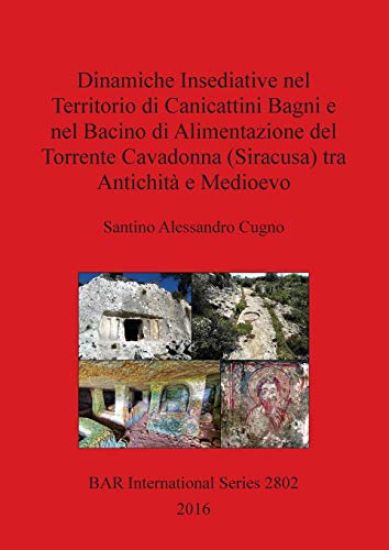
Dinamiche Insediative nel Territorio di Canicattini Bagni e nel Bacino di Alimentazione del Torrente Cavadonna (Siracusa) tra Antichità e Medioevo
Santino Alessandro Cugno
BAR Publishing
2016
nidottu
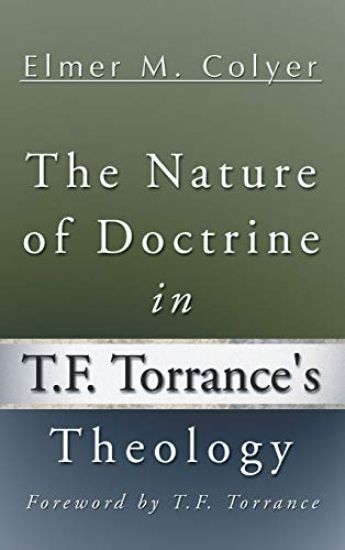
The Nature of Doctrine in T.F. Torrance's Theology
Elmer M Colyer
Wipf Stock Publishers
2001
sidottu
Thomas F. Torrance is considered by many to be the most important English-speaking theologian of the last fifty years. Torrance has written extensively (over six hundred items) on nearly every theme in theology, especially theological method and the nature of theology. Yet little secondary literature about his theology has been published to date. The significance of this book by Elmer M. Colyer is that it discusses a theme (the nature of doctrine) that takes readers into the heart of Torrance's critical realist epistemology, theological method and understanding of the nature and purpose of theology. Colyer also contributes significantly to the ongoing conversation concerning the nature of doctrine, since Torrance's understanding of doctrine moves considerably beyond the work of George Lindbeck (The Nature of Doctrine) and Alister McGrath (The Genesis of Doctrine) in this area.