Kirjojen hintavertailu. Mukana 11 342 296 kirjaa ja 12 kauppaa.

Kirjahaku

Etsi kirjoja tekijän nimen, kirjan nimen tai ISBN:n perusteella.

1000 tulosta hakusanalla Vector Hasting

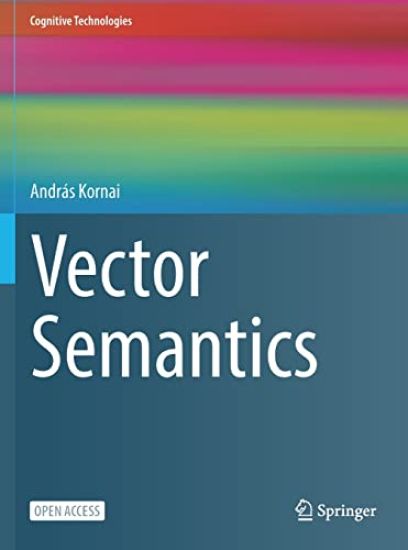
Vector Semantics

Vector Semantics

András Kornai

SPRINGER VERLAG, SINGAPORE
2022
nidottu
This open access book introduces Vector semantics, which links the formal theory of word vectors to the cognitive theory of linguistics. The computational linguists and deep learning researchers who developed word vectors have relied primarily on the ever-increasing availability of large corpora and of computers with highly parallel GPU and TPU compute engines, and their focus is with endowing computers with natural language capabilities for practical applications such as machine translation or question answering. Cognitive linguists investigate natural language from the perspective of human cognition, the relation between language and thought, and questions about conceptual universals, relying primarily on in-depth investigation of language in use. In spite of the fact that these two schools both have ‘linguistics’ in their name, so far there has been very limited communication between them, as their historical origins, data collection methods, and conceptual apparatuses are quite different. Vector semantics bridges the gap by presenting a formal theory, cast in terms of linear polytopes, that generalizes both word vectors and conceptual structures, by treating each dictionary definition as an equation, and the entire lexicon as a set of equations mutually constraining all meanings.
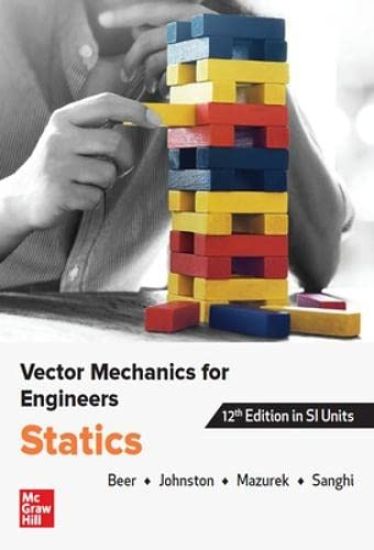
VECTOR MECHANICS FOR ENGINEERS: STATICS, SI

VECTOR MECHANICS FOR ENGINEERS: STATICS, SI

Ferdinand Beer; E. Johnston; David Mazurek

McGraw-Hill Education (Asia)
2019
nidottu
A primary objective in a first course in mechanics is to help develop a student's ability first to analyze problems in a simple and logical manner, and then to apply basic principles to their solutions. A strong conceptual understanding of these basic mechanics principles is essential for successfully solving mechanics problems. This edition of Vector Mechanics for Engineers will help instructors achieve these goals. Continuing in the spirit of its successful previous editions, this edition provides conceptually accurate and thorough coverage together with a significant refreshment of the exercise sets and online delivery of homework problems to your students. The 12th edition has new case studies and enhancements in the text and in Connect. The hallmark of the Beer-Johnston series has been the problem sets.This edition is no different. Over 650 of the homework problems in the text are new or revised. One of the characteristics of the approach used in this book is that mechanics of particles is clearly separated from the mechanics of rigid bodies. This approach makes it possible to consider simple practical applications at an early stage and to postpone the introduction of the more difficult concepts. McGraw-Hill's Connect, is also available. Connect is the only integrated learning system that empowers students by continuously adapting to deliver precisely what they need, when they need it, how they need it, so that class time is more effective. Connect allows the professor to assign homework, quizzes, and tests easily and automatically grades and records the scores of the student's work. Problems are randomized to prevent sharing of answers an may also have a "multi-step solution" which helps move the students' learning along if they experience difficulty.
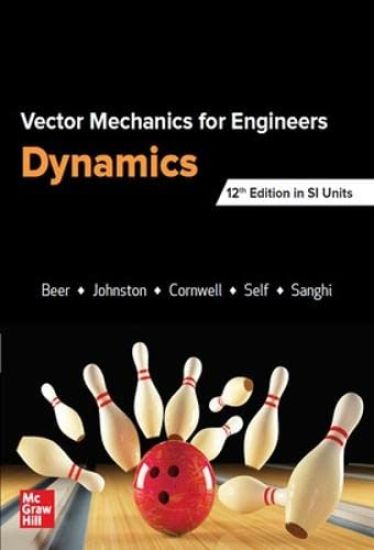
VECTOR MECHANICS FOR ENGINEERS: DYNAMICS, SI

VECTOR MECHANICS FOR ENGINEERS: DYNAMICS, SI

Ferdinand Beer; E. Johnston; Phillip Cornwell; Brian Self

McGraw-Hill Education (Asia)
2019
nidottu
A primary objective in a first course in mechanics is to help develop a student's ability first to analyze problems in a simple and logical manner, and then to apply basic principles to their solutions. A strong conceptual understanding of these basic mechanics principles is essential for successfully solving mechanics problems. This edition of Vector Mechanics for Engineers will help instructors achieve these goals. Continuing in the spirit of its successful previous editions, this edition provides conceptually accurate and thorough coverage together with a significant refreshment of the exercise sets and online delivery of homework problems to your students. The 12th edition has new case studies and enhancements in the text and in Connect. The hallmark of the Beer-Johnston series has been the problem sets.This edition is no different. Over 650 of the homework problems in the text are new or revised. One of the characteristics of the approach used in this book is that mechanics of particles is clearly separated from the mechanics of rigid bodies. This approach makes it possible to consider simple practical applications at an early stage and to postpone the introduction of the more difficult concepts. McGraw-Hill's Connect, is also available. Connect is the only integrated learning system that empowers students by continuously adapting to deliver precisely what they need, when they need it, how they need it, so that class time is more effective. Connect allows the professor to assign homework, quizzes, and tests easily and automatically grades and records the scores of the student's work. Problems are randomized to prevent sharing of answers an may also have a "multi-step solution" which helps move the students' learning along if they experience difficulty.
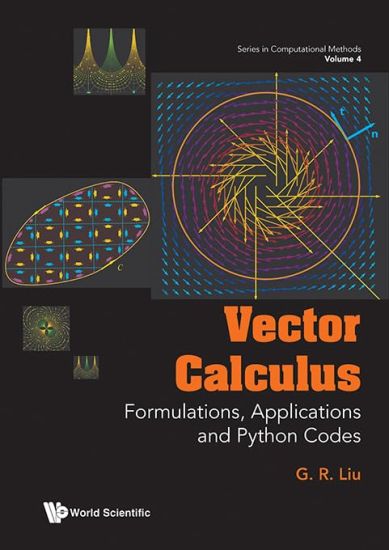
Vector Calculus: Formulations, Applications And Python Codes

Vector Calculus: Formulations, Applications And Python Codes

Gui-rong Liu

WORLD SCIENTIFIC PUBLISHING CO PTE LTD
2025
sidottu
This unique compendium deals with the differentiation and integration of vector functions. It examines critical effects and extracts important features using powerful tools of differentiation and integration. Techniques and codes for computing the divergence, curl, and gradients of a given field function, which reveal the mathematical behavior of the vector field, are discussed. Green's theorem, Stokes's theorem, and Gauss's formula, along with their novel extensions, are presented in detail with applications such as the smoothed gradient method.Written in Jupyter notebook format, the book offers a unified environment for theory description, code execution, and real-time interaction, making it ideal for reading, practicing, and further exploration.
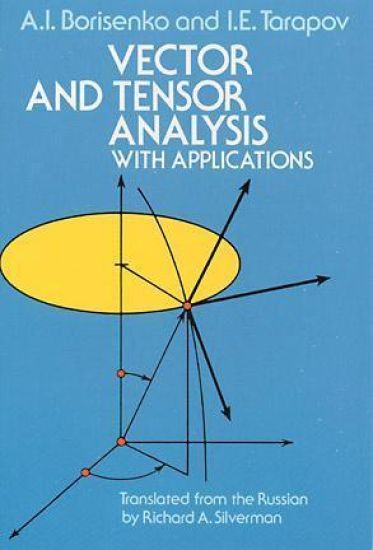
Vector and Tensor Analysis with Applications

Vector and Tensor Analysis with Applications

A. I. Borisenko

Dover Publications Inc.
2003
nidottu
Concise and readable, this text ranges from definition of vectors and discussion of algebraic operations on vectors to the concept of tensor and algebraic operations on tensors. It also includes a systematic study of the differential and integral calculus of vector and tensor functions of space and time. Worked-out problems and solutions. 1968 edition.
Vector Media

Vector Media

Leonardo Impett; Fabian Offert

UNIVERSITY OF MINNESOTA PRESS
2026
nidottu
Dispelling the notion of "generative" AI Neural networks are designed to dissolve all media into the vector space—a universal space of commensurability. In Vector Media, Leonardo Impett and Fabian Offert parse theories of automatic vision to trace contemporary artificial intelligence's technical ideology of epistemic reduction, where sensory data is turned into abstracted forms of meaning. Under this regime, bias is not just a question of what is represented but of the logic of representation itself. Drawing on Phil Agre's notion of a critical technical practice, Vector Media reveals how artificial intelligence systems embed new epistemologies of media beneath the surface of their architectures. Analyzing the techniques underpinning large multimodal artificial intelligence models like DALL-E, Midjourney, Flux, or Stable Diffusion, Impett and Offert offer the concept of neural exchange value: the value cultural artifacts acquire not through meaning or context but through their capacity to function as vectors. In such a system, commensurability becomes a condition of existence: what matters is not what something is but that it can be embedded. Rather than focusing solely on datasets, Vector Media proposes a critical study of vector spaces – and the machine cultures they produce – as a necessary complement to prevailing approaches in AI critique. Retail e-book files for this title are screen-reader friendly with images accompanied by short alt text and/or extended descriptions.
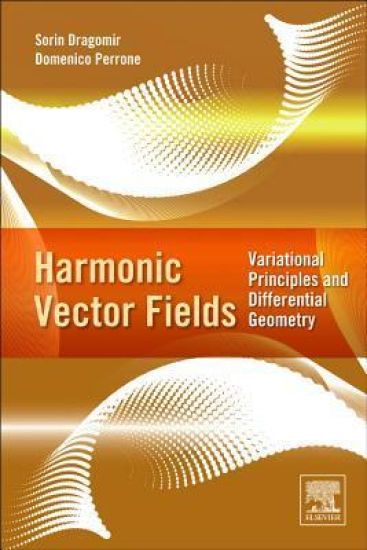
Harmonic Vector Fields

Harmonic Vector Fields

Sorin Dragomir; Domenico Perrone

Elsevier Science Publishing Co Inc
2011
sidottu
An excellent reference for anyone needing to examine properties of harmonic vector fields to help them solve research problems. The book provides the main results of harmonic vector ?elds with an emphasis on Riemannian manifolds using past and existing problems to assist you in analyzing and furnishing your own conclusion for further research. It emphasizes a combination of theoretical development with practical applications for a solid treatment of the subject useful to those new to research using differential geometric methods in extensive detail.
Arthropod Vector: Controller of Disease Transmission, Volume 1
Arthropod Vector: Controller of Disease Transmission, Volume 1: Vector Microbiome and Innate Immunity of Arthropods is built on topics initially raised at a related Keystone Symposium on Arthropod Vectors. Together with the separate, related Volume 2: Vector Saliva-Host Pathogen Interactions, this work presents a logical sequence of topic development that leads to regulatory considerations for advancing these and related concepts for developing novel control measures. The three themes of symbionts, vector immune defenses and arthropod saliva modulation of the host environment are central to the concept of determinants of vector competence that involves all aspects of vector-borne pathogen development within the arthropod that culminates in the successful transmission to the vertebrate host. These three areas are characterized at the present time by rapid achievement of significant, incremental insights, which advances our understanding for a wide variety of arthropod vector species, and this work is the first to extensively integrate these themes.
Arthropod Vector: Controller of Disease Transmission, Volume 2
Arthropod Vector: Controller of Disease Transmission, Volume 2: Vector Saliva-Host Pathogen Interactions is built on topics initially raised at a related Keystone Symposium on Arthropod Vectors. Together with the separate, related Volume 1: Controller of Disease Transmission, this work presents a logical sequence of topic development that leads to regulatory considerations for advancing these and related concepts for developing novel control measures. The three themes of symbionts, vector immune defenses and arthropod saliva modulation of the host environment are central to the concept of determinants of vector competence that involves all aspects of vector-borne pathogen development within the arthropod that culminates in the successful transmission to the vertebrate host. These three areas are characterized at the present time by rapid achievement of significant, incremental insights, which advances our understanding for a wide variety of arthropod vector species, and this work is the first to extensively integrate these themes.
Linear Vector Spaces and Cartesian Tensors

Linear Vector Spaces and Cartesian Tensors

Knowles

Oxford University Press Inc
1997
sidottu
Designed for a first year graduate course in Mechanics, this text brings together never before collected works on linear vector spaces, on which the author is a world renowned authority. It is primarily concerned with finite dimensional real Euclidean spaces, with Cartesian tensors viewed as linear transformations of such a space into itself, and with applications of these notions, especially in mechanics. The geometric content of the theory and the distinction between matrices and tensors are emphasized, and absolute- and component- notation are both employed. Problems and solutions are included.
Sensorless Vector and Direct Torque Control

Sensorless Vector and Direct Torque Control

Peter Vas

Oxford University Press
1998
sidottu
This is the first comprehensive book on sensorless high performance a.c. drives. It is essential reading for anyone interestred in acquiring a solid background on sensorless torque-controlled drives. It presents a detailed and unified treatment of sensorless vector-controlled and direct-torque controlled drive systems. It also discusses the applications of artificial intelligence to drives. Where possible, space vector theory is used and emphasis is laid on detailed mathematical and physical analysis. Sensorless drive schemes for different types of permanent magnet synchronous motors, synchronous reluctance motors, and induction motors are also presented. These include more than twenty vector drives e.g. five types of MRAS-based vector drives, and eleven types of direct-torque-controlled (DTC) drives, e.g. the ABB DTC drive. However, torque-controlled switched reluctance motor drives are also discussed due to their emerging importance. The book also covers various drive applications using artificial intelligence (fuzzy logic, neural networks, fuzzy-neural networks) and AI-based modelling of electrical machines. Finally, self-commissioning techniques are also discussed. This is a comprehensive thoroughly up-to-date, and self-contained book suitable for students at various levels, teachers, and industrial readership. Peter Vas is a Professor at the Department of Engineering at the University of Aberdeen, UK, where he is also the Head of the Intelligent Motion Control Group. His previous books published by Oxford University Press are extensively used worldwide.
Generalized Vector and Dyadic Analysis

Generalized Vector and Dyadic Analysis

Chen-To Tai

Oxford University Press
1996
sidottu
An indispensable reference tool for engineers, mathematicians, and physicists, this book offers details on previously unpublished methods of treating and presenting vector and dyadic analysis. Along with pointing out various fundamental misunderstandings in the presentation of concepts to date, Dr Tai presents original findings on a new symbolic method with the aid of a symbol vector. Additional features include: the introduction of a symbolic vector that leads to the systematic treatment of the entire subject of vector analysis . . . detailed derivations of theorems and identities . . . coverage of new topics such as surface vector analysis and dyadic analysis . . . concise but rigorous treatment of topics.
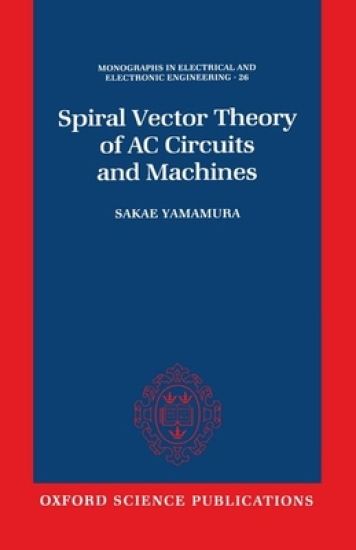
Spiral Vector Theory of AC Circuits and Machines
The spiral vector theory proposed and explained in this book unifies the steady state and transient state theories of AC circuits and machines. Previously steady state theory and transient state theory were separated by different expressions for state variables. This new theory makes possible the analysis of transient phenomena in three phase machines, an area largely untouched by conventional AC machine theories. Results of AC motor analysis obtained by the spiral vector method have led directly to new torque controls which give AC motors much superior performance to the usual DC control motors. With the rapid developments in inverter technology making the control of AC power easier the spiral vector theory provides the necessary theoretical foundation for the understanding and design of AC circuits and machines. The spiral vector theory provides superior computer simulations to AC circuits and machines, which are simple in structure and easy in use. The salient-pole AC generator is a good example for it.
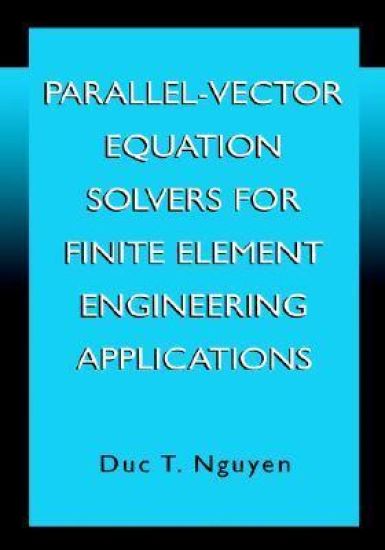
Parallel-Vector Equation Solvers for Finite Element Engineering Applications
Despite the ample number of articles on parallel-vector computational algorithms published over the last 20 years, there is a lack of texts in the field customized for senior undergraduate and graduate engineering research. Parallel-Vector Equation Solvers for Finite Element Engineering Applications aims to fill this gap, detailing both the theoretical development and important implementations of equation-solution algorithms. The mathematical background necessary to understand their inception balances well with descriptions of their practical uses. Illustrated with a number of state-of-the-art FORTRAN codes developed as examples for the book, Dr. Nguyen's text is a perfect choice for instructors and researchers alike.