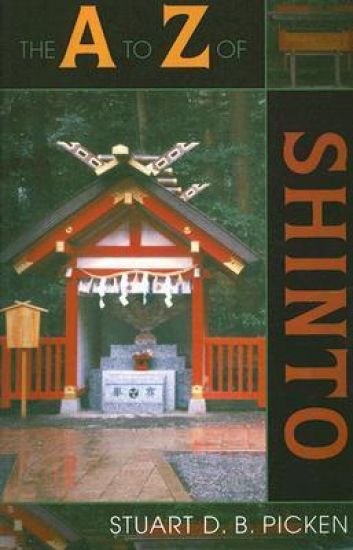
Shinto is the ancient religion of Japan. Indeed, it is one of the oldest religions in the world that is still followed. Over the centuries it has evolved out of the worship of kami, the divine within the world. Shinto has assumed many forms ranging from its origins as a folk religion to its gradual mixture with Buddhism over six centuries, and from its redefining after the Meiji Reformation in the interests of nationalism to the end of World War II, when it again became a more personal choice. As one of the few ancient religions that still thrives, it is of interest to greater circles than Japan specialists, although it remains difficult to understand and even harder to characterize in western terms. Fortunately however, understanding is greatly facilitated by The A to Z of Shinto, which traces its long historical evolution in the book's chronology and carefully considers the religion from different angles in the introduction. The dictionary includes hundreds of cross-referenced entries on significant institutions, concepts, writings, thinkers, and most importantly, the kami. The bibliography provides an outlet for further study.
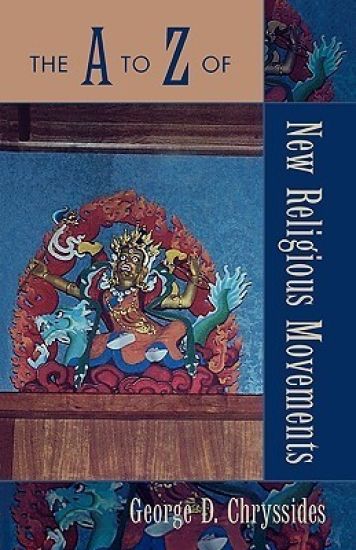
Alongside the older and more established religions, there are hundreds, indeed, thousands more, which have recently emerged. These "new religious movements" or NRMs—for lack of a better name—are not only numerous, they are also extremely varied and stem from a wide array of sources. They run the gamut from small to large, and all possess a tendency to constantly expand. And while their potential for good is considerable, more often than not it is their abuses that are noticed. Still, writing them off as "sects" is too easy, especially when they are as poorly understood as they often are. The A to Z of New Religious Movements is a major contribution to understanding these new and formative religions. While leaving any evaluation to the reader, it offers brief descriptions of well over a hundred NRMs in the dictionary section, along with information on the founders and leaders, and also their roots in Christianity, Buddhism, Hinduism, Islam and other more traditional religions. The impact of modern philosophy and science are also weighed. Since their roots often lay further back, the chronology starts in the 18th century and continues to the present, and the introduction attempts the arduous task of defining and categorizing the NRMs. The extensive bibliography provides further reading.
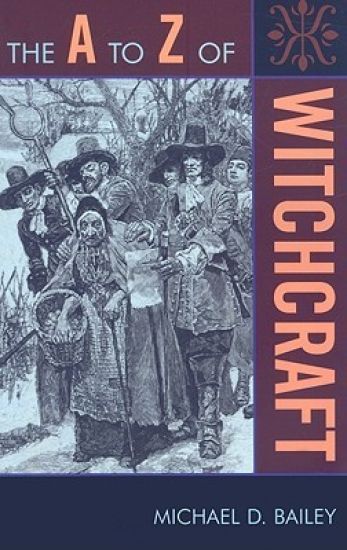
A great deal has been written about the history of witchcraft, but much of what has been written is unreliable, exaggerated, or inaccurate. This problem is especially acute in regard to modern witchcraft, or Wicca, and its supposed connections to historical witchcraft in medieval and early modern Europe. The A to Z of Witchcraft provides a reliable reference source for both academics and general readers interested in the actual historical development of witchcraft in the western world. The focus of the dictionary is on Western Europe during the late-medieval and early modern periods, when the specific idea of diabolical witchcraft developed and when the so-called "great witch-hunts" occurred. Entries are also provided that deal with magic and witchcraft in the earlier Christian period and classical antiquity, as well as with the lingering belief in witchcraft in the modern world, and with the development of the modern, neo-pagan religion of witchcraft, also known as Wicca. For comparative purposes, some entries have been provided that deal with aspects and systems of magic found in other parts of the world that seem to bear some relation to the idea of witchcraft as it developed in Christian Europe. The regions dealt with are mainly Africa, along with such New-World practices as Voodoo and Santeria. Entries in the dictionary cover important people in the history of witchcraft, from the medieval inquisitors and early modern magistrates who developed the stereotype of the historical witch to the modern individuals who have developed the religion of Wicca. Also included are legal terms and concepts important to the prosecution of the supposed crime of witchcraft, and religious and theological concepts pertaining to the demonic elements that came to be associated with witchcraft, as well as more popular beliefs and aspects of common folklore and mythology that became attached to the developing idea of witchcraft. Geographic entries are also included, discussing the scope of witch-hunting in various reg
Japanese industrial standards have long been the benchmark for quality products within Asia, indeed, within the world. Major Japanese industries like Toyota, Sony, and Honda, to name but a few, are household names that have contributed to this small island nation's status as the world's second largest economy. Japanese business practices and theories have permeated the mindset of its surrounding nations, and the country's long-term investment in the ever-growing Chinese market has further secured its status as an economic powerhouse. The A to Z of Japanese Business is an examination of the origins and characteristics of Japan's business culture. This handy reference book includes most of the important words or company names that foreign business people visiting Japan might encounter and provides an overview of Japanese corporate culture both from an historical standpoint and with reference to its most distinctive features as they affect organization and management. This is accomplished through its historical chronology detailing significant events of the past as well as recent developments within the Japanese economy and business world in general, various appendixes offering lists of business expressions that are in daily use along with a selection of the most commonly used business proverbs, a bibliography, and hundreds of cross-referenced dictionary entries on Japanese companies, their founders and managers, the ever-present bureaucratic bodies, and progress in the major industries.
Originating from a small group of Bible students led by Charles Taze Russell in the 1870s, the Watch Tower Society grew into an international society. After Russell's death in 1916, Franklin Rutherford was named his successor and gave the society a new name: "Jehovah's Witnesses." The A to Z of Jehovah's Witnesses shows how World War I & II influenced Watch Tower attitudes to civil government, armed conflict, and medical innovations like blood transfusion, as well as to mainstream churches and the development of Jehovah's Witnesses' door-to-door evangelism. The theme of prophecy, the doctrine of the 144,000, end-time calculations, Armageddon, and the Witnesses' denial of hell are all considered in The A to Z of Jehovah's Witnesses, which contains a chronology, an introductory essay, a bibliography, and 250 cross-referenced dictionary entries relating to key people and concepts.
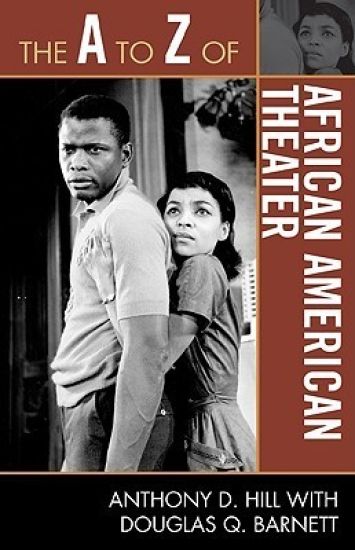
African American Theater is a vibrant and unique entity enriched by ancient Egyptian rituals, West African folklore, and European theatrical practices. A continuum of African folk traditions, it combines storytelling, mythology, rituals, music, song, and dance with ancestor worship from ancient times to the present. It afforded black artists a cultural gold mine to celebrate what it was like to be an African American in The New World. The A to Z of African American Theater celebrates nearly 200 years of black theater in the United States, identifying representative African American theater-producing organizations and chronicling their contributions to the field from its birth in 1816 to the present. This is done through a chronology, an introductory essay, a bibliography, and over 500 cross-referenced dictionary entries on actors, directors, playwrights, plays, theater producing organizations, themes, locations, and theater movements and awards.
The A to Z of the Mongol World Empire examines the history of the Mongol Empire, the pre-imperial era of Mongolian history that preceded it, and the various Mongol successor states that continued to dominate Eurasia long after the breakdown of Mongol unity. Divided into three parts, the first section is comprised of six introductory essays devoted to the: o Mongolia from the birth of Temüjin to the establishment of a Mongol Empire in 1206 o The Mongol Empire, 1206-1260 o The successor qanate of China o Mongol Iran o Ca'adai qanate of Turkistan o Golden Horde The second section contains 865 entries with more than 600 topics including: o Persons o Institutions o Terminology o Battles o Aspects of material culture o Geographical features of importance The third section is comprised of a detailed bibliographical essay and three appendixes.
Have you considered homeschooling? Perhaps you are not happy with the education that your child is currently receiving in a traditional school. Maybe your child is an above average student or one who is not working up to their full potential. You may have the privilege of being a stay at home parent but have never considered educating your own children. Why not? You may not know anything about homeschooling or realize that it is an option. Allow the author, Carolyn Tatem the opportunity to tell you more about her homeschooling journey. Homeschooling from A to Z provides a glimpse of what homeschooling is all about. Principles from A to Z are shared from the author's experience on homeschooling from elementary through high school, a seven year journey. These principles are designed to help homeschooling parents and help their children THRIVE This book is for you if . . .1.You want to learn more about homeschooling2.You are considering homeschooling 3.You are already homeschooling
Dive into the vibrant world of botanical beauty with "A to Z: Fruit and Vegetable Illustrations," a captivating book that seamlessly blends artistry and nature. This exquisite tome is a visual feast for the senses, featuring digitally hand-drawn illustrations of a cornucopia of fruits and vegetables that will delight both art enthusiasts and food lovers alike.