Kirjojen hintavertailu. Mukana 11 487 652 kirjaa ja 12 kauppaa.

Kirjahaku

Etsi kirjoja tekijän nimen, kirjan nimen tai ISBN:n perusteella.

662 tulosta hakusanalla "Inversion"

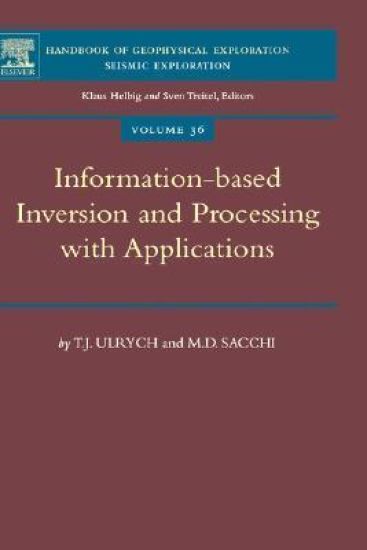
Information-Based Inversion and Processing with Applications
Information-Based Inversion and Processing with Applications examines different classical and modern aspects of geophysical data processing and inversion with emphasis on the processing of seismic records in applied seismology. Chapter 1 introduces basic concepts including: probability theory (expectation operator and ensemble statistics), elementary principles of parameter estimation, Fourier and z-transform essentials, and issues of orthogonality. In Chapter 2, the linear treatment of time series is provided. Particular attention is paid to Wold decomposition theorem and time series models (AR, MA, and ARMA) and their connection to seismic data analysis problems. Chapter 3 introduces concepts of Information theory and contains a synopsis of those topics that are used throughout the book. Examples are entropy, conditional entropy, Burg's maximum entropy spectral estimator, and mutual information. Chapter 4 provides a description of inverse problems first from a deterministic point of view, then from a probabilistic one. Chapter 5 deals with methods to improve the signal-to-noise ratio of seismic records. Concepts from previous chapters are put in practice for designing prediction error filters for noise attenuation and high-resolution Radon operators. Chapter 6 deals with the topic of deconvolution and the inversion of acoustic impedance. The first part discusses band-limited extrapolation assuming a known wavelet and considers the issue of wavelet estimation. The second part deals with sparse deconvolution using various 'entropy' type norms. Finally, Chapter 7 introduces recent topics of interest to the authors. The emphasis of this book is on applied seismology but researchers in the area of global seismology, and geophysical signal processing and inversion will find material that is relevant to the ubiquitous problem of estimating complex models from a limited number of noisy observations.
A Fatal Inversion

A Fatal Inversion

Barbara Vine

Penguin Books Ltd
2009
pokkari
A classic of the crime genre, A Fatal Inversion plunges you into the darker side of humanity with a plot that will keep you guessing throughout!'An absolute winner . . . a gripping read from start to end' Daily Mail'Brilliant. Vine has the kind of near-Victorian narrative drive' Sunday Times'I defy anyone to guess the conclusion' Daily Telegraph*****In the long hot summer of 1976, a group of young adults camp in Wyvis Hall, a beautiful Suffolk country house, after one of them unexpectedly inherits it. Revelling in their self-indulgent, irresponsible paradise, they scavenge, steal and sell heirlooms - to entertain and simply exist.Ten years later, when the current owner buries their beloved dog in the Hall's animal cemetery, the bodies of a woman and child are discovered. But which woman? And whose child? As the facts slowly emerge, their past begins to catch up with them . . .Written under Ruth Rendell's pen name, Barbara Vine, if you enjoy the novels of P.D. James, Ian Rankin and Ann Cleeves, you will love this book.*****'One of the best Barbara Vine novels' Goodreads Review'Not an ordinary mystery . . . it is compelling and certainly thought-provoking' Goodreads Review'Vine is expert at the slow disclosure of facts and feelings' Goodreads Review
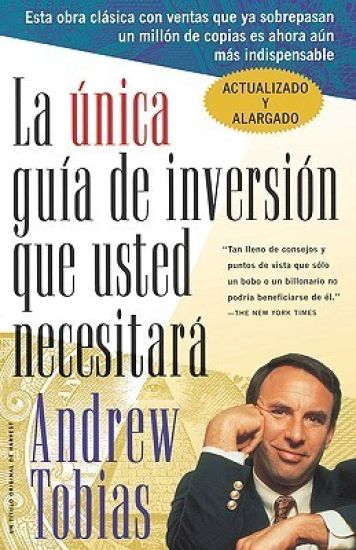
La Única Guía de Inversión Que Usted Necesitará: Spanish Edition
Andrew Tobias's newly revised, bestselling guide in a groundbreaking Spanish-language edition. Index. The million-copy bestselling classic is now even more indispensable, fully updated and revised to cover investing and money management well into the next century. Concise, breezily witty, and truly understandable, Tobias takes an informative look at the best uses for your money, no matter how much or how little you have. More than ever before, this is the "only investment guide many will ever need."( "Barrons" )
Female Sexual Inversion

Female Sexual Inversion

Chiara Beccalossi

Palgrave Macmillan
2011
sidottu
An examination of how female same-sex desires were represented in a wide range of Italian and British medical writings, 1870-1920. It shows how the psychiatric category of sexual inversion was positioned alongside other medical ideas of same-sex desires, such as the virago, tribade-prostitute, fiamma and gynaecological explanations.
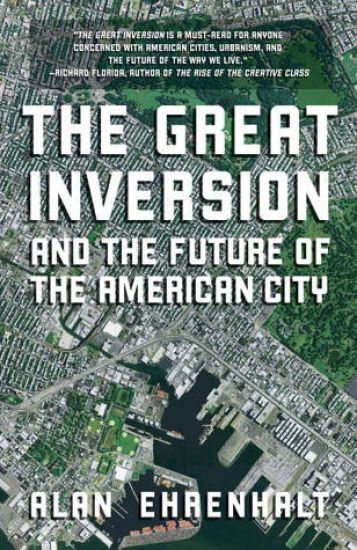
The Great Inversion and the Future of the American City
Eye-opening and thoroughly engaging, this is an indispensible look at American urban/suburban society and its future. In The Great Inversion, Alan Ehrenhalt, one of our leading urbanologists, reveals how the roles of America's cities and suburbs are changing places--young adults and affluent retirees moving in, while immigrants and the less affluent are moving out--and addresses the implications of these shifts for the future of our society. Ehrenhalt shows us how the commercial canyons of lower Manhattan are becoming residential neighborhoods, and how mass transit has revitalized inner-city communities in Chicago and Brooklyn. He explains why car-dominated cities like Phoenix and Charlotte have sought to build twenty-first-century downtowns from scratch, while sprawling postwar suburbs are seeking to attract young people with their own form of urbanized experience.
Generalised Euler-Jacobi Inversion Formula and Asymptotics beyond All Orders

Generalised Euler-Jacobi Inversion Formula and Asymptotics beyond All Orders

Vic Kowalenko; N. E. Frankel; L. Glasser; T. Taucher

Cambridge University Press
1995
pokkari
This work presents exciting new developments in understanding the subdominant exponential terms of asymptotic expansions which have previously been neglected. By considering special exponential series arising in number theory, the authors derive the generalised Euler-Jacobi series, expressed in terms of hypergeometric series. Dingle’s theory of terminants is then employed to show how the divergences in both dominant and subdominant series of a complete asymptotic expansion can be tamed. Numerical results are used to illustrate that a complete asymptotic expansion can be made to agree with exact results for the generalised Euler-Jacobi series to any desired degree of accuracy. All researchers interested in the fascinating area of exponential asymptotics will find this a most valuable book.
La mejor inversión de un líder

La mejor inversión de un líder

John C. Maxwell

Grupo Nelson
2020
nidottu
¿Cuál es la mayor ganancia en el tiempo de un líder? Después de que los líderes hayan invertido en su propio crecimiento de liderazgo, ¿cuál es la mejor manera de lograr su misión y hacer crecer a sus organizaciones? ¡Desarrollar líderes! Cuantos más líderes tenga una organización y mejor preparados estén para liderar, más exitosa será la organización y todos sus líderes. El autor número uno en ventas del New York Times, John C. Maxwell, a menudo es identificado como el experto en liderazgo más influyente del mundo. En los últimos veinticinco años, ha pasado de preparar a un puñado de líderes en una organización a desarrollar millones de líderes empresariales, gubernamentales y sin fines de lucro en todos los países del mundo. En La mejor inversión de un líder, Maxwell comparte las lecciones más importantes que aprendió sobre el proceso de desarrollo de liderazgo en el último cuarto de siglo. Él instruye a los lectores en cómoIdentificar líderes potenciales.Atraer líderes creando una mesa de liderazgo.Trabajar hasta no ser imprescindibles al preparar y capacitar líderes.Posicionar líderes para construir un equipo ganador.Entrenar líderes a niveles más altos y hacer que ellos mismos sean líderes en el desarrollo.Aquí es donde los líderes realmente experimentan el valor compuesto del desarrollo de líderes y llegan a los niveles más altos de liderazgo.Cualquier persona que quiera dar el siguiente paso en su liderazgo, construir su organización o equipo y crear su legado para el futuro debe leer La mayor inversión del líder.The Leader's Greatest ReturnIn The Leader’s Greatest Return, Maxwell shares the most important lessons he’s learned about the leadership development process over the last quarter century, from identifying high-potential leaders to coaching leaders to develop others.What is the greatest return on a leader’s time? After leaders have invested in their own leadership growth, what is the best way to accomplish their vision and grow their organizations? Develop leaders! The more leaders an organization has and the better equipped they are to lead, the more successful the organization and all of its leaders. Number one New York Times bestselling author John C. Maxwell is often identified as the most influential leadership expert in the world. In the last twenty-five years, he has grown from equipping a handful of leaders in one organization to developing millions of business, government, and nonprofit leaders in every country around the world. In The Leader’s Greatest Return, Maxwell shares the most important lessons he’s learned about the leadership development process over the last quarter century. He instructs readers in how toKnow what potential leaders look likeAttract leaders by creating a leadership tableWork themselves out of a job by equipping and empowering leadersPosition leaders to build a winning teamCoach leaders to higher levels and make them leadership developers themselves
Full Field Inversion Methods in Ocean and Seismo-Acoustics
Recent advances in the power of inversion methods, the accuracy of acoustic field prediction codes, and the speed of digital computers have made the full field inversion of ocean and seismic parameters on a large scale a practical possibility. These methods exploit amplitude and phase information detected on hydrophone/geophone arrays, thereby extending traditional inversion schemes based on time of flight measurements. Full field inversion methods provide environmental information by minimising the mismatch between measured and predicted acoustic fields through a global search of possible environmental parameters. Full Field Inversion Methods in Ocean and Seismo-Acoustics is the formal record of a conference held in Italy in June 1994, sponsored by NATO SACLANT Undersea Research Centre. It includes papers by NATO specialists and others. Topics covered include: · speed and accuracy of acoustic field prediction codes · signal processing strategies · global inversion algorithms · search spaces of environmental parameters · environmental stochastic limitations · special purpose computer architectures · measurement geometries · source and receiving sensor technologies.
Experimental Acoustic Inversion Methods for Exploration of the Shallow Water Environment
In recent years, research on acoustic remote sensing of the ocean has evolved considerably, especially in studying complex physical and biological processes in shallow water environments. To review the state of the art, an international workshop was held at Carvoeiro, Portugal, in March 1999, bringing together leading international researchers in the field. In contrast to much of the recent theoretical work, emphasis was placed on the experimental validation of the techniques. This volume, based on presentations at this workshop, summarizes a range of diverse and innovative applications. The invited contributions explore the use of acoustics to measure bottom properties and morphology, as well as to probe buried objects within the sediment. Within the water column, sound is applied to imaging of oceanographic features such as currents and tides or monitoring of marine life. Another key theme is the use of sound to solve geometric inverse problems for precise tracking of undersea vehicles. Audience: This volume should be useful both to the novice seeking an introduction to the field and to advanced researchers interested in the latest developments in acoustic sensing of the ocean environment. The workshop was sponsored by the Fundação para a Ciêcia e a Tecnologia (Portuguese Foundation for Science and Technology).
The Discourse Function of Inversion in English
First published in 1997. This dissertation presents a discourse-functional account of English inversion, based on an empirical study of natural language data. The central finding is that inversion is subject to a pragmatic constraint on the information status of its constituents; specifically, the information represented by the preposed constituent must be at least as familiar within the discourse as is that represented by the postposed constituent.
Hegel's Inversion of Philosophy

Hegel's Inversion of Philosophy

W.Clark Wolf

Cambridge University Press
2026
sidottu
Hegel's philosophy is often presented as a reconciliation between thought and the world, and thus logic and metaphysics. But what is the basis of this reconciliation? In this book, Clark Wolf argues that the key to Hegel's transformation of philosophy lies in his recognition of the special logical basis of the humanly made world. Human artifacts and institutions are not merely represented by concepts; concepts are necessary for their very existence. For this reason, Hegel sees the human world, the world of spirit or Geist, as more central in philosophy than the mind-independent world of nature. Hegel's philosophy is thus a humanism. Wolf argues that this humanistic conception of philosophy is justified in Hegel's Science of Logic, since its logical basis is his theory of concepts. Through a detailed interpretation of the Doctrine of the Concept, this book sheds new light on Hegelian idealism.
Numerical Methods of Matrix Inversion

Numerical Methods of Matrix Inversion

Keith Donald Rush

Hassell Street Press
2021
nidottu
This work has been selected by scholars as being culturally important and is part of the knowledge base of civilization as we know it.This work is in the public domain in the United States of America, and possibly other nations. Within the United States, you may freely copy and distribute this work, as no entity (individual or corporate) has a copyright on the body of the work.Scholars believe, and we concur, that this work is important enough to be preserved, reproduced, and made generally available to the public. To ensure a quality reading experience, this work has been proofread and republished using a format that seamlessly blends the original graphical elements with text in an easy-to-read typeface.We appreciate your support of the preservation process, and thank you for being an important part of keeping this knowledge alive and relevant.
Seismic Imaging and Inversion: Volume 1

Seismic Imaging and Inversion: Volume 1

Robert H. Stolt; Arthur B. Weglein

Cambridge University Press
2012
sidottu
Extracting information from seismic data requires knowledge of seismic wave propagation and reflection. The commonly used method involves solving linearly for a reflectivity at every point within the Earth, but this book follows an alternative approach which invokes inverse scattering theory. By developing the theory of seismic imaging from basic principles, the authors relate the different models of seismic propagation, reflection and imaging - thus providing links to reflectivity-based imaging on the one hand and to nonlinear seismic inversion on the other. The comprehensive and physically complete linear imaging foundation developed presents new results at the leading edge of seismic processing for target location and identification. This book serves as a fundamental guide to seismic imaging principles and algorithms and their foundation in inverse scattering theory, and is a valuable resource for working geoscientists, scientific programmers and theoretical physicists.
Seismic Imaging and Inversion: Volume 2

Seismic Imaging and Inversion: Volume 2

Arthur B. Weglein; Robert H. Stolt

Cambridge University Press
2026
sidottu
This second volume of Seismic Imaging and Inversion supersedes the first with direct nonlinear inverse theory – where all the assumptions and shortcomings of the linear theory are removed. Chapters follow the processing sequence, including predicting the reference and scattered wavefields; de-ghosting; removing multiples; Q compensation; depth imaging; and direct non-linear inversion of target mechanical properties. Every step in the processing chain is achieved directly without knowing, estimating, or determining any subsurface information, including a velocity model. No other seismic concept or methodology has that capability. Taken together, the two volumes provide researchers and industry practitioners with a solid understanding of current mainstream methods as well as a new and more capable methodology that reduces to conventional methods when the prerequisites and assumptions within those are satisfied. This provides new options in the seismic toolbox that facilitate target identification across a broader set of seismic offshore and onshore plays.